

The case of the worried.., p.14
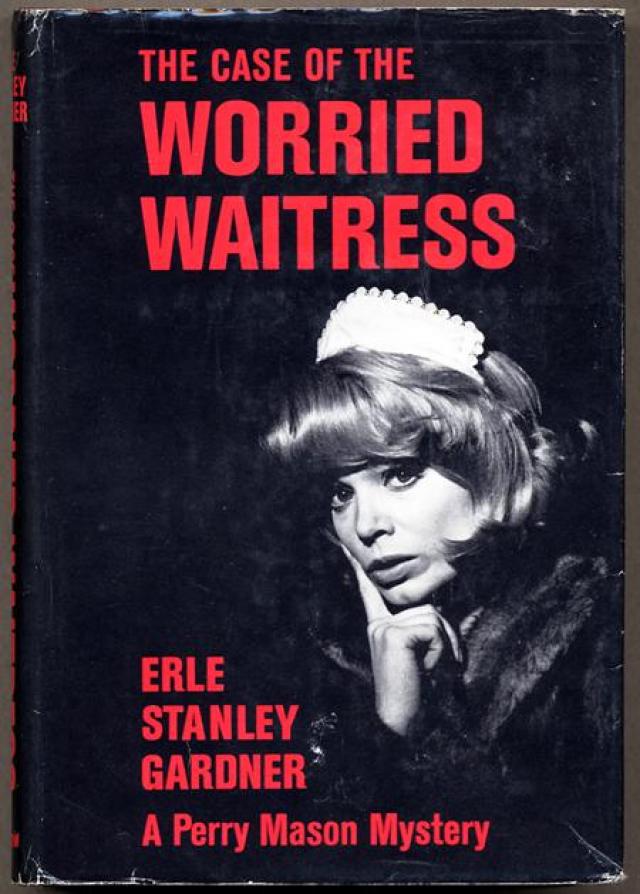
The Case of the Worried Waitress,
p.14


“How do you know it had been moved?”
“Because the blind woman crashed into it.”
“The blind woman?” Drake exclaimed.
“Exactly,” Mason said. “We’ve been a little bit less than alert, Paul. And we’ve overlooked the obvious.
“Stuart Baxley was trying to take the heat off that house. As long as officers thought there’d been a theft of a hundred-dollar bill, as long as Sophia Atwood was lying at death’s door, it was going to be impossible for anyone to move into that house and take over. But if Stuart Baxley could vindicate Katherine Ellis, and then get Katherine Ellis to move back into the house —then he could have been the fair-haired friend of the family. Don’t you see it, Paul?”
“I see your enthusiasm and excitement,” Drake said. “But what’s all this about the blind woman?”
“We’re the ones who have been blind,” Mason said. “Katherine Ellis told me that the house was haunted, that she could hear ghostly footsteps at night, with no light. And there was someone in that house when you and I were in there—someone other than Stuart Baxley. There were those peculiar sounds, such as might have been made by someone walking in felt slippers.”
“In the dark?” Drake asked.
“It’s always dark to a blind person,” Mason said. “That blind woman knew the inside of the house just as well as she knows the palm of her hand.”
Drake’s face showed sudden realization of the point Mason was making.
“Well, I’ll be damned!” he said.
Mason said, “Hurry, Paul. We’re headed down to see what’s happened with your operative who’s posing as the blind woman.”
“Your car or mine?” Drake asked.
“Yours,” Mason said. “I want to think.”
“Well, you’ve done a good job of thinking so far,” Drake said.
“But we should have known,” Mason said. “Lord, it stuck out all over the case. Sophia Atwood and this blind woman were playing some kind of a game in partnership, and the blind woman knows the house and every stick of furniture in it—every place where everything is and … ”
“Then why would anyone move the water cooler?” Drake asked.
“That’s just the point,” Mason said. “The water cooler was moved, but Mrs. Atwood didn’t have time to move it back. And the person who clubbed Mrs. Atwood with the flashlight didn’t know the water cooler had been moved or appreciate the fact that it would have to be returned to the place that it occupied.”
“But why move the water cooler in the first place?”
“Because,” Mason said, “she wanted to get at the wall in back of the place where the water cooler stood—or wanted to get at the carpet underneath the water cooler.”
Drake sighed. “You certainly go all out on these cases, Perry. You start with a worried waitress and you’re winding up with something that’s way beyond me.”
“It’s way beyond me at the moment,” Mason admitted, “but I think it has to do with the struggle for power at the Gillco Manufacturing Company.”
“We’ll soon find out,” Drake said. “At least we’ll find out what my operative knows.”
The detective drove his car with skillful manipulation through the traffic out to the manufacturing district and parked the car in front of the Gillco Manufacturing Company.
“My operative is still there,” Drake said. “Evidently there’s been no clash with the blind woman.”
Mason and Drake left the car, walked up to the woman who was seated with bowed head, holding a basket in her lap.
“How much are the pencils?” Mason asked.
“Whatever you want to give,” the woman said in a flat, expressionless voice, “starting with ten cents and going as high as you want. The ballpoint pens are a dollar each, and if you want to pay more, that’s up to you. Just don’t ask me to make change, please.” Drake bent down to examine a pencil. The woman said in a low voice that was little more than a whisper, “A man came out about fifteen minutes ago and bought a ballpoint pen. And, when he did it, he dropped a slip of paper in the bottom of the basket.”
“Can you get that slip of paper for me?” Mason asked.
“Not without exciting suspicion at the moment. There were figures on the sheet of paper, and that’s all—just two rows of figures.”
Mason said, “We’re sending a cab for you. Pick up your bag of pencils, take the cab, and go to Drake’s office. Get that paper and have it ready for him.”
“You don’t want me to wait here any longer?”
“You’ve done your job here,” Mason said. “Just get away now without being discovered by the real blind person.”
“I thought you wanted to have me confront her or have her confront me and get a tape recording of … ”
“No more,” Mason said. “We’re beginning to get the picture now.”
The lawyer nodded to Paul Drake.
Drake ostentatiously put four dollar bills in the basket, removed two ballpoint pens, gravely handed one to Mason.
“My good deed for the day,” he said, and then added, “in case anyone is watching.”
Mason and Drake walked back to the place where Drake had parked his car. From the nearest telephone booth Drake telephoned for a taxicab to come and pick up the operative who was posing as the blind woman. Then Drake said, “What do we do now?”
“We go to the house and try to find out what was the real reason for moving that water cooler.”
“And what if we are caught there?” Drake asked. “You know we’ve been ordered to keep out of that house.”
“We’ve been so ordered,” Mason said, “but I’m representing a client and my client hasn’t ordered me to keep out of the house.”
“If the police catch us there, it’s going to be rough.”
“They may catch us there,” Mason said. “Our only chance now is to work fast, before they realize what we’re up to.”
“All this is way beyond me,” Drake said. “ can follow you part way, but—well, when you come right down to it, it stands to reason that the blind woman was tied up with Sophia Atwood, but what’s the reason for it all?”
“Well,” Mason said, “we have a proxy fight in the Gillco Manufacturing Company we have Hubert Deering chummy with Gillman, the president of the company we have Hubert Deering’s mother, Bernice Atwood, sitting tight on all of the property that belonged to Gerald Atwood in his lifetime and, with that to go on, we can reach a pretty good conclusion—particularly in view of the fact that there’s someone in the plant who is in a position to have access to information, keeping the blind woman posted on the current status of the proxy fight.”
“You think that’s it?” Drake asked.
“Two figures,” Mason said, “one over the other.”
Some of the lawyer’s excitement began to manifest itself in Drake’s voice. “Good lord, Perry, if that’s the solution, you’re getting pretty close to home plate.”
“Let’s hope we’re in time at the Atwood residence,” Mason said.
“Whom are we trying to beat to the punch?”
“Stuart Baxley, for one,” Mason said.
“Only I don’t think it’s occurred to Baxley that there’s any significance about the water cooler having been moved—and knocked over by whoever was in the house.”
“Do we try to enter surreptitiously and … ?”
“We park the car right in front of the house,” Mason said. “We use my latchkey at the front door and we walk right on in.”
“And suppose there’s a police guard watching the place?”
“Then we’ll have about five or ten minutes at the outside before we’re knee-deep in trouble,” Mason said.
Chapter 17
As mason and Drake left the car, Mason said, “I don’t see any sign of a police guard here, Paul.”
“That doesn’t mean there isn’t any,” Drake said. It’s just that we don’t see one.”
“Well,” Mason said with a chuckle, “we have ourselves to blame. We made a trap and baited it and now we’re the ones who come walking into it.”
“I don’t like it,” Drake said. “We’re violating police instructions.”
“Police can’t tell me what to do in order to protect a client,” Mason said, leading the way up the walk to the porch of the house. He fitted the latchkey, opened the door and entered.
“Hey!” Drake said. “Aren’t you going to ring the bell first? Suppose somebody’s home and … ?”
The lawyer, however, was already climbing the stairs.
Police had not removed the broken water cooler, and the broken glass and crockery were where they had fallen with the soggy carpet bearing mute testimony to the liquid which had saturated it.
“Well, Paul,” Mason said, “you can see what happened. The water cooler had been moved. It hadn’t been lifted it had been partially lifted, partially dragged. You can see the tracks along the carpet. Then someone had neglected to put it back and the water cooler stood between these two doors, right where someone entering the room from that door and leaving it by this one would find the water cooler directly in the path.”
“Well, there’s nothing here,” Drake said. “No reason why the water cooler should have been moved.”
But Mason was down on his knees, studying the place where the cooler had originally been located. Then he took a penknife from his pocket, slid it along the edge of the carpet, used the blade to give him a purchase on the corner of the carpet, pulled it back.
“There’s a regular trap door here, Paul,” he said.
Drake bent forward.
Mason inserted the edge of his knife between the cracks in the board, pried gently, and raised a door on cunningly concealed hinges.
“Good lord,” Drake exclaimed, “the place is full of money!”
Mason regarded the receptacle disclosed by the open trap door, the bundles of currency which had been neatly stacked in the hiding place.
“Holy mackerel!” Drake said. “Look at them! Hundred-dollar bills—there must be a fortune here!”
Mason hurriedly returned the trap door to its place, got to his feet, kicked the carpet back over the trap door.
“All right, Paul,” he said, “out!”
“What do you mean—out?”
“I mean out!”
“What are we going to do with this money?”
“What can we do with it?”
“We’ve got to report it to the police.”
“And then,” Mason said, “Bernice comes forward, claims it was part of the estate belonging to her dead husband, Gerald Atwood she takes possession, and the fat is in the fire.”
“But we can’t leave it here,” Drake said. “Suppose it should be discovered by other people or stolen?”
“We didn’t put it here in the first place,” Mason said.
“Let’s hope that Sophia Atwood regains consciousness so we can have a heart-to-heart talk.
“You can see what happened. In some way she managed to salvage a whole chunk of property in the form of cash, or she reduced it to cash. Bernice moved in and took everything that wasn’t nailed down, but Sophia didn’t have anything to worry about. She had a comfortable fortune stashed away.
“However, Sophia didn’t dare let Bernice get the faintest inkling that she had this concealed fortune, so she acted as a woman who had lost just about everything in the world.
“Now then, we’re in a predicament, Paul. If she should die without regaining consciousness, we’re in a spot.”
“And if she regains consciousness?” Drake asked.
“If she does, and can talk, and I can have a confidential conversation with her—well,” Mason said, grinning, “we’re in a spot anyway, Paul.”
“That’s the worst of your cases. You always get in some kind of a mess and drag me in with you. If this cache is discovered and looted … Good heavens, you’ve baited such a trap that Bernice is going to come to this house and start searching with a fine-toothed comb and … ”
“And don’t forget our friend, Stuart Baxley,” Mason said.
“Well,” Drake pointed out, “if they find the money and go South with it—then what?”
Mason said, “We’ve got to handle things in such a way that the police keep a guard on this house until there’s a change, either for the better or for the worse, in Sophia Atwood’s condition.”
“And in the meantime?” Drake asked.
“In the meantime,” Mason said, “we’ve got to get out of here—fast!”
The lawyer watched his step carefully, picking his way around the broken glass and the wet spot in the carpet.
“Watch your step, Paul,” he said. “Grinding some of that glass into the carpet would be a giveaway that there had been visitors. And, right at the moment, we don’t want to give anything away.”
The lawyer stepped over the last piece of glass, went through the door into the hallway, and came to an abrupt halt.
Lt. Tragg and the uniformed policeman were standing motionless in the hallway.
“Well, hello, Lieutenant,” Mason said, after a quick intake of his breath. “How long have you been here?”
“Long enough to hear most of the conversation,” Lt. Tragg said. “Let’s go take an inventory.”
“Have a heart,” Mason said.
“I have a heart,” Lt. Tragg said. “I also have a head. How did you know this money was here?”
“I didn’t,” Mason said. “I surmised it from the … ”
“From what?” Tragg asked, as Mason’s voice trailed away into silence.
“I think,” Mason told him, “we’ve already given you enough leads on the case.”
Lt. Tragg and the officer moved into the room.
“Come on in here,” Tragg said to Mason. “You and Drake sit down over there and keep out of this. Let’s see what you’ve found. Let’s see, it was a trap door, I believe … Ah, here we are!”
Lt. Tragg gave a low whistle as he raised the trap door on its hinges to disclose the hiding place and the money.
“All right,” Tragg said to the officer, “start piling it on that table. We’ll take an inventory right now.”
“Don’t you want me to telephone for reinforcements?” the officer asked.
“Not right now,” Tragg said. “I want you as a witness to my integrity, and I’m going to be a witness to your integrity. We’re going to get this money all out of here and counted before anything happens to it and we’re each going to be in a position to swear the other wasn’t alone with the money for as much as five seconds.”
Tragg started shoveling out the bundles of currency, and the officer piled them on the table, stacking them up in a solid oblong.
“Well, that’s it,” Tragg said at length.
Mason said, “Take a good, long look, Lieutenant.”
“For what?”
“For an envelope or a piece of paper down on the bottom of that receptacle.”
“There isn’t anything,” Tragg said.
“Are you sure there isn’t something there?”
“What do you mean by something?”
“I’m looking for a will,” Mason said. “It could be just a folded piece of paper, entirely written and dated in the handwriting of the decedent. It could be a more formal will in an envelope.”
“Well, there isn’t anything else here. It’s slick and bare,” Tragg said. “And now we’ve got the job of counting the money. You folks stay right there and check on the count.”
“Those are hundred-dollar bills,” Mason said. “They’re in packages of … how many?”
“Fifty to a package,” Tragg said, running through one of the packages.
“Of course, we can’t be certain that there isn’t more than fifty in some packages, or less than fifty in others, but the packages are all labeled fifty. That’s five thousand dollars a package. Let’s see what we’ve got here.”
Lt. Tragg counted the packages hurriedly and announced the total in an awed voice. “Three hundred thousand dollars in currency. What the hell do you know about that?”
He suddenly whirled to Mason. “And I’ll bet you know a lot about that,” he charged. “That’s what you and Drake were looking for. It’s what … ”
Mason said, “If you’re asking for advice, Lieutenant, I’d keep this discovery very, very hush-hush. I’d keep a guard in the house, and I’d wait to see who comes after that money.”
Tragg laughed. “You’d like to have me lock the barn door after the horse has been stolen. I know who came after that money. Your client, Katherine Ellis, came after it—for one. She was caught and had to club her aunt over the head in order to make her escape. But she did manage to tell you enough, so that you and Paul Drake made two attempts to get this money. You could have had a very nice attorney fee with this money.”
“Accusing me of intending to steal it?” Mason asked.
“Steal it” Tragg exclaimed. “Hell, no! You were going to discover it. You were going to use it to make Stuart Baxley a red herring. You were going to turn it in as an asset of the Sophia Atwood estate. You were going to get Katherine Ellis acquitted. You were going to have her as the sole beneficiary of all this money. You were going to feather her nest and get yourself a nice fee at the same time. And, dammit,” Lt. Tragg said ruefully, “I don’t have enough evidence at the time even to say that you’re wrong. You may be on the right trail. I don’t know.
“I can, however, tell you one thing,” he said. “Under the circumstances you’ve stuck your neck in a noose.
“Hamilton Burger can use this as evidence against Katherine Ellis, claiming that she knew about the money that she tried to get it that that furnishes motivation for the crime and, in view of this discovery, the Court is going to bind her over for trial. You may be able to get her off before a jury. I don’t know. But this hasn’t done you any good.
“You should have gone to the police right at the start and told them what you knew.”
“But I didn’t know,” Mason said. “I only suspected.”
“My office is open twenty-four hours a day,” Lt. Tragg said drily. “And now we’re going to get headquarters on the line and ask them to send out reinforcements.”















