The case of the shoplift.., p.19
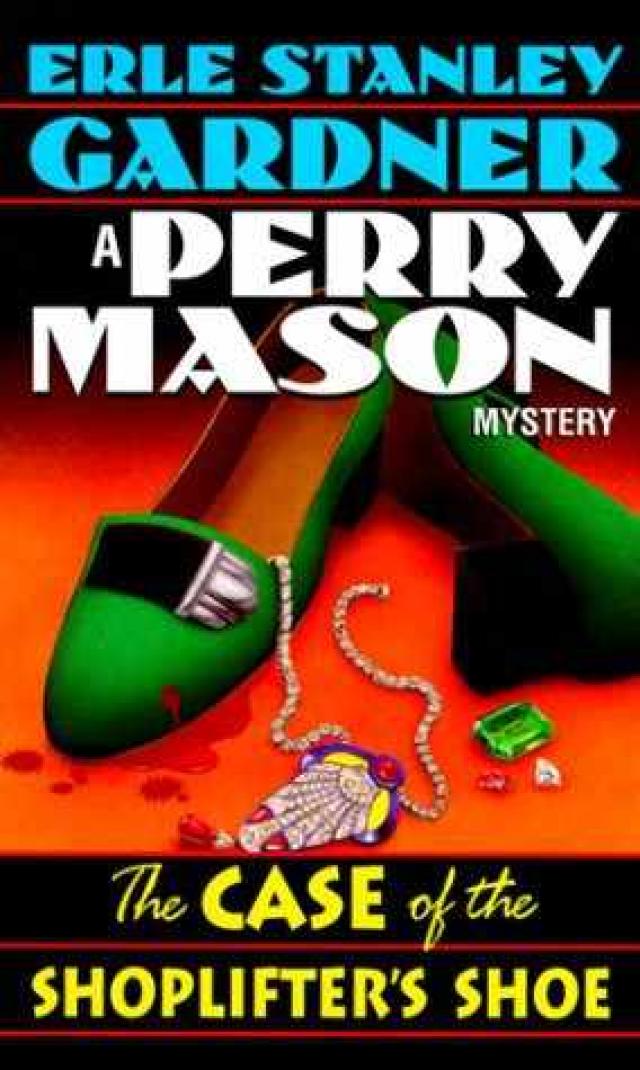
The Case of the Shoplifter's Shoe,
p.19


“Gentlemen, are you ready to begin the trial of the People vs. Sarah Breel?” Counsel for both sides answered that they were ready. Judge Barnes looked down at the white-haired woman who sat in a wheel chair at Perry Mason’s side, her right leg encased in a plaster cast, her expression as completely tranquil as was that of the judge himself. “Very well, gentlemen, proceed.”
Mason got to his feet, and stood tall and straight, having about him that indefinable something which draws the eyes of spectators like a magnet. “Your Honor,” he said, in a resonant voice which seemed not particularly loud, yet filled every corner of the mahogany-paneled courtroom as though he were talking into a microphone, “the defendant in this case wants only a fair trial. She is satisfied the facts will speak for themselves. We offer to stipulate with the district attorney’s office that the first twelve persons called to the jury box may be sworn to act as jurors in the case.”
“You mean without asking any questions at all of the proposed jurors?” Sampson asked. Mason nodded.
“Suppose they’ve read about the case? Suppose they have some fixed opinion in it?”
“I don’t care,” Mason said. “All I want is twelve men and women of intelligence and fairness.” He included the jury panel with a sweeping gesture of his arm. “I am satisfied that every one of these people possesses the necessary qualifications. Call twelve names. We’ll accept them. We don’t care whether they have any prejudices or not.”
Larry Sampson scented a trap. One didn’t take chances with Perry Mason. Somehow he felt that if he departed from the orderly course of routine trial work, he’d find himself sailing uncharted seas, with dangerous reefs ahead. “No,” he said, “I wouldn’t care to make that stipulation.” Then suddenly realizing that to the ears of the prospective jurors this sounded as though he failed to share Mason’s opinion as to their integrity and fainress, he raised his voice and said, “Not that I doubt the intelligence or honesty of any of these men or women, but I want to find out … that is, I mean, I want to question them.”
Mason turned to face the jury impanelment. “Go ahead and question,” he said. “That’s your privilege. I won’t ask any questions.”
Mason sat down, and then, for the first time since the judge had taken the bench, turned to confer with Mrs. Breel. “Do you,” Mason asked, “feel as though the evidence might recall what happened to your mind?”
“My mind is a blank,” she said, “from Monday noon until I regained consciousness in the hospital.”
The lawyer said, “This is going to be an ordeal. You’ll have to steel yourself to the idea of having the district attorney’s office sketch you as a scheming criminal. There’ll be sarcasm, shouting, a lot of sneering references to your loss of memory.”
She smiled serenely. “I can take it,” she said.
The clerk called the names of twelve jurors. Sampson advised the prospective jurors of the nature of the case. The judge asked a few routine questions, then turned to the attorneys. “Proceed, gentlemen, with such questions as you have touching upon the qualifications of prospective jurors.”
Mason, on his feet, scrutinized the jurors as though searching for something in each face. Then he smiled and said, “Your Honor, the defendant has no questions to ask of these jurors. We have no challenges for cause.”
Sampson sighed and settled down to an examination of the jurors, realizing with each question that he had been forced into a position of seeming to distrust these men and women. Yet, once having embarked upon such a policy, he dared not change. And, since the defense had given him no lead by its questions, he was forced to plug along, doggedly determined to bring out the facts, whether they knew the defendant or counsel for the defendant, whether they had read of the facts, or purported facts, in the newspapers, whether they had formed or expressed any opinion. Once, to his embarrassment, he disclosed that one of the jurors, having read the newspapers, had concluded Mrs. Breel was guilty. But that juror, meeting Perry Mason’s disarming smile, promptly asserted that he could and would lay aside such opinion if he was actually sworn to act as a juror, and would try the case solely and impartially upon the evidence introduced.
Sampson knew, of course, that Perry Mason would excuse this juror on a peremptory challenge, and the other members of the panel would understand the exercise of that challenge. But Sampson felt, somehow, as though he were doing Mason’s work for him.
Eventually, his examination drew to a close. He passed the jury for cause, and, satisfied that Mason would exert his peremptory on the biased juror, passed for peremptory. Mason said, “Your Honor, I was satisfied with the jury when I first saw them, and I’m still satisfied with them. I pass my peremptory. Swear the jury.”
Once more, Sampson experienced a vague feeling of uneasiness. He had expected at least half a day to be consumed in the examination of jurors, but now he found himself swept into the trial after less than an hour, and, somehow, felt that he was on the defensive. However, as he warmed to his opening speech before the jury, he regained his confidence. The mere recital of the facts arrayed against the defendant was sufficient to reassure any prosecutor.
The defendant had been acquainted with the decedent. She had been in the neighborhood—in fact, directly in front of the decedent’s house—at approximately the time of the murder. Robbery had been the motive for the murder. The defendant had in her possession the gun with which the murder had been committed. Moreover—and realizing that the prosecution might have some difficulty in actually proving that the handbag was the property of the defendant, Sampson stressed this point particularly—the shoe worn by the defendant had been stained with human bloods—the blood of the decedent. The person who had murdered Austin Cullens had stood over the body, taking gems from a chamois-skin belt. In doing this, that person had left the telltale red smears of footprints near the body of the deceased. The jurors would be shown photographs of tracks of footprints in the hallway. And then they would be shown the left shoe which had been worn by the defendant at the time she was brought to the hospital. That shoe, standing by itself, would be sufficient to warrant a conviction of first-degree murder.
Sampson thanked the jury, and sat down. Mason reserved his opening statement, and Sampson called, as his first witness, an acquaintance who testified briefly, and without objection or cross-examination, that he had known Austin Cullens in his lifetime; that Austin Cullens was dead; that he had seen the body of Austin Cullens at the time of the post-mortem; that the body on which the autopsy surgeon had been working was that of Austin Cullens, who had lived at 9158 St. Rupert Boulevard.
Sampson called the autopsy surgeon, Dr. Carl Frankel. Mason stipulated his qualifications, subject to the right of cross-examination, and Dr. Frankel described the postmortem, the course of the fatal bullet, and the cause of death. “You may cross-examine,” Sampson said.
Mason asked casually, “What time was the post-mortem performed, Doctor?”
“Around three o’clock in the morning.”
“You recovered the fatal bullet which had caused the death of Austin Cullens?”
“I did.”
“What did you do with it?”
“I gave it to Sergeant Holcomb of the homicide squad, who was standing at my side.”
“Let’s see,” Mason said musingly, “three o’clock in the morning. You had two post-mortems to perform by that time, didn’t you, Doctor?”
“I did.”
“The other one being that of George Trent, who had also been shot?”
“Yes, sir.”
“And you performed both of those post-mortems at the same time?”
“No, sir, I performed the post-mortem on Austin Cullens first, and then the autopsy on George Trent.”
“But you performed the post-mortem on George Trent immediately after you had finished with that of Austin Cullens?”
“That’s right.”
“And Sergeant Holcomb was present at both examinations?”
“Yes, sir.”
“Did he leave the room at any time?”
“What’s that got to do with it?” Sampson asked.
“Merely trying to get the picture,” Mason said affably. “I want to find out what became of the bullets.”
“You’ll find out when we put Sergeant Holcomb on the stand,” Sampson said.
“Well,” Mason observed, “I think if the doctor answers this question that will conclude my cross-examination.”
“No,” Dr. Frankel said, “Sergeant Holcomb did not leave the room. He was present at my side during both of the postmortems.”
“That’s all,” Mason said.
“Call Harry Diggers,” Sampson said.
Diggers took the witness stand. Clearly, almost photographically, he described operating his car on St. Rupert boulevard. He had just passed Ninety-First Street and was about midway in the block. There had been a blue sedan with a crumpled left rear fender parked at the curb. This sedan had suddenly lurched into motion and swerved sharply to the left. The witness had pulled his car to the right to avoid a collision. At that moment, the defendant had jumped out from the curb, to run directly in front of his headlights. She had flung up her hands as though to ward off the car. The witness had swung his car sharply to the left, but the front end had missed the defendant, and the running board had struck her leg and knocked her down. She was unconscious. He had started to take her to the nearest hospital, but other motorists, who had driven up, advised him to let the ambulance which had been summoned take the responsibility. Diggers had found her bag lying beside her, with a gun protruding from it. He had picked the bag up, and had insisted on having its contents inventoried, at first by bystanders, and then, when he realized the nature of the contents, by the ambulance crew. He read the inventory, and the number of the gun, from his notebook, where he had scribbled them down.
Sampson watched the jury intently. As Diggers read out the numbers, he saw a certain hardness creep into the jurors’ eyes. Then their glances strayed from the witness to the defendant. He knew that symptom only too well. Let Mason go ahead and pull his bag of tricks. When jurors lean forward in their chairs to listen to damaging testimony, then, with hard faces, look with steely indifference at the defendant, the verdict is in the bag.
With the conclusion of Diggers’ direct examination, the court took its usual midday recess, and Sampson tried hard to keep from swaggering as he walked from the courtroom.
A nurse changed Mrs. Breel’s position in the wheel chair so that she would not become cramped. Mrs. Breel smiled at Mason and said, “Well, that wasn’t so bad.”
“It’s going to get worse,” Mason warned.
“Then what?” she asked.
“Well,” Mason said, “it’s always darkest just before dawn.”
Virginia Trent came forward, standing tall, thin and austere, her face with its look of grim tension in contrast with Mrs. Breel’s carefree smile. “It’s a crime,” she said, “for them to drag Aunt Sarah into court while she’s still suffering from that broken leg.”
Mason said, “The district attorney’s office wanted to rush her to trial while she was still suffering from a loss of memory.”
“Couldn’t you have presented a physician’s certificate and secured a continuance?” Virginia Trent asked accusingly.
“I could,” Mason admitted, “but I had a better idea.”
“What?” Virginia Trent asked.
“To go on with the trial before your aunt had recovered her memory.”
Mrs. Breel flashed him a swift glance. Virginia Trent said indignantly, “What do you mean by that, Mr. Mason?”
“I just meant that I wanted to try the case while I stood the most chance of getting an acquittal.”
“Do you feel certain?” Virginia Trent asked him, her voice harsh with nervousness.
“Well,” Mason hedged, “let me put it just the way I explained it to you a few days ago…. I’m as certain of getting an acquittal now as I’ll ever be. On the other hand, a lapse of time may strengthen the Prosecution’s case.”
“You’ve said that two or three times,” Mrs. Breel said. “Can you tell us just what you have in mind?”
Mason, shoving papers into his brief case, said, “Suppose you leave the worrying to me.”
“I think that’s an excellent idea,” Mrs. Breel nodded to Virginia Trent.
“Well, I don’t,” Virginia Trent said. “I think we’re both adult, and I think we’re entitled to share in the responsibilities.”
“Go ahead and worry, then,” Mason told her gravely.
Sarah Breel sighed resignedly and said, “Very well, Ginny, since you feel that way about it, I agree with Mr. Mason. We’ll let you worry.”
Virginia’s eyes sparkled dangerously. “You two act as though you were laughing at me all the time,” she said. “This isn’t any laughing matter. In case you want to know it, Mr. Perry Mason, the general comment around the courtroom has been that you’re laying down on the job.”
There was something of a twinkle in Mason’s eyes. “Don’t let that worry you,” he said. “You see, I’m mentally lazy. I save all of my energy for fighting where it will do the most good. These lawyers who doggedly contest a case every step of the way use up too much energy. They burn themselves out.”
Virginia Trent and the nurse turned Mrs. Breel’s wheel chair around, and Virginia Trent snapped over her shoulder, “Well, you haven’t burnt yourself out. If you ask me, you aren’t even lukewarm.”
Sarah Breel couldn’t turn in the wheel chair so she could see Mason’s face, but she raised her right hand to wave reassuringly. “Don’t mind Ginny,” she called. “I always thought she took life too seriously. After all, I’m the defendant in this case. Come on, Ginny.”
Paul Drake moved forward and whispered to Perry Mason, “Sergeant Holcomb’s detectives have found Mrs. Peabody.”
“You mean Ione Bedford?” Mason asked.
“Yes.”
“What are they doing about it?” Mason asked.
“Nothing,” Drake said. “They’re keeping her under surveillance, that’s all. My men have her sewed up. When these other shadows moved in, they got wise and tipped me off. One of my boys recognized them. They’re from Homicide.”
“And there’s been no sign of Pete Chennery?”
“None. She’s sitting tight…. And don’t think Holcomb is going to do anything to play into your hands, Perry, because he isn’t. He has shadows on the job, but that’s as far as he’ll go.”
Mason grinned. “Thanks, Paul. I think this leaves us sitting pretty.”
As court reconvened at two o’clock, Mason took up his cross-examination of Diggers. “You say you were going about twenty-five miles an hour, Mr. Diggers?”
“Yes, sir.”
“And this defendant stepped out from the curb, directly in front of your headlights?”
“Yes, sir.”
“About how long was it after she stepped out from the curb in front of your headlights before you struck her?”
“Not more than one or two seconds, at the most.”
“And the defendant threw up her hands just before you struck her?”
“Yes.”
“Show the jury just how she did it.” Mason said.
The witness held up his hands, palms outward.
“As though trying to push the automobile back?” Mason asked sympathetically.
“That’s it exactly.”
“You saw both of her hands?”
“Yes.”
“Was she wearing gloves?”
“Yes, black gloves.”
“You’re certain you could see both of her hands plainly?”
“Yes, sir. That is etched on my memory so I’ll never forget it.”
“You could see the palms of both of her hands?”
“Yes, sir.”
“And she was wearing gloves?”
“Yes, sir.”
“Which one of her hands could you see the most clearly?”
The witness, feeling that Mason was trying to trap him, grew indignant. “I could see both of them equally well,” he said. “She was standing facing me. She had her hands up like this, as though trying to push the automobile away.”
Mason appeared to have been defeated. He abandoned that line of cross-examination with the bad grace of one who is retreating hastily in order to save himself from rout. “Now then, after you struck this woman, you stopped your car?”
“Yes, sir…. Understand, I’d started to stop the car before I hit her.”
“I understand,” Mason said. “Where was she lying when you stopped the car?”
“I stopped the car almost at the moment of impact. She was lying right by the right rear wheel.”
“You got out of the car on the right side?” Mason asked.
“No, sir,” Diggers corrected him, “on the left side. I opened the door nearest the steering wheel.”
“Then you walked around the car to where the defendant was lying?”
“Yes, sir.”
“Around the front, or around the back?”
“Around the back.”
“What did you do?”
“I picked her up and felt for a pulse, then tried to carry her over nearer to the sidewalk. I was just picking her up when some other people came to help me.”
“Do you know who these other people were?”
“No,” Diggers said, “although I have the names of some of the witnesses who helped me inventory the contents of the bag.”
“Oh, yes,” Mason said casually. “Now, let’s see. You were pretty much excited at the time, weren’t you?”