The case of the shoplift.., p.7
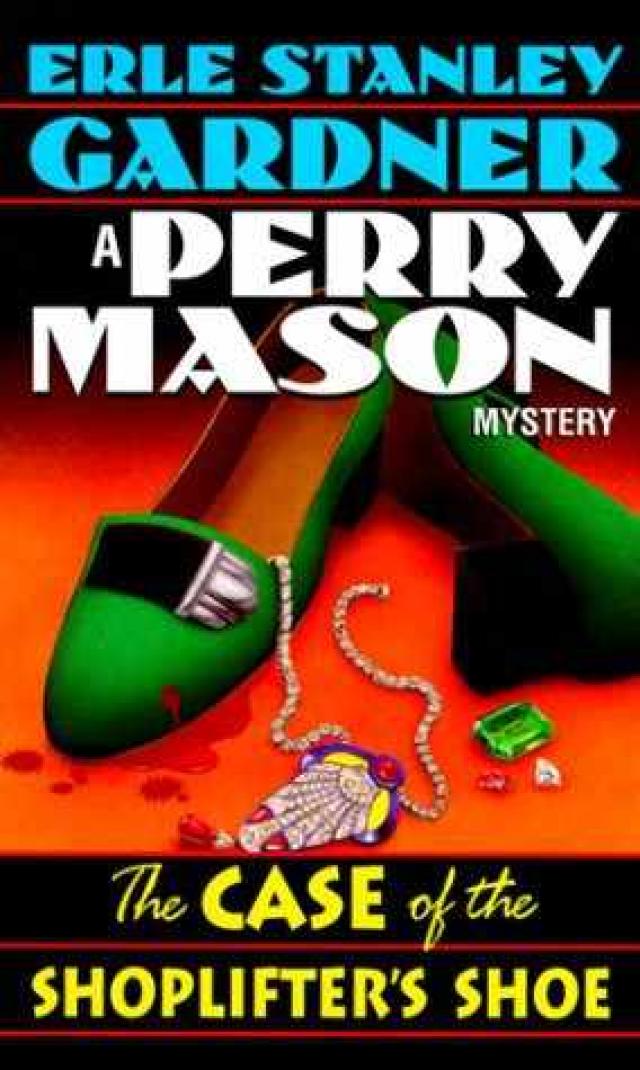
The Case of the Shoplifter's Shoe,
p.7


The man behind the desk stared straight ahead, with steady, expressionless eyes.
Mason laughed and said, “That hurt, didn’t it?”
Golding moistened his thin lips with the tip of his tongue. His eyes shifted uneasily to glance questioningly at the woman who sat at Mason’s side.
She said, in her full-toned, throaty voice, “All right, sweetheart, he’s got us.”
“He’s bluffing,” Golding said.
“He may be bluffing,” she retorted, “but he’s bluffing with the high hand.”
Mason, without taking his eyes from Golding, said over his shoulder, “Thanks.”
“Don’t thank me,” she told him. “Thank your luck. You’d better go out and play roulette. You’re getting the breaks tonight.”
Golding said, “All right, Mason, he came here. He said he wanted to see me. He came in and pulled that stuff about me having picked up some stones from George Trent. I told him he was nuts, that George Trent hadn’t been in here for two months. We argued for a while, and then he got up and went out.”
“That was all?” Mason asked.
“That was all.”
“That doesn’t coincide with the facts the way I have them,” Mason said.
“All right,” Golding told him, “suppose you tell your story.”
“Cullens,” Mason said, “found out that you had some stones that you’d picked up from Trent. He told you they didn’t belong to Trent. You had an argument about whether you could hold them if Trent didn’t have title to them. You had about six thousand tied up in them. Cullens offered to pay off half the indebtedness and take over the stones. You didn’t like that. So Cullens showed you you were in a spot because Trent didn’t own the stones. You didn’t want any lawsuits. You took the money and gave Cullens the stones. Cullens went out and someone bumped him off.”
“Where’d you get that pipe dream?” Golding asked.
“A little bird told me.”
Golding said, “They have open seasons on birds sometimes.”
“Do you make the game laws?”
“I might,” Golding said menacingly.
“Bill!” the woman exclaimed. “Shut up!”
Mason puffed at his cigarette. “Someone declared an open season on Cullens,” he said.
Golding started to say something. The woman screamed at him, “You shut up, Bill Golding. You talk too damn much!”
“Or not enough,” Mason said.
“Well, all he’s going to,” the woman insisted. “You’ve got our story—all of it.”
“That story,” Mason said, “doesn’t hold together.”
“Try and pull it apart,” Golding invited.
Mason said, “You were tipped off Cullens was killed. You decided it’d be fine if he hadn’t been here. You tipped off your employees. You didn’t figure you’d get such prompt action. When I came up and offered to have the homicide squad go through the customers in the place, you knew you were licked. So you decided to admit he’d been here, but swear that was all. You figure no one alive can contradict you.”
“That’s your story,” Golding said. “I’ve told mine and I’m sticking to it. You start pushing me around and I’ll make things hot for you.”
Mason laughed sarcastically and waved his hand in the general direction of the gambling room. “The way you’re organized,” he said, “you couldn’t make anything hot for anybody.”
The woman at Mason’s side leaned closer. “Why don’t you boys get along?” she asked.
“I’m willing to get along,” Mason said, “but I want the low-down.”
“All right, you’ve got it.”
“Were you here when Cullens was here?” Mason inquired, turning toward her.
“No.”
“Who was?”
“I don’t know. Was anyone else here, Billy?” she asked the man behind the desk.
His grin was triumphant. “No one,” he said, “just Cullens on that side of the desk and me on this.”
Mason got to his feet. “Okay,” he said casually, “if that’s the way you feel about it. Remember that you were the last person to see Cullens alive. If Cullens tried to get hard with you and make a squawk which would get you in trouble, there’s some chance you might have followed him and bumped him off.”
Golding’s face became distorted with rage. “If I bumped him off,” he said, “I did it with a six-shooter.”
“Meaning what?” Mason asked.
“Meaning there’d be five more …” The woman started for the desk, her eyes blazing.
Bill Golding’s face suddenly became an expressionless mask. The woman said thickly, “That’s all of it. It won’t do you any good to stick around. The party’s over.”
Mason said, “Rather nice hooch you serve out there, Golding.”
“It wouldn’t have been so good if I’d known who they were getting it for,” Golding snapped.
Mason said, “That line isn’t going to get you anywhere.”
The lawyer marched through the door, picked up Drake in the casino and went down the stairs, and out through the restaurant. “Now what?” Drake asked.
Mason said, “Cullens was here—they’re not talking. Call your office, Paul. Shoot two or three men down here. Sew this place up tight. I want Golding and the woman tailed when they leave, and I want the names of some of the customers who were up there, to use as witnesses.”
Drake said, “Hell, Perry, we can’t go busting into a place like that and ask the people who …”
“Watch the customers as they come out,” Mason said. “Follow them to their automobiles and get the license numbers.”
“They won’t talk,” the detective objected. “Once they get home, they’ll swear they never even heard of the joint.”
“Be your age, Paul,” the lawyer said impatiently. “Pick the prosperous guys who are with the flashy wrens about half their ages. Those birds will do anything to avoid publicity. You get them staked out and I’ll do the questioning. Let them tell me they never heard of the joint, and I’ll read ’em a riot act.”
Drake said, “Yes, I guess we could do that.”
“Well, get started,” Mason told him. “And, while you’re about it, tell your outfit to look up an Ione Bedford, who’s a friend of Austin Cullens. Get all the dope on her. Have one of your men tell Harry Diggers he’s representing an insurance company and get a written statement out of Diggers. Get an inventory of the stuff that was in that handbag Mrs. Breel was carrying.”
“Okay,” Drake said, “I’ll get started. I can get some operatives who know Bill Golding and Eva Tannis. That’ll release me so I can go back to the office and direct things from there.”
“I’ll watch the place while you telephone,” Mason told him. “Make it snappy.”
Drake nodded and walked to the corner, where he telephoned his office from a cigar store. When he returned, Mason said, “Okay, Paul, I’m on my way. Keep this place sewed up.”
Drake nodded, fumbled in his pocket for a cigarette and said, “It’s sewed, Perry.”
Chapter 6
Mason unlocked his car, started to get in, then stopped to stare in frowning concentration at the sidewalk. Abruptly he slammed the car door shut, and walked into an all-night restaurant where he found a telephone. He thumbed through the telephone directory, called a number and said, “I want to talk with Dr. Charles Gilford—tell him Perry Mason’s calling on a matter of the greatest importance.”
He heard steps receding from the telephone. A moment later, Dr. Gilford’s voice said, “Okay, Mason, what is it?”
Mason said, “A woman by the name of Sarah Breel, down at the ambulance receiving station at headquarters, broken leg, possible fracture of the skull, and internal injuries. She’s unconscious. The cops are laying for her. You know how they are. They don’t give a damn about the patient. All they want is information. They’ll start hammering questions at her as soon as she flickers an eyelid. Officially, I don’t appear as attorney, so I can’t enter into the picture. No one’s hired a private physician for her. I’m hiring you. You don’t need to tell anyone who’s paying the bill. Move in with a couple of special nurses. Move her, if she can be moved, to a private room in the best hospital in town. If she can’t be moved, see that she has the best accommodations money can buy. Keep nurses with her every minute of the time. Keep in touch with the nurses. The minute she becomes conscious, I want you on the job.”
“Any particular instructions?” Dr. Gifford asked, in a crisply professional voice.
“I don’t think I need to give any, do I?” Mason asked.
Dr. Gifford said, still in that swiftly efficient voice, “Without having seen her, Mason, I would say that she’s suffering from a nerve shock; that as soon as she regains consciousness, it will be imperative to keep her quiet. That she can’t be questioned for several days without seriously jeopardizing her chances of recovery: I’d want her kept absolutely quiet, with no visitors.”
Mason said, “I think you’re a hell of a good doctor. … If possible, get red-headed nurses.”
“Why the red-headed nurses?” Dr. Gifford asked.
“Oh, nothing,” Mason said, “only in case the dicks should start getting rough it’s always nice to have a red-headed nurse on the job. You can’t bully a red-head.”
“I know a couple who’ll do fine,” Dr. Gifford told him. “One of them’s a red-head, the other’s a brunette. They’re competent professionally, and you can’t bully them. You know, Mason, people who are suffering from severe concussions have to be kept very quiet.”
Mason said, “You’re what I’d call a damn good doctor,” and hung up.
He telephoned the Drake Detective Agency and asked for messages. The man at the telephone said, “Your secretary telephoned, Mr. Mason, and said she’d located the party you desired and was carrying out your instructions.”
Mason thanked him, hung up and drove directly to the loft building at 913 South Marsh Street, where George Trent had his office and shop. Mason rang for the janitor, whose surliness changed into smiling co-operation as Mason slipped a folded bill into the man’s palm.
“Trent?” he said. “Oh, yes. He has an office on the fifth floor. The niece went up about five minutes ago.”
“Virginia?” Mason asked.
“I think that’s her name. She’s a tall, thin girl.”
“I want to see her,” Mason said. “Let’s go.”
The janitor took him up in the elevator, stepped out into the corridor to indicate a lighted doorway. “That’s the office,” he said, “down there on the left.”
Mason thanked him and pounded his way down the corridor. He knocked on the door, and Virginia Trent said, “Who is it, please?”
“Mason,” he told her.
“Oh, just a minute, Mr. Mason.”
She threw back a bar and opened the door. Mason entered a room fitted up as an office, a small desk at one side of the room, filing cases, a stenographer’s desk and chair on the other. A door opened from the side of the room, another from the back. Virginia Trent was wearing a light tweed overcoat with deep side pockets. Her hands were encased in light weight tan kid gloves. A brown hat was pulled down low, to slant slightly over her right ear, balancing a bird wing of bright colors.
“What are you doing here?” she asked.
Mason watched her as she closed the door and slipped the bar into place. “Just dropped in to have a chat with you,” he said.
“What about?”
Mason looked around for a chair. She indicated the chair at the desk. Mason looked across to where her large dark brown purse reposed on the stenographer’s desk. “Been typing?” he asked.
“I just got here.”
“Where’ve you been?” Mason asked casually. “I’ve been trying to get you.”
“I went to a picture show,” she told him, “I wanted to get my mind off Aunt Sarah. You know, when you continually brood over anything, you lose your mental perspective. I think it’s better to go to a picture show and give your mind a rest. Don’t you ever do that when you’re working on a case, Mr. Mason?”
“No,” he said grinning, “I don’t dare to take the time for fear someone might steal a march on me. Was it a good show?”
“Pretty fair…. Mr. Mason, I want to ask you something.”
“Go ahead,” Mason told her.
“What’s a lie detector?” she asked.
Mason studied her and failed to find any expression in her eyes. “Why the question?” he asked.
“I wanted to know, that’s all.”
“Any particularly reason?”
“Well,” she said, “I’m interested from a psychological standpoint, that’s all.”
Mason said, “It’s really not much more than an instrument for taking blood pressure, the theory being that when a witness gets ready to lie, he sort of mentally braces himself, and that shows in a change of blood pressure, which, in turn, shows on a needle. Telling the truth is easy and effortless. Telling a lie involves mental effort.”
“Are they of any real value?” she asked.
“Yes,” Mason said, “their value, however, depends on the skill of the man who does the questioning. In other words, the machine registers what you might call a psychic change in the individual. The skill of the questioner accentuates those psychic changes and makes them significant.”
She looked at him steadily and said, “Mr. Mason, do you know something? I believe I could beat the lie detector.”
“Why should you?” he asked.
“Just as a psychological experiment,” she said. “I’d like to try.”
“What,” Mason asked, “would you like to lie about?”
“Oh, anything.”
“For instance, about what you were doing here?”
Her eyes widened. “Why,” she said, “I came up here to write a few personal letters. The typewriter was here and I thought I’d tap out a couple of letters to my friends.”
“How long have you been here?”
“I don’t know, five minutes or ten minutes.”
“But you hadn’t started writing when I knocked?”
“No.”
“What were you doing?”
She laughed and said, “What is this, Mr. Mason, some sort of a third-degree?”
“Were you,” he asked, “thinking about beating the lie detector?”
“Don’t be silly, Mr. Mason. I just asked you that because I’m interested in the psychological significance…. You said you wanted to see me, Mr. Mason. What did you want to see me about?”
“I wanted to tell you about your aunt,” he said, watching her narrowly.
“About Aunt Sarah?” He nodded.
“Oh, dear,” she said, “I knew it. I had the most awful premonition all the time I was in the show. I felt certain that it had happened.”
“That what had happened?” Mason asked.
“That she’d been arrested, of course.”
“For what?”
“For shoplifting,” she said, “or … or about the diamonds.”
Mason said, “I’d like to find out something about the Bedford diamonds. Can you give me a description of them?”
“Yes,” she said, “Uncle George had some notes…. But tell me about Aunt Sarah. What happened? Is she arrested?”
“She was hit by an automobile,” Mason said.
“An automobile!” the girl exclaimed.
Mason nodded. “Out on St. Rupert Boulevard,” he said, “near Ninety-First Street. Does that mean anything to you?”
“Way out there?” the girl asked. “Why, what would Aunt Sarah be doing out there?”
“That’s where Cullens lives, isn’t it?” Mason asked.
She knitted her forehead in thought. “Yes, I guess it is. Wait a minute, I have his address here in the files, Mr. Mason, and …”
“You don’t need to look at it,” Mason told her. “Cullens lives out there. That is, he did live out there.”
“Has he moved?” she asked.
“No,” Mason said, “he was killed.”
“Killed!”
“Yes, shot in the left side with a revolver.”
“What are you leading up to, Mr. Mason? Please tell me.”
Mason said, “Your aunt stepped out on the street right in front of an automobile. The automobile hit her and broke her leg and fractured her skull. There are possible internal injuries. There was blood on her left shoe. That blood didn’t come from any injuries she’d received. Moreover, there was blood on the sole of the shoe, indicating that she’d …” He broke off as the girl swung half around and toppled into a chair, her face white, her lips a pale pink. “Take it easy,” Mason cautioned. She tried to smile. “Any whiskey in this place?” the lawyer asked.
She indicated the desk. Mason jerked open the upper right-hand drawer, and found a bottle half filled with whiskey. He unscrewed the stopper and handed it to Virginia Trent. She drank awkwardly from the bottle, trying to suck the liquid from the container, and spilling some down the front of her dress as she removed the bottle from her lips, making a wry grimace.
Mason said, “You’ll have to learn to drink out of a bottle. Let some air into it. Like this.”
She watched him and smiled wanly. “You do it very expertly,” she said. “Go on, Mr. Mason, I can take it. Tell me the rest of it.”
“There isn’t any rest of it,” Mason said “Your aunt is unconscious. They found a gun, a bunch of diamonds, some silk stockings which had been stolen from another department store, and some knitting in your aunt’s bag.”
“Will Aunty—will she … recover?”
“I think so,” Mason said. “I have the best doctor in the city on the job. I’ve taken it on myself to order special nurses.” Her eyes thanked him.
“Now then,” Mason said, “there were five diamonds in your aunt’s handbag. They were wrapped in tissue paper. They looked to me as though they might be the Bedford diamonds.”
“There were five in that collection,” she said. “Where … where did Aunt Sarah …”
“That,” Mason said, “is an open question. Cullens had a chamois-skin belt next to his skin. Someone had ripped that belt open and probably taken the contents.”