The case of the shoplift.., p.3
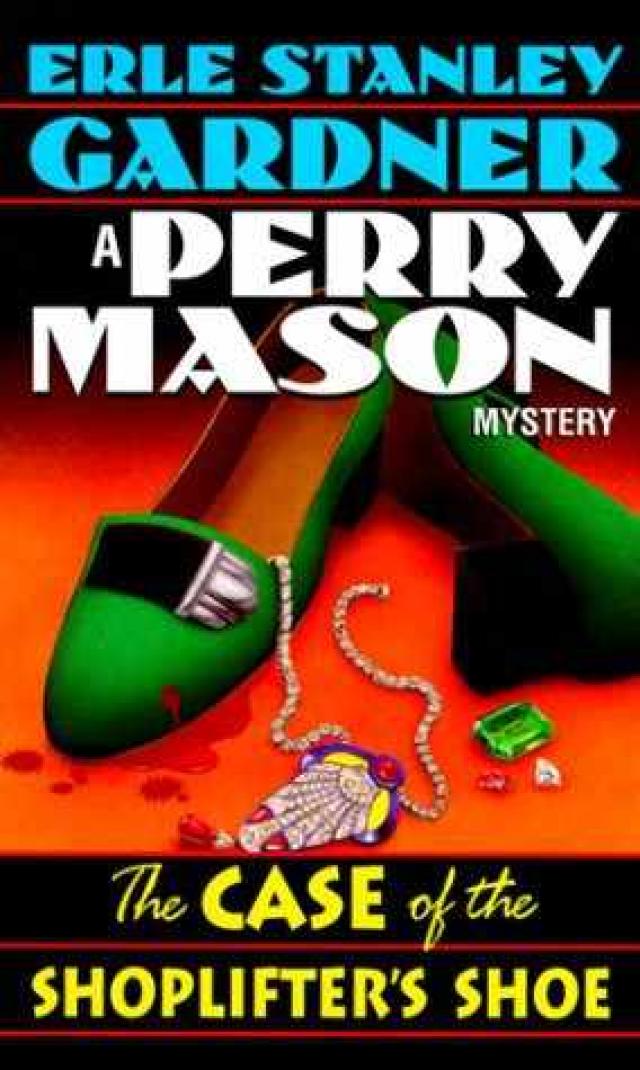
The Case of the Shoplifter's Shoe,
p.3


“Saturday. Mr. Cullens brought them in. Mrs. Bedford was to come in later on in the week.”
“When did you first realize they were gone?”
“About half an hour ago. I decided to come to you at once.”
“Go ahead,” Mason told her.
“After I missed Aunt Sarah, I became completely exasperated. I went back to Uncle George’s office, thinking she might be there. The foreman showed me a note Uncle George had left, giving directions about working out sketches and designs for the Bedford diamonds. But … well, the Bedford diamonds weren’t there.”
“The vault was open?”
“Yes. Aunt Sarah had opened it this morning.”
“How about the men in the shop? Can you trust them?”
“I think so, yes.”
“And what makes you think your Aunt Sarah has the diamonds?”
“Well … well, you saw what happened this noon. And when a person once gets a complex … well, I don’t know whether you’ve studied much about kleptomania, Mr. Mason, but it’s most devasting. Kleptomaniacs simply cannot resist the impulse to take things which don’t belong to them…. Well, anyway, Aunt Sarah was up at the office on Sunday, getting things lined up for this morning. She came back to the house yesterday afternoon, and said she’d been seized with a very peculiar dizzy spell while she was at the office; that her mind had gone completely blank for a period of what must have been half an hour; that she didn’t have the faintest recollection of what she was doing. She thought it must have been her heart. I wanted her to call a doctor. She wouldn’t do it. She said that when she regained consciousness she had the most peculiar feeling of having done something she shouldn’t. She felt as though she’d killed someone, or something of that sort.”
“Did you get a doctor?” Mason asked.
“No, she went to her room and slept for a couple of hours, and then said she felt better. At dinner, she seemed to be very much her normal self.”
“Well,” Mason said, “I don’t know just what you want me to do. As I see it, you’d better find your aunt and take some steps to locate your Uncle George. His haunts should be fairly well defined. A man who goes on these periodical drinking sprees usually …”
“But,” she said, “Mrs. Bedford wants her stones back.”
“Since when?” Mason asked.
“She rang up at noon, while I was out, and said that she’d changed her mind; that she didn’t want anything done to her stones; that she had a prospective buyer who was interested in antique jewelry, and she was going to offer the stones and settings to this buyer.”
“Did you talk with Mrs. Bedford?” Mason asked.
“No. The shop foreman did.”
“What did he tell her?”
“Told her Uncle George was out at the time, but he’d have him call as soon as he came in.”
“Well,” Mason said, “you might get in touch with police headquarters and find out if your aunt has suffered any relapses. That spell may well have been her heart. She may have had another and been taken to the emergency hospital. Or …” He broke off as the door from the outer office opened, and the girl from the information desk tiptoed quietly into the room, to stand just within the doorway. “What is it?” Mason asked.
“A Mr. Cullens is in the outer office,” she said. “He seems to be very much excited and says he must see Miss Trent immediately.”
Virginia Trent gave an exclamation of dismay. “You’ll have to hide me somewhere,” she said to Mason, and then to the girl, “Tell him I’m not here. Tell him I’ve left. Tell him …”
“Tell him nothing of the sort,” Mason interrupted. “Let’s get this thing straight. How did he know you were here, Miss Trent?”
“I left word at the office that if Aunty came in she was to call me here. I guess Mr. Cullens went to the office and the foreman told him.”
“And Cullens was the one who brought your uncle the Bedford business?” She nodded. “You’ve got to see him sooner or later,” Mason told her. “You’d better make it sooner. After all, he’s entitled to some sort of a break. I presume he vouched for your uncle to Mrs. Bedford.”
“Yes,” she said dubiously, “I guess he must have.”
Mason nodded to the girl who stood in the doorway. “Tell Mr. Cullens he can come in,” he instructed.
Virginia Trent’s hands became nervous on her lap. She said uneasily, “Oh, I can’t face him! I don’t know what to say. I just can’t think of the proper thing to tell him.”
“What’s wrong with telling him the truth?” Mason asked.
“But I don’t know the truth,” she said.
“Well, why not tell him that?”
“Because … oh, I don’t know. I just can’t bear to …”
The door from the outer office was pushed open by a beefy individual in the late forties, who ignored Mason entirely, to stride across to where Virginia Trent was seated in the big leather chair. “What the devil’s all the run-around, Virgie?” he asked.
She avoided his eyes. “I don’t know what you’re talking about.”
“Where’s your aunt?”
“I don’t know. She’s uptown somewhere. I think she’s shopping.”
Cullens turned briefly to Mason, surveying the lawyer with swift appraisal. Then his incisive eyes swung back to Virginia Trent. A huge diamond on his left hand glittered in a coruscating arc as his hand grasped her shoulder. “Come on, Virgie,” he said, “out with it. What the devil’s the idea of running up to see a lawyer?”
She said in a thin, small voice, “I wanted to talk with him about Aunt Sarah.”
“And what about Sarah?”
“She’s been shoplifting.”
Cullens drew back and laughed. It was a deep-chested, jovial, booming laugh which seemed somehow to clarify the atmosphere. He turned, then, to Perry Mason, extended his hand and said, “You’re Mason. I’m Cullens. I’m glad to know you. Sorry to butt in this way, but it’s important.” He turned back to Virginia Trent. “Now, Virgie, come down to earth and give me the low-down. What’s happened to Mrs. Bedford’s diamonds?”
“I don’t know.”
“Well, who does?”
“Aunty, I guess.”
“All right, where is she?”
“I tell you, she’s been shoplifting.”
“More power to her,” Cullens said. “She’d make a grand shoplifter. I suppose George is on one of his bats?”
She nodded. Cullens said, “Mrs. Bedford telephoned me. She said she wanted her diamonds back. She’d tried to reach George on the telephone, and didn’t like the way she’d been talked to. She thought someone was giving her a run-around, so she called me. I knew right away what had happened. But I also knew that George would mail in the keys to his car and that your aunt would get into the vault and carry on the business. Now then, Ione Bedford has a customer who’s in the market for her stones. Naturally, she doesn’t want to lose the sale. She wants the stones and needs them now.”
Virginia Trent’s mouth became a firm, straight line. She raised her eyes defiantly and said, “I tell you, Aunt Sarah has been shoplifting. You laugh if you want to, but that happens to be the truth. If you want to know, you can ask Mr. Mason. While she’s had one of her spells, she’s taken Mrs. Bedford’s diamonds and hidden them.”
A perplexed frown appeared on Cullens’ forehead. “You’re not kidding me?” he asked, and then turned to Mason. At what he saw in the lawyer’s eyes, he said slowly, “Well, I’ll be damned!” He drew up a chair, selected a cigar from his waistcoat pocket, clipped off the end with a thin, gold knife and said to Virginia, “Tell me about it.”
“There’s nothing to tell,” she said. “Aunt Sarah has been laboring under a terrific emotional strain. Also, I think she’s suffering from a fixation. However, we don’t need to go into that now. There are periods during which she has a complete lapse of memory. During those times she becomes a kleptomaniac, taking anything she can get her hands on. She was caught in a department store this noon, and I had to check out nearly every penny in my bank to keep her from going to jail.”
Cullens lit his cigar, studied the flaming match for a moment in thoughtful contemplation, then shook it out, and said, “When was the first time, Virgie?”
“This noon.”
“Were those the first symptoms?”
“Well, she went up to the office yesterday and had a dizzy spell and couldn’t remember anything which had happened for about half an hour. When she came to, she had a peculiar feeling of guilt, as though she’d murdered someone. I think that was when she took the Bedford gems and concealed them somewhere. She …”
Cullens’ diamond glittered as he raised his hand to take the cigar from his mouth. “Oh, bosh!” he said, “forget it. She’s no shoplifter. She’s trying to cover up for your uncle.”
“How do you mean?”
“When she went to the office yesterday,” Cullens said, “she found the Bedford diamonds were gone. Just between you and me, that’s the thing which has always worried her—that some day when your uncle starts on one of these benders he’ll forget that he has some stones in his pocket. Your aunt pulled this shoplifting stunt to fool you, and to fool me if it became necessary. She’s out looking for George right now.”
“I don’t think Aunty would do that,” Virginia Trent said.
Cullens said shortly, “You don’t really think she’d turn shoplifter, do you?”
“Well … well, I have the evidence of my own eyes.”
Cullens said, “All right. Let’s not argue about it. Let’s tell Ione Bedford what she’s up against.”
“Oh, we mustn’t tell her! No matter what happens, we must keep her from finding out …”
Cullens ignored her, to turn to the lawyer. “I’m sorry,” he said, “to have to handle things this way, Mr. Mason, but I think I’d better stay right here for the moment. This thing is important. It means quite a good deal to me. Those stones were worth twenty-five to thirty thousand dollars. My car’s down in front, a green convertible with the top down. Mrs. Bedford is waiting in the car. I wonder if it would be possible for you to have one of your girls …”
Mason turned to Della Street. “Go on down, Della,” he said. “Find Mrs. Bedford and bring her up.”
Virginia Trent said very firmly, “I don’t approve of this in the least. I don’t think Aunt Sarah would want it handled this way.”
“Well, I want it handled this way,” Cullens said, “and after all, I’m the one chiefly concerned. Remember, I’m the one who brought the stones in to your Uncle George in the first place.” He turned to Perry Mason. “If it’s a fair question, Mr. Mason, where do you stand in this?”
“I don’t stand,” Mason told him, grinning. “I’m sitting on the sidelines. It happens that I was present when Mrs. Breel staged what was apparently her first public demonstration of shoplifting. It also happens that it was a most edifying experience.”
Cullens grinned. “It would be. What happened?”
“Well,” Mason said reminiscently, “she carried it off remarkably well. And after that, she and her niece were good enough to join me at lunch. I hardly expected to hear any more of the matter, until Miss Trent came in to consult me. I haven’t, as yet, found out exactly what it is she wants me to do, but I felt you were entitled to an explanation. As nearly as I can tell, you’re getting it.”
Cullens turned to Virginia Trent. There was a flash of dislike in his eyes. “I suppose you wanted to duck out and leave me holding the sack, didn’t you?”
“Most certainly not!”
He laughed unpleasantly. “And it was Mason who insisted you should see me, wasn’t it?” She said nothing. “What did you want Mason to do?” he asked.
“I wanted him to locate Aunt Sarah for me, and to … well, to figure some way of stalling things along until we could find out where we stand.”
“We can find out where we stand without stalling things along,” Cullens said.
“That’s what you think,” she told him. “You’re saving your own bacon at the expense of Uncle George’s reputation. Mrs. Bedford will claim he’s stolen the stones and … and it’ll be an awful mess.”
Cullens said, “You don’t know Ione Bedford. She’s a good scout. She can take it. What we’re interested in is finding those stones.”
“Well, I don’t know just how you think you’re going to go about it,” Virginia Trent said.
“Neither do I,” Cullens said affably—“yet.”
Della Street’s rapid heels sounded in the corridor. She unlatched the door of Mason’s private office, and escorted a woman in the thirties through the doorway. “This,” she announced, “is Mrs. Bedford.”
“Come on in, Ione,” Cullens said, without getting up. “Have a chair and make yourself at home. This is Perry Mason, the lawyer. Your diamonds have gone bye-bye.”
For a moment, Mrs. Bedford stood in the doorway, surveying the occupants of the room with dark, languid eyes. Slightly heavier than Della Street, she possessed an attractive figure, which showed to advantage through a rust-colored frilled blouse and gray tailored suit. Her hat matched her blouse, as did her slippers, whose high heels served to emphasize her short foot with its high instep. She crossed over toward a chair, paused for a moment as she saw Mason’s open cigarette case, raised her eyebrows in a gesture of silent interrogation, and, at his nod, helped herself to a cigarette. She leaned forward for his light, then went over to the chair and said, “Well, now that’s something. Tell me about it, Aussie.”
“I can’t tell you much until I get the details,” Cullens said. “I’m getting them now—or trying to. George Trent is just what I told you, one of the best gem men in the country. His work is dependable and reasonable. He’s thoroughly honest. He has one vice, and only one vice. He’s a periodical drunkard. When he gets drunk, he gambles, but he does even that methodically. He puts all of the gems in the vault, leaves himself a limited amount of money in his pocket, mails in his car keys, and then goes out and gets drunk and gambles. When he loses his money, so he can’t buy any more liquor, he sobers up, comes home and goes back to work. This time, he seems to have inadvertently taken your stones with him. I gave them to him Saturday afternoon. He started his drunk Saturday night. That, my dear, is the bad news in a nutshell.”
She inhaled a deep drag from the cigarette, exhaled the smoke in twin streams through appreciative, distented nostrils. “Why the lawyer?” she asked, jerking her head toward Perry Mason.
Cullens laughed. “Virginia Trent, over here—George’s niece—thinks that her Aunt Sarah has become suddenly seized with kleptomania. She thinks the aunt took the stones while her mind was a blank and did something with them.”
“What’s the matter?” Ione Bedford asked the neice in a rich, throaty voice. “Been reading Grimm’s fairy tales, dearie?” Virginia Trent drew herself up indignantly. Her mouth tightened into a formless gash.
“Not fairy tales,” Cullens answered easily, “psychology—fixations, complexes and all that stuff. The girl studies, if you know what I mean—Freud, sex, crime …”
“It happens,” Virginia Trent said acidly, “that my aunt has surrendered in public and in the presence of witnesses to these impulses of kleptomania. She was caught shoplifting less than four hours ago.”
Ione Bedford raised inquiring eyebrows in the direction of Austin Cullens. Mason noted that it was evidently an habitual gesture with her, noticed also that they were good-looking eyebrows, and that the mannerism served to direct attention to eyes which were undoubtedly beautiful. Nor did Ione Bedford give any indication that she failed to realize the beauty of her eyes, or the graceful lines of the trim leg which her short skirt disclosed to advantage.
Cullens said, “That’s just a stall, Ione. If you saw Sarah Breel for just ten seconds, you’d realize that it’s a stall. When the foreman started checking over the work orders this morning, he found your gems were missing. Sarah knew at once George had them. So she started the old cover up—bless her soul! It’s meant well, but it isn’t going to get us any place.”
A huge emerald on Mrs. Bedford’s hand showed to advantage as she flicked ashes from the end of her cigarette with a graceful little finger. “Just what,” she asked, “is going to get us any place?”
Cullens said, “I’m going to get out and start looking for George Trent. He’s in a gambling house somewhere, beautifully plastered. Your stones are wrapped up in tissue paper and carried in a chamois-skin belt next to his skin, and he’s completely forgotten that he has them. But, if he gets drunk enough and desperate enough, he may hock them with some gambler.” Cullens turned to Mason and said, “How about it, Mr. Mason, can we claim embezzlement and get them back if he does?”
“Probably not without a lawsuit,” Mason said. “It will depend somewhat on circumstances, somewhat on the manner in which the stones were given to him, and by whom.”
“I gave him the stones,” Cullen said, “but we don’t want any lawsuits, do we, Ione?”
She shook her head and flashed Mason a smile. “No one makes any money out of lawsuits,” she said, “except lawyers.”
Mason matched her grin, “And they don’t make half enough,” he told her.
Cullens ignored the byplay. “Okay, Ione, what do we do?”
She studied the tip of her cigarette meditatively. “Suppose he’s hocked them,” she said musingly. “How much do you s’pose he’d have been able to raise on them, Aussie?”
“Not over three or four thousand at the most,” Cullens said. “Being drunk, wanting the money for gambling, and with the strong possibility of a kick-back, it’s a cinch no gambler would take a chance for more than a fifth of their clear market value.”
She turned to Perry Mason. “How much would a lawsuit cost?” she asked.
Mason grinned. “Is three or four thousand, at the most, the answer you’re waiting for?” he asked.
“Yes,” she said, and once more the emerald flashed as her hand made a gesture of dismissal. “That settles it, Aussie. Find Trent. If he has the stones, get them back. If he hasn’t, find out where he’s hocked them, and pay off the loan. That’s cheaper than a lawsuit—and faster.”