The case of the shoplift.., p.9
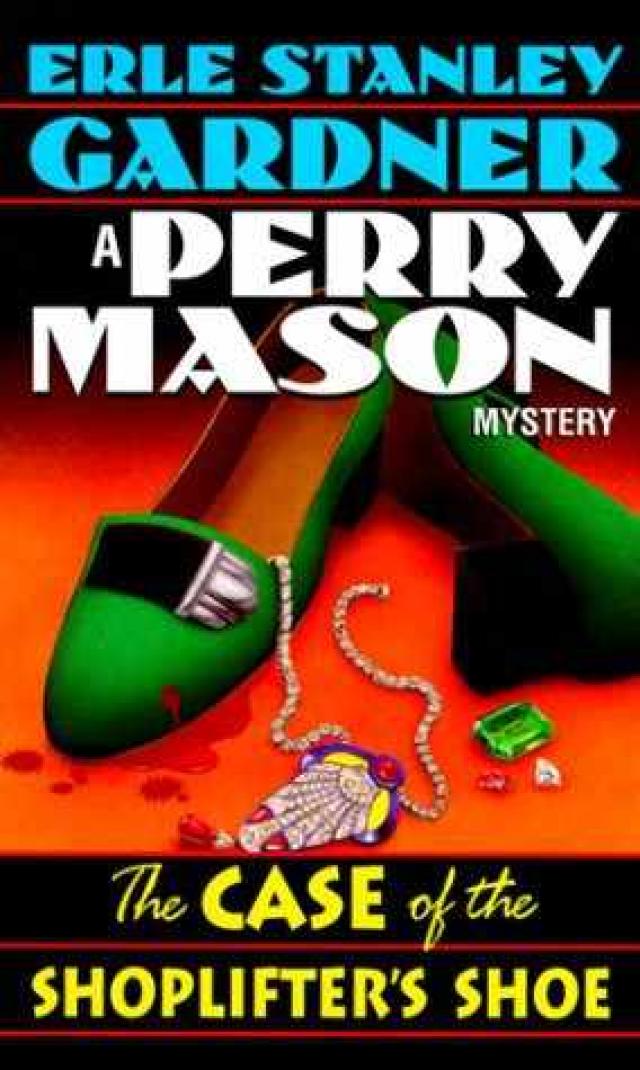
The Case of the Shoplifter's Shoe,
p.9


The waiter gravely slid the check over in front of Perry Mason. Mason grinned, pulled his billfold from his pocket, left a twenty-dollar bill on top of the check, looked at the amount of the check again and said to the waiter, “The change will just about make up your tip.”
The waiter bowed thanks. Ione Bedford said, “Where’re we going?”
“Down to the police station,” Mason said.
“The police station!”
“Uh-huh. There are some diamonds down there I want you to identify.”
“My diamonds?”
“I think so…. Just a minute, I have to put in a phone call first.”
“Well, I can use a little powder,” Mrs. Bedford told him, “and by the time we get our coats and our noses powdered, you should be finished with your telephoning. Come on, Della, and give me moral support.”
Mason called Drake’s office. “Now listen, Paul,” he said, “this is important. Ione Bedford, Della Street and I are going down to police headquarters. I’m going to try to get a look at those diamonds. Then I’m going to make a few comments and turn Mrs. Bedford loose. I want to know where she goes and what she does after she leaves headquarters. I want you to have men there who know me and know Della. They’ll see us go in and that will put the finger on Mrs. Bedford. She may go out alone.”
“Okay,” Drake said, “I’ll have the men on the job.”
Mason hung up, loitered around the checking counter until the girls emerged from the restroom. He helped them on with their coats, tipped the attendant, and led the way toward his car. “What makes you think they’re my diamonds?” Mrs. Bedford asked.
“I don’t,” Mason said. “I just want you to look at them.”
“Where were they discovered, and how do they happen to be at police headquarters?”
“Mrs. Breel,” Mason said, “was hit by a motorist. She was taken to the emergency hospital. Among other things which were found in her bag, were these diamonds, done up in paper.”
“But they couldn’t have been my diamonds,” Mrs. Bedford said, “because Aussie was getting those diamonds from The Golden Platter.”
“Did he,” Mason asked casually, “telephone you to say he had the diamonds?”
“Not after that first time. He said he’d located them, that they’d been hocked for six thousand, and he could get them for three. I told him to pay the three thousand.”
Mason said, “You’ll pardon me, Mrs. Bedford, if I seem to hold out on you, but there’s one angle of this case that I’d prefer not to comment on until after you’ve seen the diamonds.”
She nudged him playfully and said, “Go on, Big Boy, be mysterious. I like it.”
Della Street said, “You should know, Chief, that you mustn’t be so serious on my birthday. The trouble with you is you’re cold sober.”
Mason glanced surreptitiously at his wrist watch. “Well,” he said, “it’s not an incurable disease.”
Della Street surveyed him with exaggerated gravity. “Yes,” she said, “in your case it is. You’re working. You might hoist a drink or two, but it would run off your back like water off a duck’s stomach.” Ione Bedford laughed gleefully. Della Street turned on her reproachfully. “I didn’t say that accidentally,” she said. “I said it on purpose. It was a wisecrack.”
“I know it, dearie. That’s why I laughed.”
Della Street said, “No, one woman doesn’t laugh that way at another woman’s wisecracks—not when there’s a man in the party. She laughs courteously and politely. You didn’t laugh politely. You thought I was trying to say that his drinks ran off his back…. Oh, skip it. It isn’t important. Who wants to waste drinks on a duck’s back?”
Ione Bedford said to Mason, “Your secretary is younger than I thought she was.”
“Indeed,” Mason said.
Della Street laughed. “What she’s getting at is that I’m too inexperienced in holding my birthdays down to have seen many of them.”
Ine Bedford said, “After all, my dear, you’ve only had five or six highballs.”
Della Street let her eyes get large and round, as she looked up at Perry Mason. “Imagine,” she said, “being so calloused that one can use the word ‘only’ in connection with five or six highballs.”
Mason said, “Well, it sounds as though it had been a perfectly gorgeous birthday.”
“Don’t use the past tense,” Ione told him. “Her birthday isn’t over until midnight. And now that you’ve put in an appearance, we’re filled with new ideas for celebrating…. That reminds me, I have to put in a call myself. I’ll only be a minute.”
She made a dive for the telephone booth, and was careful to pull the door tightly shut. Mason said to Della Street, “Have any idea whom she’s calling, Della?”
“No.”
“What’s the idea of the party?” Mason asked.
She grinned and said, “The woman was plying me with drinks, and trying to get me to talk. I didn’t know how long it’d be before you showed up, so I pretended I was feeling the effects.”
“How much of it,” Mason asked, “is pretense?”
She gave the matter the benefit of frowning consideration, said, “About fifty percent of it is genuine, Chief,” then hiccoughed and said, “Well, perhaps you’d better make it seventy-five percent,” and laughed.
Ione Bedford emerged from the telephone booth, sailed up to Mason, linked her arm through his and said, “Okay, let’s go places. Can we get a drink at police headquarters?”
“That,” he told her, “remains to be seen.” He led the way to his car and drove to police headquarters, while the two girls, in high spirits, made hilarious comment on the cars they passed, the electric signs, and such other matters as came to their attention. At police headquarters, the property clerk regarded Mason with frowning suspicion. Mason indicated Ione Bedford. “Mrs. Bedford,” he said, “left some diamonds with Austin Cullens to give to George Trent. There’s some possibility that the diamonds found in Mrs. Breel’s handbag may be the Bedford diamonds.”
“So what?” the man behind the cage asked.
“I wanted to see if Mrs. Bedford could identify them,” Mason said.
The man said, “Just a minute,” picked up a telephone which had a device clamped on the mouthpiece making his conversation inaudible. He talked for some two or three minutes, then turned from the phone to Mason. “What’d you say her name was?”
“Mrs. Bedford, Ione Bedford.”
The man returned the telephone to his lips, there followed additional conversation, then he nodded, hung up the telephone, and moved over to the vault. He brought out Mrs. Breel’s bag, took the tissue-covered jewelry from the bottom, placed the pieces on the counter, and unwrapped the tissue. Mrs. Bedford, her hilarity completely dissipated, watched the paper coverings being removed with eyes which were narrowed in scrutiny. “No,” she said slowly, as the diamonds came to view, “those aren’t mine.”
“You’re certain?” Mason asked.
She nodded, then turned to face him. “I never saw them before in my life,” she said. “They’re somewhat similar to my pieces, but they’re not mine.”
“That’s all,” Mason told her. “Thanks.”
The property clerk carefully rewrapped each of the diamonds. “How did it happen Mrs. Breel was carrying those stones around in her handbag?” Mrs. Bedford asked. “They’re worth money.”
“That,” Mason told her, “is something we don’t know. Mrs. Breel stepped out from the curb, apparently right in front of an automobile. It was out on St. Rupert Boulevard between Ninety-First and Ninety-Second Streets and …”
“What was she doing out there?” Ione Bedford interrupted, her voice suddenly hard.
“I don’t know,” Mason said. “No one knows. Of course, with the finding of Cullens’ body, the police think …”
“With the finding of what?”
Mason looked at her in surprise. “Why, don’t you know?” he said.
“Know what?” she inquired, seeming to bite the ends off the words as she uttered them.
Mason said, “Oh, I’m so sorry. I thought you knew.”
“Go on, out with it.”
“Austin Cullens was shot sometime this evening. The police found his body lying on the living room floor of his house.”
Ione Bedford stood rigidly motionless. Della Street said to Perry Mason, “Why, Chief, why didn’t you tell me?”
“I thought I had told you.” She shook her head. “Things have been so frightfully mixed up tonight,” Mason apologized, “that I haven’t been certain … I’m very sorry if this comes as a shock to you, Mrs. Bedford. You’d known him a long time, I believe?”
She suddenly turned to Della Street. There was cold suspicion in her eyes. “All right. You two go ahead and celebrate Della Street’s birthday. I’m finished.”
“Is there,” Mason said, “some place I can take you? Remember, I have a car.”
“No,” she said, striding toward the door.
As the door slammed shut, Della Street said reproachfully, “After all, Chief, that was cruel. She may have cared for him a lot.”
“That,” Mason said, “was exactly what I wanted to find out.”
Chapter 8
Mason, freshly shaved and seeming as bouyant as a new tennis ball, deftly scaled his hat over the curved brass hook on the rack, walked over to his desk, picked up the file of important correspondence which Della Street had place on his blotter, and deposited it on the far corner of the desk. Della Street opened the door of her office, grinned a greeting and said, “Hi, Chief. What’s new?”
“How are the birthdays?” he asked.
“Well,” she said, “I’ve recovered all right, but don’t give me any more.”
He laughed. “After all, it was just a fake birthday, Della. You really aren’t a year older, you know.”
“Well,” she observed dubiously, “I feel a year older.”
“Whose suggestion was the birthday?” he asked.
“The Green Room seemed to be the only thing Mrs. Bedford was interested in,” Della said, “and naturally, I had to have some excuse to put on the party.”
“Some party,” Mason told her. “How about the sheiks?”
“What sheiks?”
“The group that flapped around the table, dancing and …”
“Oh,” she said, “you mean the table lizards. I won’t hear from them.”
“How about it?” he asked, amused. “Did they all ask for Ione Bedford’s telephone number and none for yours?”
“Don’t be silly,” she told him.
“And you mean to say you refused to give them your number?”
She smiled reminiscently. “I told them,” she said, “that my name was Virginia Trent, and gave them her number. It should be a good break for the girl.”
Mason laughed. “Paul Drake,” she went on, “wants to see you as soon as you come in.”
“Give him a ring,” Mason told her. “What’s in the papers? Anything?”
“Oh, a lot of stuff” she said, “and Drake seems to be bursting with information, I’ll give him a buzz.”
She entered her office, and Mason picked up the newspapers, to skim through them. A few moments later, Della Street closed the office to stand by the exit door which opened into the corridor. When she heard Paul Drake’s steps outside, she opened the door, and, making a mock salute, stood at attention. “Hello, Della,” the detective said. “ ’Lo, Perry.”
Mason indicated a chair. “What’s new, Paul?”
The detective sat down in the big leather chair, and turned around, draping his legs over one of its arms. “Lots of things,” he said, lighting a cigarette.
“Well,” Mason told him, “begin in the middle and work both ways.”
“On the gambling business,” Drake told him, “I have a couple of live ones spotted, a contractor about fifty-five who was there with a girl who couldn’t have been over thirty and looked twenty. Then there was a bank executive with a fluffy little blonde. Either of those two should be just what we want.”
“How about Ione Bedford?” Mason asked. “Did you follow her?”
“I’ll say.”
“Where?”
“When she left the property room in the jail,” Drake said, opening a notebook and consulting it, “she was in a hurry to go places. She ran over to the corner to flag a cab, didn’t have any luck, and walked down the street a couple of blocks to the Spring Hotel. There’s a taxi stand there. She had the taxi driver crowding signal lights and cutting corners until she came to the Milpas Apartments on Canyon Drive. She went into apartment three fourteen, which is rented by a Pete Chennery. Apparently she’s Mrs. Chennery.”
“Why, her apartment’s at the Bixel Arms on Madison Avenue,” Della Street said, “under her own name. The name isn’t listed in the telephone book because the phone was connected too late to be put in, but it’s under her name, and you can get it by calling information.”
Drake nodded. “How do you figure she’s Mrs. Pete Chennery at the Milpas Apartments?” Mason asked.
“The boys did a little snooping around,” Drake told him.
“Where is she now?”
“At last reports, still at the Milpas.”
“Did your men go through her apartment at the Bixel Arms?”
“We got in,” Drake said, “but were crowded for time. You met her out at the Green Room, took her down to headquarters, and she didn’t stay long. When she left, we figured she might be headed for her apartment, so I flashed the men on the job the signal to get out. They made a pretty good job of it, though. No letters, no correspondence, no checkbook. Nothing personal, except what you’d expect—tooth brushes, cosmetics, clothes, and a couple of hundred engraved visiting cards, together with the copper plate.”
“How about Chennery, was he home when she got there?”
“Apparently not. The apartment was dark.”
Mason said, “I’d like to know more about Chennery, Paul. I want a description. I’d particularly like to find out if there’s any chance Chennery was also known as Austin Cullens.”
“I’m sending some more men out there,” Drake said. “I’m going to pick up everything we can without making her suspicious. You don’t want her to know she’s being tagged, do you?”
“No,” Mason said. “She mustn’t …”
His desk phone rang and Della Street picked up the receiver, listened a minute, turned to Mason and said, “Dr. Gifford.”
Mason took the telephone. Dr. Gifford, speaking with close-clipped, professional rapidity, said, “Try and get this all at once, Mason. I won’t have an opportunity to repeat. Mrs. Breel is fully conscious. Actually she was conscious but sleeping most of the night. She had a concussion. No fracture, no internal injuries, the fracture in the right leg has been reduced, the leg’s in a cast, she’s been placed under arrest, with an officer on guard at the door of the room, no one is allowed to visit her. She refuses to make any statement except in the presence of her attorney, says you’re her lawyer, Sergeant Holcomb is on his way over here. It might be a good plan for you to come down. She’s in six twenty.”
“You’re at the hospital now?” Mason asked.
“Yes.”
“What’s she under arrest for?”
“Charged with the murder of Austin Cullens.”
“She hasn’t made any statement, not even to the nurses?”
“Not a cheep,” Dr. Gifford said. “I’m sneaking this call through to you. Keep it dark. Good-by.”
Mason dropped the receiver into place, strode across the office and grabbed his hat. “Sarah Breel’s recovered consciousness,” he said. “So far, she isn’t talking. They’ve charged her with first-degree murder.”
Drake said, “That means just one thing, Perry.”
“What?” Mason asked.
“That the ballistics department has tested the bullet which killed Cullens with the bullets found from the gun in Mrs. Breel’s bag and find they’re the same.”
“I’m not so sure that gun actually was in her bag,” Mason said.
“Diggers says there was a gun at the scene of the accident,” Drake said. “He evidently thought the bag might contain something valuable, because he made the ambulance men inventory the contents.”
“Anyone see that accident?” Mason asked.
“You mean see her step out in front of the car?”
“Yes.”
“Apparently not,” Drake said. “There were people along just a few minutes afterwards. Mrs. Breel was lying unconscious on the ground.”
Mason said, “Check on Diggers. Find out everything you can about him. I’m on my way.”
“Can I help, Chief?” Della Street asked.
“No,” he told her. “They’ll have a shorthand reporter. I’ll stand more of a chance of crashing the gate alone.”
He clamped his hat on his head, shot through the door and sprinted for the elevator. He caught a cruising cab and said, “Dearborn Memorial Hospital, and what I mean, make it snappy.” In the taxicab, Mason turned over in his mind the various bits of information which had been given him. Undoubtedly, the revolver found in Mrs. Breel’s handbag had been the determining factor in influencing the district attorney’s office to advise her arrest. Had that weapon not discharged the bullet which had caused Cullens’ death, the circumstantial evidence of the stained shoe would not have been sufficient. On the other hand, given the shoe, the gun with which the murder had been committed, and the indisputable evidence which placed Mrs. Breel at the scene of the crime at approximately the time of the murder, the district attorney had a case which, unexplained, would go far toward trapping Mrs. Breel in a net of circumstantial evidence. At the Dearborn Memorial Hospital, Mason took an elevator to the sixth floor, and found Mrs. Breel’s room without difficulty. An officer was on guard in the corridor. From within the room, Mason could hear the sound of excited voices. Mason started to push open the door. The officer interposed a stalwart arm. “No, you don’t, buddy,” he said.
Mason said with dignity, “I wish to see Mrs. Breel. She has asked for me.”