

The naked and the deadly, p.37
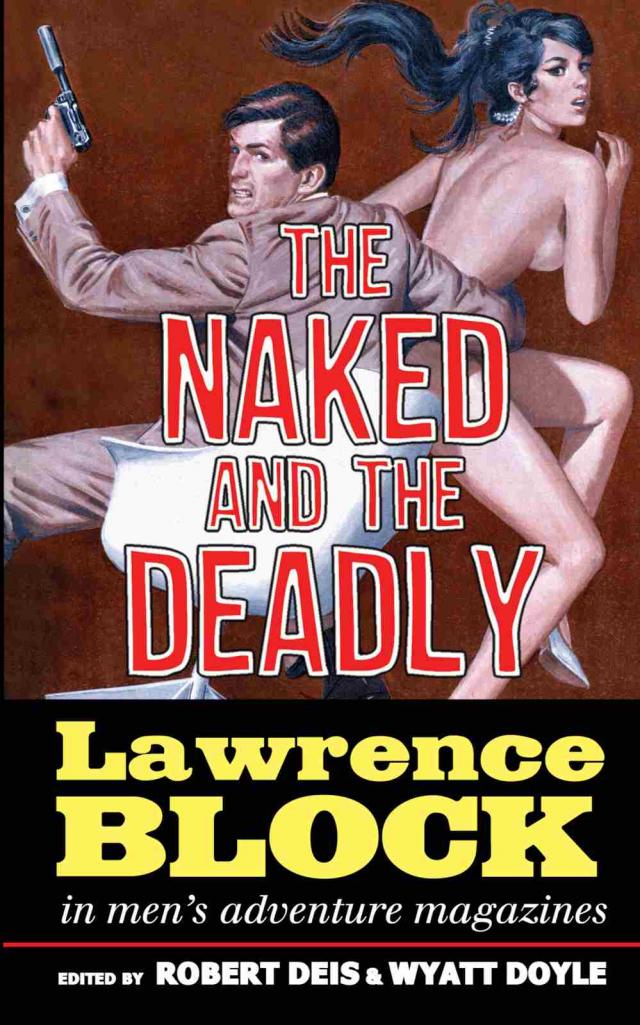
The Naked and the Deadly,
p.37


“I think he’s coming out of it,” a soft voice said. “Him come out of big sleep. Oh, the hell with it.”
I opened my eyes. Tuppence was leaning solicitously over me; Dhang was looking over her shoulder. We seemed to be on dry land. I started to sit up, but they both reached to push me back down and told me to save my strength.
“I’m all right,” I said. And I was. The fever was gone now. I groped for memory and couldn’t get the handle of it. I did not know where we were or how we had gotten there.
“What happened?”
“We almost lost you,” Tuppence said. “Baby, you were in very bad shape. Feverish, and seeing things that weren’t there, and talking to people who weren’t around. All kinds of crazy languages.”
I sat up and looked around at the two of them and the fire and, a few yards off to the side, the river. Our boat was beached on the bank.
“How long was I like that? A couple of hours?’
“Would you believe three days, baby?’’
“Frankly, no. Was I—”
“Three days.”
“How did you and Dhang manage?”
“Sign language, mostly. You don’t remember any of it?”
“Bits and pieces.” I drew a breath. I smelled fish baking. I was suddenly ravenous and I turned to Dhang, who had been maintaining a respectful silence. “About that fish,” I said in Khmer.
“It will be ready soon, Heaven.”
“Good…”
AROUND noon the next day we had stopped the boat and Dhang and I went exploring. We saw smoke off to our right and headed toward it, moving silently through the jungle. Through a break in the undergrowth I saw uniformed men sitting around a campfire, talking and laughing. I listened closely but could not understand what they were saying. Whatever language they were speaking, it was not one I recognized. Dhang couldn’t make it out either.
I considered making ourselves known to them, then decided against it. If we couldn’t be sure just who they were, things could get sticky. So we slipped away as silently as we had come.
And then, late in the afternoon, we heard a plane flying overhead. We caught sight of the craft and craned our heads upward for a look at it, and the pilot came down for a look at us.
It was a jet fighter. I made out US Air Force insignia on the undersides of the swept-back wings.
“It’s one of ours,” I said, and Tuppence and I began to wave furiously. The plane continued its downward sweep.
And bullets plowed a furrow in the water beside us.
“Evan! He’s shooting at us!”
He missed us completely on that run. He came out of his dive, swung into a graceful turn, and headed our way again.
“Overboard,” I shouted. “Swim for shore! Fast!”
We reached the bank, clambered ashore, dove into the cover of an overhang of vines and shrubs. The fighter let us alone and concentrated on the dugout. Bullets tore into the hollow wooden shell, and it filled with water. It didn’t exactly sink—it was, after all, wood—but its days of service were over. It was filled with water to the top. It was useless to us, and so were our guns.
The plane finished its run; the pilot banked smartly, headed skyward, and flew away.
“Now he can go back to his base,” I said bitterly, “and he can paint a dugout canoe on the side of the fuselage. The son of a bitch!
“Baby, I don’t get it. Why?’’
“I don’t know,” I said. “Maybe—”
“Evan—the jewels!”
I swam back to the boat. The two leather bags of jewels were where we had left them, happily untouched by the bullets. I rescued the two jewel sacks and swam back to shore. A US plane, I thought, disheartened. Just what we needed. With friends like him we didn’t need enemies.
“Why did he shoot us up, Evan? And what do we do now?’’
The second question was unanswerable. But I had the first one figured out and suddenly I knew where we were.
“Those soldiers we saw around noon were speaking Annamese,” I said. “And it would have been a very bad idea to join them.”
“Why?’’
“Because we’re in the middle of North Vietnam,” I said.
The logical way out of North Vietnam was to head south to South Vietnam. It was also, as I explained to Tuppence and a bewildered Dhang, a good way to get killed.
“But we have to try it. “There’s something called the Ho Chi Minh Trail—according to the newspapers, it’s what the North Vietnamese soldiers use when they infiltrate into the south. I don’t suppose there are any road signs on it, but we head over that way, away from the river, we ought to hit some sort of route heading south. We’ll have to travel by night, I’m afraid.”
By nightfall we had lost sight of the river without encountering a jungle trail heading south. We had huddled together twice while bands of natives, presumably civilians, passed within a few yards of us.
We reached a southbound trail a few hours later. It was a path about four feet wide, and it couldn’t have been the Ho Chi Minh Trail, because it was far too narrow and overgrown to be used by a motorized column. I decided that this was just as well. We made much better time, but it was still very slow going.
Dhang was the first to hear them. He whirled sharply about, dropped to the ground and pressed his ear against the trampled earth. It was the first time I had ever actually seen anyone with his ear to the ground.
I too dropped to the ground and pressed my ear against it. I could hear it then, the thud of vibrations. “Sounds like a mechanized column,” I said. “We’d better get out of the way.”
A few miles back our little trail had merged with a much wider path that also was heading southward. This new route was far more open. I hadn’t been too enthusiastic over it at first. True, it proved we were on the right track, but new hazards presented themselves. It stood to reason that the route would see heavy North Vietnamese traffic, which meant we would have to be very careful if we wanted to remain undetected. Still more to the point, we were open to observation by US planes and helicopters. The fact that they were on our side didn’t do a hell of a lot of good unless they happened to realize it.
We were well hidden in the brush long before the advancing column came into sight. Tuppence and Dhang crouched in silence on either side of me. A trio of jeeps were in the lead, followed by a brace of motorized anti-aircraft guns, a convoy of troop carriers, and, in the rear, four lumbering tanks.
And then, from the south, we heard the cheering sound of American air power.
Tuppence glanced at me, eyes wide with alarm, and I nodded. She pursed her lips and whistled soundlessly. Fly away, fellows, I urged them silently. Fly like birds. Go bomb Hanoi or something. But don’t drop anything around here.
They didn’t listen to me.
JUST A few yards from us the North Vietnamese braced themselves for action. The column ground to a halt, and the antiaircraft guns readied themselves for the encounter. The troop carriers peeled back their canvas tops and dozens of foot soldiers spilled out, rifles in hand. They scattered in the brush.
The planes droned overhead. The tanks—Russian T-34’s, the same sort I had seen in Korea—pointed their massive guns at the sky. Keep going, I urged the planes. Knock out the oil depots in Haiphong. Do anything, but go away.
In perfect formation the US aircraft peeled off and dived for the trail. A pair of jet fighters led the way, flying directly into the stream of flak, peppering the trail with machine-gun shells. Behind them fighter bombers laid their eggs.
It was what I thought it would be. Napalm.
The jungle burst into flame. “Fall back.” I told Tuppence and Dhang. “Don’t even worry about the soldiers. They couldn’t care less right now. Just get the hell out of the way of that fire.”
We scattered like field mice in a burning barn. More planes passed over the trail. Three of the T-34’s were out of action in no time at all, two taking direct hits, the third getting the backlash of the bomb that landed square atop the troop carrier in front of it. The ground troops screamed and died in the fire that raged around them.
We missed most of what happened, running crazily through the brush. We outran the napalm, then sprawled at last in a tangle of vines. And lay there, deafened by the sounds of battle, until the last burst of ground fire was still and the last plane flew south…
We had hated the jungle. Slogging through it, through the mud and the snakes and the insects and the treacherous vines, we had personified it and cursed it as an enemy. Now we crept toward the ruined army column and looked upon the alternative of the jungle. Acres of plant growth had been burned out of existence. What had been green was burned black, with little vestigial fires still raging at the perimeter.
I SCANNED the row of ruined jeeps and antiaircraft guns and troop carriers and tanks.
“That’s it,” I said.
“What?”
“Our passport. They got three of them but one’s still operable. All we have to do is get into it and roll.”
Tuppence looked at me as though I had gone over the edge. “You rest a minute,” she said. “The fever—”
“No fever. I’m talking about the tank. The T-34,” I said. “That’s our out. It doesn’t matter what color you are inside one of those. We’ll all be invisible. We can cut right through North Vietnam and across the demilitarized zone without anyone wondering who we are.”
“How do we get one?”
“Change places with the clowns inside it.”
“Suppose they don’t go for the idea?”
“They’re probably dead,” I said. “If they don’t come crawling out in the next few minutes, we can count on it.”
“Have you ever driven one of those things?”
“No.”
“Groovy.”
“I never paddled a dugout, either.”
We waited on the sidelines while the uninjured soldiers and walking wounded rounded up as many of their wounded fellows as they could and made their way back north again, all of their vehicles abandoned.
I went to the tank, and the metal hatch was still too hot to handle.
But the next time I checked the tank, it was only slightly warm to the touch. I opened the hood and closed it again in a hurry. The tank had been carrying a full crew of three. They were still inside. I made Tuppence stay where she was while Dhang helped me empty the tank and disinfect it with petrol from one of the troop carriers.
We climbed in, bringing along the jewels and a few guns salvaged from dead Vietnamese soldiers. We also collected several cans of fuel that had been aboard one of the troop carriers.
We left the tank’s hatch open to combat claustrophobia and asphyxiation, and we made ourselves as comfortable as possible. The control panel was in Russian, which helped. I settled myself behind it and felt like Bogart in Sahara. “This baby’ll start,” I said. “All yuh gotta do is talk nice to her…”
I drove that tank all night. Tuppence and Dhang had dropped off to sleep muttering about food and water, neither of which we had with us. We could get along without food, but water would become a problem before very long. I felt more and more like Bogart.
Somewhere between the middle of the night and dawn we lost the road. This could never have happened farther back, with the dense jungle on either side, but as we moved south the jungle gave way to vast stretches of open ground. By the time I realized what had happened, there was no way to correct the error, so I kept us on a southerly course and hoped it would take us where we wanted to go. By the time the sky lightened, we were far out of sight of the road. When Tuppence woke up and asked where we were, I told her we were in Asia, and she told me nobody likes a smart-ass.
We were still in Asia when the plane attacked us.
We were still in the open, too, surrounded by vast reaches of grassland. We were the only tank around, and he was the only plane, and unfortunately he was one of ours, and the tank was one of theirs. I didn’t even see him until he started shooting at us. Then a rocket went off a few yards to our left, and we could feel the impact inside the tank.
“You idiot,” I screamed, “we’re on your side!”
“Maybe if you got out and waved to him—”
“I don’t think so,” I said. I had closed the hatch, of course, and now I watched the plane through the tank’s sight. He was ready again. He came at us lower this time and fired off two rockets in turn. They were both wide on the left.
“He’s a lousy shot,” I said. “He’s really terrible. We’re barely a moving target, and he has all the room in the world to move around in. He should have blown us all to hell next by now.”
His next pass brought him even lower, and I cooperated by stalling the tank. This time he scored a near miss, and the tank rocked with the explosion.
He’s getting warmer. Evan—”
“What?”
“Can’t this thing shoot back?”
I looked up. There was a sort of steering wheel. I turned it, and our gun moved. There was a little door that you opened to insert a shell, and behind me on the floor there were shells. I snapped a command, and Dhang handed me a shell.
“Hey, wait a minute,” I said. “I can’t shoot him down.”
“What’s wrong?”
“He’s an American,” I said. “That’s one of our guys up there!”
“This is us down here,” Tuppence said.
He came on again, undaunted, diving straight for us. I spun the little wheel and found the gun sights. I zeroed in on him as he swept down on us. He fired his rockets, and I fired the tank gun. He missed completely and so did we.
Dhang handed me another shell. “I don’t like this,” I said.
“Maybe you can just wing him, baby.”
“Sure.”
I loaded the shell, put my eye to the sight, and started tracking him. He began his run again, and I had the damnedest feeling that this was the last chance we were going to get. He was coming from our right front. I swung the gun at him and kept it on him, and I fired before he did.
“You hit him.”
The tail of the plane seemed to disintegrate. Then the plastic canopy popped open, and the pilot ejected, seat and all. He sailed high into the air, as if shot from a cannon. His parachute opened, and he floated gracefully down to earth.
I watched him land, roll, and come up on his feet. I felt a lot better then. It had been a kill or be killed situation, certainly, but that didn’t change the fact that I had felt less than delighted at the thought of knocking American planes out of the sky. I started the engine, and the tank headed for him.
“He’ll have flares,” I said. “With any luck at all, somebody saw him go down. They’ll send a helicopter for him, and we can hitch a ride on it.”
“He may not be happy to see us.”
“He’ll be happy when he finds out we’re us. Right now he’s getting ready to surrender to a North Vietnamese tank.”
Except he wasn’t. We had a good look at him as we drew closer. He was a very young Negro airman with a very valiant look on his face, and he had one hand on his hip while he used the other to point a pistol at our tank.
“I think he wants us to surrender,” I said. “It’s going to surprise the hell out of him when we do.”
We drew closer. I flipped open the hatch, and he sent a bullet whistling over the top of it.
“Cool it, soul brother,” Tuppence called out. “The natives are friendly…”
THE SAIGON madam was a fat little Vietnamese with gold teeth and a permanent smile. Several soldiers had assured me her house was far and away the best in Saigon. The rooms were nicely appointed, the girls were clean and lovely, and the price was only ten dollars. She bowed us into the parlor and rang a little bell, and seven pretty things in slit skirts and high heels came tripping into the room and bowed before us.
Dhang was drooling, and his eyes were so bugged out that he looked like a frog.
He said, “For me?”
“You’re supposed to pick the one you want.”
“I want them all.”
“Well, pick the one you like best.”
“I like them all best.”
I counted the girls and recounted the money. Seven girls at ten dollars a girl was seventy dollars. But was it possible that little Dhang could possess seven women one after the other?
Anything was possible, I decided. Anything at all. With what Dhang had been through, it was conceivable that he had built a stock of frustration that all the prostitutes in Saigon couldn’t cure. Anyway, he wanted all seven of them, and he deserved a shot at whatever he wanted.
“He wants all seven of them,” I told the madam carefully. “They are to go to him one at a time.” I paid her.
“He is Superman?”
“Perhaps.”
“Seven girls? Ho, boy!”
She relayed the instructions to the girls, who giggled and squealed at the prospect. I sat down, and one of the girls took Dhang in hand and led him away. The madam sat down beside me.
“And you, Joe? What do you want?”
I thought it over. “Do you have any betel nut?” I said finally. She frowned and said that she did not. “In that case,” I said, “what I’d really like is a nice cold glass of milk.”
LAWRENCE BLOCK is a Mystery Writers of America Grand Master. His work over the past half century has earned him multiple Edgar Allan Poe and Shamus awards, the UK Diamond Dagger for lifetime achievement, and recognition in Germany, France, Taiwan, and Japan. His latest novels are The Burglar Who Met Fredric Brown and The Autobiography of Matthew Scudder; other recent fiction includes A Time to Scatter Stones, Keller’s Fedora, and Dead Girl Blues. In addition to novels and short fiction, he has written episodic television (Tilt!) and the Wong Kar-wai film, My Blueberry Nights.
In recent years, Lawrence Block has found a new career as an anthologist, having realized how much easier it is to dash off an introduction while inveigling others to supply the actual stories. Playing Games is his nineteenth and most recent effort; his three art-based anthologies, In Sunlight or in Shadow, Alive in Shape and Color, and From Sea to Stormy Sea, have been especially favored by critics and readers.


