Night rider, p.28
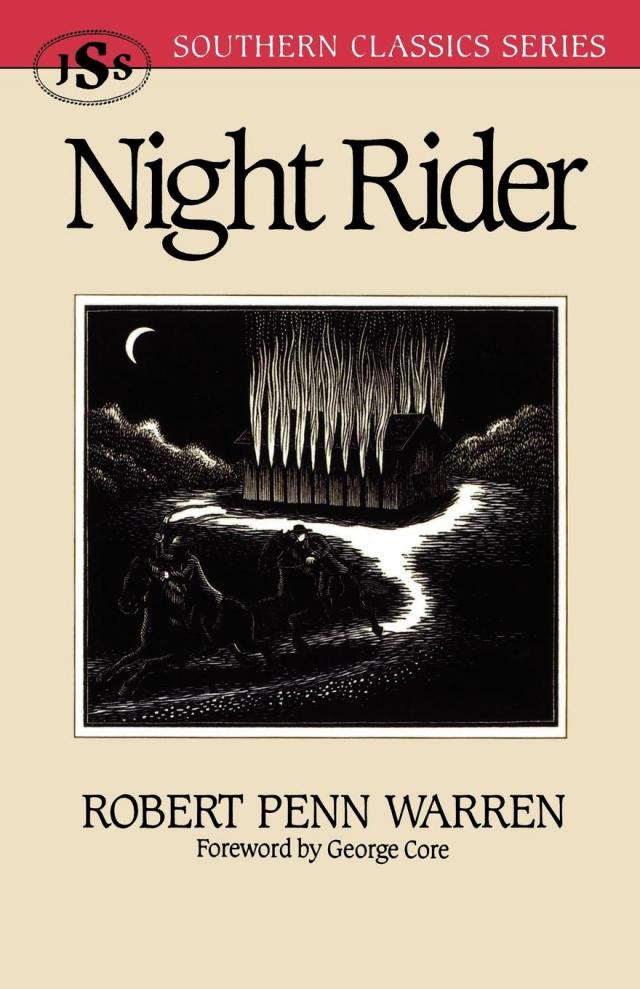
Night Rider,
p.28


‘It had to be,’ Mr. Murdock said.
‘By God ——’ Mr. Christian exclaimed, starting up from his seat and looking savagely about him; but he sank back without finishing his sentence.
‘It was a mistake,’ Mr. Munn said. ‘But it’s done. It was a mistake, because when we tried to fight against the companies we had to fight against some of our own people too. People who couldn’t see and understand, but our own people. But this’ll be different. This’ll be clear. Clear as day. Them or us. When we march in ——’
‘March!’ a voice exclaimed.
‘March in,’ Mr. Munn said slowly. ‘When we march in, it’ll be clear. Not a half-dozen men with a handful of matches and a can of coal oil. No. A thousand. Two thousand. As many as we need. All of us. And in column. Then’ — and he was filled with certainty, a deep, sure, clean conviction that engulfed him like a flood, and he scarcely heard his own words — ‘it will all be different. It will all be clear as day.’
Slowly, he sat down. He sat on one of the benches against the wall and leaned back against the uneven surface of the logs. The voices went on, and he heard them. The men would go. They were voting, and they would vote to go. He felt a tightening of his muscles and a prickling of the skin across his back and shoulders. Through the heavy cloth of his coat he felt the roughness and solidity of the logs against which he leaned. Gradually he relaxed, listening to the voices.
The men would go. They had decided on Bardsville first. Which was good. The biggest warehouses were there. That was right. Get the biggest ones first. It ought to be before the New Year, some man had said. Or sooner, another had added. Sooner. ‘We need time,’ Doctor MacDonald had pointed out, ‘nothing too hasty. Maybe we’ve been too hasty in the past, but not now. Now we’ll be sure.’
‘Time? How much time?’ someone had demanded.
‘By New Year’s, we ought to be able by New Year’s,’ Doctor MacDonald had answered. ‘But we have to drill the men. That takes time. We couldn’t get all of them ready by that time. But we don’t need all. Say, about a thousand.’
Some man had said: ‘You get more’n a thousand and a lot will have to come a long way. They’ll be half a day coming. Some, more.’
‘We won’t need more’n a thousand,’ Doctor MacDonald had told him. ‘That’ll make a show, I reckon. Later ——’ And Mr. Munn, not looking up, had known how at the moment of the pause he must have been grinning easily and confidently at the men around him, shaking his unlit pipe at them probably. And he had heard the voice go on: ‘— maybe we’ll need more.’
‘Yeah, yeah’ — it had been a voice which Mr. Munn could not recognize. ‘There’s the other towns, there’s the other warehouses. And big ones.’
And Doctor MacDonald had said, never fear, they wouldn’t wait too long, not long enough for the companies to take any steps. They wouldn’t discriminate too much in favor of Bardsville.
Then Mr. Munn walked over to join the group. They were talking about preparing the men, how to drill them. And how many would go into Bardsville on foot. And whether to burn or dynamite the warehouses. Then one of the men asked if they reckoned there’d be any fighting.
‘We’ll have the drop,’ a man said, ‘anyway.’
‘Maybe there will be some, sooner or later,’ Doctor MacDonald conceded, ‘but we’ll try to keep the drop.’ Then he added, ‘Did any of you boys ever hear a bullet go by right close to your head?’
‘I ain’t honing to, neither,’ Mr. Murdock said.
‘I reckon I have,’ another man asserted. He was a small, knotty-looking man, with a compact, dark, round, almost featureless head. He reminded Mr. Munn of a pig-nut, little, brown, and hard-shelled. The knotty-looking little man said that he had been in Cuba. ‘For the duration,’ he said, ‘and I reckon I heard a few go past.’ He slipped one arm out of its coat sleeve, and began to fumble at the buttons of his shirt. ‘But there was one I didn’t hear.’ He pushed back the shirt and the thick layer of wool underwear to expose in the lamplight the flesh of his shoulder. ‘Yeah, there was one didn’t go past.’ He thrust his bare shoulder forward, exhibiting it. In the firm, tightly muscled flesh there was a star-shaped depression large enough to accommodate a thumb-tip, puckered and white against the brownness of the surrounding surface. He looked anxiously, with a kind of poorly concealed pride, from face to face of the peering men.
‘Now, I be dog-gone,’ one of the men exclaimed slowly, and reached out to lay a finger in the old wound.
‘A Mauser ball,’ the small, knotty-looking man said; ‘it was a Mauser done it. That was a kind of rifle them bastards used down there.’ He glanced down at the mark as though to verify its presence, and observed: ‘One thing funny, now, you know it never hurt none to speak of, that is, right at first. Not a mite. But it shore-God knocked me down when it hit.’ He paused, then added, ‘It was outside Santiago.’
‘I see it cracked up the clavicle some,’ Doctor MacDonald said.
The small man looked up at Doctor MacDonald soberly. ‘I don’t know what name it goes by,’ he answered, ‘but it cracked a right smart.’ Then he grinned, for the moment, with his small, brown, unformed face looking like a boy’s.
‘Well,’ Doctor MacDonald said, ‘if you never heard one sing by your head, there’s one thing you can lay to. That’s that it’ll sound a lot worse when it happens than you ever reckoned it would.’
‘Now that’s a mouthful,’ the small man agreed.
‘I ain’t honing to hear one,’ Mr. Murdock said again.
The small man looked up inquiringly at Doctor MacDonald. ‘Was you down there,’ he asked, ‘in Cuba?’
‘No,’ Doctor MacDonald answered.
The men began to turn away from the small man, to each other and to the fire. Some of them were putting on their overcoats and mackinaws. The small man stood by himself now, his shirt and underwear still pulled back to expose the scar of the old wound. He himself looked down at the scar. Then, tentatively, as though there might yet be pain in it, he prodded it. He looked around, secretively, at the other men, but they were shaking hands and saying good night to each other. He fastened his clothing, pulled on a worn mackinaw and a black fur cap with ear-flaps, and moved toward the edge of the largest group.
The men began to leave, going out the door by twos and threes. Professor Ball stood at the door, very erect, saying good-bye to each man as he went out. Finally, all of them had gone, except Mr. Munn, Mr. Christian, and three other men from over beyond Bardsville. They stood in front of one of the fireplaces with Doctor MacDonald. Professor Ball approached them, and said, ‘Well, gentlemen, I feel we have had a very successful meeting.’
‘It had better be,’ one of the men observed, a thin-nosed, dry-skinned fellow with drooping, sandy-colored mustaches. His name was Peebles, and he came from over near Monclair. He spoke, and then, with deliberation, spat upon the declining embers.
‘How do you reckon your people are gonna take to this? Doctor MacDonald asked.
‘They ain’t gonna complain none,’ the man said, ‘not much, no-way. They been on short rations so long they’re nigh ready fer anything you name. Take me,’ he added, and tapped his chest. ‘I ain’t no diff’rent from ordinary, but what I been through, eight children and them about to be wrapping their feet in tow-sack to go out in the weather, and I’m durn nigh ready fer anything. I ain’t no diff’rent from ordinary.’
‘Well, anyway, your distinguished neighbor isn’t going to the Senate,’ Doctor MacDonald remarked. ‘That’s something. Even if he did win his suit against us, and get his God-damned tobacco back. What Dismukes paid him for that oughter keep his feet off the wet ground for a spell.’
‘He got paid, all right,’ Mr. Peebles said, ‘I’ll lay to that. But he spent a sight of money trying to be elected.’
‘Elected or not,’ Mr. Christian put in, half as though to himself, ‘he’d never got there, not if I had to wring the bastard’s neck with my own hands.’
The man named Peebles looked at Mr. Christian, and glumly nodded. ‘You ain’t the only one felt that way,’ he said.
Doctor MacDonald started to bank the fires, but Professor Ball reminded him that it wouldn’t be necessary, that tomorrow was Saturday and no school. Professor Ball began to blow out the lights, and the men gathered their coats. Mr. Peebles asked if they were sure his staying wouldn’t put them out, and Doctor MacDonald said no, that a few of the boys boarded there during the week, but they went home over Friday night till Sunday night, and there was plenty of room. The last lamp was blown out, and the long room had only the fading firelight. Doctor MacDonald pulled open the heavy door.
The cold of the air struck like a blow. Mr. Munn walked slightly behind the other men. He lifted his eyes to the deep, vaulted darkness above the trees, and filled his lungs with the probing coldness of the air. He felt very tired, but light and relieved and cleansed, like a man who, convalescing from a long sickness, goes out into the open air for the first time. That night he slept more soundly than for many months. Sunk in the big feather bed, he seemed, as he closed his eyes, to be flowing and falling, effortlessly, deeply, deliciously, and forever.
By eleven o’clock on the night of December 30, most of the people of Bardsville were at home and in bed. Some men still hung about in the saloons, hunched over the bar to look at their reflections in the mirror, or standing back from the bar with a glass in one hand and the other raised to affirm some disputed point; the barmen, however, were already beginning to glance at the clocks and to execute their movements with a greater and greater, and a more impersonal, deliberation. Small groups still sat about in the lobbies of the two hotels, but the conversation was waning. A few bands of boys and young men roamed up and down the streets of the business section, flinging firecrackers that exploded with a hollow, echoing sound between the rows of buildings, and then laughing suddenly and prolongedly. Or they stood on the corners, under the arc-lamps, with their hands thrust into their pockets and their shoulders drawn against the briskness of the air. But away from the business section the streets were deserted, except for a few isolated figures that would hurry along under the bare boughs of the maples, their heels making on the brick pavements a small, clicking sound as regular and empty as the ticking of a clock. The houses between which they passed were darkened, with only, perhaps, a little light showing through the glass above a front door or under the drawn shade of an upper room.
At fifteen minutes after eleven a locomotive whistled for a crossing to the south of town, and then, soon after, slid heavily alongside the deserted depot. The night man at the station came out, and with a greeting muffled by weariness and disinterest, handed up a paper to the engineer. The fireman clambered up over the tender and fumbled clankingly at the spout of the water tower. Rushingly, the black water, streaked with a feeble and fluctuating silver in the light of the station lamps, poured into the reservoir. The few passengers who had descended at the platform disappeared up the street. The station man went back into the office, where now he could stoke up the fire in the round-bellied iron stove, set his alarm clock, and doze on a sagging cot until four o’clock. A voice called, ‘All er-board,’ without emphasis. From the lighted interiors of the coaches a few faces pressed against the glass of the windows to peer out at the deserted platform. The steam feathered whitely from the cylinders and the train began to pull away. North of town it whistled again, and the sound prolonged itself wailingly over the fields and the woods, and was heard by wakeful persons in the bedrooms of houses on that side of town.
Standing at the edge of a dry elder thicket that bordered the lane just before it crossed the tracks, Doctor MacDonald heard the approaching blast of the whistle. The long, glaring beam of the headlight knifed through the dark, lighting unreally the hanging leaves of bushes and the grass along the tracks. Then the locomotive plunged over the crossing with a multiple thunder of wheels, and as it passed, the figure of the fireman was for a moment visible, bent to heave a shovelful of coal into the firebox door. Then the last coaches whipped past, the dry leaves along the track sank in the failing gust of the passage, and the train fled away down the tubular corridor of light before it. ‘On time,’ Doctor MacDonald said, extinguished the match by which he had read his watch, and clicked shut, with a gesture of finality, the watchcase.
‘She was on time,’ Doctor MacDonald repeated.
‘The engineer,’ the man said, and nodded toward the woods across the lane, ‘now I wonder could he see all them fellers over there.’
‘If he did,’ Doctor MacDonald replied, ‘he’ll have something to tell his kids when he gets to Chicago tomorrow.’ His eyes were fixed after the disappearing train. A pale, flame-colored reflection from the open firebox lightened the billowy underside of the otherwise invisible plume of smoke that trailed over the locomotive. The fireman would be stoking for the cut northward.
‘Naw,’ another voice said from the shadow of the thicket, ‘the engineer sets on the other side, he couldn’t see nothing over here.’
The train was out of sight now.
No one spoke for a minute or two. There was no sound except a faintly rasping, dry, restless sound from the dark woods across the lane, a sound like a breeze in dead leaves before they fall. But there was no wind. Doctor MacDonald began to sing under his breath, almost wordlessly: ‘The old gray mare come trotten through the wilderness, trotten through the wilderness, trotten through the wilderness. The old gray mare come ——’
‘It’s cold,’ one of the voices said subduedly.
‘It’s this standing around,’ the other voice rejoined.
‘Well,’ the first man said, ‘I hope we don’t find it no hotter before day, huh?’
Under his breath Doctor MacDonald kept on singing: ‘We come to a creek but we couldn’t git acrost, we couldn’t git acrost, we couldn’t git acrost ——’
‘Do you reckon there’s any chance it’s true about word getting out?’
Doctor MacDonald sang softly, ‘— but we couldn’t git acrost ——’
‘It came pretty straight,’ the other man answered, ‘from a man drives a team for the Alta.’
Doctor MacDonald stopped singing. ‘If there is a home guard, or whatever that fellow said it was,’ he said, ‘it’ll be a passel of warehouse hands and clerks and young bucks with nothing better to do. Unless they brought in some other men on the train. And we’ll know that in a minute. Soon as he gets here.’ He began to sing, so softly that the words were indistinguishable now. The other men were silent.
Mr. Munn said, ‘I hear him now.’ Doctor MacDonald stopped humming.
There was the sound of a horse galloping up the lane from the pike, an increasing sound of hoofs on the soft earth of the lane like a roll on a damp and sagging drumhead. The bulk of the horse and rider loomed suddenly out of the dark, almost upon the group, and the rider slid out of his saddle.
‘Well?’ Doctor MacDonald demanded.
‘Not a thing,’ the rider reported, ‘not a thing stirring. We walked round uptown and down by the warehouses, and watched the train come in. Not a thing stirring.’
‘Ah,’ Doctor MacDonald said, with a gentle and sibilant exhalation of his breath. Then he took his watch from his pocket, and struck a match against his trousers. Shielding the flame with his cupped hand, he peered at the watch, and, briefly, his long, bony face was illuminated. ‘Eight minutes to twelve,’ he asserted matter-of-factly, and extinguished the match. Then: ‘Mr. Murphy, Mr. Sykes, we’re ready.’ Two of the men who had been standing beside him at the edge of the lane turned abruptly into the darkness of the thicket, and with a crackling and trampling of leaves and dry elder stalks, led out their horses.
‘Tell Mr. Sills to move in,’ Doctor MacDonald ordered. ‘Tell him to hit the bottom of Jefferson Street as near to twelve-thirty as he can. He knows what to do from that point. And’ — he turned to the other man, who had already mounted — ‘Mr. Sykes, you tell Mr. Murdock to hit the Cherry Creek bridge at the same time. He knows, then. But tell them not to touch a wire till five minutes before they move in. That’s all.’
The two men wheeled, lifted their horses into a gallop, and almost immediately, long before the sound of hoofs had faded out, were lost in the darkness. Doctor MacDonald peered after them, then directed: ‘All right, Mr. Mosely, tell Mr. Hamer to start. And to make them keep formation all the way.’
The figure of a man moved from the edge of the elder thicket, crossed the lane, and entered the grove on the other side.
Doctor MacDonald began to sing again, very softly, almost tunelessly: ‘Rock of ages, cleft for me, let me hide myself in Thee, let the water ——’
Mr. Munn tried to make out his face, but could not. There was only the paler blur in the darkness. Then he looked up at the sky. Only a few stars were visible. There’ll be, he thought, more than six hours till light.
‘It’s shore-God now cold,’ a voice said.
No one replied.
Mr. Munn tried to move his toes inside his boots, but they were stiff and cramped. He had not realized how cold he was. Now, up to the knees, his legs were almost as stiff and dead as posts. He could not detect the words of Doctor MacDonald’s singing any more, they had sunk so low. He tried to remember how the words of the hymn went.
A voice called out, subduedly and indistinguishably, from the woods across the lane. The gentle, dry, rustling sound like a breeze increased in the woods, then, suddenly, was a peremptory shuffling and crackling. A single figure appeared in the lane.
‘They’re coming,’ Doctor MacDonald said.
Then there were the others. They came out of the woods, shuffling the dead leaves, to hesitate raggedly in the open lane and then form four abreast and move toward the railroad tracks. They carried guns on their shoulders, and strips of white cloth were across their faces. A few other men, masked too and with white bands on their left arms, stood in the lane, and kept saying, in harsh, suppressed voices: ‘Move up, there! Move up, four abreast! Make it four abreast, and hold it.’ The head of the column moved up the lane, and turned down the railroad track toward town. But in the lane it was constantly replenished, the men there filtering from the strip of woodland, hesitating, then forming and moving away after the others. The last men came from the woods.