Night rider, p.3
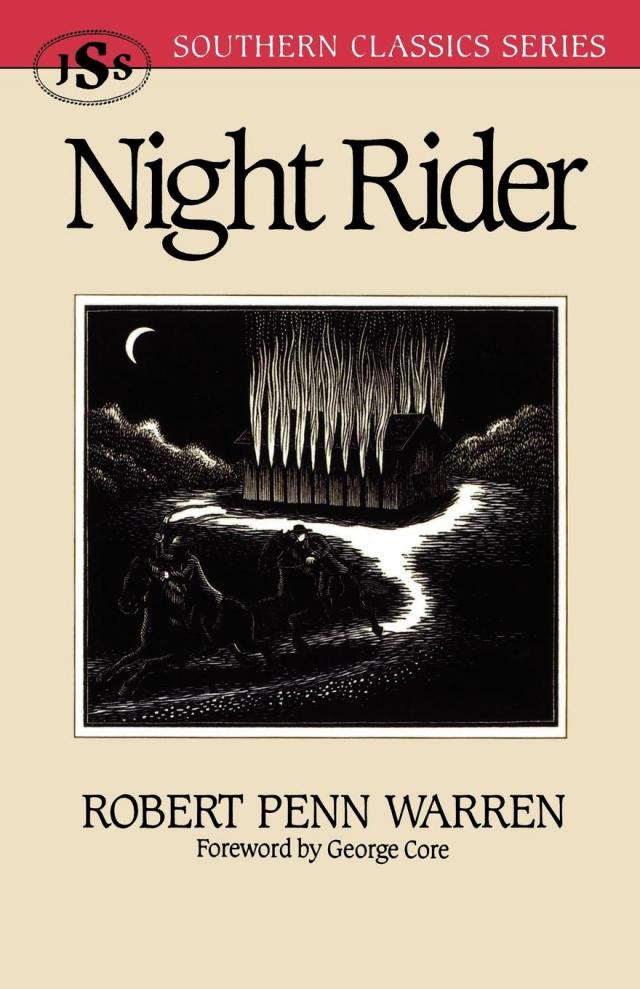
Night Rider,
p.3


‘I’m not planning to go into politics,’ Mr. Munn replied. Not planning to, no, not exactly, he told himself, even though it had sometimes presented itself to his mind as a possibility for the future. ‘No,’ he went on, shaking his head, ‘I’ve got enough to do already with my farm and my law practice.’ But, as he spoke, he was almost aware of the discomfort of a lie, for what had, in the past, never seemed more than a daydream, a remote possibility out of many possibilities, now rose like a certainty before his mind, solid and beckoning.
But by the time they turned in at the side door of the bank building, the certainty had disappeared before the logical, skeptical scrutiny of his mind, which was his natural attitude, and before the satisfaction he took in his life as it now was. Politicians were slaves, he had sometimes told himself, dispelling the casual speculations in the past; and if he desired anything of life, that thing was to be free, and himself.
When he entered the long, shabby room above the bank, shoved in by Mr. Christian, he was aware of the surprise that touched the faces of the men already there about the baize-covered table, a surprise that did not disappear, but was only mitigated, when Mr. Christian promptly followed, and shut the door.
‘I just ran into Mr. Munn here,’ Mr. Christian said, ‘and I brought him along. Now, Perse, he’s a smart man, gentlemen, and he might tell you all something.’ Mr. Christian strode to the table, laid his black hat on the green baize, and swept his eyes over the group, but with a glance that seemed to linger infinitesimally on the face of each man.
Good Lord, Mr. Munn thought, he’s bullying the lot; he just brought me to show he could do it if he wanted without asking. Then he heard Mr. Christian saying, ‘I know you all’d be glad I brought him.’
‘That’s fine,’ one of the men rejoined, but, Mr. Munn observed, without much enthusiasm.
‘Come here, Perse,’ Mr. Christian ordered. ‘I want to introduce you to some of these fellows. You know Mr. Peacham and Mr. Sills, but here’s Mr. Burden from over near Princeton.’
Mr. Munn did know Mr. Peacham and Mr. Sills, and had known them all of his life, both farmers from the same county, Mr. Peacham, tall, spare, gray, and preacherish, with a hooked, paper-thin nose, and Mr. Sills, an aimless-looking, nondescript, small man, who had, in twenty years, built up a fine place from eroded fields bought for taxes, and who had a sharp, mean tongue and a great piety. Mr. Munn greeted them, and shook hands. He shook hands with Mr. Burden, a dark man of middle age, well set up, with a quiet way of speaking. He had never heard of Mr. Burden.
He knew some of the other men well. There was Mr. Morse, who ran a newspaper in Millsborough; Captain Todd, a kindly, bearded man, a veteran of the Civil War, and Mr. Dicey Short, both tobacco farmers and good ones, men whom he had seen on the streets of Bardsville from the time of his earliest recollections. He shook hands with them, detecting in them, he felt, some nervousness of constraint, and shook hands with Senator Tolliver. Senator Tolliver was affable, smiling from his long, aquiline face and saying that he knew Mr. Munn would have something valuable to say.
‘I’m afraid not,’ Mr. Munn answered, ‘and I’m afraid I’m intruding.’
‘Not at all, not at all,’ Senator Tolliver insisted, ‘and I personally am very glad to see you again.’
Mr. Munn thanked him, shook hands with two more men, who were strangers to him and whose names he missed, and took a chair at the lower end of the table from Mr. Morse, who was apparently acting as a kind of chairman. It was a bad seat, facing the glare of the windows, but it was the only seat left, for Mr. Christian, with a grunt of animal satisfaction, had dropped his bulk into the one beside the Senator, and now sat there blowing through his powerful-looking yellow teeth and fanning himself with his hat.
The meeting was what he could have predicted, Mr. Munn decided, if he had taken the trouble to speculate about it beforehand. Mr. Sills, in his colorless voice and with the manner he must use in his missionary societies and meetings of stewards in his church, read a long list of names. It was a list of men who, according to Mr. Sills, might be depended upon to support the purposes and ideals of the Association of Growers of Dark Fired Tobacco. ‘Which purposes and ideals,’ Mr. Christian had interrupted Mr. Sills before the list began, ‘is to make those son-a-bitching buyers pay me what my tobacco’s worth.’
At that, someone had laughed, and Mr. Munn, in the midst of his own smile, had suddenly seen again in his mind the rapt and distant expression Mr. Christian’s face had worn when he first looked from the window of the hotel room over the heads of the crowd in the street.
But after the laughter stopped, Mr. Sills, clearing his throat slightly, repeated with his colorless equanimity, ‘. . . to support the purposes and ideals of the Association of Growers of Dark Fired Tobacco,’ and began to read the list.
The names proceeded. Mr. Munn listened idly to them. There were a great many names, and many of them now already were checked off as promised supporters. He had not thought that matters had gone quite so far. The Association might, after all, come to something at this rate. He tried to study the faces of the men at the table between him and the light, ordinary faces and ordinary men, on the whole, men whom he had known all his life, or like men he had known. Then it occurred to him that behind all the names he was hearing without attention were other men, scattered over the section, in other countries, perfectly real men, all different from each other in their own ways, but drawn together by the fact that their names were on the pieces of paper which Mr. Sills held. From that paper invisible threads, as it were, stretched off to Hunter County and Caldwell County and into Tennessee to those men. They were all webbed together by those strands, parts of their beings, which were their own, different each from each, coming together here, and becoming one thing. An idea — that was it — an idea seized parts of their individual beings and held them together and made them coalesce. And something was made that had not existed before. He looked around him again at those faces at the table. Perhaps Mr. Bill and these other men here at the table, who seemed so ordinary, were not so ordinary after all; for they had done it. Whatever it was. The thing which they had created, which they were, at this moment, in the act of creating, had no meaning as yet, no form. You couldn’t tell — you couldn’t ever tell what a thing was until it was dead, until the time for action was past.
‘All very satisfactory, very satisfactory,’ the Senator was saying as soon as the last name had been read. ‘With these commitments to go on, and the crowd we’ve got here today, we may go far. It may be the biggest thing this section has ever seen.’
‘You’re damned tooting,’ Mr. Christian put in, ‘and you tell ’em today. You get up there and r’ar back and tell ’em.’
‘I’ll do my best,’ the Senator promised.
‘You better,’ Mr. Christian said.
Then Mr. Morse, who was acting as chairman, interrupted and asked Mr. Burden, the dark man from over near Princeton, if he had any further information about warehouses. There was, Mr. Burden said, a little to add to previous reports. Warehouses would have to be built at Millsborough and Gill’s Crossing, it seemed. There was nothing available for lease at Millsborough, for the tobacco companies had every likely building already tied up in one way or another — he had found that out quick enough. They would have to build. That was too bad. But the one at Gill’s Crossing would be a good thing, more convenient to all the farmers up the Rose Creek section than anything the buyers could offer. It would save the farmers hauling and would give the Association a good name in that section where there weren’t too many sympathizers now.
‘We’ll get those babies, too,’ Mr. Christian said, and whistled through his yellow teeth.
With gravity, Captain Todd shook his head. ‘Maybe,’ he replied, ‘and maybe not. A lot of ’em up there are a mite ornery. Half those folks went with the Yankees in the war.’
‘I don’t care if they went with the Turks,’ Mr. Christian declared. ‘A hand of tobacco is a hand of tobacco, and I like any Yankee I ever saw a hell of a sight better’n I like a buyer.’
The meeting was soon over. The men shoved back their chairs gratingly, and rose. Mr. Christian came and stood beside Mr. Munn. The Senator and Captain Todd remained by the windows, talking. The other men began to go from the room, the footsteps resounding hollowly on the wooden stairs beyond. When all except the two men by the window had gone, Mr. Christian said: ‘Perse, the Senator and Captain Todd and me are going to eat over at Wilson’s, we got a room reserved in the back. We want you to come with us.’
Mr. Munn, hesitating, said that it was mighty nice, and Mr. Christian put his hand on Mr. Munn’s shoulder and urged, ‘You better; it’s the only chance you got to get a bite with this mob in town.’
Mr. Munn answered that he appreciated the invitation and would go. And at that Mr. Christian called to the men by the window that Perse was going with them to eat and that he himself would meet them at Wilson’s, for he had to go get Sukie. Mr. Christian went down the stairs with a great clatter, and Mr. Munn was left alone by the door. Captain Todd, apparently, cut short his conversation, and came toward Mr. Munn, moving with his easy gait that gave no hint of impending age. That always struck Mr. Munn, how the man carried his years, and it struck him now; and now it struck him that of all the people present Captain Todd was the only man who had seemed fully himself, not nervous or constrained.
‘Come along, Perse,’ Captain Todd called. ‘We better get on over, I reckon.’
Mr. Munn stood aside to permit the Senator and Captain Todd to precede him. Bowing slightly, they did so. Captain Todd, with the air of impersonal gravity that characterized him, closed the door, shutting off the light that came from the room.
Conversation was impossible as they fought their way through the crowd toward the corner where Wilson’s restaurant and saloon were situated. At that corner the crowd was thickest. People were packed solid before the door to the restaurant side of the building, apparently in some sort of line waiting turn to get in.
‘I guess I’m lucky you all picked me up,’ Mr. Munn said.
‘It’s fortunate for us,’ the Senator answered.
They made their way to the side door of the restaurant, entered a short passage, and found the room that had been reserved. It was a smallish room, not too well lighted by the single window, which opened on an alley. They had scarcely seated themselves before a skinny negro boy entered, his stained white coat sticking to him with sweat.
‘You better lay another place, boy,’ Captain Todd ordered.
‘Yassuh,’ the boy replied, with a quick, secretive gesture lifting a little wad of towel to wipe the sweat from one cheek.
‘And boy,’ the Senator added, ‘you better bring us a bowl of ice and a pitcher of water and a pint of whatever good rye you’ve got. For I’ — and he turned to the others — ‘need some refreshment and trust you will join me.’
‘I’ve had the pleasure of voting for you on occasion,’ Captain Todd said, ‘and so I don’t reckon I’ll pass up the privilege of drinking with you one more time, Edmund.’
The slightest cloud, as Mr. Munn noticed, touched the Senator’s handsome face, and then was instantly dispelled by his smile. ‘I was grateful to my friends,’ he remarked, ‘and when I didn’t hold my seat last election, I almost felt I had let them down.’
‘There’s another one coming up,’ Captain Todd pointed out, ‘not fifteen months off.’
‘Not for me,’ and the Senator, still smiling, shook his head. ‘I hope I can do more good here than in Washington, here with the Association. Here’s where the fight is.’ But the smile, though not fading from his face, no longer seemed, at least to Mr. Munn, who regarded him closely, the true token of ease and geniality. And then the smile itself faded, while the Senator raised his glance, which was cold and abstract now, to the blank brick wall visible beyond the single window. Captain Todd did not seem to notice, Mr. Munn thought; but then you could never tell what Captain Todd noticed, for he was always the same behind his neat beard, always with the same poise and amiable gravity. No, you couldn’t tell about Captain Todd, or for that matter about anybody, about the Senator. There was no telling what made his smile fade that way and his eyes withdraw and fix upon that blank, sunlit wall across the alley.
But the negro boy had come back with the ice and the pitcher and the whisky, and the Senator, now smiling again, and again one of them, was pouring the liquor. He added ice and a little water to each glass, and with a slightly ceremonious air offered drinks to the Captain and to Mr. Munn. Then he raised his own glass and called, ‘To the Association and our prosperity!’
The others raised their glasses, and then drank. Then they sat without speaking for a little, as though to relish the first flush of the liquor. The Senator drained his glass, and replenished it. ‘It’s hot in here,’ he said.
‘Pretty hot,’ Captain Todd agreed, ‘but it’s better than most folks got today. At least we’ll eat. A lot of empty bellies will growl this afternoon.’
‘There must be twenty thousand people in town,’ the Senator said. ‘Nobody expected that many. The town hasn’t made preparation.’
‘More’n that,’ Captain Todd declared. ‘They were moving in all day yesterday, they say. All yesterday afternoon I could see wagons and buggies coming down the pike past my place. The dust never got settled before somebody stirred it up again coming toward town. They’ve come from all over, all these counties round here. They say people slept in their wagons or on the ground or sat up all night talking and singing.’ He took a slow sip from his glass, and shook his head. ‘It’s been forty years since I’ve seen this many folks together — not since the war.’
‘It is a kind of war,’ the Senator remarked.
Captain Todd shook his head, smiling a little. ‘Well, just a kind of one, I hope. I had four years of another kind, and I reckon that’s enough to hold a man the rest of his life.’
At that moment there was the sound of Mr. Christian’s boots on the boards of the passage and his voice calling for Captain Todd. Then he entered the room, flushed and perspiring, with his daughter behind him. He turned and pointed accusingly at her, saying: ‘She had to primp, she took ten minutes primping and kept me standing there! We gonna be late at this rate.’
‘I don’t think so,’ the Senator said.
‘Come here, Sukie,’ Mr. Christian commanded, then turning to the men, announced: ‘This is my girl Sukie. She’s come home to run my house for me, like I told you.’
‘This is a great pleasure,’ the Senator declared, and bowed as he took her hand.
‘I used to know you,’ Captain Todd said, ‘when you were a little girl.’
Somewhat embarrassed, as though he were alone in front of the thousands of eyes, and not knowing precisely how he came to be there, Mr. Munn sat in a chair on the high platform under the awning, which was hung with red, white, and blue bunting. But the eyes, he knew, were not fixed upon him. The Senator was speaking, his full, rich voice, which could, at need, ring out like a trumpet, dominating the hot emptiness of the afternoon air. People, men for the most part, crowded up to the very edge of the platform, which was so high that those directly in front had to crane their necks upward to watch the speaker. Their attention never wavered from him, and as they held their faces upward, gazing and immobile, they gave the impression of a slow, animal patience.
The platform had been erected toward one end of the oval area defined by the race track, and that entire space was filled with people. Those toward the front sat on the board benches that had been prepared for the occasion, or on the ground in the wide aisles. But there were not enough seats, far from enough, and people stood beyond the seats, ring after ring of them packed together, all of them staring at the man on the platform, who must appear, at such a distance, as nothing more than a tiny black-garbed marionette that gesticulated in almost soundless pantomime under the brilliant patch of bunting.
Over to the right, Mr. Munn could see the white walls of the stables, and on the roofs the forms of the people who had seized that point of vantage. Beyond the stables was a grove of oaks. The afternoon was peculiarly windless, peculiarly still. The steady sunlight burned down over the heads of the people, over the distant oak trees, and over the wide, brown fields that were visible to the left beyond the fair grounds. At a great height, a single buzzard hung motionless as though sustained in the incandescent blue of the sky.
Mr. Munn could feel the weight of the sun beating upon him through the awning. Perspiration was running down the back of the Senator’s neck and his iron-gray hair was streaked darker with dampness, but he seemed oblivious to that discomfort, for, standing very erect at the edge of the platform, he poured forth his full and powerful discourse, never lifting a hand to relieve his streaming forehead. Occasionally, Mr. Munn wiped his own face with his handkerchief, and shifted in his chair. He wished again that he had never come to Bardsville. He could have found out all he wanted to know from the papers. But here he was, and here upon the platform. The Senator had urged it, saying, ‘Of course, if your sympathies are not fully with the movement, I shan’t insist, but ——’ And Mr. Bill had seized him by the arm and bellowed at him. They were kind. They were giving him a lift, helping his law practice by putting him up in front of people. And it would help.
He could tell that the rally was going well; better, probably, than the most sanguine had dared to hope. Since they had mounted the platform and the silence had fallen over the people, Mr. Christian’s face had burned with a great excitement. He sat leaning forward in his chair, his heavy boots set squarely on the boards, and his wide, pale blue eyes roved constantly over the crowd as though to seize them and compel them, every man. He had not changed that posture since Brother Morgan, the Methodist preacher, had opened the rally with a prayer that this great occasion might serve in the end to glorify the goodness of God as well as to increase the prosperity of His children upon earth. Mr. Munn had speculated a little at the presence of Brother Morgan and at his apparent enthusiasm for the Association of Growers of Dark Fired Tobacco; but shortly he had remembered that Mr. Sills was a rich man and that he was a power in the First Methodist Church of Bardsville.