

Once our lives, p.20
Once Our Lives,
p.20
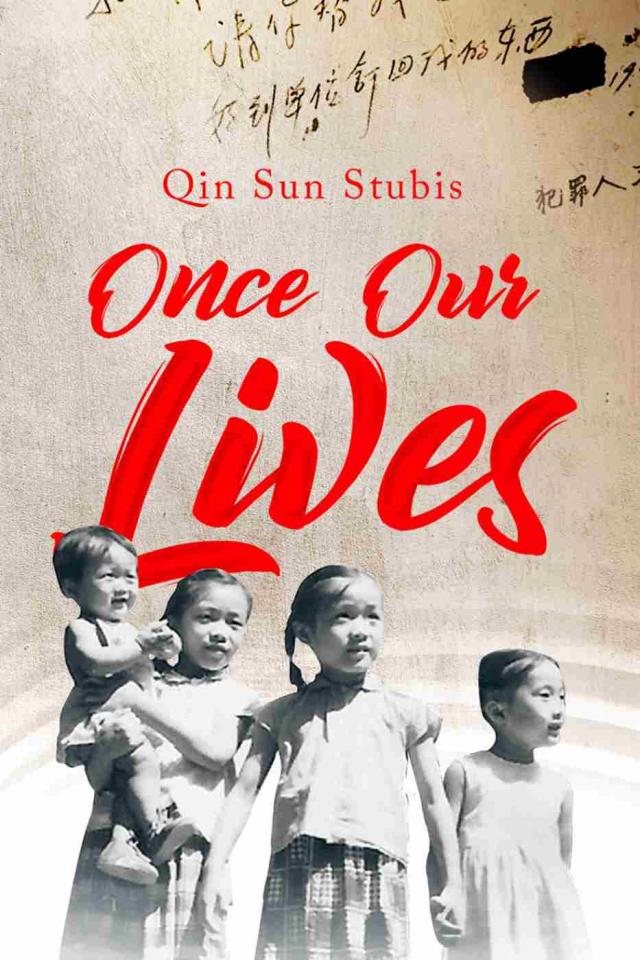


By the time the sun rose above the horizon, Yan was already home, seeing An Chu off on his daily search for work. Yan spent her day taking care of the baby and making small improvements to the house. Whenever she could, she tried to make a little money using her sewing and knitting skills. Sitting in the washbasin with her rattle, little Ping was Yan’s best advertising model. Ping was always dressed cutely in neat, hand-made baby clothes and sweaters, which the slum mothers instantly wanted to have for their own daughters.
“That is a lovely sweater,” one woman commented as she passed by. “My daughter’s birthday is coming in a week. Will you knit me one if I give you the yarn and fifty fen? It’s not much but it’s all I can afford.”
Yan was pleased. “Of course, I will.”
When the woman came back to get her sweater a few days later, she brought along a friend. Yan got five bright coins and a new customer. The Sun family would have meat with their rice for the first time in a month.
Yan could finish an order in a remarkably short time, and she never charged an extra fee for a rush job. People started to like her, even though she conducted her deals in a businesslike manner with no small talk.
Yan began earning regular money crocheting scarves, knitting sweaters, and embroidering pillowcases.
During the 1950s, hand work was not well-respected in China. Only the poor and overly practical grandmothers would make their own clothes. A garment sewed by machine or sporting a label proclaimed the difference between those who could afford store-brand clothing and those who could not. As a result, Yan was paid small handfuls of change for doing a lot of skilled work. She had to keep her needle flying for long hours just to keep her family fed.
An Chu was not bringing much home even though he was out every day searching for work. Yan grew worried and frustrated. Still, she greeted her husband cheerfully every afternoon when he returned home: “You look tired. I’ll bring you some tea. Where did you go today?”
“Oh, I always check out the city job agency and then some local repair shops to see if they need anyone for the day.”
“How was the agency? Anything there?” She tried not to sound too concerned as she made some tea for him.
“No,” he said.
With her brimming teacup suspended in mid-air, she searched for ideas to help her husband to get a job. “Did you tell them we have a baby and really need a job?”
“No.”
“Did you tell them we live in a slum and don’t even have a real home?”
“No.”
“Did you tell them that Chairman Mao has sent us back to the city and we need a job?”
“No.”
She wanted to be patient, but Yan couldn’t stand hearing “no” anymore. Always no, no, and no. She rushed to her husband, dropped the cup down on the table in front of him with a splash, and looked him in the eye. “Why can’t you get something? Can’t you beg them or tell them you’d do anything to get a job?”
“Too many people are looking for jobs. The agency is filled with them. You should see—thousands of them! They all have excuses, newborn babies, dying parents, sick wives, starving children, no place to live, no money to buy milk, no charcoal to boil water. They haven’t eaten for two days. The officials are deaf to our problems. All they say is ‘No jobs today’ and ‘Come back tomorrow.’ I’m not sure if there are any jobs anymore and I don’t think they are, either. They don’t care that, for lots of people, there won’t be a tomorrow if they don’t get jobs soon. They have their own job and that might be enough for them. What can I do? Nobody seems to understand why we left the city and then came back.”
Yan was scared by the dark picture her husband painted for her. “How about the government and the Communist Party? They encouraged us to go there and then sent us back. Shouldn’t they take care of us now?”
“Yan, the whole country is facing hard times right now. The government doesn’t have money to help people like us. We are young. They expect us to fight for ourselves.”
Yan felt physically ill. She collapsed onto the bench next to An Chu.
“What can we do now?” she finally breathed, more to herself than to him.
Yan knew that at this rate there would be many more meals of shredded cabbage and not even the tender middles but the tough outer skins mixed with a handful of coarse brown rice. She hoped they would have enough money to buy the rice.
Yan could not afford to stop working, so playing with Ping meant singing her opera tunes and telling her folktales while she sewed. She didn’t care if Ping was too young to understand the love stories and tragic tales she spun along with her needle. She wanted to fill her daughter’s ears with music and words while her work filled the family’s bellies. She wanted her baby to learn and grow up to be somebody, so Yan worked to create an oasis of culture in this urban desert.
“Ping!” Yan caught Ping as she climbed down out of her wooden basin headfirst. “You scared me, Little Dumpling. You have escaped too many times today.”
As Ping grew more independent, Yan learned to watch the baby with one eye and sew with the other.
“I want Mama.”
“Do you want Mama to sing you another song?” Yan asked as she lowered Ping back into the basin.
“No, I want out!” Ping cried as she resisted, her body suspended in midair and her legs kicking. “I want Mama.”
“My slippery mud eel, my sweet baby, how about staying in the tub for just one more song so Mama can finish this dress? Mama will get you white rice for dinner, just rice, no cabbage?”
Ping stopped struggling when she heard the words “white rice.” She knew how hunger felt and how coarse the outer leaves of old cabbage tasted even at such a young age. She gave Yan a big smile and let herself be lowered down once again into the basin. There she patiently sat and waited for Mama’s needle to stop flying, visions of steaming white joy in her tiny head.
Now that she had her own house, Yan began dreaming about school again—but not for herself. Her wish now was that Ping would be able to go someday. All her children would go. She would tell them how she wanted to get an education but could not, simply because she was a girl. She did not want her children to be punished just for being girls. A smile spread across her face when she thought how the Communist Party had ordered all children to be educated, whether they were boys or girls, from the city or the country, rich or poor, smart or average. All city children were entitled to twelve years of tuition-free education. Youngsters in rural areas got nine years of schooling.
As a woman, Yan was grateful that the Communist Party had worked to promote equality between men and women. It punished discrimination against women as severely as prostitution and opium addiction, making it a criminal offense. As a result, China was (at least in theory) a country of equal rights, where girls were respected, heard, and treated fairly.
At the family level, however, the reality was quite different. Thousands of years of Chinese history made it clear that men were more important than women. Men were physically stronger and played more important roles in family and social life. Starting at birth, boys were given more attention, better clothes and food, and more praise. Men were favored and they knew it.
The importance of the woman in a family was minimal. When a woman got married, she left her own clan and joined her husband’s. Although she did not have to change her last name, her children would take her husband’s family name; her own family name ended with her life. Often, a married woman wasn’t even addressed by name. She was merely referred to as “the daughter-in-law of the Sun family” or “the mother of So-and-So.” Gradually, no one would remember her real name. A family unlucky enough to have only daughters was a family in danger of dying out—of extinction. A woman was pressured to have sons to honor and strengthen her husband’s name. A man with at least four sons was the proudest of all. His neighbors and friends would praise him with the old saying, “He has four boys to carry the four corners of his coffin,” meaning his cup was full, his life was secure, and he had everything he needed for the rest of his life.
In contrast, a family with two or more daughters often became desperate and started to name their daughters Lin Di (“Bringing a Younger Brother”), Zhao Di (“Calling for a Younger Brother”), or Yon Di (“Encouraging a Little Brother”). They used their daughters’ names as ways of summoning the fates to bring them a son.
While without much value herself, a girl with such a name would often become the family heroine when her baby brother finally arrived since she was the one who had brought him. As a result, her status rose accordingly.
Having had a daughter and broken the Sun family’s lucky streak of first-born sons, Yan was subjected to not-so-subtle pressure to carry on the family line.
“Did you hear? The Cheng family was giving out baskets of lucky eggs. Their daughter-in-law just had another boy.”
“How nice. Their family ancestors are so lucky to have such a devoted daughter-in-law.”
Of course, it was a woman’s fault if she had daughters, just as it was a woman’s glory to have sons. Yan felt helpless. Maybe one day she would have a son. Only then, she realized, would she be able to gain a respectable position in the Sun family. But how could she know what she would carry inside herself?
Life was hard and, in one way, that helped distract her from all the ridiculous expectations, slights, and petty grudges. Yan barely had enough time and strength to finish her daily chores and keep her family afloat, much less worry about extending the glory of the Suns. She just wanted to let the future take care of itself, especially since she did not hold the key to it. In an odd way, Yan was comforted by the depth of the abyss into which she had fallen. Since she was sure she had already landed at the very bottom, life could not get any worse. If only she worked hard enough, things would have to get better. What Yan underestimated was the strength of the gravitational pull of poverty and how misfortune usually pointed only one way—downward. Fighting fate was like fighting a tornado—most people surrendered quickly and lost the fire of ambition, never to be rekindled. Few possessed the type of courage, extreme courage, to reject what life brought. Poverty only surrendered to those with a will strong enough to unshackle the choking leash of necessity around their necks. Yan’s persistence and determination would eventually pull her family up from among the dregs of society. But that would not take place until after two more decades of struggle.
Chapter IV
Life of a
Down-and-Out Family
Ping passed her first birthday without celebration, much less presents. Her birthday was just a normal day. If she were a boy, she would have been treated differently.
When a boy was a month old, his father’s parents gave a big banquet in his honor. He was presented to the public for the first time in a way that underscored his importance to the future of the family. Because of him, the family tree was rooted more strongly and deeply, and it was important to give this new seedling help as he started his life journey. The prosperity of the entire family tree depended on it. Guests were happy to share the special occasion and hoped the celebration would also bring good luck to their families. To ensure this, they came with extravagant gifts: gold, silver coins, paper money wrapped in red, bundles of silk, or assortments of rare fruits.
An Chu’s parents did not have much, but if Ping had been a boy, they would have spent every fen they had or even borrowed money to make a feast, give thanks to the Goddess of Mercy, and show off their newest heir. To spread their joy, they would have given away baskets and baskets of red hard-boiled eggs to hungry friends and envious neighbors. But, no, Ping was a girl. There was nothing to celebrate. The Suns didn’t even like to have her around. They did not want to see her eating and growing, a constant reminder of their bad luck.
Luckily, little Ping was too young to understand that anyone could dislike her. She returned the frowning stares of her grannies with big smiles, and giggled at her aunties’ pointing fingers and pepper-hot tongues. Rather than enjoying an easy triumph, the cheerful, red-faced infant left them feeling disconcerted and annoyed.
When Ping started crawling across the dirt floor, no one picked her up except Yan. She believed even a poor child could be kept clean. But Yan wasn’t there all the time and quite often when she came back from an errand or a short trip to the store, Ping was filthy. As she wiped the baby’s hands, knees and face, Yan couldn’t help noticing that the aunts and grannies all looked amused and victorious.
Sometimes Yan needed to be away for longer periods of time. When her husband found extra work or odd jobs that required more than one laborer, Yan accompanied him. One day, An Chu came home with exciting news. He had found a three-month assignment for two people at a quarry a few miles outside the city. Steady work was rare and they both jumped at the chance to earn a few fen each day, breaking rocks into gravel by hand.
At dawn, An Chu was already up, preparing his bicycle for the long day trip. There really wasn’t much he could do with the ancient contraption, all rusted and squeaky, but he cared for it as much as possible. The seat was mutilated, stuffed with cotton, and topped with a homemade seat cover. Behind this, using a wooden board and some straw for a cushion, An Chu built a passenger seat. Every morning, An Chu turned the bicycle upside down and oiled the chain and crumbling brown axles where what was left of the bent and tired spokes wearily gathered. When this was done, he would spin one pedal to make the wheel turn, the chain spooling forward as smooth as silk. Only then would he stand up with a smile to soap his grease-stained hands and get ready to leave the house.
While An Chu worked on the bike, Yan prepared their breakfast and their lunches. Breakfast was simple: a bowl of watery gruel made from yesterday’s leftover rice and some pickled cabbage skins. Yan used less water than usual to avoid their having to go to the bathroom before they could reach their destination.
Yan divided the leftover rice into two oblong, dented aluminum lunch boxes: a large portion for An Chu and a small portion for herself. Then she took out the leftover dishes from the night before. She stuffed most of them into An Chu’s box and put just a little in her own. Sometimes, there was just enough to fill An Chu’s box. To allay her own hunger, Yan placed a few pickled vegetables next to her scoop of rice. The salt, vinegar and spices of the pickles made the rice into a meal. She then wrapped the boxes carefully with a towel and placed them in a bag on the bike’s handlebars.
Yan was almost ready to set out. The last and most important task she had left was to take the sleeping Ping to her in-laws’. She rolled Ping into her arm in such a gentle manner that she did not wake up.
Ping was a good baby. If she had a choice, Yan would never have left her at her in-laws’. Every day, returning after long hours of intense physical labor, Yan would put off resting and go straight to the Suns’ hut to pick her up, for she knew that if she lay down on her bed, her aching bones would not let her up again.
Yan tried to be pleasant when she picked Ping up each day, but she usually got an earful of complaints from her five sisters-in-law.
“Your little dear pooped under my bed today, just like a dog.”
“She peed under mine.”
“She grabbed my toys,” the youngest joined in. “They’re not hers. She doesn’t have any.”
“It would be better to have a puppy,” the oldest snapped. “A puppy is nice. Your baby cries for its mom all day long.”
They especially disliked taking care of Ping because they were not paid for all the time they spent studiously neglecting the baby. Yan and An Chu did not have any extra money.
The sisters, however, found tricky ways to profit from the situation. They constantly left Yan with yarn to crochet scarves and sweaters, which they then sold to passersby in the street. Yan complied silently in the vain hope that they would treat her daughter better.
At daybreak, An Chu and Yan rolled their bicycle out of the hut and started the long journey toward the quarry. Yan wrapped her arms around her husband, and enjoyed the refreshing morning breeze as An Chu pedaled westward away from the dawn sky. They had to get to the quarry as early as possible to start work and squeeze in an extra hour of pay.
The work was intensely physical. An Chu rolled a huge rock into position and pounded it with a giant hammer and chisel. He had to use all his might to crack the rock. His blows were so powerful that the rock vibrated and groaned again and again before it finally shattered into large, irregular pieces. An Chu then broke them into more manageable sizes for Yan to work on.
With the help of a hammer, Yan’s job was to make gravel out of the fist-sized rocks her husband had just created. Yan was good at working with small things—needlework, sewing, knitting and crocheting. She was not good with hammers. In fact, she had never picked up a hammer before. But life was forcing her to learn new things and learn them fast. She watched the other wives around her lift their hammers and let them fall singing on the dull, gray stones. But for some reason, while other wives’ rocks turned quickly into gravel, Yan hit the ground more often than the rocks. Sometimes, she hit her own hand instead.
Her strenuous efforts eventually yielded a smallish pile of fine gravel at the end of the day, but not without help from her husband and at the cost of bruised hands and aching joints—more than she knew she had. Painfully aware of his wife’s tiny size and physical frailty, An Chu kept a close eye on her. Whenever her rock pile got too big, he walked over and insisted he needed a break from the boring and much easier job of splitting boulders. Every swing of An Chu’s hammer magically turned granite into gravel. He made it look so simple. Yan admired her husband, and, inspired by his example, she sped up her own work, ignoring her ringing ears and the complaints of her swollen, throbbing fingers.


