

Once our lives, p.22
Once Our Lives,
p.22


“Hundreds of babies I have brought to this world,” she went on. “But your daughter is one of only two that were born so white. I would be very flattered to be her godmother and see her grow up.”
Yan did not respond.
The doctor was perplexed by Yan’s silence and began to wonder if Yan heard what she said.
“Comrade Gu, are you alright?”
Yan was not just physically tired; she was emotionally drained. Another daughter was a blow to all her hopes. She needed a boy to please her husband and get the troublesome Sun family off her back. Envisioning their reaction to the birth, she felt defeated.
It wasn’t that she didn’t want another daughter or that she preferred boys to girls—she loved Ping and knew that she would love this new white mouse baby, too. But boys—and the women who bore them—fared better in this world than girls and the luckless wretches who kept defiantly churning them out against the wishes of the ancestors. Yan knew full well that both she and her new baby would leave the hospital in a worse position than when they entered it. The hardship of being girls would always follow them. Yan’s life had told her so. If she were a boy, she could have gone to school and had a very different fate. Wealth could be confiscated, but not knowledge. She could have been a teacher, a scientist, or even a doctor. She felt sorry for her daughters and felt like apologizing for not having made them boys. She had been praying for a boy every single day since the beginning of this pregnancy but still ended up having a girl. Why? Why couldn’t she have boys like all the other women in this ward? Hadn’t fate already cheated her enough? Did it have to deny her the smallest chance to make her life easier?
Yan realized that the doctor was still holding her baby. She looked into her puffy eyes, thanked her, and took the child. Although, in the old days, white skin was a happy sign of high birth and an easy life, Yan knew better. When An Chu was finally allowed to come in to see the baby, it took only five minutes for them to abandon any notion of using one of the many poetic, hopeful, or frilly girls’ names so favored and savored in the old China. Instead, they agreed to call me by the serious-sounding name “Qin.” Although in English, it looks and sounds similar to the name of the emperor Qin (“Ch’in”) who first unified China and gave the infant nation its name, the character my parents picked out was anything but ambitious or noble. It was a name for a new, harder world that, like Yan, would continue to suffer the birth pains of its time. The girl whose white skin promised ease and privilege was instead named Diligence because even then her parents knew that only through struggle, patience and hard work would this poor mouse ever stand a chance to someday be someone.
My birth brought not only the sure promise of trouble, but immediate problems for my mother. Yan developed a fever and was ordered to stay in the hospital. Terrified that two-year-old Ping was at the mercy of her nasty sisters-in-law and An Chu would soon be sent away to the bamboo forest, Yan planned an escape relying on the same trick she had used before. She hid her fever by taking the thermometer out of her mouth and reinserting it when she heard the nurse coming back.
Her deception worked. She was discharged and she left for home. But as soon as she walked out the door Yan fainted. During her entire twenty-three hours of labor, An Chu had not brought her anything to eat or drink. He was unaware that the hospital did not provide any food to its patients. Or maybe it was just a man’s carelessness. For months, she broke out in a cold sweat as soon as she felt the slightest twinge of hunger. She often collapsed where she stood and was almost unable to move until she had something to eat. Her fever eventually stopped, but the nasty fainting spells persisted.
Some of the old folks in the slum advised her that since it was an illness brought on by childbirth, another pregnancy was the only way to get rid of it. Yan inadvertently followed their counsel two years later when she had her third child. Miraculously, the fainting spells stopped.
Chapter VII
A “Single Mother”
Afew days after Yan gave birth to Qin, An Chu left for the bamboo forest in Jiangxi Province, five hours away by train. He worked and lived in the forest with a group of construction workers, logging bamboo trees and floating them down the river where they were pulled out and loaded onto trains destined for Shanghai. He was given six days of leave during his first two years of service—enough to get only a few glimpses of his wife and children before returning to the jungles, where the mental images of his family and city life quickly faded away like delicate black-and-white photographs, overpowered by the heat and violent green of the tropics.
Yan had to become both the man and the woman of the household. Once a month, Yan went to the accounting department of the District House and Land Management Bureau to collect An Chu’s paycheck, but after the agency deducted his “living expenses,” what was left was too little for Yan and her daughters to live on.
An Chu’s sisters were fed up with their brother’s troublesome family and stopped helping them altogether once he was out of sight. To feed herself and her children, Yan took a job sewing purses and wallets.
There was no way to call An Chu in the forest so Yan wrote him a letter telling him what had happened. It took three months for him to get the note, and, when he did, he was terribly upset and disappointed. He thought by sacrificing himself and working long, tiring hours in this sweltering hell that his family would be well-provided for. He did not know that half his pay was being deducted for the two daily cups of rice and the “rent” for the tin shack in which he and 20 other men lived without water or electricity. If he could have cut down on his expenses and lived on wild bamboo shoots to send more money home he would have, but he couldn’t change the rules. He was powerless and too far away to help his family.
Life at home was worse than An Chu feared. Even with the added money from her own job, Yan was barely getting by. Every morning, she got out of the bed as soon as she heard her in-laws’ squeaking door. She knew it must be four-thirty and they were leaving for the morning market. Yan searched through pitch-black room for her socks and shoes and ignored the urge to follow them. The famine had reached Shanghai, and not even a single vendor was giving out scraps any more. Yan changed and fed the baby, holding her for a few precious minutes, knowing it would be night before she would see her again. She lowered the baby gently into a comfortable bamboo cradle cushioned with a soft, clean quilt, and moved the cradle to the very center of the wooden hut in case of an earthquake. Qin was supposed to be fed and changed at noon by her brother Chon Gao, but the teenager was often too busy to stop by, and when he did, too embarrassed or disgusted to change the baby’s diaper. If all went well, Yan returned late at night to find the baby’s face covered with a thick glue of rice cereal and the quilted cushion swollen and heavy, serving as a giant, soaking diaper for the neglected child. Mostly, little Qin lay quietly, staring and whimpering softly after a whole day alone in the cradle.
Yan washed the soiled cushion every day so the baby would have a clean bed to start her day. Winter days were the worst. When she hung the quilt out to dry, it turned into a thick sheet of ice. Yan had to warm it on top of the family rice pot so her little baby could have a clean, if slightly sticky, quilt. At least it smelled like food on those days when the baby went hungry. Yan shook her head and sighed.
After putting the baby down, Yan got Ping up.
“Ping, Ping,” Yan whispered into her daughter’s ear as she held out her favorite pink sweater. “Give mama your little arm. Wake up now, my little angel.”
She inserted one little arm into a sleeve, lifted Ping up slightly, slipped her own hand underneath her, and cooed, “Now, my little girl, give mama your other arm.”
Ping opened her eyes, gave Yan a smile, and went back to sleep.
Yan looked at her sleepy daughter and tickled her little feet one at a time. “Wake up, sleepyhead. Please—” she pleaded. “You want Mama to make some money and buy us dinner, don’t you?”
It took a few more moments before Ping responded to her mother’s efforts to get her up. Pigtails were tied and breakfast porridge served before mother and daughter headed out the door. There was always one final lingering look back into the dark room where the crib lay and a moment of hesitation before the door closed with a quiet moan.
Yan held Ping’s hand and walked her to a nearby state-run nursery school where kids were kept in one big room, fed home-brought lunches, and given naps in the middle of the floor on a large, worn-out quilt. Government nurseries, which only charged a small fee, were popular among working-class families, but there was a lengthy waiting list to get in. These primitive daycare centers could not cope with the baby boom of the 1950s and 60s, created by the party leadership’s enthusiastic encouragement that women have more children. China had never put the infrastructure in place to care for, feed, or educate all these extra little citizens. Parents had to work and most newborns were raised by their grandparents. Yan did not have that luxury, so she felt lucky to have gotten Ping into a local nursery. As Yan dropped her off and waved goodbye, she only wished she could have brought Qin, too, but children under two were not allowed.
An hour later and a couple of miles away from her children, Yan sat with a group of women in their fifties and sixties, sewing purses and wallets in a “neighborhood processing unit”—a fancy term for a factory. She worked in a bare room with a concrete floor, benches, and a long wooden table, around which workers sat and did piecework for the state for minimal pay.
Most of the workers were retired working-class women looking for a little extra cash. In addition to the money, they enjoyed being part of a group, gossiping all day long about minute details of the most trivial happenings around them. There were constant bursts of laughter among the bent backs, interspersed with tears, friendly slaps, and a steady stream of overlapping conversation. The old ladies all addressed each other as “sisters”—except for Yan.
When Yan first arrived, the others examined her closely with critical eyes. Yan was always neatly dressed in muted, fairly decent clothes, which hinted at a more sophisticated or intellectual side. On the other hand, the dark, shiny pigtails cascading down to her waist gave her the look of a very young girl, maybe in her late teens, they guessed.
After a few days of close observation, they relaxed and began to see Yan as a harmless, shy, and reliable co-worker. Although there was always a stream of conversation around her, Yan never joined in. Her only focus was on her work. She was respectful to all her colleagues, but Yan never talked about herself or why she was there. She just worked.
Once they became used to Yan, they started to call her “Little Girl.” Sometimes, they caressed her glossy pigtails, shook their heads, and sighed. “You are such a young girl, Yan. You shouldn’t be here with us, a bunch of old fools.”
Their maternal instincts prompted them to protect and take care of Yan in whatever little ways they could. They brought her mugs of hot tea at lunch and let her leave early while they stayed behind to clean up. Yan gratefully accepted her co-workers’ kind offers of help. She needed to get home to her children.
The years moved slowly when every minute was a struggle, and every day was a fight. Yan looked forward to when Qin turned two and could also go to nursery school. It bothered her to leave a baby in a crib all day long without being held, caressed, and pampered, with no one to change her diapers, or respond to her cries. It was torture to choose between leaving her or having her starve. Yan prayed that the baby would grow up quickly and when Qin turned one, she handed in the school application a year early. In China, a child’s first birthday is considered the most important in its life, but Yan couldn’t wait for Qin to turn two.
Finally, the time arrived.
It was a hot mid-July day. For the first time, Yan took a day off from work. She got up early, and scrubbed the baby clean in the family’s wooden tub as Ping ate her breakfast.
“Will Qin join my nursery school today?” Ping asked with her mouth full, seeing her mother having some water fun with her baby sister.
“Come on, Qin, splash!” Yan encouraged the baby before she turned to Ping. “Yes, she will. From now on, she will be able to play with other children instead of staying in her crib all day. Will you share your friends with her in school?”
“Of course, I will.” Ping promised. “And I’ll tell the teachers to change her diaper, too.”
“Good girl,” Yan said. “You both are my good girls,” she said to Qin as she looked at Ping tenderly. “Come on, let’s splash some more. It’s fun.”
She supported the baby’s back with one hand while gently hitting the water with the other. As water drops flew, Qin waved her arms and legs.
“Come on, Qin, splash Mama!”
Qin waved her arms harder and harder in and out of water as glistening droplets filled Yan’s hair. She laughed hard and was surprised by the sound of her own joyful voice.
“I’m so happy today!”
She dried Qin up, and got her into the most decent outfit she could find.
“Shall we go to the nursery now?” Yan asked.
Ping couldn’t wait. “Let’s go, Mama! Let’s go!”
Yan held Qin in one arm as she held Ping’s hand. In her belly was yet another life kicking gently. Together, they headed toward Qin’s new nursery.
Yan’s cheeks were flushed with excitement. She wanted to tell the whole world: Today is my daughter’s second birthday and I’m sending her to a nursery!
No more urine-soaked quilts. No more porridge-glued face. No more leaving her baby alone at home. It made her shudder to recall the time when government workers came to the slum looking for building violations. Spotting the homemade hut, they knocked on the door. When they received no answer, they began testing its safety the only way they knew—by hitting the frail walls with sledgehammers and seeing if it would fall down. Some good-hearted neighbors ran to Yan’s workplace and brought her the news. By the time Yan arrived, she found her baby in her crib in the middle of the room completely buried by fallen objects. Luckily, the baby was unharmed. Whenever she thought about the incident, Yan held her baby even tighter.
The nursery interview on which Yan had pinned all her hopes turned out to be a complete disaster. After inspecting the baby, the head of the school declared that Qin was a paraplegic and would probably never be able to walk. She had never seen a child that age who could not walk … or even sit up.
“Our school is overwhelmed as it is,” she said matter-of-factly. “We can’t take disabled children here.”
Yan stood there, her face drained of blood. She became numb and could not feel her own body. Of course, she was not blind. She knew Qin could not sit or walk. The baby was lying alone in her crib all day with the exception of the few hours when Yan was home. She thought the nursery school would give Qin more attention and gradually get her on her feet. But paraplegic? That was not possible! Had she ruined her baby’s life?
In the end, Yan managed to pull herself together. She gathered her children and headed home with a curtain of tears over her eyes and face.
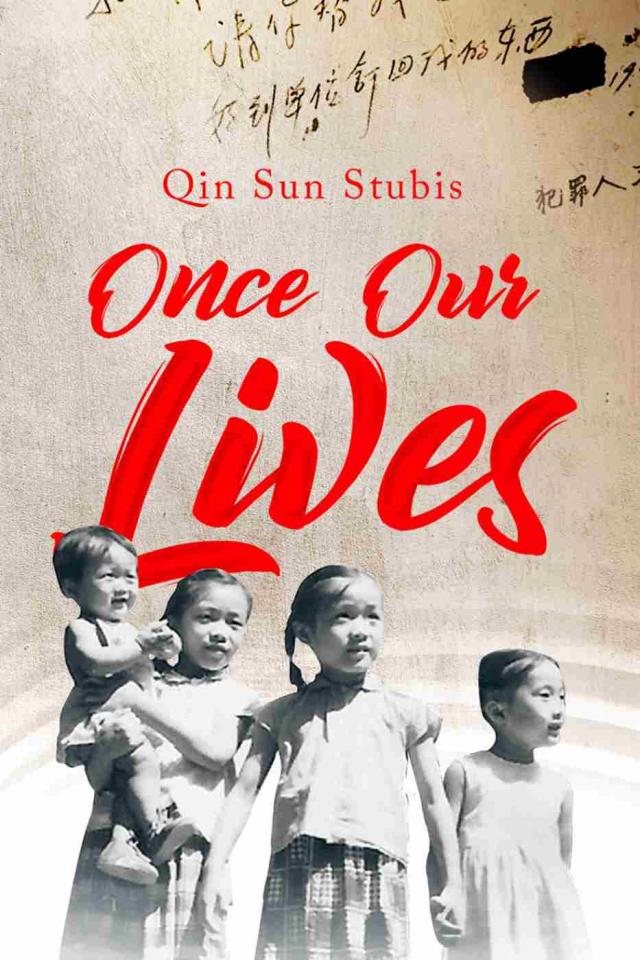
So ended my second birthday, with no nursery school, no father, no party, no gifts, no laughter, no relatives showing up to wish us well. Just a crying mother and a confused, hungry four-year-old sister in a hot, upside-down, wooden box with ugly sledgehammer marks on the outside.
The next day, Yan did not go to work. She never went back. From then on, she stayed home with Ping and me.
In spite of her growing stomach and fatigue, she was determined to get me on my feet, make me stand, walk, skip, run, and, above all, become a normal child. She quietly sold several of her precious keepsakes (among them, the last gold watch her father had given her from his beloved clock shop) in exchange for a few bottles of fish oil and calcium tablets to strengthen my bones.
Her hard work paid off, and she began to see me making progress, but at a cost. Without her job, the whole family had almost nothing to eat. There were days when she and Ping had to go to bed without dinner. She had to coax the four-year-old Ping to sleep with just two milk candies.
“Go to sleep, dear,” she said. “Tomorrow we will have dinner on the table.”
“But I’m not sleepy, Mama. I’m hungry.”
“When you fall asleep, you won’t feel hungry anymore. Trust me. Close your eyes and think about a dream you wish to have tonight, a dream that will please you.”
“How about a banquet with lots of dishes?”
“What kind of dishes?”
“How about steamed fish, pork belly in brown sauce, egg custard with pork fat on top, and lots and lots of rice?”
“That sounds wonderful!”
“Can I invite Grandpa Ho De? He hasn’t been here for a long time, and he loves pork belly in brown sauce.”
“Sure.”
“I’ll pick out the best piece for him.”
“That’s a good girl. Now what kind of new games will you play with Grandpa? Will you take him out for a walk when I prepare the dishes? Grandpa is getting old. You have to hold his hand and walk slowly, right? Will you draw pictures for him? He loves your pictures so much that he has pasted them all over his store …”
Yan tucked Ping in for the night while the sky was still bright to spare her an evening of suffering. Little Ping had her arms wrapped tight around her mother’s neck and they talked for a long, long time. Their conversation gradually turned into a monologue as Ping’s little arms slipped off and fell onto her pillow. Yan looked at her daughter: Ping was sleeping peacefully with a smile on her face. She had reached a world where food was plentiful. Today was finished. But what would happen tomorrow? What could Yan give to Ping for breakfast, and where would she get the dinner she had promised to her daughter tomorrow? These worries would haunt Yan’s dreams.


