

Once our lives, p.23
Once Our Lives,
p.23
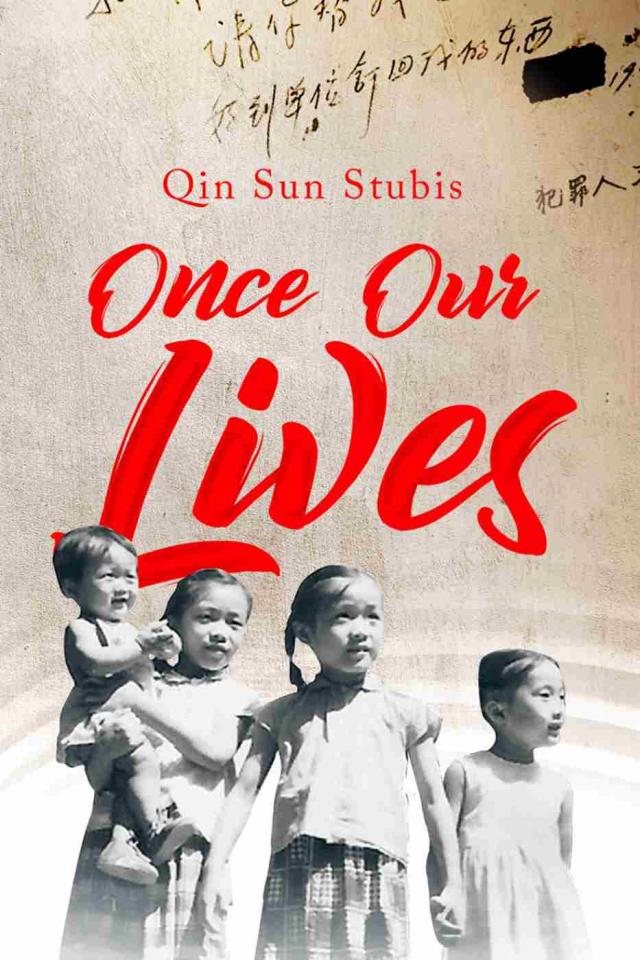


Plotting and scheming in the forest, An Chu somehow managed to convince his manager to send him back to Shanghai a year early for the birth of their third child. He arrived just in time to hear the news: Yan had delivered a beautiful, dark-haired child—their third. The infant was named “Min,” a warm-sounding word meaning “Intelligence.” Yan and An Chu were so happy they didn’t even care that she was a girl.
Chapter VIII
Last Days of the Shantytown
The tiny wooden hut was now bustling with life. Yan enjoyed being an at-home mother for her three young daughters. The family was finally together again with An Chu working nearby. Though his wages were modest, Yan was good at stretching every penny he earned.
Yan preferred spending time with her children to doing chores and running the errands that, by necessity, occupied most of her days. Her life had always been one of haste. Now she wanted to do everything as slowly as possible, soaking in every little detail of life. Simple pleasures—hugs, giggles and kisses—were enough to make her feel rich and happy.
Every morning, she took her time making eight elaborate pigtails, two each for herself and the girls. Ping and Qin usually got “mouse tails”—long, thin, tightly braided pigtails. Min’s hair was too short for “mouse tails,” so she got “fireworks” with two, cute funnel-like brushes on the top of her head. Of course, all the girls got one final touch: butterfly bows. Soon pigtail-making became an important part of their day. The chores could wait.
“Mom,” Ping held up an empty jar and cried out. “There’s no more milk, and I think Min is hungry!” At the age of five, Ping enjoyed being a little mother, filling the baby bottle for her little sisters.
“I’m coming,” Yan replied as she pulled a ribbon from between her teeth and finished the last bow on Qin’s hair.
“Let’s make a pot of rice and some more milk for Min,” she said as she turned around and picked up a dented aluminum pot.
Poor families without the money to buy milk turned to an ancient Chinese solution—a magic formula used for hundreds of generations: Mothers added an extra cup of water to the family pot of rice. When it came to a boil, that extra cup of water bubbled into a thick layer of translucent, milky liquid. If you put that cup of rice milk into a baby bottle and added a pinch of sugar, you had yourself some infant formula. The baby got her milk and the family got their rice. Millions of Chinese babies were nourished this way until they graduated to solid foods. Ping was a rice-milk baby, and so was every one of Yan’s other children, growing up without ever tasting real milk. Rice was what the rich and poor Chinese had in common: As long as a pot of rice was on the table at dinnertime, everything was fine.
After she finished her household chores, Yan did some sewing and knitting. She now had a family of five to clothe. Without a sewing machine or money, she had to plan ahead for every season. To pinch pennies, she patched socks and shoes, and lengthened sleeves of old jackets that were getting too short for her growing daughters. Yan used tricks she learned from the costume shop in her theater days. She searched through her sewing basket, and dug out matching ribbons and bows, which she stitched onto the upper parts of sleeves of the children’s worn-out clothes. Her daughters’ blouses and old jackets suddenly became new again. In the Sun household, necessity was the mother of fashion.
Only when a piece of clothing became completely unwearable would Yan make something new, though she often could not even afford to buy material. She shook her head as she gently washed socks full of holes, or torn underwear that was beyond repair. She had to wait until she could save a few fen here and there and then go to a fabric store to find leftover bits from the cutting area. Scraps of fabric were pieced together like a jigsaw puzzle and sewed to make sleeves, mittens, or little underpants for her girls. Yan was a magician who could turn old clothes into new ones or an adult sweater into children’s scarves and hats. She could transform an ancient outfit forgotten at the bottom of a drawer into a trio of identical jumpers for Ping, Qin and Min.
With material in such short supply, nothing could be wasted. When old clothes and sheets could not be patched anymore, Yan salvaged the fabric to make soles for their cotton shoes.
She usually chose a sunny day to work on this labor-intensive task. First, a clean wooden board was laid out under the sun, and then a small pot of water was placed on the stove. When it came to a boil, a flour-water mixture was poured in and stirred until it turned into a mass of thick, hot glue. Now, Yan was ready to proceed to the real action: One layer of fabric was followed by one layer of glue. After each strip of fabric was applied, she smoothed it with her palm to get rid of air bubbles that were trapped underneath. Layer after layer was added until she ran out of fabric. Then she had to wait for the sun to do the rest of the work, hardening the material. It was time for her to clean her hands and the pot, and spend time with her girls.
By nightfall, Yan peeled the thick, stiff fabric off the wood. She traced shoe shapes on it with small ones squeezed in between big ones to get maximum use of the precious material. After cutting them out with a sharp knife, all the soles were stacked in a pile and Yan began finishing them. She took a piece of thick, coarse thread she had waxed smooth by rubbing it hundreds of times against an old candle and ran it through the soles over and over until the stitching was so close it became part of the fabric itself. She then attached the soles to the sewn cotton bodies of the shoes. Yan had to force hundreds of stitches back and forth through every stack of fabric board to make each shoe.
Hand-made cotton shoes took a long time to make and wore out quickly. And since they were made from fabric and flour, they were not waterproof. To help them last, An Chu trimmed rubber from broken bicycle tires and nailed an extra layer of protection onto the bottoms. At the time, it was a popular way for farmers and the city’s poor to be able to afford shoes. And with three daughters and a husband, Yan had to make a lot of them.
Despite her busy life, Yan always made time for her father. Ho De’s life had gotten simpler since Chon Gao graduated from high school and, knowing a lot about trouble, joined the Police Academy. Ho De now lived alone. Although he took care of the store, he stopped taking care of himself. He did not want to be bothered with starting the stove, cooking a hot meal for one, or even changing his clothes. His hair got whiter. His back bent lower, though he was not even sixty. Knowing that he would never do it himself, Yan came to clean his apartment, do his wash, and draw him a bath. She wanted to take care of him, despite her own hard life. It made her happy that Ho De came to have dinner with them once a week. He seemed to come back to life playing with his three granddaughters. He brought them gifts of fresh sugarcane to suck on, oranges to hold and smell, and walnuts to crack and share. He tickled them until they squealed and hugged them tenderly. After all the noisy fun, which was nearly enough to bring the wooden hut down in splinters, the family sat down for a hot meal. It was the only hot meal Ho De had until his next visit the following Friday. What he ate in between, no one knew. But all the neighbors later recalled that he never lit his stove.
The last time he visited, everything seemed to unfold in a normal way. Ho De came, ate, stayed until seven or eight at night, and was accompanied to the bus stop by An Chu. When he got home, he went out as he always did with two thermos bottles to buy hot water for himself. A neighbor recognized Ho De walking unsteadily in the dark and offered to carry the bottles for him.
“Are you alright, Grandfather?” he asked respectfully as he took the bottles.
Ho De collapsed before he could respond and never woke up again.
Grandpa Ho De’s shocking death was my earliest memory. I woke up in the middle of the night and called to my mother to turn on the light so I could go to the bathroom. Mother was always worried I would wet the bed, and had tied the light switch to a long string attached to her bed frame so we could go quickly if the need arose. That night, I called, and called, and called. I was getting desperate when the light finally came on. Instead of my mother, I saw the motionless face of my grandmother glowing in the dim light. Why was my father’s mother here? She never came to our house. And where was my mom? For the first time in my life, I had the feeling of being awake in a dream. Everything seemed unreal. Then, I started to search for my father, but he was not there, either. By that time, I had forgotten why I had called my mother in the first place. All I knew was that since that weird night, Grandpa Ho De never came to visit again.
The next morning, Mother and Father finally came home. There were no smiles on their faces when they saw us. Mother’s swollen eyelids told me she had cried a lot and something awful had happened. When I went over to her and hugged her leg, I looked up and saw tears flowing down her face. Her body was shaking, as if she were laughing, but the sounds she made were strange and terrible. I was scared and held her tight as the quaking went on and on.
A few unsettling days later, Mother took out our best clothes and told us that we were going to visit Grandpa Ho De.
I was too young to understand that the fancy house we arrived at was a funeral home. I saw him lying in an oblong wooden box with a red satin blanket covering him up to his chest. He looked very peaceful, just like someone who was asleep. Mother held baby Min and wept. I never saw her cry so much. I tried to comfort her, but nothing I did seemed to make any difference.
Finally, Mother pulled herself together and instructed Ping and me to bow and bid farewell to Grandpa Ho De.
“Grandpa loved you very much,” she said. “Now it’s time you should say ‘goodbye’ to him.”
I could not understand Mother’s intention or why we were there in the first place, but I didn’t like the sound of her request and the feeling of everything else going on around me. I refused to bow, saying, “Grandpa is sleeping. I’ll wait for him to wake up and then I will play with him.”
At my reply, Mother broke down again. She wrapped her arms around me and squeezed me so tightly that I could barely breathe. Her tears wet my face and alarmed me. I did not understand that people would die, and Grandpa Ho De would never wake up again or play with me.
Later in life, Mother recounted many times the story of Ho De’s burial service. It was a sad scene, with only her, my dad, Uncle Chon Gao, Ping, baby Min, and me gathered around him to bid him an eternal farewell. No other relatives came. No one from my father’s family came.
My mother took Ho De’s death very hard. She borrowed a tremendous amount of money to buy him a decent coffin, a final change of clothes, a red silk quilt, and a burial plot. She put his Bible on his chest before the coffin lid was closed, and he was lowered into the ground.
Of the four parents Yan had, Ho De was the third who had left her. He had loved her, taught her, and given her a treasured dowry of aristocratic Chinese manners, pride, and dignity, which Yan carried all her life even during hard times. Through his teachings, Ho De’s legacy lived on far beyond his years through Yan’s life and the lives of her children.
When Yan and An Chu went to clean out Ho De’s run-down, bare apartment, there was nothing of value left. A few splintered chairs, third-hand knick-knacks, and three dirty rice bowls in the sink were apparently Yan’s entire sad inheritance. It was no wonder she fainted when she found the money. Millions of dollars in cash were stuffed into the mattress and wooden posts of the bed he had slept on. There was so much money they would have needed half a dozen wheelbarrows to cart it away. Ho De had literally been lying on a secret fortune.
And, like most astonishing secrets, it was, of course, too good to be true. The 1,000-yuan notes, decorated beautifully with blue thread, red numbers, and embossed gold seals, boasted Dr. Sun Yat-sen’s portrait and signature—proud shadows of the old order, the days of the nationalist republic before the communists rose to power. Why had so much money been hidden away for so long, without anyone’s knowledge? Yan had her own explanation: She believed it had been secreted away by her late adoptive mother, Jin Lai. Why she chose to keep paper currency, rather than gold or silver, no one would ever know. The heartbreak of it all was that the beautiful piles of money were completely worthless. Still, An Chu and Yan decided to use it to give Ho De a royal send-off. Taking the treasure to the house’s traditional, private courtyard, they carefully stacked the thick wads of money in a pyramid reaching as high as Yan’s waist and set fire to it. As Yan watched the bright sparks and yellow-rimmed, glowing ashes rise into the air, she was startled by a visual echo the colors recalled in her mind, summoning back the glinting of the beautiful, golden watches so beloved by her father so long ago. All those golden timepieces, Yan thought, as well as the golden times they had spent together, were now gone, literally gone up in smoke.
Life went on in the small wooden hut, but without Ho De, it would never be the same. In the absence of Grandpa’s treats, hugs, jokes, and laughter, the children learned to keep him alive in their memories. Through their mother’s stories, they understood that Grandpa Ho De was a learned man, an expert calligrapher, and a lover of books. So, they picked up books and started their own calligraphy lessons. Grandpa Ho De’s tales were their childhood favorites, and they told them to each other over and over. Most of all, they loved to snuggle together under Grandpa’s old black-and-white bathrobe until it became threadbare. Ho De was forever their best and only Grandfather. Years later, even when they had trouble remembering him clearly, they could still feel his warm presence under the skeleton of his robe.
Part IV
Rapids of Life,
Where Are You Taking Us?
(Shanghai, 1965 to 1975)
Chapter I
Our New Home
“ Have you heard the news?”
“What?”
“The government wants to tear down our huts!”
“My hut!?”
“All our huts.”
“Are you sure?”
“Old Li knows some important people in the city. He said that, if we don’t leave, Liberation Army soldiers will come with their guns and drive us out!”
“It’s not possible!”
“Where can we go?”
Just as Yan finally started to feel settled in the shantytown she now called home, rumors began that the whole village would be demolished. Its wretched living conditions violated many of the new public health regulations and the Communist government’s vision of a new utopia. It had to go, although no one had thought through where all these people would actually live.
People panicked about the possible destruction of their homes and the poor but close-knit community they had painstakingly built. They had worked hard to create these crude huts, which, along with their broken furniture and dented cooking pots, were filled with their lives’ most precious memories. Despite the squalor, the shantytown was home, and the thought of living somewhere else made them feel scared and lost. Most people hoped against hope that the rumors would go away and started to believe they might be left alone until, one day, uniformed men appeared with buckets of glue and brushes as big as spatulas, and started to post evacuation notices over their front doors. Families that ignored the notices or didn’t know how to read came home from work and found everything they owned in the street, and their front doors nailed shut. Even if they couldn’t understand the large Chinese characters written in bloody red, shouting, “DANGER! STAY OUT!” they knew that their homes were doomed and their lives were about to change.
Instead of creating order, as the authorities had hoped, tearing down the shantytown caused more chaos. People ran around aimlessly, not knowing what to do. Communities, neighbors, and friends disappeared along with the help, advice, and comfort they provided. Piles of broken things were scattered everywhere, people were shouting, children crying, and chickens running about loose, looking for familiar landmarks in the rubble. People began worrying about being robbed of the little they had by others who had lost everything. Families whose huts were still standing bundled up their treasures and disassembled their furniture, ready to flee when the sledgehammers started pounding on their walls.
Although I was only five at the time, I sensed something was going on. I saw neighbors moving out furniture, folding quilts, packing clothes, and loading their belongings onto waiting wagons and wheelbarrows. All the noise and activity attracted me. I wanted to go outside, stand in the middle of the action, and participate in the excitement. I wanted to find out where all my friends were going. Maybe I could play with them one more time before they were put on top of their wagons and disappeared with their parents. But Mother wouldn’t let me get out. Instead, she ordered me and my sisters to stay inside our boring hut all day long. She even closed our front door so we couldn’t see what was going on!
“It’s too dusty outside,” she said plainly as if nothing was happening. “Please stay inside with Mama.”
What do you mean dusty? Our floor is made of dust! I protested in my head.
The hut was dark, just like on a rainy day. And so, I did what I always did on rainy days: I started playing the “peeking” game. Spying on the rest of the world was my favorite thing to do when I got bored. Our house was built with badly joined wooden planks filled with gaps and slits. One of my great entertainments as a child was to experience the living kaleidoscope of the outside world through long, skinny lenses. Some of the strategically located secret windows served me well over the years and taught me a lot about the life Mother had tried to hide from me. Once I crouched in a corner and watched in horror as my best friend’s parents tore each other’s clothes and cursed at each other until her father had enough, knocked her mother down, and walked away.


