Science fiction the best.., p.22
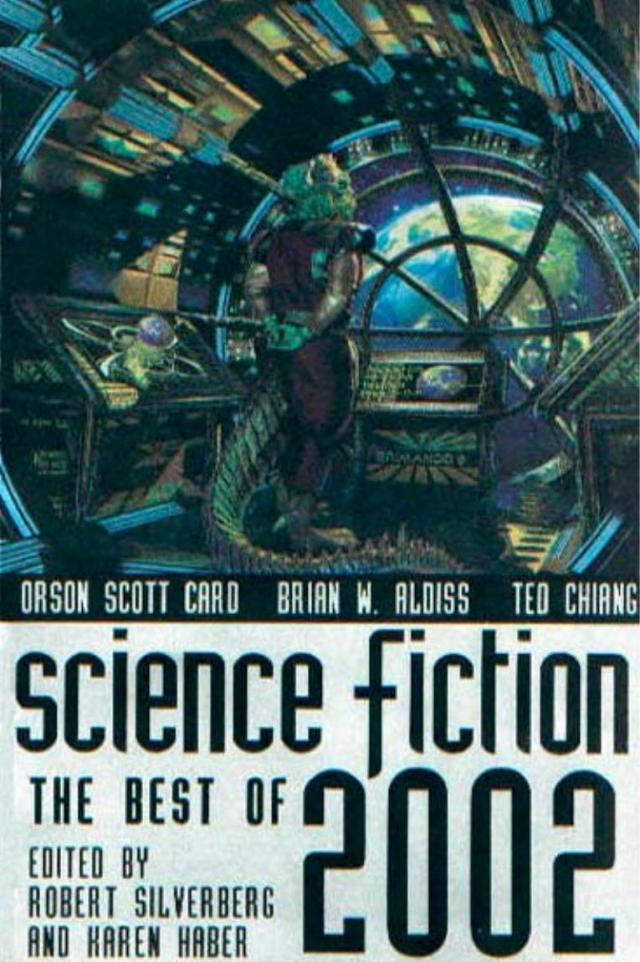
Science Fiction: The Best of 2002,
p.22


I found that the warren of interconnecting corridors
and rooms, cheaply built of thin partition walls and lit
only at intervals with low-power electric bulbs, presented what seemed to be an almost endless combination of random paths and routes. I stood my paintings like sentinels, at odd and hidden positions in the maze, behind doorways, beyond corners in the passageways, irrationally
blocking the darkest places.
I would then leave the building and normal life re-
turned for a while. I would start new paintings, or, just as often, walk down to the streets with my easel and stool
and begin to work up a supply of commercially attractive
landscapes. I was always in need of cash.
So my life continued like that, month after month, un-
der the broiling Muriseayan sun. I knew that I had at last found a kind of fulfilment. Even the tourist art was not
all drudgery, because I learnt that working with representational paintings required a discipline of line, subject 2 0 3
C H R I S T O P H E R P R I E S T
and brushwork that only increased the intensity of the
tactile art I went to afterwards and which no one saw. In the streets of Muriseay Town I built a small reputation as a journeyman landscape artist.
Five years went by. Life was as good to me as it ever
had been.
Five years was not long enough to ensure that life could
always be good. One night the blackcaps came for me.
I was, as ever, alone. My life was solitary, my mood
introspective. I had no friends other than whores. I lived for my art, working through its mysterious agenda, post-Acizzone, unique, perhaps ultimately futile.
I was in my storage depot, obsessively rearranging my
boards again, placing and replacing the sentinels in the
corridors. Earlier that day I had hired a carter to bring down my five most recent works and since the man left I
had been slowly moving them into place, touching them,
holding them, arranging them.
The black-caps entered the building without my being
aware of them. I was absorbed in a painting I had com-
pleted the week before. I was holding it so that my fingers were wrapped around the back of the board but my palms
were pressing lightly against the paint at the edges.
The painting dealt obliquely with an incident that had
occurred while I was in the army in the south. Night had
fallen while I was on patrol alone and I had had difficulty getting back to our lines. For an hour I wandered in the
dark and cold, slowly freezing. In the end someone had
found me and led me back to our trenches, but until then
I had been in terror of death.
Post-Acizzone, I had depicted the extreme fright I ex-
perienced: total darkness, a bitter wind, a chill that struck 2 0 4
T H E D I S C H A R G E
through to the bone, ground so broken that you could not
walk without stumbling, a constant threat from unseen
enemies, loneliness, silence enforced by panic, distant
explosions.
The painting was a comfort to me.
I surfaced from my comfort to find four black-caps
standing back from me, watching me. They were carrying
their batons in holsters. Terror struck me, as if with a
physical blow.
I made a sound, an inarticulate throat-noise, involun-
tary, like a trapped animal. I wanted to speak to them,
shout at them, but all I was capable of was a bestial sound.
I drew breath, tried again. This time the noise I made was halting, as if fear had added a stammer to the moan.
Hearing this, registering my fright, the black-caps
drew their batons. They moved casually, in no hurry to
start. I backed away, brushing against my painting, caus-
ing it to fall.
The men had no faces I could see: their capped helmets
covered their heads, placed a smoked visor across their
eyes, had a raised lip to protect their mouth and jaw.
Four clicks as the synaptic batons were armed—they
were raised to the strike position.
‘You’ve been discharged, trooper!’ one of the men said
and contemptuously threw a scrap of paper in my direc-
tion. It fluttered at once, fell close to his boots. ‘Discharge for a coward!’
I said . . . but I could only breathe in, shuddering, and say nothing.
There was another way out of the building that only I
could know, through the underfloor warren. One of the
men was between me and the short flight of steps that led down. I feinted, moving towards the scrap of paper, as if 2 0 5
C H R I S T O P H E R P R I E S T
to pick it up. Then I spun around, dashed, collided with
the man’s leg. He swung the baton viciously at me. I took an intense bolt of electricity that dropped me. I skidded across the floor.
My leg was paralysed. I scrambled to get up, rolled on
my side, tried again.
Seeing I was immobilized, one of the black-caps
moved across to the painting I had been absorbed in
when they arrived. He leaned over it, prodded at its sur-
face with the end of his baton.
I managed to raise myself on my good leg, half-
crouching.
Where the end of his baton touched the tactilist pig-
ment, a spout of fierce white flame suddenly appeared,
with a sharp crackling sound. Smoke rose copiously as
the flame died. The man made a sardonic laughing sound
and did it again.
The others went over to see what he was doing. They
too pressed the live ends of their batons against the
board, producing spurts of bright flame and much more
smoke. They guffawed.
One of them crouched, leaned forward to see what it
was that was burning. He brushed his bare fingertips
across an undamaged portion of the pigment.
My terror and trauma reached out to him through the
paint. The ultrasonics bonded him to the board.
He became still, four of his fingers resting on the pig-
ment. For a moment he stayed in position, looking almost
reflective as he squatted there with his hand extended.
Then he tipped slowly forward. He tried to balance him-
self with his other hand, but that too landed on the pig-
ments. As he fell across the painting, his body started
jerking in spasms. Both his hands were bonded to the
2 0 6
T H E D I S C H A R G E
board. His baton had rolled away. Smoke still poured
from the smouldering scars.
His three companions moved across to find out what
was wrong with him. They kept an eye on me as they did
so. I was trying to lever myself upright, putting all my
weight on the leg that still had feeling, letting the other dangle lightly against the floor. Sensation was returning quickly, but the pain was unspeakable.
I watched the three black-caps, dreading the menace
they exuded. It could only be a matter of time before
they did to me whatever it was they had come to do.
They were grappling with the man who had fallen, try-
ing to pull him away from the pigments. My breath was
making a light screeching noise as I struggled for bal-
ance. I thought I had known fear before, but there was
nothing in my remembered experience that equalled this.
I managed a step. They ignored me. They were still
trying to lift the man away from my painting. The smoke
swirled from the damage they had caused with their ba-
tons.
One of them shouted at me to help them.
‘What is this stuff? What’s holding him against that
board?’
The man started screaming as the smouldering pig-
ments reached his hands, but still he could not release
himself. His pain, my agonies, contorted his body.
‘His dreams!’ I cried boldly. ‘He is captive of his own
vile dreams!’
I made a second step, then a third. Each was easier
than the one before, although the pain was terrible. I
hobbled towards the shallow stairs by the stage, took the top one, then another, nearly overbalanced, took the third and fourth.
2 0 7
C H R I S T O P H E R P R I E S T
They saw me as I reached the door beneath the old stage.
I scarcely dared to look back, but I saw them abandoning
the man who had fallen across the pigments and hoist their batons to the strike position. With athletic strength they were moving quickly across the short distance towards me.
I dived through the door, dragging my hurt leg.
Breath rasped in my throat. I made a sobbing sound.
There was one door, a passage, a chamber and another
door. I passed through all of them. Behind me the black-
caps were shouting, ordering me to halt. Someone blun-
dered against one of the thin partition walls. I heard the wood creaking as he thudded against it.
I hurried on. The curving passage where I stored some
of my smaller paintings was next, then a series of three
small cubicles, all with doors wide open. I had placed one of my paintings inside each of these cubicles, standing
guard within.
I passed along the corridor, slamming closed the doors
at each end. My leg was working almost normally again,
but the pain continued. I was in another corridor with an alcove at the end, where I had stood a painting. I doubled back, pushed the door of one of the larger chambers and
propped open the spring-loaded door with the edge of one
of my boards. I passed through. Another corridor was be-
yond, wider than the others. Here were a dozen of my
paintings, stacked against the wall. I hooked my good foot beneath them, causing them to clatter down at an angle
and partly block the way. I passed them. The men were
yelling at me again, threatening me, ordering me to stop.
I heard a crash behind me, and another. One of the
men shouted a curse.
I went through into the next short corridor, where four
more chambers opened out. Some of my most intense
2 0 8
T H E D I S C H A R G E
paintings were hidden in each of these. I pulled them so
that they extended into the corridor at knee height. I balanced a tall one against them, so that any disturbance of it would make it fall.
There was another crash, followed by shouting. The
voices now were only a short distance away from me, on
the other side of the decrepit dividing wall. There was a heavy sound, as if someone had fallen. Then I heard
swearing—a man screamed. One of his companions began
shouting. The thin wall bulged towards me as he fell
against it. I heard paintings fall around them, heard the crackle of sudden fire as synaptic batons made contact
with the pigments.
I smelt smoke.
I was regaining my strength, although the naked fear
of being caught by the black-caps still had a grip on me.
I came into another corridor, one that was wider and bet-
ter lit than the others and not enclosed by walls that
reached to the ceiling. Smoke drifted here.
I halted at the end, trying to control my breath. The
warren of corridors behind me was silent. I went out of
the corridor into the large sub-floor area beyond. The silence followed and wisps of smoke swirled around me. I
stood and listened, tense and frightened, paralysed by the terror of what would happen if even one of the men had
managed to push past the paintings without touching
any of them.
The silence remained. Sound, thought, movement, life,
absorbed by the paintings of trauma and loss.
They had surrendered to my fears. Fire licked around
them.
I could see none of the flames myself, but gradually the
smoke was thickening. It heaped along the ceiling, a dark 2 0 9
C H R I S T O P H E R P R I E S T
grey cloud, heavy with the vapours of scorched pigments.
I realized at last that I had to leave before I became
trapped by the spreading fire. I went quickly across the
sub-floor area, struggled with the old iron-handled doors, fell out into the darkness. I walked stiffly up the cobbled alley that ran behind the building, turned a corner, then another, walked into one of Muriseay’s market streets
where the hot night was filled with people, lights, music and the raucous, thrilling sound of traffic.
For the rest of the night I stumbled through the back-
streets and alleys of the town, trailing my fingertips
along the rough texture of the stuccoed walls, obsessed
with thoughts of the paintings that were being lost while the building burned. My agonies were being consumed
but I was released from my past.
I went through the port area again in the hour before
dawn. The paintings must have smouldered for a time be-
fore properly igniting the shabby wooden walls of the
warren, but now the whole of my building was consumed
with flames. The doorways and windows I had sealed up
for privacy had become apertures once more, square por-
tals into the inferno within, white and yellow fire roaring in the gales of sucked air. Black smoke belched out
through vents and gaps in the roof. Fire crews were inef-
fectually jetting cascades of water against the crumbling brick walls. I watched their efforts as I stood on the quay, a small bag with my belongings by my side. In the east
the sky was lightening.
By the time the fire crews had brought the flames un-
der control I was aboard the first ferry of the day, heading for other islands.
Their names chimed in my mind, urging me on.
2 1 0
Aboard the
Beatitude
Brian W. Aldiss
“It is axiomatic that we who are genetically improved
will seek out the Unknown. We will make it Known or
we will destroy it. On occasions, we must also destroy
the newly Known. This is the Military Morality.”
—Commander Philosopher Hijenk Skaramonter in
Beatitudes for Conquest
The great brute projectile accelerated along its invisible pathway. The universe through which it sped was itself in rapid movement. Starlight flashed along the flank of the
ship. It moved at such a velocity it could scarcely be detected by the civilizations past which it blasted its
course—until those civilizations were disintegrated and
destroyed by the ship’s weaponry.
It built on the destruction. It was now over two thou-
sand miles long, traveling way above the crawl of light,
about to enter eotemporality.
Looking down the main corridor running the length of
the structure you could see dull red lurking at the far end of it. The Doppler effect was by now inbuilt. Aboard the
2 1 1
B R I A N W. A L D I S S
Beatitude, the bows were traveling faster than the stern. . . .
<
quarters of the ship shine with brilliance. The fretting
makes it look like an Oriental palace.
<
way. Their marching order round the great extent of the
Marchway is flawless. These men retain their fighting fitness. They are ready for any eventuality.>>
It paused here, then continued.
<
sparkling order. The great side ports of the ship, stretching from Captain’s Deck to D Deck, remain brilliant, con-
stantly repolished on the exterior against scratches from microdust. It is a continual joy to see the orange blossom falling outside, falling through space, orange and white, with green leaves intertwined.
<
get practice takes place on the range every seventh day,
with live ammunition. The silencing systems work per-
fectly. Our armory systems are held in operational readi-
ness.
<
hundred-plus percent. We computers control everything.
The atmosphere is breathed over and over again. It could
not be better. We enjoy our tasks.
<
ever changing, as they had been over the first two hun-
dred years of our journey. Men and women enjoy their
food; their redesigned anatomies see to that. Athletics in 2 1 2
A B OA R D T H E B E AT I T U D E
the free-fall area ensure that they have good appetites.
No one ever complains. All looked splendidly well. Those
dying are later revived.
<
hallucinations at this velocity. The Beatitude is constantly catching up with the retreating enemy galaxy. The
weapons destined to overwhelm that enemy are kept
primed and ready. If we pass within a thousand light-
years of a sun, we routinely destroy it, whether or not it has planets. The sun’s elements are then utilized for fuel.
This arrangement has proved highly satisfactory.
<