Selected poems, p.29
Selected Poems,
p.29


Through a combination of good morals and laws
He was able to annex for the Danes Fionia,
Arnholt, Falster, Mona – twenty islands in all.
He fashioned an enormous throne from feudal bricks.
He defeated the Saxons, the Vandals, and the Picts,
Celts, Byelorussians, Slavs in ambush holding back,
And all the forest peoples who scream when they attack.
He abolished magic runes and idolatry,
The menhir where, on foggy evenings, you can see
Feral cats come to rub their backs as they pass through.
Speaking of Caesar, he would often say, ‘Us two.’
His icy helmet gave off a mysterious glare.
His anger made monsters go extinct everywhere.
During the score of years he reigned and righted wrong,
He was the noble knight, the archer skilled and strong.
Having killed the hydra, he stamped out its progeny.
His life, both blessed and feared throughout the Baltic sea,
Was a proud story no one living could avoid.
In one winter alone, he hunted down and destroyed
Three dragons in Scotland and two kings in Skane.
He was a hero, a giant, a genius. In his reign
The fate of the whole world seemed linked to his own.
His parricide though? He forgot, or ceased to care.
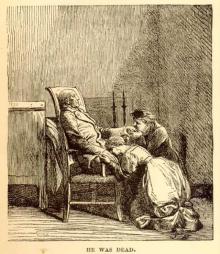
He died. They placed him in a coffin made of stone.
The bishop of Aarhus came down to say a prayer
Over the tomb in which Kanut lay in state.
He called him a saint, said that he was truly great,
That heavenly scents would spring from his memory,
That they, the priests, already saw him in his glory,
Sitting like a prophet at the right hand of the Lord.
All the priests left the high cathedral, reassured
The dead king was resting in the peace of his grave.
Night fell. Now the silenced organ ceased to grieve.
Opening his eyes again, the king took up his sword
Then left the tomb (for spirits, solid walls are nothing more
Than mist one passes through or through which one roams).
He walked across the sea that reflects all the domes
And towers of Altona, Aarhus, and Elsenor.
The shadows listened for the footsteps of their lord.
Being a dream himself, he marched on noiselessly.
Kanut went straight to Savo mountain by the sea,
And on this mountain trembling before its liege,
Said, ‘Savo, peak to which the elements lay siege,
Let me cut some snow from your summit wrapped in cloud,
So that I may use it to make my funeral shroud.’
Recognizing him, the mountain dared not refuse.
Kanut took up the sword that only he could use
(His unbreakable sword) and, approaching the peak,
Cut the snow and fashioned it into a winding sheet,
Then shouted, ‘Ancient mountain, death gives little insight.
In which direction should one set out for God’s light?’
Brooding from within the endless spinning of the skies,
The mountain with its blocked ravines and crooked sides
Responded, ‘Spirit, I am here, I do not know.’
Kanut left the mountain in the grip of so much ice.
Head high, completely white in his shroud made of snow,
He walked beyond Norway, beyond Iceland, alone,
Into the immense and silent night. The heavens cleared.
Behind him, the enigmatic world disappeared.
He found himself – spectre, soul – a kingdomless king,
Naked, face to face with a gigantic, ghostly thing –
Infinity – horrific and receding doorway
Where lighting bolts slowly and sadly fade away;
Hydras and shades for which the nights are vertebrae;
Shapeless things moving through the darkness in a daze;
Starless skies – and yet an indefinable gaze
Falls from this unmovable confusion without sound.
Instead of noise, percussive shivers made by waves
Of enigmatic darkness, muffled and profound.
He marched on, whispering, ‘The tomb’s here. But beyond
There is God.’ He took three steps and cried aloud,
But night, deafer than a morgue, did not respond.
Motionlessness. Silence. Not one wrinkle in his shroud
Was moving. Kanut pushed on. The purity
And whiteness of his garment reassured him so that he
Could go on. Then he saw something on his shroud
Appear and grow larger – a kind of black star.
The star expanded slowly, and Kanut, reaching out
And touching it, knew (and, knowing, shook with a start)
A drop of blood had fallen from somewhere out of sight.
His head which, until then, had always kept its poise
Straightened up. Enraged, he looked out at the night
And saw nothing. Space was black. There was no noise.
Looking straight ahead, he shouted, ‘Onward!’ – in vain.
Directly in front of the first, a second stain
Fell then grew larger, and this lord who didn’t scare
Looked into the thickened gloom and saw nothing there.
As a bloodhound will pause for a moment, then strain
To follow a scent, he marched on. Another stain
Fell onto his shroud. He had never run away.
Kanut stopped walking any farther then and there
And turned toward his broadsword’s side to go that way.
A drop of blood, as if it had come from a nightmare,
Fell on him and stained the hand he could barely see.
For a second time he turned away and changed his stride
The way one turns the pages of a registry,
And started walking toward the left and sinister side.
A drop of blood fell onto the winding sheet then
And Kanut jumped backwards, knowing he was alone
And wishing he were back in his death bed again.
A drop of blood fell onto the shroud. He turned to stone
(All colour gone from his face) and this warrior
Lowered his head and attempted to pray.
A drop of blood fell onto him. And just as before,
He became enraged – his prayer was frightened away –
Then, hesitant and gloomy, started walking again.
This appalling ghost passed by, and, now and then,
A drop of blood detached itself from the darkness
And fell onto this sombre whiteness unappeased.
Shaking like a poplar in the wind, Kanut imagined
These stains increasing and expanding without end:
Another and another and another! – like a flood
Of red needles shining vaguely at their tops.
Trickling into folds in the winding sheet, these drops,
Mixing together, created cloudlets of blood.
He walked on. He walked on. The blood kept coming down
Drop by drop, from that vault no one can sound –
Continuously, noiselessly, as though it might
Be falling from feet hanging from a gibbet at night.
Alas! Who was shedding each formidable tear?
Infinity. Kanut advanced, trembling with fear,
Toward paradise, pale, no longer looking around,
Into the ocean of night without a sound.
Finally, walking always as though in a haze,
He came to a closed door from which the brilliant rays
Of a strange and mysterious dawn were streaming out –
Then lowered his eyes again to look at his shroud.
This was the holy, awe-inspiring place.
You weren’t sure which of God’s rays shone. Behind the gates
Hosannas rose up and you could hear the angels sing.
The shroud was soaked with blood and Kanut was shivering.
And that is why Kanut, rebuffed and fleeing out of fear
From the light of the dawn, hasn’t yet dared appear
Before the judge whose forehead shines forever with the sun;
That is why this dark king has remained in the night:
Because he can’t be pure again, his sin can’t be undone.
And sensing at every step he takes toward the light
A drop of blood falling on his head, that is why
He prowls eternally through the enormous black sky.
Le Travail des captifs
Dieu dit au roi: «Je suis ton Dieu. Je veux un temple.»
C’est ainsi, dans l’azur où l’astre le contemple,
Que Dieu parla; du moins le prêtre l’entendit.
Et le roi vint trouver les captifs, et leur dit:
– «En est-il un de vous qui sache faire un temple?
– Non, dirent-ils. – J’en vais tuer cent pour l’exemple,
Dit le roi. Dieu demande un temple en son courroux.
Ce que Dieu veut du roi, le roi le veut de vous.
C’est juste.» –
C’est pourquoi l’on fit mourir cent hommes.
Alors un des captifs cria: – «Sire, nous sommes
Convaincus. Faites-nous, roi, dans les environs,
Donner une montagne, et nous la creuserons.
– Une caverne? dit le roi. – Roi qui gouvernes,
Dieu ne refuse point d’entrer dans les cavernes,
Dit l’homme, et ce n’est pas une rébellion
Que faire un temple à Dieu de l’antre du lion.
– Faites,» dit le roi.
L’homme eut donc une montagne,
Et les captifs, traînant les chaînes de leur bagne,
Se mirent à creuser ce mont, nommé Galgal;
Et l’homme était leur chef, bien qu’il fût leur égal,
Mais dans la servitude, ombre où rien ne pénètre,
On a pour chef l’esclave à qui parle le maître.
Ils creusèrent le mont Galgal profondémont.
Quand ils eurent fini, l’homme dit: – «Roi clément
Vos prisonniers ont fait ce que le ciel désire;
Mais ce temple est à vous avant d’être à Dieu, sire;
Que votre Éternité daigne venir le voir.
– J’y consens, répondit le roi. – Notre devoir,
Reprit l’humble captif prosterné sur les dalles,
Est d’adorer la cendre où marchent vos sandales;
Quand vous plaît-il de voire notre œuvre? – Sur-le-champ.»
Alors le maître et l’homme, à ses pieds se couchant,
Furent mis sous un dais sur une plate-forme;
Un puits était bouché par une pierre énorme,
La pierre fut levée, un câble hasardeux
Soutint les quatre coins du trône, et tous les deux
Descendirent au fond du puits, unique entrée
De la montagne à coups de pioches éventrée.
Quand ils furent en bas, le prince s’étonna.
«C’est de cette façon qu’on entre dans l’Etna,
C’est ainsi qu’on pénètre au trou de la Sibylle,
C’est ainsi qu’on aborde à l’Hadès immobile,
Mais ce n’est pas ainsi qu’on arrive au saint lieu.
– Qu’on monte ou qu’on descende, on va toujours à Dieu,
Dit l’architecte, ayant comme un forçat la marque;
O roi, soyez ici le bienvenu, monarque
Qui, parmi les plus grands et parmi les premiers
Rayonnez, comme un cèdre au milieu des palmiers
Règne, et comme Pathmos brille entre les Sporades.
– Qu’est ce bruit? dit le roi. – Ce sont mes camarades
Qui laissent retomber le couvercle du puits.
– Mais nous ne pourrons plus sortir. – Rois, vos appuis
Sont les astres, ô prince, et votre cimeterre
Fait reculer la foudre, et vous êtes sur terre
Le soleil, comme au ciel le soleil est le roi.
Que peut craindre ici-bas Votre Hautesse? – Quoi!
Plus d’issue! – O grand roi, roi sublime, qu’importe!
Vous êtes l’homme à qui Dieu même ouvre la porte.»
Alors le roi cria: – «Plus de jour, plus de bruit,
Tout est noir, je ne vois plus rien. Pourquoi la nuit
Est-elle dans ce temple ainsi qu’en une cave?
Pourquoi? – Parce que c’est ta tombe,» dit l’esclave.
The Work of the Prisoners
God spoke: ‘I am your God. I want a temple built for me.’
It was thus, where the stars contemplate Him, that He
(At least according to the high priest) commanded.
And so the king approached the prisoners and demanded:
‘Does any one of you know how to build a temple?’
‘No,’ they said. ‘Kill a hundred men as an example,’
Said the king. ‘God is asking this in anger. And when
God asks the king, the king asks you – and that is how
It should be.’
That is why they killed a hundred men.
Afterwards one prisoner spoke up: ‘We are now
Convinced, sire. All you have to do is look about
And find a nearby mountain: we will hollow it out.’
‘A cavern?’ asked the king. ‘O king who reigns on high,
God does not refuse to enter caves,’ the man replied.
‘And great, sublime king, it is no rebellion when
Your subjects build a temple from a lion’s den.’
‘Then do it,’ said the king.
So the man had his mountain,
And the prisoners, each dragging his convict’s chain,
Began to hollow out the mountain called Gesequel.
The man was their leader, although he was their equal.
For in slavery, a darkness no one penetrates or seeks,
The leader is the slave to whom the master speaks.
They hollowed out Gesequel. The work was punishing.
And when they had finished, the man said, ‘Gende king,
Your prisoners have built all that heaven could desire;
The temple is yours before God’s, however, sire:
May your Highness deign to look at it and judge its beauty.’
‘I will,’ the king consented with a nod. ‘It is our duty,’
The humble slave responded on his knees as if to God,
‘To worship the dust upon which your sandals trod.
When would you like to see our work?’ ‘Right away.’
And so the master and the prisoner made their way
To a platform covered over by a canopy.
A boulder stoppered up the shaft they couldn’t see.
The stone was pried out, and a flimsy-looking cable
Attached to the platform’s four corners. Both were able
Thereby to descend into the shaft now unblocked –
The only entrance into the disemboweled rock.
Once down there, the king was more astounded than before.
‘This is how you enter into Etna’s molten core;
This is how you penetrate the Sibyl’s secret caves
Or reach the gates of Hell which nothing ever moves,
Not how you arrive at a holy place or ground.’
‘One always goes toward God, whether going up or down,’
Said the architect branded with a convict’s mark.
‘O king, you are welcome here. O my monarch
Who, among the greatest and the highest spread your rays,
And, like a cedar in the midst of lesser trees,
Reign – just as Patmos shines among the Sporades.’
‘What is that noise?’ the king asked. ‘My fellow slaves
Letting the cover to the temple fall back down.’
‘But then we won’t be able to get out.’ ‘Your great renown
Is such that your levers are the stars; your scimitar
Can roll back the thunder itself; on earth you are
The sun, as the sun is king in heaven every day.
What can Your Highness fear down here?’ ‘Did you just say
There’s no way out?’ ‘King, what difference does that make?
You are he to whom God Himself unlocks the gate.’
And then the king cried out, ‘No more noise, no more light!
Everything is black. I am blind now. Why the night?
Tell me why this temple is darker than a cave.’
‘Why? Because this temple is your tomb,’ replied the slave.
La Rose de l’ Infante
Elle est toute petite, une duègne la garde.
Elle tient à la main une rose, et regarde.
Quoi? que regarde-t-elle? Elle ne sait pas. L’eau,
Un bassin qu’assombrit le pin et le bouleau;
Ce qu’elle a devant elle; un cygne aux ailes blanches,
Le bercement des flots sous la chanson des branches,
Et le profond jardin rayonnant et fleuri.
Tout ce bel ange a l’air dans la neige pétri.
On voit un grand palais comme au fond d’une gloire,
Un parc, de clairs viviers où les biches vont boire,
Et des paons étoilés sous les bois chevelus.
L’innocence est sur elle une blancheur de plus;
Toutes ses grâces font comme un faisceau qui tremble.
Autour de cette enfant l’herbe est splendide et semble
Pleine de vrais rubis et de diaments fins;
Un jet de saphirs sort des bouches des dauphins.
Elle se tient au bord de l’eau; sa fleur l’occupe;
Sa basquine est en point de Gênes; sur sa jupe
Un arabesque, errant dans les plis du satin,
Suit les mille détours d’un fil d’or florentin.
La rose épanouie et toute grande ouverte,
Sortant du frais bouton comme d’une urne ouverte,
Charge la petitesse exquise de sa main;
Quand l’enfant, allongeant ses lèvres de carmin,
Fronce, en la respirant, sa riante narine,
La magnifique fleur, royale et pupurine,
Cache plus qu’à demi ce visage charmant,
Si bien que l’œil hésite, et qu’on ne sait comment
Distinguer de la fleur ce bel enfant qui joue,
Et si l’on voit la rose ou si l’on voit la joue.