You dont know us negroes.., p.2
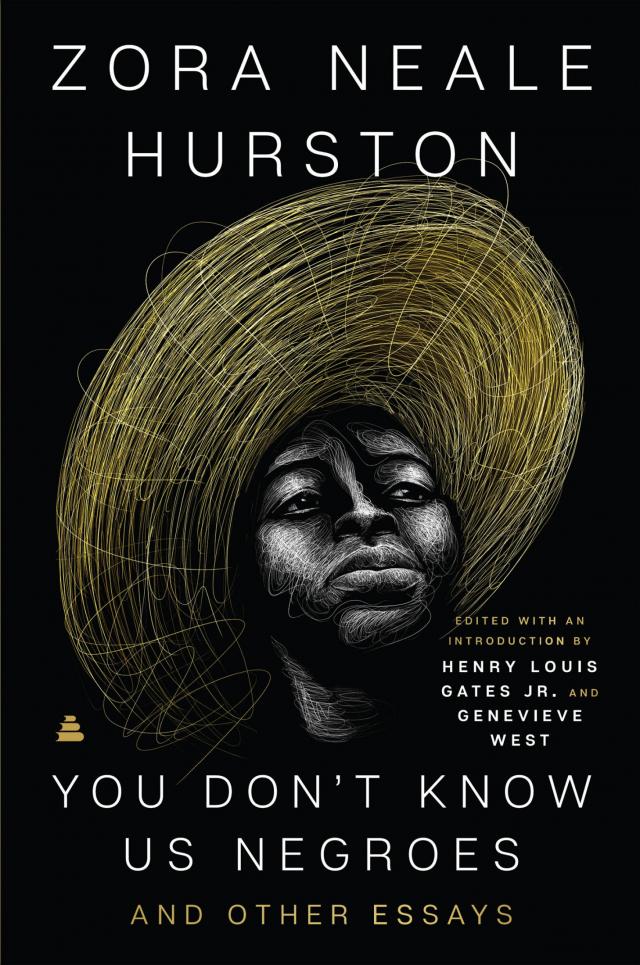
You Don't Know Us Negroes and Other Essays,
p.2


In short, we might think of Hurston as a Black cultural nationalist, in contemporary Black political parlance, or as a Black cultural “conservative” or a “traditionalist,” in the sense of valuing traditional forms of cultural expression in the forms in which we received them, as it were. She defends these traditional Black cultural forms against those who think they are too much echoes of the slave past to be “presentable” in an era defined by the primitive modernism of the Harlem Renaissance or its predecessor, turn-of-the-century “politics of respectability,” to use the historian Evelyn Brooks Higginbotham’s resonant term.
Let us be blunt: Hurston is engaged in a war of representation, defending “the race” against detractors both white and Black, on the one hand—against those who had long parodied and mocked Black speech, song, and sermons and other traditional cultural forms—and on the other hand, against the modernists who thought these forms needed to be “tidied up,” given a “face lift,” as Hurston put it, to be fit to be seated at the proverbial welcome table of American and, indeed, world civilization. Nor did “dialect” need to be abandoned and the traditional Black cultural forms transformed into standard English, as James Weldon Johnson had argued in his preface to The Book of American Negro Poetry (1922), and as he did in his monumental standard-English renditions of canonical Black sermons, God’s Trombones (1927).6 The spirituals were sublime as they were created; there was no need for them to be “concertized,” a scornful word Hurston seems to have coined. The stakes in this battle over the face and voice of Black cultural representation were enormous. Hurston was one of the most articulate defenders of the tradition in its unadulterated purity, and the essays in the first two sections of this book prove that. There was, she argues again and again, absolutely nothing produced by the ancestors of which to be ashamed. To the contrary, these secular and sacred forms contained the heart and soul of the race. As she says of the spirituals, their “truth dies under training like flowers under hot water.”
Hurston—the critic, the linguist, the cultural anthropologist—is at all points very much Hurston the novelist, implicitly outlining her theory of the novel as she practiced it, as well as perhaps the very first comprehensive theory of African American culture itself. She articulates an aesthetic theory “based on Negro idioms,” as she puts it in her review essay “Jazz Regarded as Social Achievement.” In her pioneering observations about the nature of Black culture, Hurston always insists that African Americans are a people, concerned by the full range of human emotions from love to death, just like every other people on the planet. As she writes in “Art and Such,” published just a year after her masterpiece, Their Eyes Were Watching God, had been roundly criticized by a Richard Wright in the grip of social realist aesthetics:
So the same old theme, the same old phrases get done again [in representations of African American characters in literature] to the detriment of art. To [writers such as these] no Negro exists as an individual—he exists only as another tragic unit of the Race. This in spite of the obvious fact that Negroes love and hate and fight and play and strive and travel and have a thousand and one interests in life like other humans. When his baby cuts a new tooth he brags as shamelessly as anyone else without once weeping over the prospect of some Klansman knocking it out when and if the child ever gets grown. The Negro artist knows all this but he conceives that a Negro can do nothing but weave something in his particular art form about the Race problem. . . . Anyway, the effect of the whole period has been to fix activities in a mold that precluded originality and denied creation in the arts.
At the end of this stunningly insightful essay, in which she writes about herself in third person, Hurston gives scholars and critics of her fiction a gift—her own theory of the novel—the proverbial “figure in the carpet” that shaped Jonah’s Gourd Vine (1934) and reached its summit three years later in Their Eyes Were Watching God. The latter would be rediscovered by Alice Walker, and its aesthetic principles, if not its forms, refashioned and echoed by a generation of Black authors, especially Black female authors, for the last fifty years. Her explicit lining out of her own sense of the import and originality of her very own practice of the art of fiction writing, remarkably, stands the test of time.
The Black novel, she argues, will only rise to the sublime levels of Black vernacular cultural forms if writers create “a Negro story without bias,” stories in which the “characters live and move,” stories “about Negroes,” certainly, “but [characters] that could be anybody.” In other words, stories about the human condition, cast in the world that Black people live and breathe behind the Veil; stories, as it were, that Black authors allow readers, white and Black, to “overhear” in the same way that traditional Black storytellers, in the church, on the porch, in the juke joint, around the fireplace, told their stories as works of art without worrying about the political implications of their stories under the white gaze. We see this same thing in the same way that blues and jazz compositions emerged in a Black-on-Black world.
Writers, she argued, needed to mimic that mode of self-revelation, of voice expression, without self-censorship and without concern about someone else’s politics of race and representation, without apology or shame, “without special pleading,” and—quite boldly—with characters “seen in relation to themselves and not in relation to the whites as has been the rule.” To watch characters in novels such as these unfold in their fictional worlds, as we do in Their Eyes Were Watching God, for instance, “one would conclude that there were no white people in the world.” And just as important is how the story is told, in what language the story is rendered. “[T]he telling of the story [must be] in the idiom—not the dialect—of the Negro. The Negro’s poetical flow of language, his thinking in images and figures,” she argues in “Art and Such,” are the hallmarks of her own novelistic practice of which she was most proud. She brilliantly labels her approach as “stewing the subject in its own juice.” Only then, she prophesies, out of this intraracial “stewing,” will the African American novelist find her or his own voice.
History has borne out Hurston’s prediction in the works of so many of her literary heirs, male as well as female, who, taken together, since Hurston’s literary recovery, have produced perhaps the richest field of fiction in the history of the African American literary tradition, all indebted, in one way or another, to the poetics and practices of Zora Neale Hurston. And in large part because of the boldness of her aesthetic theory and the novelty of her political critique of novels that centered white racism, readers white and Black have been “overhearing” the resplendent voices of the Black experience, within the Veil, in a rich variety of ways of which Hurston no doubt would have approved.
This implicit and explicit political approach to Hurston’s art makes discussions of race and gender central to understanding her larger body of work. Her willingness to argue for Black vernacular artistic culture and her concomitant creation of strong female characters often made her a lightning rod for those who would have preferred to see depictions of unambiguously centered, barefaced white racism, or of predictably noble and praiseworthy Black characters striving for the middle class. Long before second-wave feminism proclaimed that the personal was political, Hurston created resilient female characters who dared speak their pieces, often in the faces of their male antagonists and partners. Courtship and marriage lie at the heart of most of her fiction, and in her nonfiction, we are similarly offered a glimpse at Hurston’s views on whether romance and self-regard can coexist for women in their relationships with men. She wrote the essays “The Ten Commandments of Charm” and “The Lost Keys of Glory” nearly twenty years apart, the former about a year before her first marriage, the latter after the dissolution of her third. Her portraits of men are unflattering: they are childish, shallow, easily manipulated. The mock biblical verse of the first is humorous to be sure, but also biting—and shockingly resonant, still today. The first commandment—“Be cheerful. Let not thy smile come off”—will make any woman who has ever been “encouraged” to smile by a stranger grimace. The second essay contains elements that have come to be associated with Hurston—a folklore adaptation followed by an incisive, insightful analysis—but its tone and intent are difficult to nail down, particularly since its claims contradict today’s feminist constructions of Hurston’s identity as a strong, independent woman.
Hurston was herself married three times (to younger men), but she never stayed married for long. From a distance—in her letters and her other writings—she seems to have been happiest pounding away at her typewriter, puttering in her garden, or collecting folklore, but—“The Lost Keys of Glory” suggests—she wanted both, a long-lasting romantic relationship and an active intellectual life as a writer and anthropologist. She certainly resisted giving up her career as a writer, as she explains in her autobiography, Dust Tracks on a Road (1942), for traditional married life. Given the gendered norms of her own time, modern readers often see Hurston as a feminist who resisted pressures to marry and keep a home for her husband, but this essay certainly complicates those arguments. Contradictions between Hurston’s own life and the essay’s musings abound.
The central metaphor of “The Lost Keys of Glory” comes from a Black folktale in which Woman—with advice from the Devil—requests from God the keys to the kitchen, the bedroom, and Man’s generations. With those in hand, she is able to rely on Man to work for her, but his physical strength, enhanced by God following Man’s own request, can quite literally beat her into submission. Man and Woman have something the other needs. The examples Hurston offers seem to suggest that the happiest women are those who maintain a career but keep a husband at the center of their worlds, providing “steak and potatoes and apple pie on demand” and offering slippers “wherever he might choose to flop down and wallow in the house.” Given Hurston’s own biography, it is surprising to see her advising women that the path to happiness requires catering to men who “wallow,” piglike. She even describes feminism as a “mirage,” “the light that failed” to deliver what it promised. But let us be clear: none of this means that the essay endorses traditional gender roles as equitable or fair. Instead, it highlights the dishonesty of cultural norms that ostensibly permits women to pursue professional careers and then penalizes them for doing so. Women who “tear out after the free life of the males” find themselves alone or neurotic, damaged by the way others—especially men—see them: as “too mannish,” echoing the well-known and phenomenally popular sermon of the Reverend J. M. Gates, “Manish Women,” which he released on vinyl in 1930. She corrected the spelling, but the sentiment was the same.
Throughout Hurston’s life, her aesthetic philosophy staunchly resisted the white gaze and distortions or “modernizations” of traditional Black culture and art, but this essay reveals a psychological fatigue in dealing with the male gaze. Was it disappointment that led Hurston to suggest that women accept the status quo? “No female careerist can avoid looking at the picture from time to time,” she argues. “And the inevitable question arises inside her, how much is a career worth to a woman anyway? Are not the unknown women, bossing the man of her choice really happier than the career-woman, however famous outside her natural sphere?” As a career woman herself, Hurston certainly invites speculation that she, too, had “from time to time” regrets about having pursued a career, despite the demands of men in her life who assumed she would relinquish her professional ambitions when they wed. We might prefer to think of Hurston—our literary and cultural icon—as fiercely independent, happily waging her way in the world, committed to her art and research, but the essay here suggests she paid a steep price for that choice. It is an important perspective on Hurston, as a person, and on midcentury challenges facing career-minded women after World War II, when Rosie the Riveter was expected to return to her home. Remembering the context in which Hurston lived and wrote is critical to appreciating the complexity and subtlety of her argument here. It is not that she believes things should be the way that she describes. Rather, her approach accepts that they just are.
Hurston’s writings on race and politics are no less complex, and despite the risks of offending powerful people or organizations, she never shrank from tackling both intraracial as well as interracial politics. She took on the intraracial dissention at Howard in “The Hue and Cry About Howard University,” just as she does in “The Rise of the Begging Joints.” In “The ‘Pet Negro’ System” she explores “the web of feelings and mutual dependencies” between Blacks and whites in the South, that “a lot of black folk . . . find . . . mighty cosy.” The system, she suggests, benefits individuals and complicates blanket claims about race relations in the region. She notably even occasionally approaches such fraught topics with humor as in “Noses” and “Now Take Noses” where differences in Black and white noses reflect the races’ different characters:
The Roman nose, like all Gaul, is divided into three parts—the start, the bend, and the drop. It starts forthwith to rule the world, bends sharply to seek its means, and proceeds sharply after that to achieve its ends. This leads to conquest and law.
The nose of Africa sits in the shade of its cheek bones and dreams. It points not upward, not downward, not anywhere. It sits and dreams and dreams.
Her satire on Marcus Garvey, “The Emperor Effaces Himself,” takes a tongue-in-cheek approach to the man—to his uniforms and parades and contradictions—but never to the man’s politics, which is an important distinction. “Crazy for This Democracy” centers the failings of American democracy by connecting racism at home to colonialism abroad. Even when, as she irreverently writes, she has “promised God and some other responsible characters, including a bench of bishops,” to remain silent on Brown v. Board of Education, nevertheless, she voiced her deep reservations about abandoning all-Black institutions in the unreflecting frenzy of embracing—after systematically being excluded from them for so long—integrated ones.
Hurston’s race pride permeates everything she writes. She exults in a “timeless” but feminine self even as she sharpens her oyster knife in “How It Feels to Be Colored Me.” She takes a more serious look at racism in “My Most Humiliating Jim Crow Experience,” but she refuses to give up even a scintilla of pride or sense of self to a racist physician who has the gall to request payment after seeing her in his laundry closet, as if she were so much dirty linen to keep out of view. Absolutely certain of her worth as Lucy Hurston’s daughter, she recalls,
I got up, set my hat at a reckless angle and walked out, telling him that I would send him a check, which I never did. I went away feeling the pathos of Anglo-Saxon civilization.
And I still mean pathos, for I know that anything with such a false foundation cannot last. Whom the gods would destroy, they first make mad.
Her pride in Florida’s Black cattle rancher whose hard work, expertise, and unimpeachable character made him a community pillar permeates “Lawrence of the River.” It also surfaces in “Race Cannot Become Great Until It Recognizes Its Talent,” a neglected but important work, reprinted here for the first time. In Hurston’s earliest explicit statement of her aesthetics, she draws parallels between her own commitments to folk culture and Black idiomatic expression and the works of Shakespeare and Chaucer. Hurston recognized that she was pushing boundaries in depicting folk or working-class characters, and, in doing so, sometimes made middle-class, New Negroes uncomfortable, but her pride in her culture assured her that what others found shameful or reduced to stereotype held tremendous promise for the arts—and for Black culture as a whole.
What, then, explains Hurston’s well-known opposition to Brown v. Board of Education? Her letter to the editor bears careful reading—both for what it says and for what it does not. The inclusion of “Which Way the NAACP?,” which appears here in print for the first time, also sheds light on her thinking. Hurston recoiled at the unintended message she saw lurking beneath the court case—that integrated schools with integrated teachers were without question somehow better than all-Black schools with all-Black teachers; that white teachers and students were “inherently” better than Black ones. Her “white mule” critique of the decision reflects her immense pride in Black educators and her knowledge that Black teachers in Black schools teach more than merely academic subjects. They serve as role models and shepherd students through a racist culture. At the same time, Hurston points out inequities in the way the schools are administered:
The Supreme Court would have pleased me more if they had concerned themselves about enforcing the compulsory education provisions for Negroes in the South as is done for white children. The next 10 years would be better spent in appointing truant officers and looking after conditions in the homes from which the children come.
So why did she oppose the landmark Supreme Court decision?
Hurston saw the efforts to integrate schools—primary, secondary, and post-secondary—as a declaration that African Americans were not independent and needed the approval of, and social mingling with, whites. She wanted instead to see “[g]rowth from within.” Hurston argues that it was conceding too much to declare that all-Black institutions, inherently, were unequal. Underfunded schools were inherently unequal, not Black schools. What she believed in was willing separation versus enforced segregation. She points out, quite rightly, that “[i]t is a contradiction in terms to scream race pride and equality while at the same time spurning Negro teachers and self-association.” And, she could sometimes be naive, a trait we also see in the Ruby McCollum case below.