You dont know us negroes.., p.40
You Don't Know Us Negroes and Other Essays,
p.40
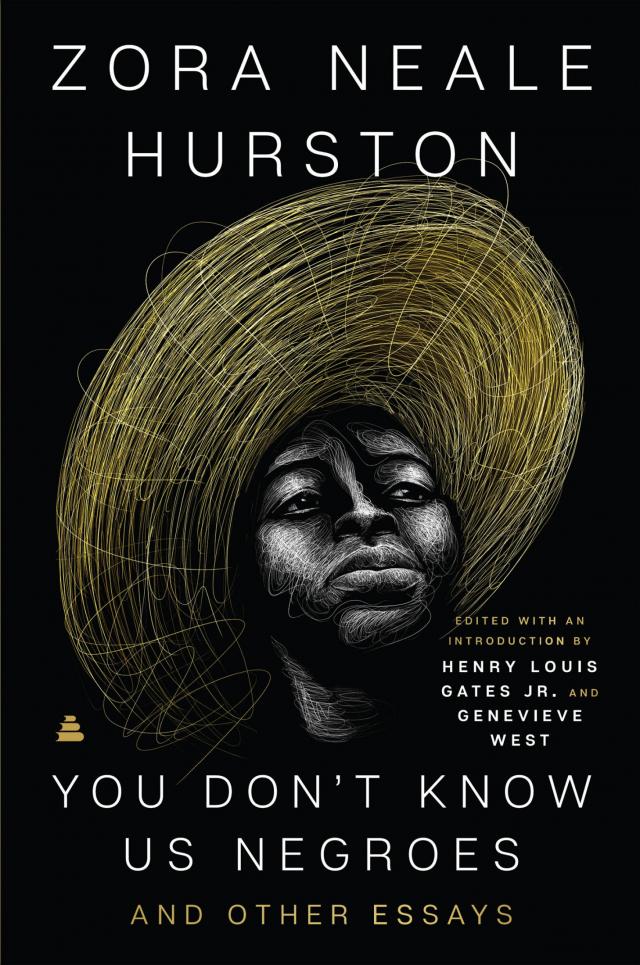


“My Impressions of the Trial,” ca. 1953
“The South Was Had,” ca. 1954–59
“Court Order Can’t Make Races Mix,” 1955
“Which Way the NAACP?,” ca. 1957
“Take for Instance Spessard Holland,” ca. 1958
Credits
“A Negro Voter Sizes Up Taft.” Saturday Evening Post, December 8, 1951, 29, 150–52.
“Art and Such,” typescript (9 typed pages). Box 12, Item 6. Zora Neale Hurston Papers. Special Area Collection. George A. Smathers Libraries, University of Florida.
“Bare Plot Against Ruby.” Pittsburgh Courier (Pittsburgh, PA), November 29, 1952, 1.
“Bits of Our Harlem.” Negro World (New York City, NY), April 15, 1922, 6.
“Characteristics of Negro Expression.” In Negro Anthology, edited by Nancy Cunard, 39–46. London: Wishart, 1934.
“Conversions and Visions.” In Negro Anthology, edited by Nancy Cunard, 47–49. London: Wishart, 1934.
“Court Order Can’t Make Races Mix.” Orlando Sentinel (Orlando, FL), August 11, 1955, 10.
“Crazy for This Democracy.” Negro Digest, December 1945, 46–48.
“Fannie Hurst.” The Saturday Review, October 9, 1937, 15–16.
“High John de Conquer.” The American Mercury, October 1943, 450–58.
“How It Feels to Be Colored Me.” The World Tomorrow, May 1928, 215–16.
“I Saw Negro Votes Peddled.” The American Legion Magazine, November 1950, 12–13, 54–57, 59–60.
“Jazz Regarded as Social Achievement.” New York Herald Tribune Weekly Book Review (New York City, NY), December 22, 1946, 8.
“Justice and Fair Play Aim of Judge Adams as Ruby Goes on Trial.” Pittsburgh Courier (Pittsburgh, PA), November 29, 1952, 5.
“Lawrence of the River.” Saturday Evening Post, September 5, 1942, 18, 55–57.
“McCollum-Adams Trial Highlights.” Pittsburgh Courier (Pittsburgh, PA), December 27, 1952, 4.
“Mourner’s Bench, Communist Line: Why the Negro Won’t Buy Communism.” The American Legion Magazine, June 1951, 14–15, 55–60.
“My Impressions of the Trial,” typescript. Box 1, Folder 2. Documents Relating to the Trial of Ruby McCollum for the Murder of Dr. LeRoy Adams, Live Oak, Florida. Special and Area Studies Collections. George A. Smathers Libraries, University of Florida.
“My Most Humiliating Jim Crow Experience.” Negro Digest, June 1944, 25–26.
“Negroes Without Self-Pity.” The American Mercury, November 1943, 601–3.
“Noses.” The X-Ray, 1926, 22–23.
“Now Take Noses.” In Cordially Yours: A Collection of Original Short Stories and Essays by America’s Leading Authors, edited by Thomas Page Smith, 25–27. Philadelphia: Boston Herald Book Fair Committee, 1939.
“Race Cannot Become Great Until It Recognizes Its Talent.” The Washington Tribune (Washington, DC), December 29, 1934.
“Review of Voodoo in New Orleans by Robert Tallant.” Journal of American Folklore 60, no. 238 (October–December 1947): 436–38.
“Ritualistic Expression from the Lips of the Communicants of the Seventh Day Church of God,” typescript. Margaret Mead Papers and South Pacific Ethnographic Archives, 1838–1996, Container C5. Manuscript Division, Library of Congress.
“Ruby Bares Her Love Life.” Pittsburgh Courier (Pittsburgh, PA), January 3, 1953, 1, 4.
“Ruby McCollum Fights for Life.” Pittsburgh Courier (Pittsburgh, PA), November 22, 1952, 1, 4.
“Ruby Sane!” Pittsburgh Courier (Pittsburgh, PA), October 18, 1952, 1, 4.
“Ruby’s Story: Doctor’s Threats, Tussle over Gun Led to Slaying!” Pittsburgh Courier (Pittsburgh, PA), January 10, 1953, 1, 4.
“Ruby’s Troubles Mount: Named in $100,000 Lawsuit!” Pittsburgh Courier (Pittsburgh, PA), January 17, 1953, 1, 5.
“Shouting.” In Negro Anthology, edited by Nancy Cunard, 49–50. London: Wishart, 1934.
“Spirituals and Neo-Spirituals.” In Negro Anthology, edited by Nancy Cunard, 359–61. London: Wishart, 1934.
“Stories of Conflict.” The Saturday Review, April 2, 1938, 32.
“Take for Instance Spessard Holland,” typescript. Zora Neale Hurston Collection, Special and Area Studies Collections. George A. Smathers Libraries, Gainesville, Florida.
“The Chick with One Hen,” typescript carbon, corrected. Zora Neale Hurston Collection. JWJ MSS 9 Series II, Writings, Box 1, Folder 8a. Yale Collection of American Literature. Beinecke Rare Book and Manuscript Library, New Haven, Connecticut.
“The Emperor Effaces Himself,” typescript carbon. Zora Neale Hurston Collection. JWJ MSS 9 Series II, Writings, Box 1, Folder 15. Yale Collection of American Literature. Beinecke Rare Book and Manuscript Library, New Haven, Connecticut.
“The Hue and Cry About Howard University.” The Messenger, September 1925, 315–19, 338.
“The Last Slave Ship.” The American Mercury, March 1944, 351–58.
“The Life Story of Mrs. Ruby J. McCollum!” Pittsburgh Courier (Pittsburgh, PA), February 28, 1953, 3.
“The Life Story of Mrs. Ruby J. McCollum! Part 2.” Pittsburgh Courier (Pittsburgh, PA), March 7, 1953, 2.
“The Life Story of Mrs. Ruby J. McCollum! Part 3.” Pittsburgh Courier (Pittsburgh, PA), March 14, 1953, 2.
“The Life Story of Mrs. Ruby J. McCollum! Part 4.” Pittsburgh Courier (Pittsburgh, PA), March 21, 1953, 3.
“The Life Story of Mrs. Ruby J. McCollum! Part 5.” Pittsburgh Courier (Pittsburgh, PA), March 28, 1953, 2.
“The Life Story of Mrs. Ruby J. McCollum! Part 6.” Pittsburgh Courier (Pittsburgh, PA), April 4, 1953, 3.
“The Life Story of Mrs. Ruby J. McCollum! Part 7.” Pittsburgh Courier (Pittsburgh, PA), April 11, 1953, 3.
“The Life Story of Mrs. Ruby J. McCollum! Part 8.” Pittsburgh Courier (Pittsburgh, PA), April 18, 1953, 2.
“The Life Story of Mrs. Ruby J. McCollum! Part 9.” Pittsburgh Courier (Pittsburgh, PA), April 25, 1953, 3.
“The Life Story of Mrs. Ruby J. McCollum! Part 10.” Pittsburgh Courier (Pittsburgh, PA), May 2, 1953, 2.
“The Lost Keys of Glory,” typescript. Helen Worden Erskine papers. MS#0400, Box 2. Rare Book and Manuscript Library. Columbia University Library, New York City, New York.
“The ‘Pet Negro’ System.” The American Mercury, May 1943, 593–600.
“The Rise of the Begging Joints.” The American Mercury, March 1945, 288–93.
“The South Was Had,” typescript. Zora Neale Hurston Collection. Special and Area Studies Collections. George A. Smathers Libraries, Gainesville, Florida.
“The Ten Commandments of Charm.” The X-Ray, 1926, 22. “Trial Highlights.” Pittsburgh Courier (Pittsburgh, PA), November 29, 1952, 5.
“Trial Highlights.” Pittsburgh Courier (Pittsburgh, PA), November 29, 1952, 5.
“Victim of Fate!” Pittsburgh Courier (Pittsburgh, PA), October 11, 1952, 4.
“What White Publishers Won’t Print.” Negro Digest, April 1950, 85–89.
“Which Way the NAACP?,” typescript. PP 487, Box 7, Folder 22. Kenneth Spencer Research Library, University of Kansas.
“You Don’t Know Us Negroes,” typescript. Lawrence Spivak Papers. MSS40964, Container 37. Collections in the Archive of Folk Culture. Manuscript Division, Library of Congress, Washington, DC.
“Zora’s Revealing Story of Ruby’s First Day in Court!” Pittsburgh Courier (Pittsburgh, PA), October 11, 1952, 1, 4.
Notes
Introduction
1. Frantz Fanon, Black Skin, White Mask, trans. Richard Philcox (New York: Grove Press, 2007), 90.
2. Du Bois W. E. Burghardt. The Souls of Black Folk. Second Edition. Chicago: A. C. McClurg & Co., 1903. p. VIII.
3. Zora Neale Hurston, “Full of Mud, Sweat and Blood,” review of God Shakes Creation in New York Herald Tribune Books, November 3, 1935, 8.
4. Zora Neale Hurston, “Mother Catherine,” in Negro Anthology, ed. Nancy Cunard (London: Wishart & Co, 1934), 54–57.
5. E. Franklin Frazier, Black Bourgeoise (Glencoe, IL: The Free Press, 1957).
6. James Weldon Johnson (1871–1938) was an influential writer, editor, activist, and leader of the National Association for the Advancement of Colored People (NAACP). He is best remembered for his novel The Autobiography of an Ex-Colored Man (1912), a collection of his poems God’s Trombones (1927), his anthology The Book of American Negro Poetry (1922), and his study of Harlem Black Manhattan (1930).
7. William Bradford Huie, Ruby McCollum: Woman in the Suwannee Jail (New York: EP Hutton & Co, 1956), 27.
8. Zora Neale Hurston, Zora Neale Hurston: A Life in Letters, ed. Carla Kaplan (New York: Doubleday, 2002), 705.
9. Hurston, A Life in Letters, 705.
10. Huie, Ruby McCollum, 185–88.
Bits of Our Harlem
1. Henry Wadsworth Longfellow (1807–1882) was a celebrated white nineteenth-century American poet.
2. Lenox Avenue, which is also known as Malcolm X Boulevard, runs north and south from Central Park through the center of Harlem to the Harlem River on the island of Manhattan.
3. 181st Street runs east and west, but it does not intersect with Lenox, raising the possibility that the street number is incorrect.
High John de Conquer
1. Hurston published this essay in October 1943 and alludes to the challenges of being a nation at war.
2. “Old Cuffy” is a historical, generic name for an enslaved person.
3. The Middle Passage is the journey of slave ships from West Africa to the West Indies.
4. Albatrosses were associated with good luck on sea voyages, though the superstition was popularized by Samuel Taylor Coleridge in Rime of the Ancient Mariner (1798).
5. Hurston alludes here to Mark 8:36 in the Bible.
6. Hurston likely alludes to 1 Corinthians 15:38–40, which distinguishes between consuming human flesh and that of other creatures.
7. John Henry is an African American folk hero who dies racing a steam-powered steel-driving machine building a railroad. He appears in many folk songs and stories. An audio recording of “John Henry” in the Library of Congress, collected by John A. Lomax in 1939, can be found at www.loc.gov/item/lomaxbib000326/?.
8. John the Conqueror root is a popular ingredient in hoodoo, or root working, which Hurston studied. Though the root is said to be native to the Southern US, its precise historical origin is unknown, and most roots sold under the name today are unlikely the original plant. See Carolyn Morrow Long, “John the Conqueror: From Root-Charm to Commercial Product,” Pharmacy in History 39, no. 2 (1997): 47–53.
9. “The Tar-Baby” is an Uncle Remus story first recorded in writing by Joel Chandler Harris, although the story originated in oral tradition. In the folktale Brer Fox creates a doll made of sticky tar to entrap Brer Rabbit. See Joel Chandler Harris, The Tar-Baby and Other Rhymes of Uncle Remus (Ontario: Copp, Clark, 1905), 3–16.
10. An earlier version of this story appears in Hurston’s short fiction. See “Possum or Pig” in Hitting a Straight Lick with a Crooked Stick, ed. Genevieve West (New York: HarperCollins, 2020), 141–42.
11. Jason and the Argonauts, from the ancient Greek epic Argonautica, embark on a long journey to steal the Golden Fleece and use it to claim kingship over Iolcus.
The Last Slave Ship
1. In May 2019, the wreck of the Clotilda was confirmed to be found near Twelve Mile Island along the Mobile River. See Allison Keyes, “The ‘Clotilda,’ the Last Known Slave Ship to Arrive in the U.S., Is Found,” Smithsonian Magazine, May 22, 2019, smithsonianmag.com/smithsonian-institution/clotilda-last-known-slave-ship-arrive-us-found-180972177.
2. In Barracoon, Hurston spells Cudgo’s name as “Cudjo.” See Zora Neale Hurston, Barracoon: The Story of the Last “Black Cargo,” ed. Deborah G. Plant (New York: Amistad, 2019).
3. Kossula was not the last survivor of the Clotilda, as Hurston claimed here. Her letter to Langston Hughes dated July 10, 1928, indicates that she knew of another, who is likely the one referred to in recent scholarship. See Hannah Durkin, “Uncovering the Hidden Lives of Last Clotilda Survivor Matilda McCrear and Her Family,” Slavery & Abolition 41, no. 3 (2020), doi.org/10.1080/0144039X.2020.1741833. For Hurston’s letter, see Zora Neale Hurston: A Life in Letters, ed. Carla Kaplan (New York: Doubleday, 2002), 123. For additional information on the other survivor, see Hannah Durkin, “Finding Last Middle Passage Survivor Sally ‘Redoshi’ Smith on the Page and Screen,” Slavery & Abolition 40, no. 4 (2019), doi.org/10.1080/0144039X.2019.1596397.
4. Dahomey, located in present-day Benin in West Africa, was ruled by King Ghezo from 1818–1858.
5. Abomey is a city in the south of Benin.
6. Hurston’s original use of the alternate spelling of barracoun, rather than barracoon, has been retained throughout this essay.
7. A short piece matching Hurston’s quotation appears in the Alabama Beacon on November 19, 1858.
8. Timothy Meaher (1812–1892) was the Maine businessman who hired Captain William Foster to undertake a slaving voyage aboard the Clotilda after the US had outlawed the transatlantic importation of enslaved people. For more biographical information on these men and the other Meaher brothers, see Sylviane A. Diouf, Dreams of Africa in Alabama: The Slave Ship Clotilda and the Story of the Last Africans Brought to America (Oxford: Oxford Univ. Press, 2007), ACLS Humanities E-book.
9. A narrative written by Captain William Foster in 1860, titled “Last Slaver from US to Africa. AD 1860” and held in the Clotilda Collection of the Mobile Public Library Digital Archives, shares Foster’s experience of visiting Dahomey. This piece includes reference to the snake collection, though there is no mention of the human-skin drum. Hurston may have accessed another unknown source for this detail. See also Diouf, “An Essay on Sources,” in Dreams of Africa in Alabama, 245–49.
10. Roger Taney (1777–1864) was the Supreme Court justice who penned the infamous final majority opinion ruling against enslaved man Dred Scott’s case for freedom in 1857. Taney argued that Dred Scott was not a US citizen and therefore had no right to sue in federal court.
11. John Dabney (ca. 1809–1881?) was a Virginian plantation owner who helped smuggle the Africans further inland. See Diouf, Dreams of Africa in Alabama.
12. A biography of James Dennison (1840–1915), written by his granddaughter, Mable Dennison, and titled Biographical Memoirs of James Dennison, is available online via the Mobile Public Library Digital Archives in the Clotilda Collection. See Mable Dennison, Biographical Memoirs of James Dennison, Clotilda Collection, Mobile Public Library Digital Archives, http://digital.mobilepubliclibrary.org/items/show/1806.
13. The repetition of the name Tim in this sentence is an obvious error in the original text, but it is impossible to know whether Tim or Tom took the larger number of enslaved pairs as property.
Characteristics of Negro Expression
1. Paradise Lost (1667) is an epic poem published by John Milton that recounts the Fall of Man from Genesis, the first book of the Bible. Thomas Carlyle’s novel Sartor Resartus (1836) comments on difficulties with the philosophic system.
2. Louis XIV (1638–1715) was king of France from 1643–1715.
3. Hurston’s note: From pang.
4. The Occident is the Western world, especially Europe and America.
5. Victrola is a brand of record player; a “console victrola” is a furniture-sized machine, as opposed to a small tabletop version.
6. The Treaty of Versailles, signed in 1919, ended World War I for the Allies and Germany. Waterman is a luxury fountain pen company founded in 1884.
7. Langston Hughes (1901–1967) was a Harlem Renaissance poet, novelist, and activist. The poem Hurston quotes is titled “Evil Woman,” collected in Hughes’s second volume of poetry, Fine Clothes to the Jew (1927). The lines of Hughes’s poem break differently than they appear here, but Hurston’s rendering of the poem has been retained. See Langston Hughes, The Collected Works of Langston Hughes 1921–1940, ed. Arnold Rampersad (Columbia: Univ. of Missouri Press, 2001), 99.
8. Hurston refers to the “St. Louis Blues” (1914), a song composed by W. C. Handy that deviates from common twelve-bar blues.
9. Bill “Bo-Jangles” Robinson (1878–1949) was a dancer, singer, and actor. Earl “Snakehips” Tucker (1906–1937) was a dancer most famous for his signature dance, the “snakehips.”
10. John D. Rockefeller (1839–1937) and Henry Ford (1863–1947) were very wealthy business magnates and industrialists.
11. In John 18:10 of the Bible, Peter draws a sword and cuts off the ear of one of the men who came to arrest Jesus.
12. Each of the African American folk heroes Hurston mentions here may have been based on a real person. John Henry, the “steel-driving man,” races a steam-powered steel-driving machine on a railroad. “Stacker Lee,” also known as “Stagger Lee,” was a real person, Lee Shelton (1865–1912), whose murder of another man inspired a song of the same name recorded by many artists. See Cecil Brown, Stagolee Shot Billy (Cambridge: Harvard Univ. Press, 2003). “Smokey Joe” is most likely “Smokey” Joe Williams (1886–1951), a baseball pitcher for the Negro leagues whose career spanned almost three decades. Finally, it is unclear whether “Bad Lazarus” corresponds to “Old Bad Lazarus” as recorded by the Works Progress Administration (WPA) in 1939, on deposit in the Library of Congress, or the work song “Po’ Lazarus” about a man shot unjustly by a sheriff, recorded by Alan Lomax in 1959. The version Lomax collected later appeared in the movie O Brother, Where Art Thou? (2000). It appears at the Library of Congress at www.loc.gov/folklife/lomax/lomaxiconicsonglist.html.
13. Rudolph Valentino (1895–1926), an Italian immigrant, was an actor who starred in the silent film The Sheik (1921). Hurston refers to the slicked-back hair Valentino was known for outside the film, which closely resembles the “conk” hairstyle popular with Black men beginning around the time The Sheik was made.
14. Paul Whiteman (1890–1967) was a white bandleader popular in the 1920s and 1930s, sometimes called the “King of Jazz,” although the title has attracted controversy.