You dont know us negroes.., p.26
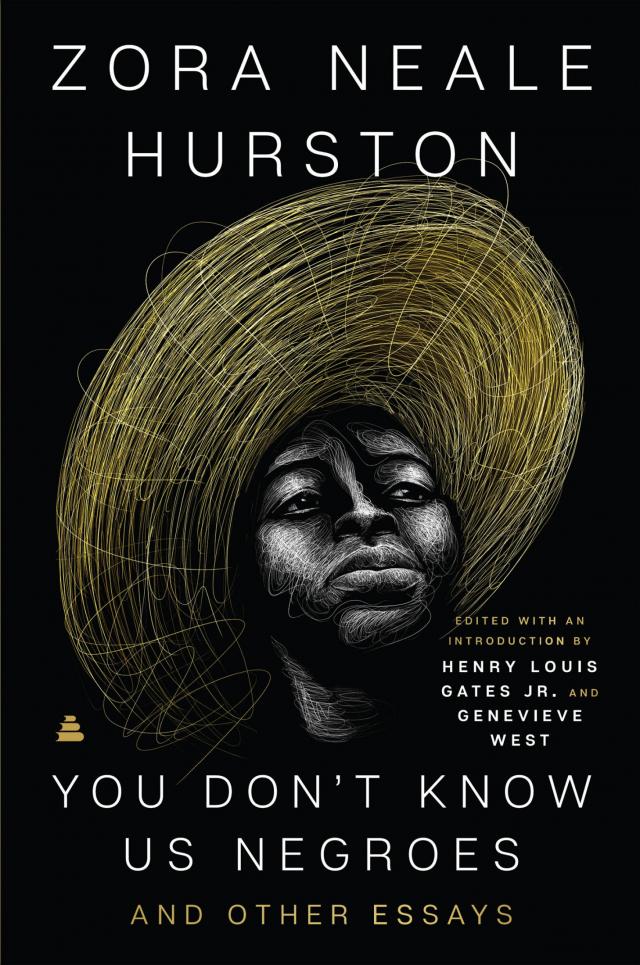
You Don't Know Us Negroes and Other Essays,
p.26


Jim Crow is the rule in South Africa, and is even more extensive than in America. More rigid and grinding. No East Indian may ride first-class in the trains of British-held India. Jim Crow is common in all colonial Africa, Asia and the Netherlands East Indies. There, too, a Javanese male is punished for flirting back at a white female. So why this stupid assumption that “moving North” will do away with social smallpox? Events in the northern cities do not bear out this juvenile contention.
So why the waste of good time and energy, and further delay the recovery of the patient by picking him over bump by bump and blister to blister? Why not the shot of serum that will kill the thing in the blood? The bumps are symptoms. The symptoms cannot disappear until the cause is cured.
These Jim Crow laws have been put on the books for a purpose, and that purpose is psychological. It has two edges to the thing. By physical evidence, back seats in trains, back-doors of houses, exclusion from certain places and activities, to promote in the mind of the smallest white child the conviction of First by Birth, eternal and irrevocable like the place assigned to the Levites by Moses over the other tribes of the Hebrews. Talent, capabilities, nothing has anything to do with the case. Just FIRST BY BIRTH.
No one of darker skin can ever be considered an equal. Seeing the daily humiliations of the darker people confirm the child in its superiority, so that it comes to feel it the arrangement of God. By the same means, the smallest dark child is to be convinced of its inferiority, so that it is to be convinced that competition is out of the question, and against all nature and God.
All physical and emotional things flow from this premise. It perpetuates itself. The unnatural exaltation of one ego, and the equally unnatural grinding down of the other. The business of some whites to help pick a bump or so is even part of the pattern. Not a human right, but a concession from the throne has been made. Otherwise why do they not take the attitude of Robert Ingersoll that all of it is wrong?7 Why the necessity for the little concession? Why not go for the under-skin injection? Is it a bargaining with a detail to save the whole intact? It is something to think about.
As for me, I am committed to the hypodermic and the serum. I see no point in the picking of a bump. Others can erupt too easily. That same one can burst out again. Witness the easy scrapping of FEPC.8 No, I give my hand, my heart and my head to the total struggle. I am for complete repeal of All Jim Crow Laws in the United States once and for all, and right now. For the benefit of this nation and as a precedent to the world.
I have been made to believe in this democracy thing, and I am all for tasting this democracy out. The flavor must be good. If the Occident is so intent in keeping the taste out of darker mouths that it spends all those billions and expends all those millions of lives, colored ones too, to keep it among themselves, then it must be something good. I crave to sample this gorgeous thing. So I cannot say anything different from repeal of all Jim Crow laws! Not in some future generation, but repeal now and forever!!
I Saw Negro Votes Peddled
Millions of Americans no doubt harbor the illusion that the Period of the Reconstruction ended in the 1870s, and in dying out took all of its symptoms with it.1 No more herding of the Negro vote by greedy Carpet-baggers and their allies, the opportunist-minded southerner who came to be known as the Scalawag. No more prostitution of the purposes of free election by packing the polls with Negro voters who balloted as they were told without understanding what any of the commotion was about. Those days were gone forever.
Those, like myself, who held that delusion, were never so mistaken. In the Florida Primary election of May 2, 1950, I saw Negro votes being peddled on a big scale. Single-shotting was the order of the day.
To those who might not be familiar with the term, single-shotting in an election means to go into the booth and pull down a single lever, ignoring everything else offered for public consideration. This erratic behavior on the part of a voter is a dead giveaway. First, it signifies that the voter is unprepared in his own mind to comprehend, even vaguely, the contested issues. Second, it betrays the fact that the ballot-wielder has been coached. The instructor does not trust the voter’s mind to retain but so much, so no risk is taken by trying to teach the whole ticket. Just go in and pull down lever Number 2, for instance, then come on out. Lever Two, you know a 2 when you see it, don’t you? Pull 2, t-w-o, and come on out and get your pay. That or these, are the mechanics and the explanation of single-shotting.2
It was while registration was going on that a murmur reached me that this was going to be a hotly-contested senatorial fight between the incumbent, Senator Claude Pepper, and his challenger, Representative George Smathers, and that an organization from the North was going to come into Florida to organize and deliver the Negro vote in a lump. From historical background, I did not believe that an outside agency would dare to interfere in a southern election, nor did I believe that the Negro vote could be handled as a dark, amorphous lump. Then and there I made up my mind to be in Florida for this struggle at all costs, and to be in Miami, Florida’s largest city and the seat of Dade County, which from rumor was slated to be the hottest battleground.
So I planted myself there and saw the intense and well-organized drive to get the mass of Negro voters registered for the polls. I heard about the payment of a dollar to each prospective voter, because you cannot keep secret what thousands of people know. It was a dollar for each person who registered to vote, and twenty-five cents a head for the bush-beaters who rounded up the people and delivered them to the registration centers. By all accounts, this was the heaviest registration of Negro voters in the history of the State, and perhaps many years will pass before it happens that way again.
Whether there was an organization behind this intense drive was answered for me positively by a Negro schoolteacher who was part of the movement.
“You were correctly informed,” she told me with assurance, and even a touch of pride in her voice. “They are really here. That is no rumor at all. It is a positive fact. They are our friends from up North here helping us out and they are doing a wonderful job. The Negro vote holds the balance of power, and the way we are organized now, I can’t see any way in the world for our candidate to lose. Not with the help we’ve got. It’s in the bag!”
That was the way it was. Under the promise of gain, if you can call a dollar bill gain, the inert section of the Negro voters were needled into action and registration. The Negro bush-beaters herding the prospective voters in, and the organizers in the shadows directing the bush-beaters.
But all of the Negroes did not hurry to register for the sake of a dollar. There was a sector of the socially-conscious who already knew something about the organization from the inside, and saw in the election a beautiful Trojan horse. They were on hand to open the door and let out the warriors on the State. The long-delayed capture of the South by the left-wing was at hand.
Estimating that at least 50 percent of those Negroes who had been pressured to register would forget all about the whole thing in a few days, I watched to see the inertia set in. But the organizing experts had thought about that too. For that section of the voters who could be appealed to through their desire for political power, the FEPC issue was kept at white heat. It was going to do everything for them, down to frying the breakfast bacon and hanging out the wash on the line. For those indifferent to such things, a kind of voter’s soup kitchen was provided. With the proper credentials, those pleading poverty could go to certain addresses and draw groceries. Here they were exhorted to hold firm and to spread the good gospel wherever they went. Vote right, and there would be a lot more free things besides groceries. That was the kind of government that poor people needed, and that was the kind that they would get if they voted right.
Then there were those post-primary promises. They gave unthinking voters visions and made them dream dreams. One young woman worker told me with a confident smile that the day after the election she would be driving a Cadillac. Just like that! A drab middle-aged woman told me about the groceries that she had already got, and how she had been promised plenty of sheets and towels for her house, which she needed badly. She only wished that she had thought to ask for some new wool blankets too. Her next door neighbor had put in for some. Nice, new, pink-colored blankets and all. Still another woman was glowing over the promise of two new inner-spring mattresses for her beds. She was very excited about the prospect. The wishes of many years coming true at last. Oh, no, she answered my doubts. She was not going to be fooled. She had told the white woman whom she did day-work for twice a week about it and asked her please to go down to the party headquarters the day after election and pick out her two mattresses for her and have them delivered right away.
This voting for what-you-could-get was making me feel sick and sad. The right to vote, to express the will of the individual in the affairs of the community, the commonwealth and the nation, was nowhere to be found in this general talk that was going on all around me. The concept was entirely missing. The exercise of the franchise, the most potent, the most sacred thing that man has conceived and strived for since humans began to live in communities, was counted as practically nothing.
I am only too aware that corrupt politicians buy white votes, and that unthinking white voters sell them, and often very cheaply. But this right ought to be held in higher regard by Negroes than any other citizens in the United States. For us, this prized symbol of citizenship has a long and somber history. It commences with the very inception of the United States. There have been more public debates, more moral preachments, more laws proposed and passed, more contention, and yes, more human bloodshed to bring us to the place where we can cast a ballot, and thereby express our will in the affairs of our country, than anybody else in America. It is positively astounding that any adult Negro could look upon the right to vote as a small thing, let alone regard this highest right in civilization in such a way as to put a price upon it. In the establishment of human rights and the importance of the individual from Greece to Rome to England and to its elevation in the United States by fundamental law, it has been a long, terrible and bloody road. Americans held it so sacred that they laid down their lives on the field of battle that we too might share this right. It struck me as ironical that what others thought worth giving their lives to gain for us, some among us could think so little of that we could sell it for a dollar and think that we had gained something.
The polls opened at seven o’clock on the morning of May 2nd, and I was on hand to see what would happen. Observing as carefully as I could, I went through the colored neighborhoods from one polling precinct to the other. Except for minor human-interest details, the scene was the same everywhere. The organizers were on hand at every place, carefully setting up their pitches the required three hundred feet from the polls. There was somebody seated at a little table. The turnout in the early hours was tremendous, for the most part arriving in trucks, forty to fifty to a load.
The voters tumbled out of the trucks, made their way to the little table, got each a little piece of paper and formed in line to the polls. The lines moved in and out of the polling-place with astonishing speed and smoothness. They knew exactly what they were to do and they did it fast. Pull down one lever and come out of there so that as many as possible could do the same thing before they had to report to their jobs of work.
When these voters came out of the booth, they all did the same thing. They went back to the little table and were handed another piece of paper. With it in hand, they hurried back to the truck and it sped away to bring in another load.
Even if somebody had not told me, my intelligence would have informed me that those pieces of paper passed out after the vote could mean but one thing: That these men and women were being paid for their votes. I further learned that the piece of paper was worth two dollars to the holder when presented at the proper place. But just to pile things up, I got around among the party workers who were handing out literature to voters headed for the polls. One snarlingly refused to give me any answer to my question. But several others gave me an answer, and their phrasing was so identical in every case that it could not possibly be by accident.
“That is a lie. We are not paying anybody to vote. These are poor working people, and we are giving them two dollars apiece to pay them for their time to take off long enough from their jobs to cast their votes. You can’t make nothing illegal out of that. No law against it at all.” Then they grinned in a way to let me know that they had all the answers.
Standing around in the warm Miami sun, I suffered from a number of thoughts. During slavery, a healthy Negro slave brought anywhere from seven hundred to two or three thousand dollars on the block. That was trading in Negro bodies. Now, here Negroes were selling something supposed to be infinitely more precious than our bodies at two bucks a throw. My mind flashed to that big scene in Uncle Tom’s Cabin, where Uncle Tom declaims, “My body might belong to you, but my soul belong to God!”3 Then I smiled. This election certainly was a big joke on poor old Uncle Tom.
From Uncle Tom’s Cabin, I passed easily to the Reconstruction, what it had meant to Negroes; what it had meant to southern whites, and what it portended in later years for both races.
The over-simplified accounts of those days, heard in my childhood, made it an age of splendor for Negroes. Nobody ever connected up the awful decades that followed for the Negros with those ten years. I was a freshman in college before I came upon any details of the Reconstruction. Then an elderly and very scholarly Congressman from Virginia described for me the political mechanics of that time in the South.4
The Carpet-baggers were in power in the South. Not being citizens in southern states, they could not vote. The newly freed Negroes were citizens, and had the vote. Some southern opportunists hurriedly took the oath of allegiance, and between them and the Carpet-baggers, the Negro voters were exploited to political advantage. An election went something like this: The candidates and their supporters contracted for Negro votes. Naturally, few could read or write, but there were no voting-machines in those days. Come the day of election, anywhere from a hundred to five hundred Negro voters could be found locked in a barn, with plenty of corn liquor promised to them as soon as the voting was over. Also, they would get a whole dollar apiece to spend.
At the first call, a sort of foreman would unlock the door and march out his herd of voters in their shirt-sleeves and to the polls. After voting, they would be taken back to the barn to put on coats, then back again to the polls to vote again. Later they put on hats and the candidate “voted their hats.” If necessary, they were scrambled up and brought back to the polls from another direction and voted again. All that a white man needed who yearned for a place and power under that system was a few hundred dollars and a tough conscience, and he was in. With the long and bloody struggle for Negro freedom in mind, many of those Scalawags must have laughed a-plenty to themselves. At a dollar a head, and voting each man three times, a Negro that during slavery would have brought at least seven hundred dollars on the block, he could now buy for thirty cents. And the Scalawag could profit infinitely more by the cheap vote than he could from the voter’s sweaty labor, and he did not even have to feed and shelter him.
The measures of Rutherford B. Hayes brought to an end the golden picnic of the Carpet-baggers and Scalawags.5 Before the fury of the re-enfranchised South, they scattered in every direction. The men who had reaped the harvest from the conquered and prostrate South were gone, but their naive tools, those Negro voters, were still around. And the scars of those Reconstruction years remained. Negroes had repeatedly voted their shirts, their coats and their hats, but had nothing to show for it but empty hands and eyes to cry with. Yet they were called upon to pay for what their exploiters had done. In those dark after-decades arose the Knights of the Ku Klux Klan, disfranchisement of the Negro through the three disabling clauses, the Grandfather Clause, the Property Clause and the Literacy Clause.6 There came the habit of lynching, and later segregation in every state in the South.
Those Negroes, fresh out of slavery, cannot fairly be held responsible for what went on during the Reconstruction. They were illiterate. They had no background for making decisions, even to small ones that concerned their daily lives. The scoundrels who took advantage of them are the most reprehensible in all history. And to make it worse, they had brought off this monstrous villainy under the cloak of “friends of the Negro.” But where, oh, where were these “friends” while the terrible decades rolled in? Unlike the turtle, their voices were not heard in the land.7
But this is A.D. 1950. I am standing on the corner in Miami, Florida. It is a southern city with hundreds of very modern and comfortable Negro homes, lived in by Negroes of many professions, from the finest colleges and universities in the United States. Among them are physicians, dentists, lawyers, morticians, pharmacists, teachers, registered nurses, ministers, journalists and the like. A Negro judge presides over a municipal court, and Negro policemen patrol the streets. Free public schools available for Negro children are ably staffed by Negroes. Negro business men control into the millions in wealth. Yet, here is the saddening picture of hundreds of Negros, no thousands, being herded to the polls just as in 1870, and paid two dollars for votes.
To me, it represents an incalculable loss of prestige to the American Negro. There is something ironical about peddling your vote for two dollars, then calling yourself a “Race champion” fighting for more Civil Rights. There has to be an overload of self-pity and insufficient self-confidence and respect to cause a Negro with a ballot, the most potent weapon in a republic, to make him feel that he needs to be led to the polls to express his convictions on public affairs. It has to be a lack of something to cause him to sell his vote, then look for some “friend of the Negro” to look out for his advancement. It is like a man in a jungle facing a tiger and throwing his high-powered rifle away, then calling for some friend to come help him.