You dont know us negroes.., p.42
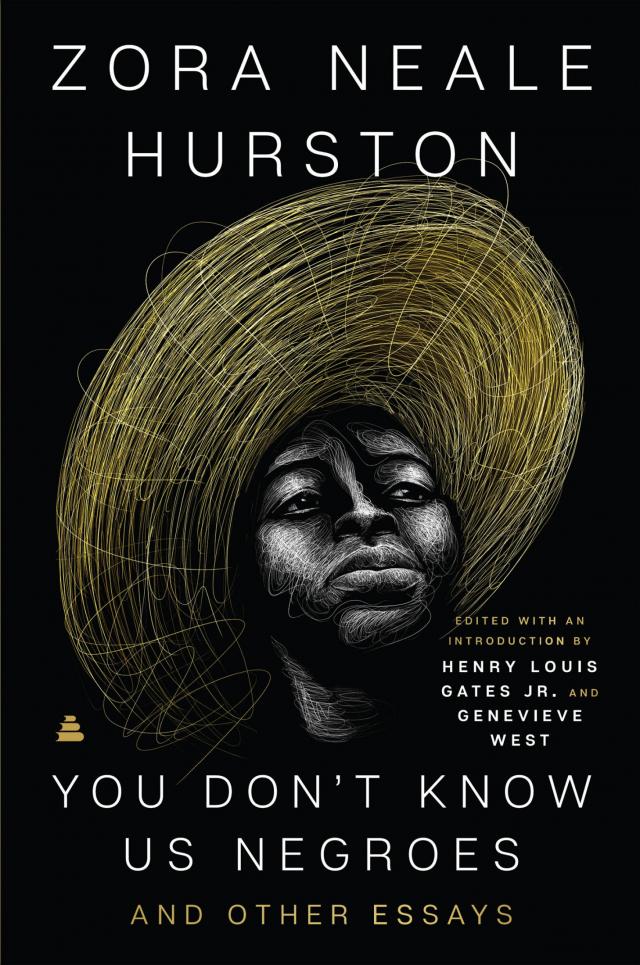
You Don't Know Us Negroes and Other Essays,
p.42


The Chick with One Hen
1. Alain LeRoy Locke (1885–1954) was a professor of philosophy at Howard University, editor, and essayist. He was the campus advisor for The Stylus, the campus literary magazine that published Hurston’s first short story. He introduced Hurston (as well as Langston Hughes and Claude McKay) to Charlotte Osgood Mason, who would financially back her work collecting folklore in the South in the late 1920s and early 1930s. Locke is best known as the editor of the volume that is often called “the bible of the Harlem Renaissance,” The New Negro: An Interpretation (1925). For Locke’s review of Hurston’s novel, Their Eyes Were Watching God, see “Jingo, Counter-Jingo and Us,” Opportunity, February 1939, 7–10.
2. In his review, Locke describes Hurston’s characters in Their Eyes Were Watching God as “pseudo-primitives” and dismisses the novel as art or literature, saying, “setting and surprising flashes of contemporary folklore are the main point.” He takes Hurston to task, saying that “[h]er gift for poetic phrase, for rare dialect and folk humor keep her flashing on the surface of her community and her characters and from diving down deep either into the inner psychology of characterization or to the sharp analysis of the social background.” He asks that Hurston “come to grips with motive fiction and social document fiction.” “Having gotten rid of condescension, let us now get over over-simplification,” he concludes. See his “Jingo, Counter-Jingo and Us,” Opportunity, January 1938, 10.
3. Locke held bachelor’s degrees from Harvard and Oxford Universities and a PhD from Harvard. He was also the first African American Rhodes scholar.
4. Sterling A. Brown (1901–1989) was an African American poet and essayist who taught at Howard University from 1932–1969. His first volume of poetry, Southern Road (1932), placed him alongside Langston Hughes as an important and innovative poet who found inspiration in working-class Black life.
5. Hurston writes about this controversy in her essay “The Hue and Cry About Howard University,” which is included here.
6. The Green Pastures (1930) by Marc Connelly (1890–1980) won the Pulitzer Prize for drama. Connelly, who was white, based the play on stories by another white writer, Roark Bradford. His stories in Ol’ Man Adam an’ His Chillun (1928) depict rural Southern African Americans in simplified and stereotypical ways. The Green Pastures was subsequently adapted to considerable acclaim in 1936 in a film by the same name. See Marc Connelly, The Green Pastures: A Fable Suggested by Roark Bradford’s Southern Sketches, Ol’ Man Adam an’ His Chillun (New York: Farrar and Rinehart, 1930); Roark Bradford, Ol’ Man Adam an’ His Chillun (New York: Harper, 1928).
Jazz Regarded as Social Achievement
1. Rudi Blesh (1899–1985) was a white jazz critic and educator.
2. Hurston explains in “Characteristics of Negro Expression,” “Jook is the word for a Negro pleasure house. It may mean a bawdy house. It may mean the house set apart on public works where the men and women dance, drink and gamble. Often it is a combination of all these.”
3. George Pullen Jackson (1874–1953) was a white musicologist and educator.
4. W. C. Handy (1873–1958), a Black composer and musician, is known for strongly influencing the development of the blues.
5. Ethel Waters (1896–1977), a Black singer and actress who got her start in the blues, went on to perform regularly on Broadway. Hurston wrote about her friendship with Waters in her 1942 autobiography, Dust Tracks on a Road. See Cheryl A. Wall, ed., Zora Neale Hurston Folklore, Memoirs, and Other Writings (New York: Library of America, 1995), 738–42.
6. Josh White (1914–1969) was a Black guitarist popular on race records performing the blues, among other genres.
7. Gabriel Brown (1910–1972) was a Black guitarist whom Hurston recorded performing “John Henry.” The recording is available online at the Library of Congress. See Gabriel Brown, “John Henry,” recorded by Zora Neale Hurston, Alan Lomax, and Mary Elizabeth Barnicle, audio, www.loc.gov/item/ihas.200196392.
8. Huddie William Ledbetter (1888–1949), whose stage name was Lead Belly, was a Black musician and composer known for his use of the twelve-string guitar.
9. Alan Lomax (1915–2002) was a white ethnomusicologist who collected a significant body of traditional music now on deposit at the Library of Congress; Hurston collaborated with Lomax to record Gabriel Brown, noted above.
10. Louis Armstrong (1901–1971) was a Black trumpeter and singer whose musical career spanned five decades.
Review of Voodoo in New Orleans by Robert Tallant
1. Robert Tallant (1909–1957) was a white Louisiana writer of fiction and nonfiction.
2. Hoodoo and Voodoo are often used interchangeably, but Hurston distinguishes between them. Hoodoo refers to sympathetic root work, while Voodoo (as well as Vodou and other spellings) refers to a distinct syncretic religion.
3. William Seabrook (1884–1945) was a white writer known for his travel narratives, especially on the occult. See The Magic Island (New York: Harcourt, Brace, 1929) for his account of Vodou practices in Haiti.
4. Marie Leveau (1801–1881) was a free Creole woman often known as the Voodoo Queen of New Orleans.
5. The editors have been unable to definitively identify the person Hurston refers to here.
6. Hurston’s Mules and Men (Philadelphia: J. B. Lippincott, 1935) is an autoethnographic account of her fieldwork in Florida and Louisiana, including her apprenticeship as a Voodoo priestess. Rockford Lewis (dates unknown) was a Voodoo practitioner active from the 1930s–1950s who served two years in a penitentiary for mail fraud, sending advertisements for his charms through the post office.
7. “Two-Headed Doctor” is a term for a skilled Voodoo practitioner. Billy Middleton explains the term this way: the name “two-headed doctors” indicates the “dualistic elements of their identity: their ability to do both good and harm . . . their existence on the dividing line between religion and folk magic, their dual Christian and African religious roots, and their ability to both heal and practice divinatory magic.” See Billy Middleton, “Two-Headed Medicine: Hoodoo Workers, Conjure Doctors, and Zora Neale Hurston,” Southern Quarterly 53, no. 3/4 (Spring/Summer 2016): 163.
8. High John de Conquer is a figure in African American folklore who also lends his name to a popular ingredient in hoodoo, or root working, which Hurston studied.
9. The Works Progress Administration Writers’ Project was a Depression-era program begun in 1935 and funded by the federal government to provide jobs for out-of-work writers.
10. Hurston details the practices of the Sect Rouge, a group distinct from mainstream Haitian Voodoo, along with information on Legba, a loa or spirit in Haitian Voodoo, in her book Tell My Horse (Philadelphia: J. B. Lippincott, 1938).
11. Lyle Saxon (1891–1946) was a Louisiana writer heavily involved with the Works Progress Administration’s Depression-era Federal Writers’ Project.
What White Publishers Won’t Print
1. Scarlet Sister Mary, a novel by white American author Julia Peterkin (New York: Bobbs-Merrill, 1928), won the 1929 Pulitzer Prize.
2. Charles Spurgeon Johnson (1893–1956) was a Black sociologist and founder of the magazine Opportunity. There he published Hurston’s first story, “Drenched in Light,” for a national audience. He served as the first African American president of Fisk University.
3. Carl Van Vechten (1880–1964) was a white American author, critic, and photographer who enjoyed a close friendship with Hurston. His best-known and most controversial novel is Nigger Heaven (New York: Alfred A. Knopf, 1926).
4. See The Other Room (New York: Crown, 1947) by Worth Tuttle Hedden (1896–1985).
5. Sinclair Lewis (1885–1951) was the first American to win the Nobel Prize in literature. See his novel Main Street (New York: Harcourt, Brace and Howe, 1920).
The Hue and Cry About Howard University
1. Howard University is a historically Black university in Washington, DC, founded in 1867; the same year, the Normal and Preparatory Department was founded to act as a prep school, which Hurston later attended.
2. May Miller (1899–1995) was an American poet and playwright active during the Harlem Renaissance.
3. Hannibal (247 BC–ca. 183–181 BC) was a Carthaginian general who led a contingent of elephants over the Alps to attack the Roman Empire in 218 BC. Napoleon Bonaparte (1769–1821) was a French military leader who claimed the title of Emperor of the French in 1804.
4. The Student Army Training Corps was a federal program designed to train university students for service in World War I. The editors have been unable to identify the Wienstein Hurston refers to here.
5. Charles H. Wesley (1891–1987) was an American historian, minister, and author of some two dozen books on African American history.
6. “There’s A Long Long Trail A-Winding” and “K-K-K-Katy” were popular World War I–era songs. “Roll Jordan Roll” and “Ain’t Gonna Study War No More” (sometimes called “Down by the Riverside”) are both traditional spirituals.
7. “God of Our Fathers” was written in 1872 by Daniel C. Roberts (1841–1907), an Episcopalian priest, to commemorate the centennial of the US Constitution. “Immortal Love Forever Full” was written in 1866 by John Greenleaf Whittier (1807–1892), a Quaker poet and writer.
8. James Stanley Durkee (1866–1951), a minister, served as Howard president from 1918–1926. To date, he was the last white president of the university.
9. “The Heavens Declare the Glory of God” is Psalm 19:1 of the Bible.
10. Edward Hugh Sothern (1859–1933) was an American actor, considered one of the foremost Shakespearean actors of his time.
11. Lulu Vere Childers (1870–1946) was the director of music at Howard from 1905–1946, where she founded both the Conservatory of Music and School of Music. Roy W. Tibbs (1888–1944) was head of the Department of Piano and Organ and founder of Howard’s glee club. Charlotte Beatrice Lewis (dates unknown) was an accomplished pianist and assistant professor of piano and history of music at Howard.
12. John Marshall Miles (b. 1887) was a religious worker and educator.
13. Reed Smoot (1862–1941) was a United States senator from Utah from 1903– 1933. He served as the chair of the Senate Finance Committee and on the Senate Appropriations Committee but was not the chair as Hurston suggests.
14. The Rand School of Social Science was founded in 1906 by members of the Socialist Party of America.
15. “The Hill” refers to Capitol Hill, a historic neighborhood and the location of the US Capitol, Supreme Court, and Library of Congress.
16. Thomas B. Dyett (ca. 1886–1971) went on to become a New York lawyer and civil servant. Norman L. McGhee Sr. (1897–1979) completed his bachelor’s (1920) and law (1922) degrees at Howard and went on to become a successful businessman in Cleveland, Ohio.
17. Dr. Emmett J. Scott Sr. (1873–1957) was a journalist and close associate of Booker T. Washington at the Tuskegee Institute; he served as Howard’s secretary-treasurer from 1919–1933. George W. Cook (1855–1931) was a Howard alum and served at various positions on Howard’s faculty and administration for over fifty years. Edward L. Parks (1851–1930) served as a professor of economics, treasurer, and registrar during his time at Howard.
18. Hurston alludes to Tuskegee University, a historically Black university known at the time for providing students preparation for work in trades and applied professions.
19. Kelly Miller (1863–1939) was a writer, educator, and alumnus of Howard University and Johns Hopkins University who later held several positions at Howard from 1890 until his death.
20. Z. Alexander Looby (1899–1972) went on to become a lawyer, educator, and activist after earning his Bachelor of Law from Howard. George Winston Brown (b. 1898). Frederick Douglass Jordan (1901–1979) attended Howard as an undergraduate and would become a bishop in the African Methodist Episcopal Church.
21. William V. Tunnell (d. 1943) was a Howard alum and Episcopalian minister in addition to his work in Howard’s history department.
22. An ancient tale tells of how Spartan boys were trained to hide their deceptions at all costs: a young boy once stole a fox, and, when confronted, hid the fox under his clothes rather than reveal it. The panicked fox slashed at the boy, killing him.
23. Calvin Coolidge (1872–1933) served as US president from 1923–1929.
24. Dwight Oliver Wendell Holmes (1877–1963) continued his career in college administration as president of Morgan State from 1937–1948. Frederick D. Wilkinson (b. 1890).
25. Lucy Diggs Slowe (1885–1937) was an English professor at Howard in addition to her role as dean of women.
26. Norman L. McGhee (1897–1979) was a lawyer and businessman educated at Howard. See note 16 above.
27. Oliver Otis Howard (1830–1909) was a Union general, namesake and former president of Howard University.
28. The Curry College (formerly School) is a private institution in a suburb of Boston founded in 1879.
29. Samuel Silas Curry (1847–1921) was a speech teacher and namesake of the Curry School referenced above.
30. Carl J. Murphy (1889–1967) was a Howard alum and former German professor there until he assumed operations of Baltimore’s Afro-American newspaper following his father’s death.
31. “Facts Howard University Washington, D. C. 1918–1926,” 1926, Howard University Digital Archive, accessed May 17, 2021, https://dh.howard.edu/cgi/viewcontent.cgi?article=1010&context=hu_pub.
32. Emory B. Smith (1886–1950) was a pastor and briefly a judge in addition to his work at Howard.
33. Dudley Weldon Woodard (1881–1965) was a mathematician and Howard alum who established Howard’s math graduate program. Saint Elmo Brady (1884–1966) was a chemist who taught at Tuskegee, Howard, and Fisk during his career. Frank Coleman (1890–1967) was a physicist and veteran of World War I who served as head of Howard’s physics department.
34. Robert Josselyn Leonard (1885–1929) was an educator and school administrator who studied vocational training.
35. Alain LeRoy Locke (1885–1954). Alonzo H. Brown (dates unknown) taught at both Howard and Fisk Universities during his career in math education. Metz T. P. Lochard (1896–1984) was an English professor at both Howard and Fisk in addition to his work in journalism. For additional information on Locke, please see note 1 in “The Chick with One Hen.” Orlando C. Thornton (b. 1895).
36. The absence of first names has made it difficult to determine precisely who Hurston references here. We believe these to be Alfred Cromwell Priestly, Pezavia Eugene or Harry C. Hardwick, and James Garfield or Suzanne Y. Goins.
The Emperor Effaces Himself
1. Marcus Garvey (1887–1940), a Jamaican activist and Pan-Africanist, founded the Universal Negro Improvement Association (UNIA) in Harlem, which remains the largest grassroots Black Nationalist organization in American history. The organization promoted Black empowerment and created the newspaper Negro World. Middle-class Blacks often looked down upon the UNIA’s elaborate costumes and parades. Garvey was convicted of mail fraud in 1925 and deported in 1927.
2. The flag of the UNIA depicts three wide red, black, and green horizontal bars. The flag is often called the Pan-African flag.
3. Hurston likely alludes to William J. Simmons (1880–1945), founder of the second Ku Klux Klan in 1915.
4. Lloyd George (1863–1945) was a Welsh attorney and politician who served as prime minister of the United Kingdom from 1916–1922.
5. William Edward Burghardt Du Bois (1868–1963) was an African American sociologist, historian, and activist, a founding member of the NAACP, founding editor of the organization’s journal, The Crisis, from 1910–1934, and a critic of Garvey.
6. James Weldon Johnson (1871–1938) was an African American writer and civil rights activist. He was the first Black executive secretary of the NAACP, published poetry and novels, and taught at Fisk University. William Pickens (1881–1954), an African American who graduated from Talladega College and Yale University, was a linguist, educator, and autobiographer who later worked for the NAACP.
7. E. L. Gaines (dates unknown) was a Californian and war veteran who resigned from his role as the UNIA’s military commander in 1924 over a financial dispute with Garvey. Gaines had served in his role for four years and never been paid. The story made headlines. See “Garvey’s Military Leader Quits Post,” New York Age, August 2, 1924, 1–2.
8. William H. Ferris (1874–1941), a graduate of Harvard University, minister, civil rights activist, and educator, held the multiple roles outlined by Hurston in the UNIA.
9. The UNIA created the Black Star Line and purchased four battered ships on which goods and Black Americans could return to Africa. Garvey was convicted of using the images of one ship to sell stock in another ship—one he had not yet purchased but was preparing to purchase. The brochures containing the image of the ship were sent through the US Mail, which led to Garvey’s conviction for mail fraud.
10. Booker T. Washington (1856–1915) was an African American educator, orator, and founder of the famed Tuskegee Institute.
11. Garvey was prosecuted by William Heyward (1877–1944), US attorney for the Southern District of New York, and Maxwell S. Mattuck (1893–1957), assistant US attorney. Heyward led the famed Black 369th Army Infantry Regiment, frequently called the Harlem Hellfighters, into battle during World War I. Mattuck was the lead prosecutor at Garvey’s trial, so he is likely the person alluded to here.
12. John Sidney de Bourg (ca. 1852–unknown) was a Grenadian-born activist deported by the British from Trinidad at the age of sixty-seven for his role in the Workingmen’s Association. De Bourg attended Garvey’s 1920 International Convention of the Negro Peoples of the World where he was elected to office and then went to work for the UNIA. When Garvey went on trial, however, de Bourg testified against the UNIA leader and was later awarded nearly ten thousand dollars in back pay owed by the UNIA. See Tony Martin, The Pan-African Connection from Slavery to Garvey and Beyond (Dover, MA: The Majority Press, 1984), 68–69.