You dont know us negroes.., p.43
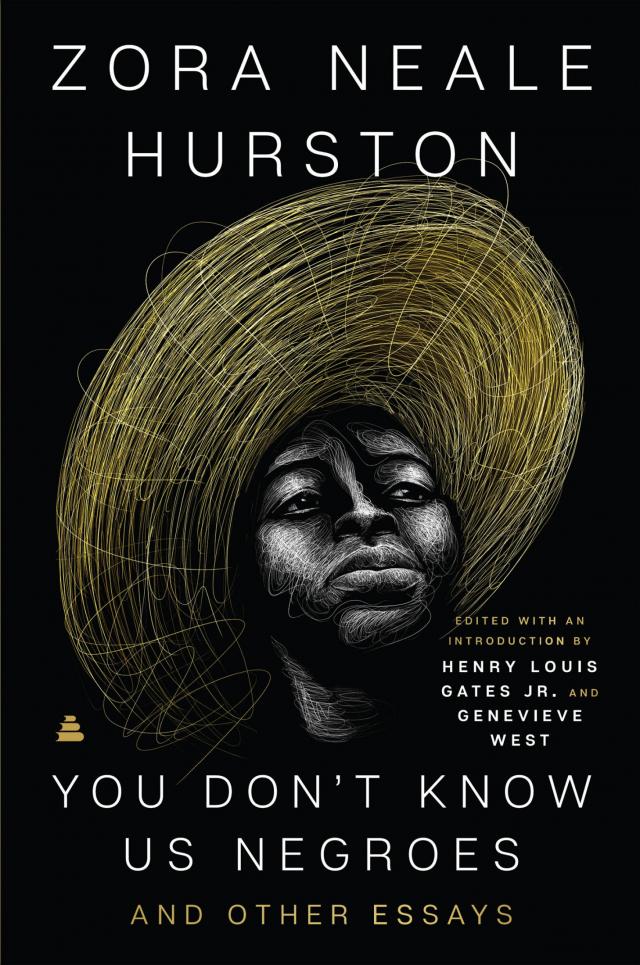
You Don't Know Us Negroes and Other Essays,
p.43


13. Judge Julian William Mack (1866–1943) served on the US Court of Appeals, 7th Circuit from 1911–1929, when he was reassigned to the 6th Circuit. For a biography of Mack, see Harry Barnard, The Forging of an American Jew: The Life and Times of Judge Julian W. Mack (New York: Herzl Press, 1974).
The Ten Commandments of Charm
1. Venus is the Roman goddess of love, beauty, and sex.
Noses
1. Like Coty, Rigaud and Hudnut were cosmetic companies. Both companies’ names are misspelled in the original text as Regnaud and Hudaut’s, respectively, and thus are corrected here.
How It Feels to Be Colored Me
1. Hegira in this context refers to Hurston’s departure from Eatonville.
2. Hurston attended Barnard College, where she was the only Black student enrolled.
3. Peggy Hopkins Joyce (1893–1957) was an American actress, model, and dancer well-known during the Jazz Age.
Race Cannot Become Great Until It Recognizes Its Talent
1. Puck is a figure from British mythology. He appears in Shakespeare’s A Midsummer Night’s Dream. Caliban, half human and half monster, appears in The Tempest. Brer Rabbit is an important trickster figure in African American folklore.
2. Claude Neal (ca. 1911–1934) was an African American farmhand who was lynched before a crowd of spectators outside the Jackson County Courthouse in the Florida panhandle on October 26, 1934.
My Most Humiliating Jim Crow Experience
1. Charlotte Osgood Mason (1854–1946) was a white American socialite and patron of Harlem Renaissance artists, including Hurston, Langston Hughes, and Claude McKay. She financed much of Hurston’s anthropological fieldwork in the Deep South and the Caribbean.
2. Lindley Hoffman Paul Chapin Jr. (1888–1938) was a member of the wealthy and influential Chapin family. His sisters Katherine, a poet, and Cornelia, a sculptor, were also beneficiaries of Mason’s patronage. See andré m. carrington, “Salon Cultures and Spaces of Culture Edification,” in A Companion to the Harlem Renaissance, ed. Cherene Sherrard-Johnson (Hoboken, NJ: John Wiley & Sons, 2015), 251–66.
The Lost Keys of Glory
1. A similar version of the folktale that Hurston expands upon here appears in Mules and Men (1935; New York: HarperPerennial, 1990), 31–32, 34. Hurston’s typescript treats Man and Woman as proper nouns, so her capitalization is retained throughout.
2. Clare Boothe Luce (1903–1987) was a white playwright, editor at Vanity Fair, journalist for Life Magazine, US ambassador to Italy and Brazil, and elected to Congress in 1942. Luce married into wealthy society, divorced her first husband, and later married Henry R. Luce, the publisher of Time and Life Magazine.
3. Dorothy Celene Thompson (1893–1961) was a white American journalist and radio broadcaster. Thompson is known for interviewing Hitler for Cosmopolitan Magazine, which she then parlayed into a book, and cautioning the US against the rise of Nazism. She married three times.
4. As in the passage below, Hurston’s reference to the Holy Grail alludes to Arthurian legends in which the elusory Grail, often a cup or chalice, has magical powers.
5. Sir Percival (with the name spelled variously) is a figure from medieval Arthurian romances and a member of King Arthur’s round table. Sir Galahad (also spelled in multiple ways) is also a figure from Arthurian legend. Both figures search for the Holy Grail. Here, Hurston probably alludes to Alfred, Lord Tennyson’s poem “Morte d’Arthur,” although the image of one robed in “white samite,” a silk fabric often woven with metallic thread, is clearly much older. For a discussion of the image, see Linda Gowans, “‘Clothed in White Samite, Mystic and Wonderful’: A Famous Arthurian Image in Tennyson and His Predecessors,” Arthuriana 26, no. 2 (Summer 2016): 7–24.
The South Was Had
1. Dwight D. “Ike” Eisenhower (1890–1969) served as President of the United States from 1953–61. Prior to that he was a five-star general in the US Army and responsible for planning the Allied assault on Normandy in World War II.
2. John Temple Graves, II (1892–1967) was a white Birmingham, Alabama, newspaper editor and syndicated columnist.
3. Robert A. Taft (1889–1953) was a US Senator from Ohio who lost the Republican nomination for president in 1952 to Eisenhower.
4. Theodore G. Bilbo was a white politician from Mississippi who twice served as governor of the state before serving in the US Senate from 1935–47.
5. Everett McKinley Dirkson (1896–1969) was a white politician who served multiple terms in the House of Representatives and then won a seat in the Senate in 1950.
Take for Instance Spessard Holland
1. Gilbert and Sullivan’s Pirates of Penzance (1879) is a popular operetta. Hurston once worked as a lady’s maid for a performer in a Gilbert and Sullivan troop, so she likely knew the operetta well.
2. An earlier version of this passage includes this text: “a whopping majority of 86,000, which tells who followed the script and who ad libbed.” Hurston revised this passage as it appears above. Spessard L. Holland (1892–1971) was a white American attorney and politician who served as governor of Florida from 1941–1945 and US senator from 1946–71. Claude D. Pepper (1900–1989) was also a white attorney, a Democrat, who served Florida in both the US House of Representatives and the US Senate. Although considered a liberal, he opposed making lynching a federal crime.
3. Hurston’s manuscript of this essay mistakenly identifies Holland’s alma mater as “Clemson” in Atlanta, Georgia. Her error has been corrected. Holland graduated from Emory, which is in Atlanta.
4. Richard Russell Jr. (1897–1971) served as a US senator for Georgia from 1932–1971 after serving as governor of the state. He opposed civil rights legislation and led a like-minded coalition in Washington to prevent such laws from being passed.
5. Florida Agricultural and Mechanical College, known today as Florida A&M University, is a historically Black institution in Tallahassee founded in 1887.
6. John Robert Edward Lee Sr. (1864–1944) was president of Florida Agricultural and Mechanical College, now Florida Agricultural and Mechanical University or FAMU, in Tallahassee, Florida, from 1924–1944.
7. The Freedmen’s Bureau (1865–1872) was created just prior to the end of the Civil War to assist with reconstructing the South. It was charged with feeding, housing, and resettling formerly enslaved people and poor whites after the war. Initially the goals for the agency included resettling Black Americans on confiscated or abandoned land. While the federal agency built schools and hospitals and kept people from starving, most land was returned to its original owners.
8. Holland married Mary Agnes Groover in 1919, and they remained together until his death.
9. Robert A. Taft (1889–1953) married Martha Wheaton Bowers (1889–1958) in 1914.
The “Pet Negro” System
1. Japheth and Ham were two of Noah’s sons, according to Genesis 5:32 in the Bible. In Genesis 9:25, Noah curses Ham’s descendants, stating that they will be servants to the descendants of his other sons. The so-called curse of Ham has since been used as justification for the enslavement of Africans and African Americans.
2. In an effort to end slavery in the United States, John Brown (1800–1859), a devoted white abolitionist, led an ill-fated raid on Harpers Ferry, Virginia, in 1859. Brown was captured and executed for treason.
3. Theodore G. Bilbo (1877–1947) was a white Democratic governor and senator from Mississippi. J. Thomas Heflin (1869–1951) was a white Democratic secretary of state, congressman, and senator from Alabama. Benjamin R. Tillman (1847–1918), also a white Democrat, was governor of South Carolina and served in the Senate.
4. James E. Shepard (1875–1947) was the African American founder and president of the North Carolina State College for Negroes from 1910 until his death. The school’s name was changed to North Carolina Central University in 1969.
5. Eartha M. M. White (1876–1974) was a prominent African American singer, teacher, entrepreneur, and humanitarian in Jacksonville, Florida. She spent her business profits on community endeavors, including a home for the elderly, a home for unwed mothers, and an orphanage.
6. Carl Van Vechten (1880–1964) wrote for Vanity Fair and befriended (and some said betrayed) a number of Harlem Renaissance writers. He is best remembered for his photographs of the literati and his controversial novel Nigger Heaven (1926). Henry Allen Moe (1894–1975) was a World War I veteran, attorney, and administrator. He served as the founding administrator for the Guggenheim Foundation, president of the American Philosophical Society, and the first director of the National Endowment for the Humanities. He was Hurston’s principle contact at the Guggenheim Foundation, which awarded her two fellowships for conducting anthropological research in Haiti and Jamaica, which she wrote about in Tell My Horse (1938). Both of these men are white. Walter Francis White (1893–1955) was an African American activist who served first as an investigator for and later led the NAACP. He was at the helm when the Legal Defense Fund was founded to fight public segregation, including Brown v. Board of Education, which eventually led to the end of segregated schools. Hugo Lafayette Black (1886–1971), a white man, resigned his Ku Klux Klan membership in 1925. He would go on to represent Alabama in the US Senate and serve on the US Supreme Court from 1937– 1971. William Edward Burghardt Du Bois (1868–1963) was an African American writer, sociologist, civil rights activist, Pan-Africanist, founding member of the NAACP, and founding editor of the influential Crisis magazine from 1910–1934. Joel Spingarn (1875– 1939) was a Jewish professor of comparative literature at Columbia University, a soldier in World War I, the second president of the NAACP, and founder of the publishing firm Harcourt, Brace and Company.
Negroes Without Self-Pity
1. Garfield Devoe Rogers Sr. (1885–1951) was a Tampa entrepreneur and philanthropist. His name also appears in advertising as C. D. Rogers. He was a cofounder of the Central Life Insurance Company, alongside C. Blythe Andrews and Mary McLeod Bethune. Central Life would grow to be one of the largest Black-owned insurance companies in Florida.
2. James Leonard Lewis (1905–1954) served as president of the Afro-American Insurance Company, which his grandfather Abraham Lincoln Lewis founded in 1901. The site of the company’s first office in Jacksonville, Florida, is memorialized by a historical marker that identifies it as Florida’s first African American insurance company.
3. John Robert Edward Lee Sr. (1864–1944) was president of Florida Agricultural and Mechanical College in Tallahassee, Florida, from 1924–1944.
The Rise of the Begging Joints
1. Fagin is a character in Charles Dickens’s serially published novel Oliver Twist (1837–1839) who teaches children to be pickpockets.
2. George Schuyler (1895–1977) was an African American fiction writer, journalist, and commentator who is often described as conservative. His satirical novel Black No More (1931) skewers American constructions of race. He was a columnist for the influential Pittsburgh Courier and published in H. L. Mencken’s American Mercury, The Messenger, The Crisis, The Nation, and the Washington Post.
Crazy for This Democracy
1. President Roosevelt used the phrase “arsenal of democracy” in his Fireside Chat on December 29, 1940, to describe the role he imagined for the United States in fighting the Axis Powers prior to the bombing of Pearl Harbor in 1941. Rather than entering the war directly, he imagined that the US would provide military equipment.
2. Will Rogers (1879–1935) was an American performer and humorist. Known for his quips and ironic humor, he often opened his shows with the line, “All I know is what I read in the papers.”
3. President Roosevelt and British prime minister Winston Churchill issued the Atlantic Charter on August 14, 1941. The agreement articulated eight goals for the two nations in World War II. Among them was the right to political self-determination. In the years that followed, the Atlantic Charter served as a means to advance decolonization and human rights. For more on this topic, see Mark Reeves, “‘Free and Equal Parts in Your Commonwealth’: The Atlantic Charter and Anticolonial Delegations to London, 1941–3,” Twentieth Century British History 29, no. 2 (June 2018): 259–83.
4. President Roosevelt’s State of the Union address on January 6, 1941, outlined “four essential human freedoms”: “freedom of speech and expression,” “freedom of religion,” “freedom from want,” and “freedom from fear.”
5. Toussaint Louverture (1743–1803) was a powerful figure in the fight for independence in the French colony of Saint-Dominque (now Haiti). He is often described as the leader of the first successful slave revolt in the Americas.
6. Hurston is most likely referring to Sukarno (1901–1970), a key figure in the Indonesian independence movement and considered the first president of Indonesia.
7. Robert Ingersoll (1833–1899), sometimes known as the Great Agnostic, was an American lecturer and an advocate of free thought. He opposed the prevailing doctrine of social Darwinism, which held that some races or nations were inherently inferior to others.
8. FEPC refers to the Fair Employment Practices Committee, which was created in 1941 via executive order. It was created to prevent racial discrimination against African Americans in defense or government jobs. Congress cut funding for the program after World War II, and it was formally dissolved in 1946.
I Saw Negro Votes Peddled
1. Reconstruction was the period from 1863–1877 after the Civil War during which the former Confederacy was rejoined with the Union, slavery was abolished, and attempts were made to establish civil rights for formerly enslaved people.
2. Simply put, the voter casts a ballot in a single race for a specified candidate, who is, in Hurston’s example, the second name on the ballot. The voter fails to cast a ballot in any other contest.
3. Hurston alludes here to Richard Wright’s collection Uncle Tom’s Children (1938). Wright himself alludes in the title to the character of Uncle Tom in the antislavery novel Uncle Tom’s Cabin (1852) by Harriet Beecher Stowe (1811–1896).
4. Harriet Beecher Stowe’s influential novel Uncle Tom’s Cabin first appeared in 1852.
5. Hurston was unwittingly repeating the spurious charges of historians of the Dunning School at Columbia, who saw Reconstruction as a dark period in the history of American democracy, rather than the interracial revolution that it was. Hurston clearly had not read W.E.B. Du Bois’s seminal rebuttal to the Dunning School, Black Reconstruction: An Essay Toward a History of the Part Which Black Folk Played in the Attempt to Reconstruct Democracy in America, 1860–1880 (1935).
6. Rutherford B. Hayes (1822–1893) was the nineteenth president of the United States and oversaw the end of Reconstruction.
7. The clauses Hurston refers to were laws enacted after Reconstruction in Southern states to prevent African Americans from exercising the right to vote. While the Fifteenth Amendment meant that states could not limit the right to vote based on race, the clauses provided other ways to prevent Blacks from voting. The grandfather clauses (overturned by the US Supreme Court in 1909) allowed Blacks and whites to vote only if their grandfathers had been able to. Similarly, property clauses required voters to own property, while literacy clauses required that voters pass a literacy test.
8. See Song of Solomon, chapter 2:12 in the Bible. Though recorded as “turtle” in some translations, the verse refers to the voice of the turtledove.
Mourner’s Bench
1. Robert Hemenway cites the title as “Mourners Bench, Communist Line: Why the Negro Won’t Buy Communism.” American Legion Magazine 50, no. 6 (June 1951) lists the essay in the table of contents as it appears above. Notably, Hurston’s name and the essay’s title appear on the cover of the magazine. Full text available at: https://archive.legion.org/handle/20.500.12203/3965. Henry Winston (1911–1986) was a Mississippi-born organizer, high-ranking Communist Party official, and eventual chairman of the Communist Party USA from 1966 until his death.
2. William Edward Burghardt Du Bois (1868–1963) was an African American sociologist, historian, and activist, a founding member of the NAACP, and a founding editor of the organization’s journal, The Crisis, from 1910–1934. In 1951, he cofounded the American Peace Crusade, an organization that aimed to end the Korean War. The group’s leaders feared a nuclear holocaust would result from the war.
3. Howard Fast (1914–2003) was a Jewish American novelist, member of the Communist Party, and writer for the Daily Worker.
4. In 1950 Lt. Leon A. Gilbert (1920–1999), an African American officer, was convicted by an all-white military tribunal of “misbehavior before the enemy” for refusing to rejoin his unit at the front during an incursion of North Korean People’s Army soldiers south of the 38th parallel. Although he initially received the death sentence, instead he served five years of a twenty-year prison sentence before being released.
5. Wayland Rudd (1900–1952) was an African American actor who moved to Russia in 1932. While he returned to the US with his wife and daughter, he later moved back to Russia where he lived and worked until the time of his death. William Paterson (1891–1980) was a Black attorney and member of the Communist Party USA. He defended Nicola Sacco and Bartolomo Vanzetti in 1927 and worked on the Scottsboro case. Frank and John Goode, both Black, were Paul Robeson’s brothers-in-law (dates unknown). They moved to Russia in 1934 to work on the film Black and White, which never materialized. John would return to the US in 1937, while Frank remained until his death. Paul Robeson (1898–1976) was a well-known African American singer, performer, and political activist with Leftist sympathies, although he was not apparently an official member of the Communist Party. He was admitted to the bar in New York, but pursued life as a performer instead.