You dont know us negroes.., p.6
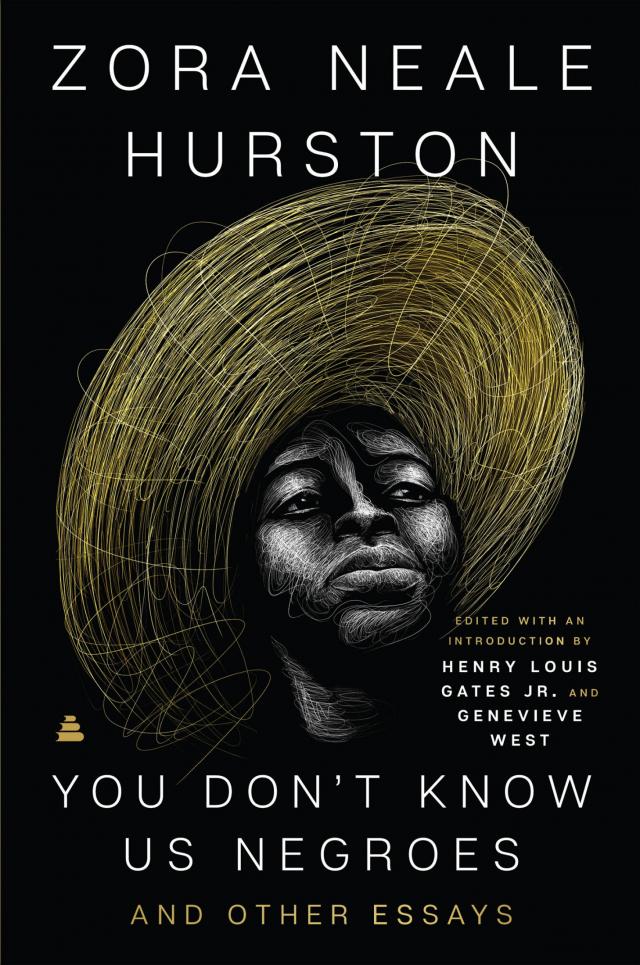
You Don't Know Us Negroes and Other Essays,
p.6


Upon gaining their freedom with Emancipation, Kossula and the rest resolved to return to Africa. They worked in mills and shipyards, made baskets and grew vegetables, and saved every possible penny. But their plan proved impractical, and after a year or two they gave up their dream of going home. They bought a tract of land from Tim Meaher, instead, and settled down to life in America.
African Town was and is an orderly community. Kossula, who with the rest became converted to Christianity, tried to assure me that his Takkoi tribe were practically Christians before their capture. He would never talk to me about his native religion—which had apparently been the butt of much joking when he first came to America—but he did say by way of explanation: “We know in Africa dat it a God, but we no know He got a Son.”
Kossula was erect in his carriage even at ninety-five, and remained cheerful to the end. He felt his uprooting deeply. If I ever went to Africa, he said, I must tell his people where he was. Kossula never knew that not one survivor of Takkoi was known to be alive. Like numerous other tribes and nations of West Africa, Takkoi had disappeared from the earth, its name to be recalled only at the yearly state ceremony to celebrate the might and majesty of Dahomey—when the names of all the tribes and nations destroyed by Dahomey were called as testimony to Dahoman valor.
Two commercial travelers to the Court of Dahomey saw the skull of the King of Takkoi there on such an occasion. It was mounted in a beautiful ship model, highly ornamented and occupying a place of honor. Thus was tribute paid to the memory of a brave man. When asked about the relic’s elaborate decoration, the King of Dahomey said: “It is what I would have wished if I had fallen before him. It is the due of a king.”
Characteristics of Negro Expression
DRAMA
The Negro’s universal mimicry is not so much a thing in itself as an evidence of something that permeates his entire self. And that thing is drama.
His very words are action words. His interpretation of the English language is in terms of pictures. One act described in terms of another. Hence the rich metaphor and simile.
The metaphor is of course very primitive. It is easier to illustrate than it is to explain because action came before speech. Let us make a parallel. Language is like money. In primitive communities actual goods, however bulky, are bartered for what one wants. This finally evolves into coin, the coin being not real wealth but a symbol of wealth. Still later even coin is abandoned for legal tender, and still later for cheques in certain usages.
Every phase of Negro life is highly dramatised. No matter how joyful or how sad the case there is sufficient poise for drama. Everything is acted out. Unconsciously for the most part of course. There is an impromptu ceremony always ready for every hour of life. No little moment passes unadorned.
Now the people with highly developed languages have words for detached ideas. That is legal tender. “That-which-we-squat-on” has become “chair.” “Groan-causer” has evolved into “spear,” and so on. Some individuals even conceive of the equivalent of cheque words, like “ideation” and “pleonastic.” Perhaps we might say that Paradise Lost and Sartor Resartus are written in cheque words.1
The primitive man exchanges descriptive words. His terms are all close fitting. Frequently the Negro, even with detached words in his vocabulary—not evolved in him but transplanted on his tongue by contact—must add action to make it do. So we have “chop-axe,” “sitting-chair,” “cook-pot” and the like because the speaker has in his mind the picture of the object in use. Action. Everything illustrated. So we can say the white man thinks in a written language and the Negro thinks in hieroglyphics.
A bit of Negro drama familiar to all is the frequent meeting of two opponents who threaten to do atrocious murder one upon the other.
Who has not observed a robust young Negro chap posing upon a street corner, possessed of nothing but his clothing, his strength and his youth? Does he bear himself like a pauper? No, Louis XIV could be no more insolent in his assurance.2 His eyes say plainly, “Female, halt!” His posture exults, “Ah, female, I am the eternal male, the giver of life. Behold in my hot flesh all the delights of this world. Salute me, I am strength.” All this with a languid posture, there is no mistaking his meaning.
A Negro girl strolls past the corner lounger. Her whole body panging and posing.3 A slight shoulder movement that calls attention to her bust, that is all of a dare. A hippy undulation below the waist that is a sheaf of promises tied with conscious power. She is acting out “I’m a darned sweet woman and you know it.”
These little plays by strolling players are acted out daily in a dozen streets in a thousand cities, and no one ever mistakes the meaning.
WILL TO ADORN
The will to adorn is the second most notable characteristic in Negro expression. Perhaps his idea of ornament does not attempt to meet conventional standards, but it satisfies the soul of its creator.
In this respect the American Negro has done wonders to the English language. It has often been stated by etymologists that the Negro has introduced no African words to the language. This is true, but it is equally true that he has made over a great part of the tongue to his liking and has had his revision accepted by the ruling class. No one listening to a Southern white man talk could deny this. Not only has he softened and toned down strongly consonanted words like “aren’t” to “aint” and the like, he has made new force words out of old feeble elements. Examples of this are “ham-shanked,” “battle-hammed,” “double-teen,” “bodaciously,” “muffle-jawed.”
But the Negro’s greatest contribution to the language is: (1) the use of metaphor and simile; (2) the use of the double descriptive; (3) the use of verbal nouns.
1. METAPHOR AND SIMILE
One at a time, like lawyers going to heaven.
You sho is propaganda.
Sobbing hearted.
I’ll beat you till: (a) rope like okra, (b) slack like lime, (c) smell like onions.
Fatal for naked.
Kyting along.
That’s a lynch.
That’s a rope.
Cloakers—deceivers.
Regular as pig-tracks.
Mule blood—black molasses.
Syndicating—gossiping.
Flambeaux—cheap cafe (lighted by flambeaux).
To put yo’self on de ladder.
2. THE DOUBLE DESCRIPTIVE
High-tall.
Little-tee-ninchy (tiny).
Low-down.
Top-superior.
Sham-polish.
Lady-people.
Kill-dead.
Hot-boiling.
Chop-axe.
Sitting-chairs.
De watch wall.
Speedy-hurry.
More great and more better.
3. VERBAL NOUNS
She features somebody I know.
Funeralize.
Sense me into it.
Puts the shamery on him.
’Taint everybody you kin confidence.
I wouldn’t friend with her.
Jooking—playing piano or guitar as it is done in Jook-houses (houses of ill-fame).
Uglying away.
I wouldn’t scorn my name all up on you.
Bookooing (beaucoup) around—showing off.
NOUNS FROM VERBS
Won’t stand a broke.
She won’t take a listen.
He won’t stand straightening.
That is such a compelment.
That’s a lynch.
The stark, trimmed phrases of the Occident seem too bare for the voluptuous child of the sun, hence the adornment.4 It arises out of the same impulse as the wearing of jewelry and the making of sculpture—the urge to adorn.
On the walls of the homes of the average Negro one always finds a glut of gaudy calendars, wall pockets and advertising lithographs. The sophisticated white man or Negro would tolerate none of these, even if they bore a likeness to the Mona Lisa. No commercial art for decoration. Nor the calendar nor the advertisement spoils the picture for this lowly man. He sees the beauty in spite of the declaration of the Portland Cement Works or the butcher’s announcement. I saw in Mobile a room in which there was an over-stuffed mohair living-room suite, an imitation mahogany bed and chifferobe, a console victrola.5 The walls were gaily papered with Sunday supplements of the Mobile Register. There were seven calendars and three wall pockets. One of them was decorated with a lace doily. The mantel-shelf was covered with a scarf of deep homemade lace, looped up with a huge bow of pink crêpe paper. Over the door was a huge lithograph showing the Treaty of Versailles being signed with a Waterman fountain pen.6
It was grotesque, yes. But it indicated the desire for beauty. And decorating a decoration, as in the case of the doily on the gaudy wall pocket, did not seem out of place to the hostess. The feeling back of such an act is that there can never be enough of beauty, let alone too much. Perhaps she is right. We each have our standards of art, and thus are we all interested parties and so unfit to pass judgment upon the art concepts of others.
Whatever the Negro does of his own volition he embellishes. His religious service is for the greater part excellent prose poetry. Both prayers and sermons are tooled and polished until they are true works of art. The supplication is forgotten in the frenzy of creation. The prayer of the white man is considered humorous in its bleakness. The beauty of the Old Testament does not exceed that of a Negro prayer.
ANGULARITY
After adornment the next most striking manifestation of the Negro is Angularity. Everything that he touches becomes angular. In all African sculpture and doctrine of any sort we find the same thing.
Anyone watching Negro dancers will be struck by the same phenomenon. Every posture is another angle. Pleasing, yes. But an effect achieved by the very means which an European strives to avoid.
The pictures on the walls are hung at deep angles. Furniture is always set at an angle. I have instances of a piece of furniture in the middle of a wall being set with one end nearer the wall than the other to avoid the simple straight line.
ASYMMETRY
Asymmetry is a definite feature of Negro art. I have no samples of true Negro painting unless we count the African shields, but the sculpture and carvings are full of this beauty and lack of symmetry.
It is present in the literature, both prose and verse. I offer an example of this quality in verse from Langston Hughes:7
I aint gonna mistreat ma good gal any more,
I’m just gonna kill her next time she makes me sore.
. . . .
I treats her kind but she don’t do me right,
She fights and quarrels most ever’ night.
. . . .
I can’t have no woman’s got such low-down ways
Cause de blue gum woman aint de style now’days.
. . . .
I brought her from the South and she’s goin on back,
Else I’ll use her head for a carpet track.
It is the lack of symmetry which makes Negro dancing so difficult for white dancers to learn. The abrupt and unexpected changes. The frequent change of key and time are evidences of this quality in music. (Note the St. Louis Blues.)8
The dancing of the justly famous Bo-Jangles and Snake Hips are excellent examples.9
The presence of rhythm and lack of symmetry are paradoxical, but there they are. Both are present to a marked degree. There is always rhythm, but it is the rhythm of segments. Each unit has a rhythm of its own, but when the whole is assembled it is lacking in symmetry. But easily workable to a Negro who is accustomed to the break in going from one part to another, so that he adjusts himself to the new tempo.
DANCING
Negro dancing is dynamic suggestion. No matter how violent it may appear to the beholder, every posture gives the impression that the dancer will do much more. For example, the performer flexes one knee sharply, assumes a ferocious face mask, thrusts the upper part of the body forward with clenched fists, elbows taut as in hard running or grasping a thrusting blade. That is all. But the spectator himself adds the picture of ferocious assault, hears the drums and finds himself keeping time with the music and tensing himself for the struggle. It is compelling insinuation. That is the very reason the spectator is held so rapt. He is participating in the performance himself—carrying out the suggestions of the performer.
The difference in the two arts is: the white dancer attempts to express fully; the Negro is restrained, but succeeds in gripping the beholder by forcing him to finish the action the performer suggests. Since no art ever can express all the variations conceivable, the Negro must be considered the greater artist, his dancing is realistic suggestion, and that is about all a great artist can do.
NEGRO FOLKLORE
Negro folklore is not a thing of the past. It is still in the making. Its great variety shows the adaptability of the black man: nothing is too old or too new, domestic or foreign, high or low, for his use. God and the Devil are paired, and are treated no more reverently than Rockefeller and Ford.10 Both of these men are prominent in folklore, Ford being particularly strong, and they talk and act like good-natured stevedores or mill-hands. Ole Massa is sometimes a smart man and often a fool. The automobile is ranged alongside of the oxcart. The angels and the apostles walk and talk like section hands. And through it all walks Jack, the greatest culture hero of the South; Jack beats them all—even the Devil, who is often smarter than God.
CULTURE HEROES
The Devil is next after Jack as a culture hero. He can out-smart everyone but Jack. God is absolutely no match for him. He is good-natured and full of humour. The sort of person one may count on to help out in any difficulty.
Peter the Apostle is the third in importance. One need not look far for the explanation. The Negro is not a Christian really. The primitive gods are not deities of too subtle inner reflection; they are hard-working bodies who serve their devotees just as laboriously as the suppliant serves them. Gods of physical violence, stopping at nothing to serve their followers. Now of all the apostles Peter is the most active. When the other ten fell back trembling in the garden, Peter wielded the blade on the posse.11 Peter first and foremost in all action. The gods of no peoples have been philosophic until the people themselves have approached that state.
The rabbit, the bear, the lion, the buzzard, the fox are culture heroes from the animal world. The rabbit is far in the lead of all the others and is blood brother to Jack. In short, the trickster-hero of West Africa has been transplanted to America.
John Henry is a culture hero in song, but no more so than Stacker Lee, Smokey Joe or Bad Lazarus.12 There are many, many Negroes who have never heard of any of the song heroes, but none who do not know John (Jack) and the rabbit.
Examples of Folklore and the Modern Culture Hero
WHY DE PORPOISE’S TAIL IS ON CROSSWISE
Now, I want to tell you ’bout de porpoise. God had done made de world and everything. He set de moon and de stars in de sky. He got de fishes of de sea, and de fowls of de air completed.
He made de sun and hung it up. Then He made a nice gold track for it to run on. Then He said, “Now, Sun, I got everything made but Time. That’s up to you. I want you to start out and go round de world on dis track just as fast as you kin make it. And de time it takes you to go and come, I’m going to call day and night.”
De Sun went zoonin’ on cross de elements. Now, de porpoise was hanging round there and heard God what he tole de Sun, so he decided he’d take dat trip round de world hisself. He looked up and saw de Sun kytin’ along so he lit out too, him and dat Sun!
So de porpoise beat de Sun round de world by one hour and three minutes. So God said, “Aw naw, this aint gointer do! I didn’t mean for nothin’ to be faster than de Sun!” So God run dat porpoise for three days before he run him down and caught him, and took his tail off and put it on crossways to slow him up. Still he’s de fastest thing in de water.
And dat’s why de porpoise got his tail on crossways.
ROCKEFELLER AND FORD
Once John D. Rockefeller and Henry Ford was woofing at each other. Rockefeller told Henry Ford he could build a solid gold road round the world. Henry Ford told him if he would he would look at it and see if he liked it, and if he did he would buy it and put one of his tin lizzies on it.
ORIGINALITY
It has been said so often that the Negro is lacking in originality that it has almost become a gospel. Outward signs seem to bear this out. But if one looks closely its falsity is immediately evident.
It is obvious that to get back to original sources is much too difficult for any group to claim very much as a certainty. What we really mean by originality is the modification of ideas. The most ardent admirer of the great Shakespeare cannot claim first source even for him. It is his treatment of the borrowed material.
So if we look at it squarely, the Negro is a very original being. While he lives and moves in the midst of a white civilisation, everything that he touches is re-interpreted for his own use. He has modified the language, mode of food preparation, practice of medicine, and most certainly the religion of his new country, just as he adapted to suit himself the Sheik hair-cut made famous by Rudolph Valentino.13
Everyone is familiar with the Negro’s modification of the whites’ musical instruments, so that his interpretation has been adopted by the white man himself and then re-interpreted. In so many words, Paul Whiteman is giving an imitation of a Negro orchestra making use of white-invented musical instruments in a Negro way.14 Thus has arisen a new art in the civilised world, and thus has our so-called civilisation come. The exchange and re-exchange of ideas between groups.