You dont know us negroes.., p.41
You Don't Know Us Negroes and Other Essays,
p.41


15. Hurston’s reference to a “sixth race” is connected to theosophy, an esoteric movement popular during the Harlem Renaissance that theorized five “root races” of the world, most of which are extinct, and predicted the rise of a “sixth root race” in the future. The songs Hurston refers to are “Shake That Thing,” copyrighted in 1926 by Papa Charlie Jackson, and “It’s Tight Like That,” recorded in 1928 by Tampa Red and Georgia Tom.
16. Roland Hayes (1887–1977) was an African American singer and composer who met with significant commercial success, touring abroad from the 1920s–1940s.
17. Hurston references the first point of Woodrow Wilson’s (1856–1924) “Fourteen Points Speech” (1918), “open covenants of peace, openly arrived at.”
18. Hiding a light under a bushel alludes to Matthew 5:15 in the Bible.
19. Dixie to Broadway, a musical revue, ran for seventy-seven performances in the Broadhurst Theatre on Broadway from 1924–1925.
20. “Octoroon” literally refers to those who are one-eighth Black and seven-eighths white, but Hurston’s use of the term here points out a colorism or shadeism in mainstream appropriations of Jook culture.
21. Hurston’s note: Elegant (?).
22. Hurston’s use of “black” here refers specifically to colorism or shadeism through which Black women with dark complexions face discrimination from those who privilege a lighter complexion.
23. In construction, a mud-sill is a supporting sill that rests directly on the ground; here, Hurston uses its metaphorical meaning, a person of low social standing.
24. Hurston’s note: Yaller (yellow), light mulatto.
25. A lumber camp would have a commissary for purchasing everyday supplies. In this context, the woman with a dark complexion is purchasing items on credit on his account, despite his denigrating women who look like her.
26. Sex (1926) was a risqué Broadway play written and starred in by Mae West.
27. Hurston likely refers to “Let Your Linen Hang Low” (1937), recorded by Rosetta Howard with the Harlem Hamfats.
28. George Gershwin (1898–1937) was a popular white American composer and pianist.
29. Ann Pennington (1893–1971) was a white Broadway actress, singer, and dancer.
30. The Fisk Jubilee Singers are an a cappella group first formed in 1871 from students at Fisk University, a historically Black university in Nashville, Tennessee. The group traveled the world, and continues to do so, singing the spirituals first sung by enslaved Africans and African Americans.
31. Butterbeans and Susie was a comedy/musical duo of husband and wife Jodie Edwards (1893–1967) and Susie Edwards (1894–1963), active in the first half of the twentieth century.
32. Hurston refers to minstrelsy, a racist genre of entertainment in which white actors put on blackface—sometimes using burnt cork as a pigment—and performed sketches as Black caricatures.
Conversions and Visions
1. Emilie Townes explains the phrase “rimbones of nothing” as “that space in which creation itself enters our lives in ways too deep for words and only sounds and images roil our souls, challenges our vision” in “Walking on the Rim Bones of Nothingness: Scholarship and Activism,” Journal of the American Academy of Religion 77, no. 1 (March 2009): 1–15.
2. Hurston’s note: Brick dust is used in New Orleans to seam steps. It leaves them reddish.
3. Catamounts are a species of American big cat, also known as cougars, pumas, and mountain lions.
4. This is likely an allusion to the Bible, John 12:24–25.
Spirituals and Neo-Spirituals
1. The song title as it appears here also appears in the Library of Congress at www.loc.gov/item/afc9999005.1832. To demonstrate Hurston’s point, a variant title appears as “The Dying-Bed Maker,” and a similar version of the song, “Jesus is a Dying Bed Maker,” also appears to have circulated.
2. Harry T. Burleigh (1866–1949) was a composer and singer known for classical arrangements of spirituals. J. Rosamond Johnson (1873–1954) was a composer and pianist known for composing the Black National Anthem, “Lift Ev’ry Voice and Sing” (ca. 1900). Lawrence Brown (1907–1988) was a jazz trombonist. R. Nathaniel Dett (1882–1943) was a conductor and musician. Hall Johnson (1888–1970) was a composer known for arranging spirituals. “Work” may refer either to John Work Jr. (1871–1925), a professor and director of the Fisk Jubilee Singers at Fisk University, or to his son John Wesley Work III (1901–1967), a composer, ethnomusicologist, and professor also employed by Fisk University.
3. Hurston’s note: Evening dress.
4. Hurston’s original note directs readers to “The Sermon as Heard by Zora Neale Hurston from C. C. Lovelace, at Eau Gallie, Florida, May 3, 1929,” which she published in Negro Anthology, ed. Nancy Cunard (London: Wishart, 1934), 50–54.
5. “O That I Knew the Secret Place” (1721) is a hymn written by Englishman Isaac Watts (1674–1748).
Ritualistic Expression from the Lips of the Communicants of the Seventh Day Church of God
1. “Seventh Day” churches are a subset of Christianity that, among other differences from mainstream Protestantism, keep a holy day of rest, called the Sabbath, on Saturday rather than Sunday, which is the day most Christian denominations observe a day of rest.
2. A doxology is a short, traditional prayer of praise often employed at the end of a church service or song.
3. The parentheses throughout this essay are Hurston’s.
4. R. A. R. Johnson (c. 1854–1940) is the founder of the Holy Church of the Living God, the Pillar and the Ground of the Truth, the House of Prayer for All People, which Hurston visited in the spring of 1940 to conduct research in collaboration with Jane Belo (1904–1968), an anthropological field-worker, photographer, and videographer who studied religion and trances, particularly in Bali; the church is still active today, mainly under the shorter name the House of God. Sanctification is a doctrine that differs between many denominations of Christianity, mainly in whether the sanctification is complete or partial in life, whether it occurs instantly or over time, and whether it is permanent or dependent upon continuously seeking God.
5. It is unclear whether this church was ever officially begun; a church under a similar name, the Evangelical Methodist Church, was founded in 1946, but it appears similar only in name to the one mentioned by Johnson.
6. Abyssinia is an exonym for the Ethiopian Empire, one of the first places to adopt Christianity as the official religion; the Empire fell in the 1970s after seven hundred years.
7. Adam and Eve were the first two people created by God in the Jewish, Christian, and Muslim faiths.
8. Enoch is one of the ten antediluvian patriarchs discussed in the book of Genesis; the verse Genesis 5:24 reads that “Enoch walked with God; and he was not, for God took him,” (New American Standard Bible), which many have interpreted as God taking him to heaven without first dying.
9. Noah, Abraham, Isaac, and Jacob are all biblical patriarchs; Jesus Christ is held as the Messiah figure by Christianity, but not by Judaism or Islam.
10. The King’s Highway is referenced in the biblical book of Numbers as the path the Hebrews followed after the exodus from Egypt.
11. Judgement Day is a prophesied event in Abrahamic religions, usually accompanied by the final salvation of believers and the end of the world.
12. The Commandment Keeper Church is also the subject of a documentary directed by Hurston and listed on the National Film Registry of the Library of Congress at https://www.loc.gov/static/programs/national-film-preservation-board/documents/commandment_keeper_church.pdf.
13. Washington likely preached at the Macedonia Baptist Church in South Carolina, a historical Black church that gained publicity in the 1990s after its arson at the hands of Ku Klux Klan members. The editors were unable to find records of a New Zion church in the state that mentions Washington as a former pastor, although there are several churches by the name that existed during his lifetime.
14. Consumption is a historical term for the disease now known as tuberculosis.
15. Deuteronomy 28 presents blessings for those who obey God and curses for those who disobey him.
16. Hurston’s capitalization and use of the single quotation mark is irregular here. Her original reads: “‘Yes Lord, Amen etc.” It has been standardized to follow the conventions she establishes in the previous sentences.
17. The editors were unable to find records of a Baptist church called Pilgrim in Beaufort, South Carolina, during this time period.
18. This verse recounts the phenomenon of speaking in tongues (other languages) when filled with the Holy Ghost/Spirit, which is considered an aspect of God in most denominations of Christianity.
19. Daniel and John are both figures featured in their own books of the Bible; Daniel is an Old Testament text, while John is the author of the final Gospels and Revelation.
20. This “conversation” ends abruptly with significant white space remaining on the page. The next section begins on a new page, suggesting, perhaps, that Hurston intended to return to the “conversation” with Mary but never did so.
21. The “Children at the Red Sea” references Exodus 15, in which the Israelites dance and sing God’s praises after the parting of the Red Sea by Moses to allow them final passage out of Egypt.
22. In Matthew 10 of the Bible, Jesus teaches his disciples to exorcise spirits and heal disease, then provides them with rules for how and when to apply these gifts.
23. Witch smellers were people who led rituals to expose evil witches within a community; the practice was most common in southern Africa, but legal and cultural shifts in the 1900s have lessened their prevalence.
24. The African Methodist Episcopal Church (AME) is an influential, historically Black denomination of Christianity founded by Richard Allen (1760–1831), who was born enslaved. Allen was first ordained, though, in the Methodist Episcopal Church (MEC), a more mainstream (and white-dominated) denomination.
25. This hymn was originally published as a poem by Joseph M. Scriven (1819–1886).
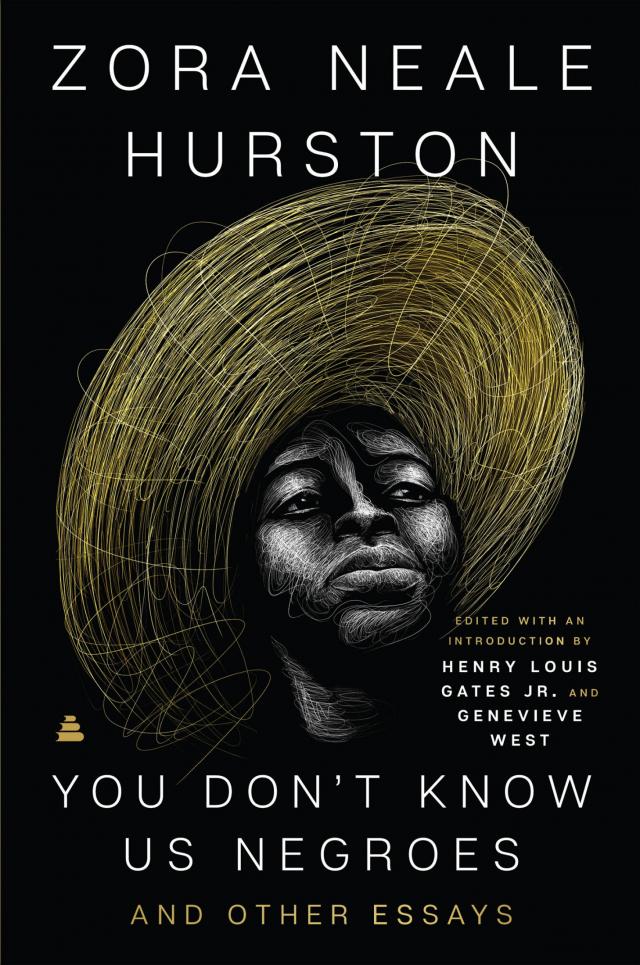
You Don’t Know Us Negroes
1. This essay was slated for publication in 1934 in American Mercury, but for reasons that remain unclear, the essay was never published.
2. The parable Hurston references tells of six blind men who encounter an elephant. Each mistakenly believes that the part he holds in his hands—the head or the tail, for instance—constitutes the entire elephant. It is a parable with Buddhist roots about perception and not seeing the entire picture. See John D. Ireland, The Udana and the Itvuttaka: Two Classics from the Poli Canon (Candy, Shri Lanka: The Buddhist Publication Society, 1997), 82–88.
3. For the story of Ishmael’s conception see the book of Genesis, verses 16–17 in the Bible.
4. This phrase was popularized in the 1943 song “Is You Is or Is You Ain’t My Baby.” It also appears regularly in the work of the white writer Octavus Roy Cohen (1891–1959). See his Florian Slappy Goes Abroad (Boston: Little, Brown, 1928). For recent discussions of these stereotypes, see Bernard A. Drew, Black Stereotypes in Popular Series Fiction, 1851–1955: Jim Crow Era Authors (Jefferson, NC: McFarland, 2015).
5. Flournoy E. Miller (1885–1971) and Aubrey Lyles (1884–1932) were an African American vaudeville team who wrote and produced wildly popular Broadway musicals, including Shuffle Along (1921) and Runnin’ Wild (1923).
6. See Hans Christian Andersen, “The Shadow,” in The Complete Stories (New York: Anchor Books, 1974), 43–45.
7. Josh Billings is the pen and performance name of Henry Wheeler Shaw (1818– 1885), a white American humorist.
8. David Belasco (1853–1931) was a white American producer and playwright. See James F. Wilson, Bulldaggers, Pansies, and Chocolate Babies: Performance, Race, and Sexuality in the Harlem Renaissance (Ann Arbor: Univ. of Michigan Press, 2011).
9. All of the authors Hurston mentions in this paragraph are white. DuBose Heyward (1885–1940) was the author of Porgy (New York: George H. Doran, 1925), which became the foundation for the Broadway hit Porgy and Bess (1935) and a film version. E. C. L. Adams wrote Congaree Sketches (Chapel Hill: Univ. of North Carolina Press, 1927). Julia Peterkin (1880–1961), an American novelist, won the Pulitzer Prize for Scarlet Sister Mary (New York: Bobbs-Merrill, 1928). Thomas Sigismund Stribling (1881–1965), a Tennessee novelist, won the Pulitzer Prize for The Store (Garden City, NY: Doubleday Doran, 1932). Paul Green (1894–1981) was a poet and playwright who also won the Pulitzer Prize for his play In Abraham’s Bosom, which was first produced in 1926 (New York: McBride, 1927).
10. Roark Bradford (1896–1948) was a white American novelist best remembered for Ol’ Man Adam an’ His Chillun (1928), which became the foundation for the hit play The Green Pastures by Marc Connelly (1890–1980), who was also white. The play won the Pulitzer Prize in 1930.
11. Al Jolson (1886–1950) was a well-known white American performer and comedian who performed in blackface makeup.
12. Richard B. Harrison (1864–1935) was a prolific African American actor featured on the cover of Time Magazine on March 4, 1935, just days before his death.
13. In 1 Kings 17:2–5 of the Bible, Elijah remains in the wilderness at God’s direction, drinking from a stream and fed by ravens who bring him food twice each day.
14. These are all biblical allusions. For the story of Jonah in the whale’s belly, see Jonah 1–2. For the story of Isaiah lying on his left side, see Ezekiel 4:4–8. For the story of Jeremiah crying in the wilderness, see Jeremiah 31.
Fannie Hurst
1. Fannie Hurst (1885–1968) was a Jewish American author and activist known for focusing on gender issues. Hurston worked for Hurst as an amanuensis for a time after they met in 1925, though their friendship lasted longer than her formal employment.
2. The Queen of Sheba, first mentioned in 1 Kings 10:1 of the Bible, was said to have brought a caravan of spices, gold, and jewels to a talk with King Solomon.
3. Humoresque: A Laugh on Life with a Tear Behind It (1919); Back Street (1931); Lummox (1923); and The Vertical City (1922) were all popular works of fiction by Hurst.
4. Jacques S. Danielson (1875–1952) was a Russian immigrant pianist who married Hurst in 1915.
5. The Medicis were a powerful, wealthy family during the Italian Renaissance known for their extensive patronage of the arts.
6. Elisabeth Marbury (1856–1933) was an American literary and theatrical agent who worked with Hurston.
7. Vilhjalmur Stefansson (1879–1962) was a Canadian explorer and archaeologist.
Art and Such
1. The original text reads, “music tales and dances.” The comma has been added to facilitate the reader’s comprehension.
2. Reconstruction was the period from 1863–1877 after the Civil War during which the former Confederacy was rejoined with the Union, slavery was abolished, and attempts were made to establish civil rights for formerly enslaved people.
3. O. Richard Reid (1898–unknown) was a Black portrait painter. On Fannie Hurst (1885–1968) see notes 1 and 3 above. John Barrymore (1882–1942) was a white stage, film, and radio actor. H. L. Mencken (1880–1956) was a white author and scholar of American English.
4. Augusta Savage (1892–1962) was a Black sculptor and art teacher active during the Harlem Renaissance.
5. The parenthetical note here is Hurston’s reminder to herself to add a list of Savages’s works to the essay.
6. J. Rosamond Johnson (1873–1954) was a composer and pianist known for composing the Black National Anthem, “Lift Ev’ry Voice and Sing” (ca. 1900).
7. For information on James Weldon Johnson (1871–1938) see note 5 in the Introduction. J. Rosamond Johnson was his brother. James wrote the poem his brother put to music for “Lift Ev’ry Voice and Sing.”
8. Brooks Thompson (1860–unknown), an African American carpenter, is mentioned in a chapter on his daughter in Marsha Dean Phelts, An American Beach for African Americans (Gainesville: Univ. Press of Florida, 1997). Thompson’s birth date was provided in an email to the editors.
9. Theodore Roosevelt (1858–1919) was president of the US from 1901–1909. His campaign song for the 1904 presidential election was written by Bob Cole (1868–1911), J. Rosamund Johnson, and James Weldon Johnson.
10. James Weldon Johnson, God’s Trombones (New York: The Viking Press, 1927).
11. The Autobiography of an Ex-Colored Man (Sherman, French, 1912; repr., New York: Knopf, 1927) is a work of fiction. Johnson’s Black Manhattan (New York: Knopf, 1930) is a work of history, while Along this Way (New York: The Viking Press, 1933) is an autobiography.
12. Hurston writes about herself in third person here.
13. Mules and Men (Philadelphia: J. B. Lippincott, 1935) is an ethnography of Hurston’s time collecting folklore in the South. Their Eyes Were Watching God (Philadelphia: J. B. Lippincott, 1937) is considered Hurston’s masterpiece. Tell My Horse (Philadelphia: J. B. Lippincott, 1938) documents Hurston’s time studying folklore in Jamaica and Haiti.
Stories of Conflict
1. Richard Wright (1908–1960) was an African American writer of fiction and nonfiction whose work mainly focused on the lives of Blacks. When this review by Hurston appeared, Wright had recently panned Hurston’s 1937 novel Their Eyes Were Watching God and accused of her minstrelsy.
2. Hurston likely refers to the Great Dismal Swamp, an area of marshland between Virginia and North Carolina that those who escaped from slavery lived in up to the Civil War. See Richard Grant, “Deep in the Swamps, Archeologists Are Finding How Fugitive Slaves Kept Their Freedom,” Smithsonian Magazine, September 2016, www.smithsonianmag.com/history/deep-swamps-archaeologists-fugitive-slaves-kept-freedom-180960122.