You dont know us negroes.., p.34
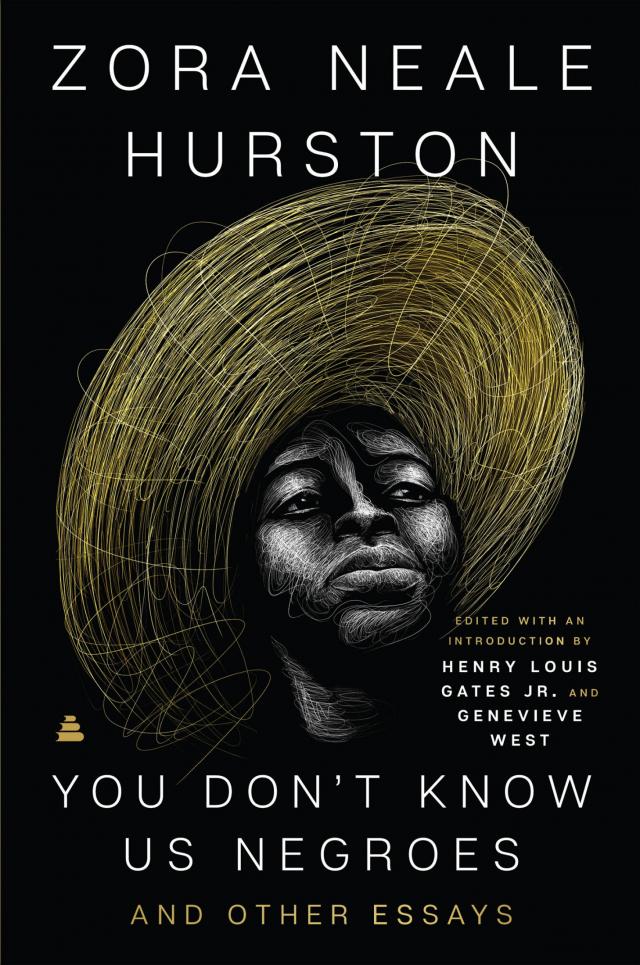
You Don't Know Us Negroes and Other Essays,
p.34


(This exchange of words could be interpreted as a veiled lover’s quarrel about something else. It is common talk that Dr. Adams never dunned anybody for payment. The McCollums had a reputation for always paying their bills. They had been using Dr. Adams as family physician for six years. They had received numerous bills from his office on the first of the month, and had never failed to pay promptly. The only logical conclusion is that they were talking in code for the benefit of the three colored women in the waiting room. It must not be forgotten that Ruby was two months pregnant by Dr. Adams for the second time nor that Dr. Adams was pressing her to leave her husband and move out to his farm. Also it has been hinted that the envelope in which the bill was mailed to Sam McCollum contained something beside that bill. It was intended for Sam’s eyes, but Ruby intercepted it by opening the letter herself on Saturday night. Friday was Aug. 1. Hence, Ruby hastened down to the office on Sunday morning as soon as Sam went to church. Do not forget that Thelma Curry kept the records of the Negro patients and mailed out statements. She was a witness for the state and on the stand said she did not know the amount of the bill, nor even who mailed them out.
It is very strange, as Defense Lawyer Cannon remarked, that the bill which the state claimed precipitated the killing was not offered in evidence. Nor was the over-the-shoulder, large handbag which it was claimed contained the pistol when Ruby went to the office. Cannon made it plain that he thought that peace officers stole that bag and its contents, including eighteen $100 bills that Sunday morning after Ruby was rushed away from her home, leaving only her small children there.)
UNDER cross-examination by Attorney Cannon, Mrs. McCollum said she entered Dr. Adams’ office on this fatal morning and reminded the doctor that he sent the bill “out to the house to Sam” (her husband).
She quoted Dr. Adams as saying: “Yes, and I’m going to get mine if I have to go to the county judge.”
Ruby said she asked him the amount of the bill. She quoted the doctor as saying “$116.”
Ruby then said she paid Dr. Adams $9 for the three shots and an additional $100 and asked him for a receipt. She said he wrote the receipt and handed it to her. She said the doctor detained her after she put the receipt into her pocketbook and headed for the door. She told the court that the doctor led her back of a screen hiding the operating table and demanded that she get on the table.
She testified that she told the doctor her shoulder was hurting, but that the doctor accused her of being cold.
“I’ll do what I can, but how about some other time?” Ruby said she told Dr. Adams.
* * *
IN A hushed courtroom, Mrs. McCollum said Dr. Adams told her: “No! I want you up there today! You get up there.” Ruby said the doctor then slapped her, and that she again told him that she didn’t “feel up to it,” but that she would try to do what he wanted her to do.
She said Dr. Adams struck her again. It was then, Mrs. McCollum said, that I said, “Never again” and began to fight in earnest. She said the doctor “picked up the gun from somewhere back there and poked it in my stomach, demanding that I get on the table.”
Mrs. McCollum said it was at this time that the two of them tussled over the gun. (Dr. Adams was shot four times.) Mrs. McCollum said she blacked out after this and did not “come to” until she reached her home. She had changed her dress and prepared the baby’s formula when police officers arrived.
RUBY: Mr. Gray (deputy sheriff) went upstairs behind me and told me, “I know your husband and have often done things for him.”
After Ruby had revealed where she had disposed of the gun, she was placed under arrest and taken away. What became of the pocketbook that she had carried that day and its important contents, she has no idea.
Afternoon session, Friday, Dec. 19, 1952.
Cross-examination of Ruby McCollum by state.
O. O. EDWARDS: (Assistant State Attorney) What time did you say you left home?
RUBY: I can’t say exactly. 10–10:30 I guess.
CANNON: (Defense) You have testified that you were pregnant on Aug. 3. Are you pregnant now?
(Objection sustained.)
CANNON: Did you have a miscarriage?
(Objection sustained.)
STATE: (Edwards) On Aug. 23, while you were at Raiford, did you write a letter to Mr. Crews (P. Guy Crews, formerly Ruby’s lawyer) which came into the hands of R. H. Cox, director of the Women’s Department at the State Prison Farm, denying sex relations with Dr. Adams and further stating that he was not the father of your child and that you had never had sex relations with any other man than your husband?
RUBY: I did write something like that.
CANNON: (On his feet with hot challenge in his eyes) Tell the jury now WHY you wrote that letter.
(Objection sustained.)
CANNON: (Seeking a way past the barrage of objections) Did anyone do anything to you to force you to write that letter?
RUBY: I was afraid. A nurse gave me 2ccs of some drug and it put me to sneezing and feeling very ill. I wrote it because I was afraid.
CANNON: Before you wrote that letter, were there officers continually asking you about your pregnancy?
RUBY: I don’t know whether he was an officer or not, but he came in and held my arm while the nurse gave me the shots.
CANNON: What were you afraid of?
RUBY: Being in such a place, then too, what they would do to me. I was told that I would get a bigger dose next time if I didn’t get rid . . .
(Objection sustained.)
This matter dealt with her miscarriage while at Raiford.
3:25 p.m.: Atty. Odis Henderson, for the defense, begins to address the jury. He developed the theory of the defense that the killing of Dr. Adams could not be sustained as premeditated murder. The state had not proved its case as such. The physical facts, the wounds, indicated that they had happened during a scuffle. He made a vigorous attack upon the four Negro witnesses for the state, charging that what they testified had been put into their mouths by State Attorney Black. Henderson accused them with scorn of “dealing with cesspools of truth.” “A deaf woman (Carrie Dailey) testified to what she heard, and a blind woman (Della Arnold) swore to what she saw.” Young Henderson, after stating that this was his very first murder trial, ended his speech before the jury touchingly by saying, “Do unto her as you would have done unto you under similar circumstances.”
* * *
Assistant State Atty. O. O. Edwards made a more emotional appeal to the jury. He played on emotional traditions. The jury was urged not to believe that Ruby McCollum had been the mistress of Dr. Adams. The thought was repugnant. “She killed him to keep from paying the $116 medical bill. Shot this prominent citizen in the back, gentlemen, a man whom we all knew and loved so much and was so needed by white and colored, then went home, changed her dress and fixed her baby’s formula.”
He demanded the death penalty without mercy.
Saturday Morning,
Dec. 20, 1952
A. K. Black, State Attorney for Suwannee County, began to address the jury as soon as court opened. Black developed no further theory of the killing. He based his case on the medical bill, and Ruby’s resentment at being asked to pay it.
“You all know that a good way to get them (Negroes) mad is to try to collect. You’ve seen ’em mull” (sullen). Black cautioned the jury not to be deceived by Ruby’s behavior on the stand. He warned that she was highly intelligent, wealthy, but full of sly cunning. She had been planning for her day in court from the time that she went to Dr. Adams’ office on the morning of Aug. 3, 1952. He began his address by paying compliments to the defense attorneys, and ended by demanding the death penalty for Ruby McCollum.
* * *
YOU COULD see the spectators coming alive the moment that Frank Cannon, Florida’s legal Jack Barrymore, got to his feet.1 The man’s dynamic personality exploded for a 100 feet around him in all directions. He could easily pass for the brother of Senator Spessard L. Holland.2 They look that much alike, but possibly Frank Cannon is a trifle more striking. Cannon is destined to go a long way in this world.
First he acknowledged the compliments of State Attorney Black, then added dryly, “Even if he did almost get me run out of town the day this case opened.”
Attorney Cannon referred to Black’s attempt to bar him from the McCollum case.
Defense Attorney Cannon continued to develop the theory that the killing was not one of premeditated murder, but of sudden passion. That the contention of the state was ridiculous.
“Loretta Adams (Ruby’s last child), the fruit of the body of Dr. C. LeRoy Adams, was right here in this courtroom, but prevented of being exhibited to the jury. The state has sought to keep all evidence from reaching your ears. It is a matter of conscience. God forbid that I ever sit as a prosecutor and withhold evidence from a jury!” Attorney Cannon said.
“The case of Dr. Adams and Ruby McCollum is not rare. A lot of white men, as you call it, get messed up with n——r women. You men of the jury know men who are doing the same thing,” Cannon said.
Insisting again that the state had not proved premeditation, and that it had excluded all evidence that might be helpful to the defendant, Atty. Frank Cannon asked for a second-degree verdict, and took his seat.
Judge Adams charged the jury, and the twelve jurors retired for consideration at 11:24 a.m. The jury filed through the courtroom at noon on the way to dinner. At 2:21 the knock came on the door and the jury brought in its verdict.
“We, the jury, find the defendant, Ruby McCollum, guilty of murder in the first degree. So say we all.”
Defense Attorneys Cannon and Henderson indicated immediately that they would file an appeal within the fifteen days allowed by the court. Attorney Cannon went into conference with the male members of the family without leaving the courtroom.
JANUARY 10, 1953
Ruby’s Troubles Mount: Named in $100,000 Lawsuit!*
LIVE OAK, Fla.—The attorney whose prosecution placed Mrs. Ruby McCollum in the shadow of the death chair . . . A. K. Black . . . has resigned as state attorney for Suwanee County, Fla.
He quit his post to represent Mrs. Florrie Adams (white), widow of the slain Dr. C. LeRoy Adams, who has filed a $100,000 suit against Mrs. McCollum and the estate of her dead husband, Sam McCollum.
Mrs. McCollum shot and killed Dr. Adams last August and was found guilty, without mercy, at her trial last month. Mr. McCollum died of a heart attack shortly after the doctor had been killed.
During her trial, Mrs. McCollum testified that she and Dr. Adams had been “lovers” and that he was the father of her last child.
* * *
UNCONFIRMED REPORTS intimate that Mrs. McCollum is worth close to $200,000, while McCollum’s estate is in excess of this amount.
And as Ruby’s troubles mounted, these other developments were evident:
Releford McGriff, first Negro attorney to enter the case, joins former county solicitor Frank T. Cannon to appeal for a new trial based on different points. Judge Hal Adams is set to hear the motion this week.
The inheritance of the three McCollum children is threatened by the suit of Mrs. Adams.1
Danger of little relief from the mandatory death sentence faced by Mrs. McCollum is seen . . . and a judgment against her monies would tie up future defense funds.
If Mrs. Adams’ suit is successful, a large block of stock owned by McCollum in the Central Life Insurance Company of Tampa would fall into the hands of white ownership.
Mrs. Adams is asking the $100,000 damages on the grounds that she has been deprived of the “comfort, association and protection of said husband, and also has been deprived of the support of said husband.”
* * *
AS EVENTS continue to unfold in the gripping tragedy, Mrs. McCollum found her troubles mounting. A faint ray of hope still gleamed through all the darkness as her attorneys prepared to argue a motion for a new trial on fifty-eight different points before Judge Hal Adams.
Two top attorneys are making the appeal . . . Atty. Frank T. Cannon, former county solicitor, and Releford McGriff, noted Florida Negro attorney . . . the first Negro attorney to enter the picture.
The suit filed by Mrs. Adams came as a bombshell as interested spectators were anxiously awaiting the judge’s decision on a new trial. Sentence has yet to be passed on Mrs. McCollum, found guilty of first degree murder of Dr. Adams by an all-white jury.2
* * *
Mrs. McCollum has testified that she had shot Dr. Adams during a scuffle over a pistol in his office in August. She told the Court during her tense trial that she had been intimate with the highly respected white physician over a period of years and that he was the father of her 15-month-old daughter.
Her husband, Sam McCollum, wealthy businessman, died shortly after the slaying, leaving a large estate in both real and personal property. The joint holdings of the McCollums has been estimated by close associates as being close to $500,000.
The suit for $100,000 has been filed against both Mrs. McCollum and the estate, which under normal circumstance would go to the three McCollum children if the mother were to die in the electric chair. A successful suit on the part of Mrs. Adams would deprive the youngsters of this inheritance.
* * *
INCLUDED IN THE McCollum estate are large blocks of stock in the Central Life Insurance Company of Tampa, one of the largest Negro-owned insurance companies in the Deep South. If Mrs. Adams’ suit is successful, it would place her in the position to become the first white director of a Negro-owned life insurance company. McCollum was a director of the company at his death.
Matthew L. Jackson and Roland J. Yates were appointed administrators of the estate of Sam McCollum. There has been wide-spread conjecture on the attitude of the civil court toward the suit.
JANUARY 17, 1953
The Life Story of Mrs. Ruby J. McCollum!
“. . . And on the signing of the order by the chief executive of the State of Florida, you shall be removed to the State Prison at Raiford, and there electric currents shall be caused to pass through your body sufficient to cause your death, and to continue until you are dead . . . and may God have mercy upon your soul!”
It was the climax to the life of a Florida woman whose story has rocked an entire nation. These were the fateful words pronounced by Judge Hal W. Adams of the Circuit Court of Suwannee County, Fla., as the shadows of dusk fell on Jan. 17, 1953.
The words were pronounced in a choked voice and they were addressed to Ruby McCollum as she stood before the bar to hear her sentence. Her left elbow rested casually on the back of the chair that had been occupied during all of the hearings and the trial by the state’s attorney who had prosecuted her and won a first degree murder conviction against her.
What thoughts passed through her mind as she fleetingly reviewed her entire lifetime in one brief moment, only Ruby McCollum knew. Outwardly calm and self-possessed, Ruby McCollum returned to her seat at the counsel table.
The discerning spectator could not avoid the conclusion that here was no ordinary mortal, no cringing victim inadequate to its fate. There sat an extraordinary personality. Here was a woman—a Negro woman with the courage to dare every fate, to boldly attack every tradition of her surroundings and even the age-old laws of every land.
Her closest relatives and the people who said they knew her as a friend or associate express profound and painful surprise. Mrs. McCollum—born Ruby Jackson—had nothing of daring, nothing out of the ordinary in her. Always quiet with little to say and utterly absorbed in ordinary domestic affairs. What had changed the Ruby they knew so strangely?
* * *
THE TRUTH IS that nobody, not even the closest blood relations, ever really knows anybody else. The greatest human travail has been in the attempt at self-revelation, but never, since the world began, has any one individual completely succeeded. There is an old saying to the effect that: “He is a man, so nobody knows him but God.”
As to what has come about in the life of Ruby Jackson McCollum, perhaps it was inevitable from the hour of her birth, as humble and unnoticed as it was. An Arab proverb says: “The fate of every man hath he bound about his neck.”1 We are born with our own climate which shall create the outward circumstances which people carelessly say determined our course.
Fatalists contend that it was there in the seed already at birth. So, the ordinary-seeming little boy born on the island of Corsica becomes the Emperor of France and the most renowned military figure the world has ever known, but he died on St. Helena still imperfectly known.2
So, thus, we go to search out the beginnings, the early years of Ruby Jackson McCollum who has been sentenced to die for the fatal shooting of Dr. C. LeRoy Adams, nominee for the Florida State Senate, the most successful doctor of medicine in Live Oak, Fla., and easily the most popular man in the entire area.
* * *
HE WAS A broad-shouldered six-footer with magnificence of body and an irresistible smile, a handsome white man whom women of both races seemed unable to resist. He was the charmer who fell before the blazing gun of Ruby McCollum, the slightly built, soft-spoken Negro woman, on a Sunday morning in August, 1952.
Certainly, there was nothing in the early life of Ruby Jackson, later to become Ruby McCollum, that made relatives and neighbors see anything that might hint of what was to later come to pass. That, probably, was because the average person takes it for granted that silence means a lack of thought and internal activity.
It is rarely considered that thoughts too profound for words might be surging through an individual like a great underground river, unless and until it bursts forth like an awesome Niagara or Victoria Nyansa.3 That was undoubtedly the case with Ruby McCollum.
* * *
RUBY IS THE second child of William and Gertrude Jackson. Clemon Jackson, now a barber in Ocala, Fla., was the first-born. Ruby followed him into the world two years later. William Jackson, who died in 1949, was a successful farmer with his farm hard beside Fessenden Academy at Martin, Fla., about eight miles from Ocala.