You dont know us negroes.., p.44
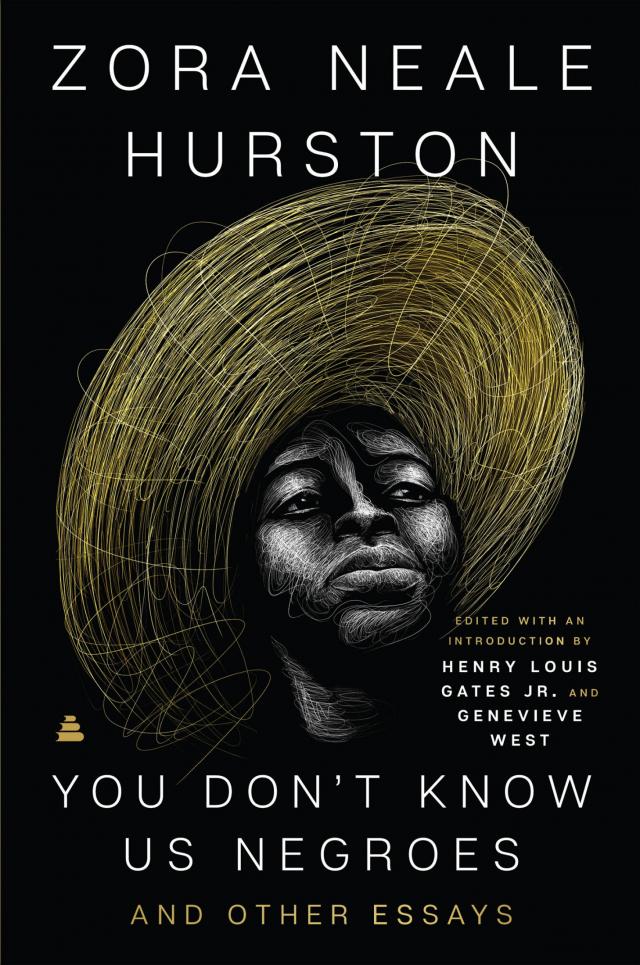
You Don't Know Us Negroes and Other Essays,
p.44


6. Langston Hughes (1901–1967) was a beloved American writer known for his poetry, fiction, and plays. He and Hurston shared the same literary patron, Charlotte Osgood Mason. At one time Hurston and Hughes were friends and collaborators, but their dispute over a play effectively ended their friendship. Interestingly, Louise Thompson (1901–1999) was the typist who worked on the play with Hughes and Hurston. See Mule Bone: A Comedy of Negro Life (New York: HarperPerennial, 2008).
7. Robert A. Taft (1889–1953), son of former president William Howard Taft, was a conservative Republican politician who served as senator from Ohio from 1939–1953; his bids for the presidency were ultimately unsuccessful.
8. The Abraham Lincoln Brigade was a group of Americans recruited by the Communist Party to serve in the fight against Franco in the Spanish Civil War.
9. The Scottsboro case involved nine Black teenagers who were accused of raping two white women in Alabama in 1931. The inflammatory nature of the charges and the location in the Jim Crow South meant a fair trial was virtually impossible.
10. Hurston alludes to the Korean War where Black men were killed in action. Hurston questions the intelligence of expecting people suffering the loss of their loved ones at the hands of Koreans to side with North Korea instead of America.
11. Hurston likely refers to Caroline Schermerhorn Astor (1830–1908). Married to William Backhouse Astor Jr., she is often remembered as a socialite. In the years after her marriage, she emerged as the most powerful figure in New York society circles, setting standards for manners, social customs, and admittance to the New York Four Hundred.
12. Booker T. Washington (1856–1915) was an African American educator, orator, and founder of the famed Tuskegee Institute.
13. The Medicis were a powerful, wealthy family during the Italian Renaissance known for their extensive patronage of the arts.
14. Genghis Khan (1162–1227) was a powerful leader of Mongolian tribes who eventually claimed territory from Poland to the Caspian Sea.
15. Max Schmeling (1905–2005) was a German boxer and heavyweight world champion. He is best known in the United States for his matches against the African American boxer Joe Louis in 1936 and 1938, which Nazi Party leaders attempted to leverage as propaganda.
16. Du Bois applied for membership in the Communist Party in 1961, the same year he moved to Ghana.
17. Baal was a deity in the ancient Canaanite religion. In 1 Kings 18:20–40 Elijah exposes his followers as worshippers of a false god when Baal fails to answer their prayers.
A Negro Voter Sizes Up Taft
1. Robert A. Taft (1889–1953), son of former president William Howard Taft, was a conservative Republican politician who served as senator from Ohio from 1939–1953; his bids for the presidency were ultimately unsuccessful. By “Elephant Boy,” Hurston suggests that Taft was fighting to be the Republican candidate in 1952’s election.
2. Charles P. Taft II (1897–1983) was Robert A. Taft’s younger brother and served as mayor of Cincinnati from 1955–1957.
3. Martha Wheaton Bowers Taft (1889–1958), wife of Robert A. Taft, was an active leader in the Girl Scouts and helped found the League of Women Voters in addition to her work for her husband’s campaigns.
4. Abraham Lincoln (1809–1865) was president of the US from 1861–1865 and signed the Emancipation Proclamation that abolished slavery.
5. Daniel Webster (1782–1852) was a politician who served in Congress and as secretary of state during his career, which has been remembered as a remarkable one; along with Robert A. Taft and three others, Webster was named one of the United States’ most outstanding senators in 1959 by a Senate committee.
6. Theodore G. Bilbo (1877–1947) served as a US senator from Mississippi from 1935–1947.
7. Alphonso Taft (1810–1891) served as attorney general and ambassador to Russia and Austria-Hungary in addition to his work as secretary of war during the Civil War. Ulysses S. Grant (1822–1885) was president from 1869–1877 after serving as commanding general of the Union army during the Civil War.
8. William Howard Taft (1857–1930) served as US president from 1909–1913 and is currently the only person to have been both president and chief justice of the Supreme Court.
9. Helen Louise Taft (1861–1943) came from a family full of senators and other government officials and was an active First Lady.
10. Lloyd Wheaton Bowers (1859–1910) was a lawyer before his brief tenure as solicitor general from 1909–1910.
11. Thomas Jefferson (1743–1826) was a founding father of the US and served as president from 1801–1809. Martha Washington (1731–1802) was the first First Lady of the United States.
12. Hurston refers to several dynasties often grouped together as the “Boston Brahmins,” historically influential upper-class families. The Adams family includes John Adams (1735–1826), second president of the US, his son John Quincy Adams (1767–1848), sixth president, and several other notable members through the country’s history. The Cabot family includes mainly merchants, though Henry Cabot Lodge (1850–1924) and his grandson Henry Cabot Lodge Jr. (1902–1985) were both notable US senators from Massachusetts. The most notable members of the Lodge family are the aforementioned senators also included in the Cabot line.
13. The publications known collectively as the Federalist or the Federalist Papers are eighty-five essays written by John Jay, James Madison, and Alexander Hamilton between 1787 and 1788 that appeared in New York newspapers as the state considered whether to ratify the US Constitution.
14. “Jacksonian democracy” is a term for the trend of policies begun by Andrew Jackson (1767–1845) during his term as president from 1829–1837; the period is characterized by laissez-faire capitalism, emphasis on expanding voting rights to all white men, and manifest destiny across the West.
15. The spoils system, also a characteristic of Jacksonian democracy, refers to the practice of appointing allies to positions of power after they help win an election; Andrew Jackson himself practiced the spoils system liberally after his first presidential win in 1828.
16. Alexander Hamilton (1755 or 1757–1804) was a founding father and the first US secretary of the treasury from 1789–1795.
17. President Franklin Delano Roosevelt (1882–1945) implemented a series of actions known as the New Deal in 1933 to address the crises of the Great Depression. The New Deal included the Works Progress Administration and the Federal Writers’ Project, which Hurston worked for in the late 1930s.
18. The term Pinko in Hurston’s time was a pejorative term for someone with Communist leanings. With hard-core Marxists being commonly called “reds,” a Pinko is someone less so.
19. The Kremlin was the seat of government for the Union of Soviet Socialist Republics from 1922–1991.
20. Henry Agard Wallace (1888–1965) served as the US secretary of commerce, the US secretary of agriculture, and as Roosevelt’s vice president. In 1948 the Progressive Party nominated him for president. Frances Perkins (1880–1965) was US secretary of labor from 1933–1945. The first woman appointed to a cabinet post, Perkins led the Department of Labor as it established the first minimum wage, established Social Security, and limited the number of hours that children could work. Anna Eleanor Roosevelt (1884–1962) is remembered for her role in advocating for social causes and for women’s rights. Married to Franklin Delano Roosevelt, she served as First Lady from 1933–1945. Vito Marcantonio (1902–1954) represented the state of New York in the US House of Representatives from 1939–1951. He ran unsuccessfully for mayor of New York as the nominee of the American Labor Party in 1949.
21. Aaron Burr (1756–1836) and Thomas Jefferson (1743–1826) were tied in the electoral college vote to become president in 1800. As practices of the time dictated, the winner would become president, while the other would serve as vice president.
22. Hurston is in error here. Alexander Hamilton (ca. 1755–1804) may have persuaded Delaware’s lone representative, James A. Bayard, to change his vote, which helped Jefferson win to become president. When Burr ran for governor of New York in 1804, Hamilton again opposed Burr. Burr challenged Hamilton to a duel in which he shot Hamilton, who later died of his wound.
23. A straw man is a logical fallacy. It depends on distorting the opposition’s argument only to knock down something that was not part of the opponent’s position. In this case, Hurston suggests that Democrats have been setting up and knocking down straw men in order to attract Black voters.
24. The Smathers-Pepper campaign was the Democratic primary race in Florida in 1950. Incumbent Claude D. Pepper (1900–1989) was challenged by George A. Smathers (1913–2007) in what became an ugly race. Smathers ultimately won the primary and went on to win election to the Senate. The nature of the campaign battered both men’s political reputations.
25. Marian Anderson (1897–1993) was a world-renowned African American contralto. When Howard University sought to rent Constitution Hall for a performance by Anderson, the Daughters of the American Revolution (DAR), which owned the hall, denied the request because of her race. First Lady Eleanor Roosevelt, a member of the DAR, resigned from the organization. Anderson would go on to perform on the steps of the Lincoln Memorial before a desegregated crowd.
26. Harold LeClair Ickes (1874–1952) was an American politician appointed by Franklin D. Roosevelt as US secretary of the interior from 1933–1946. Addis Ababa is the capital of Ethiopia.
27. Hurston alludes to the great flood described in Genesis 7 of the Bible. The cloud Hurston describes, however, has been whipped up out of egg whites. That is, it is manufactured.
28. The phrase “chewed tobacco and spit white lime” appears in Hurston’s essay “Dance Songs and Tales from the Bahamas” but in an entirely different context. Here the phrase implies anger. In “Dance Songs” it functions as a quip that opens and closes specific folktales. See Hurston, “Dance Songs and Tales from the Bahamas,” Journal of American Folklore 43, no. 169 (July–September 1930): 294–312, www.jstor.org/stable/534942.
29. Hurston’s use of the phrase “Little White Father” probably refers to Nicholas II, Emperor of All the Russias, who was in power in the early years of World War I. Nicholas and his family were executed in 1918.
30. Booker T. Washington (1856–1915) was a Black educator and founder of the famed Tuskegee Institute (now University).
31. Theodore Roosevelt (1858–1919) was president of the US from 1901–1909.
Court Order Can’t Make Races Mix
1. Hurston of course refers to the landmark 1954 ruling in Brown v. Board of Education, which ended the legality of “separate but equal” public schools.
2. DeWitt Everett Williams (ca. 1899–1975) served as Florida’s state agent for Negro schools from 1927–1963.
Which Way the NAACP?
1. Hurston refers to the desegregation of Central High School in Little Rock, Arkansas, in 1957. The governor of Arkansas sent the Arkansas National Guard to bar entry to the nine African American students, often remembered as the “Little Rock Nine.” President Dwight D. Eisenhower eventually sent federal troops to escort the students onto the campus.
2. William Edward Burghardt Du Bois (1868–1963) was an African American writer, sociologist, civil rights activist, Pan-Africanist, founding member of the NAACP, and founding editor of the influential Crisis magazine from 1910–1934.
3. Booker T. Washington (1856–1915) was an African American educator, orator, and, as Hurston says here, founder of the famed Tuskegee Institute. While both Washington and Du Bois were considered important leaders and advocates for African Americans, Washington argued for social separation and industrial education that would be seen as less of a threat by whites, while Du Bois advocated for immediate equality and access to a more traditional liberal arts education.
4. Du Bois’s autobiographical book is actually titled Dusk of Dawn: An Essay Toward an Autobiography of a Race Concept (1940). For a contemporary edition, see The Oxford W. E. B. Du Bois, ed. Henry Louis Gates Jr., 19 vols. (New York: Oxford, 2007).
5. Virgil D. Hawkins (1906–1988) was denied admission to the University of Florida law school in 1949, marking the start of a decades-long legal battle to practice law in Florida.
6. Autherine Lucy (b. 1929) was the first African American student to attend the University of Alabama, where she was subjected to degrading attacks by white mobs. She was later expelled after filing a lawsuit against the university for failing to protect her against these attacks. This expulsion was rescinded in 1988, when she was allowed to resume classes.
7. President Harry S. Truman (president 1945–1953) ordered the desegregation of America’s military in 1948, but it was not until Dwight D. Eisenhower succeeded him as president (1953–1961) that the order was fully implemented and the last all-Black units were desegregated.
8. Paul Robeson (1898–1976) was a well-known African American singer, performer, and political activist with Leftist sympathies, although he was not apparently an official member of the Communist Party. Langston Hughes (1901–1967) was known for his poetry, fiction, and plays. Hurston knew both men, and at one time she was close to Hughes, with whom she disputed the authorship and ownership of the play Mule Bone. See Mule Bone: A Comedy of Negro Life (New York: HarperPerennial, 2008). For a study of Hurston and Hughes’s relationship, see Yuval Taylor, Zora and Langston: A Story of Friendship and Betrayal (New York: W. W. Norton, 2019).
9. Charles Clinton Spaulding (1874–1952) was a highly successful African American businessman. He served as the president of the North Carolina Mutual Life Insurance Company for thirty years, though he was not the founder as Hurston suggests. Under Spaulding’s leadership, the company grew to one of the largest Black-owned businesses in the United States. However, his wife, Charlotte Garner Spaulding, did not serve in the Department of Health, Education, and Welfare. Hurston seems to have mistaken her for Jane Morrow Spaulding (1900–1965), a social worker who became the first African American woman to serve as an assistant secretary in a president’s cabinet.
10. Oveta Culp Hobby (1905–1995) served as the director of the Women’s Army Corps and was the first secretary of the Department of Health, Education, and Welfare.
11. Spaulding opposed funding the hospital because it would not employ African American physicians. A more complete record of Spaulding’s career and her dismissal can be found in Jessie Carney Smith, ed., Notable Black American Women, Book II (New York: Gale Research, 1995), 609–12.
12. Drew Pearson (1897–1969) was an American journalist best known for his syndicated newspaper column “The Washington Merry-Go-Round.”
13. While Spaulding was a Republican at the time of her appointment to the Department of Health, Education, and Welfare, by the time Hurston wrote this article, Spaulding had begun campaigning for Democratic causes.
14. Josephine Baker (1906–1975) was an American entertainer who became famous in her adopted home of Paris. While Baker is remembered by many for her performances in the banana skirt Hurston mentions, she was also active in the French Underground during World War II and received the Croix de Guerre after the war ended.
15. Will Rogers (1879–1935) was an American actor and humorist. Rogers often used the line “All I know is what I read in the papers” in his public appearances, particularly at the beginning of his live performances.
16. Walter Winchell (1897–1972) was an American news and radio journalist, popular in between the 1930s and 1950s.
17. Richard Wright’s Black Power: A Record of Reactions in a Land of Pathos (1954) is available today in Black Power: Three Books from Exile (New York: HarperPerennial, 2008), 1–428.
18. Kwame Nkrumah (1909–1972) was a Ghanaian nationalist leader who served as the country’s first prime minister and president after gaining independence from the United Kingdom in 1957.
Zora’s Revealing Story of Ruby’s 1st Day in Court!
1. In the epigraph, Hurston quotes “Old Folks at Home” (1851), better known as “Suwannee River,” by American songwriter Stephen Collins Foster (1826–1864). In the paragraph below, Hurston quotes Foster’s 1853 “Old Kentucky Home.”
2. The surname LeRoy also appears variously as Leroy. The editors have opted for the capitalization found on Adams’s grave marker as indicated by the photograph at www.findagrave.com/memorial/51960369/clifford-leroy-adams. Adams (1908–1952) is buried in the Live Oak Cemetery, Live Oak, Florida.
Ruby McCollum Fights for Life
1. See Acts 16:24–27 in the Bible, which recount Paul and Silas being freed from prison by an earthquake.
Bare Plot Against Ruby
1. Malcolm Johnson (1904–1976) was an investigative reporter who won the 1949 Pulitzer Prize for local reporting for a series of twenty-four stories, “Crime on the Waterfront,” published in The New York Sun. Bernard Parker remains unidentified.
Ruby’s Story: Doctor’s Threats, Tussle over Gun Led to Slaying!
1. John “Jack” Barrymore (1882–1942) was a well-known white stage and film star.
2. Spessard L. Holland (1892–1971) was a white American attorney and politician who served as governor of Florida from 1941–1945 and US senator from 1946–1971.
Ruby’s Troubles Mount: Named in $100,000 Lawsuit!
1. Ruby McCollum actually had four children, but only three of those were Sam McCollum’s.
2. Hurston indicates in part eight of “The Life Story of Mrs. Ruby J. McCollum” that Suwannee County had for the first time included African Americans on a jury, but it is unclear whether she meant they served on Ruby McCollum’s jury.