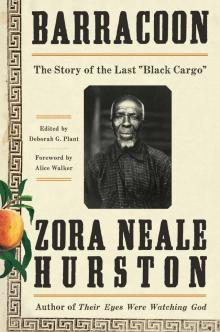
You dont know us negroes.., p.5
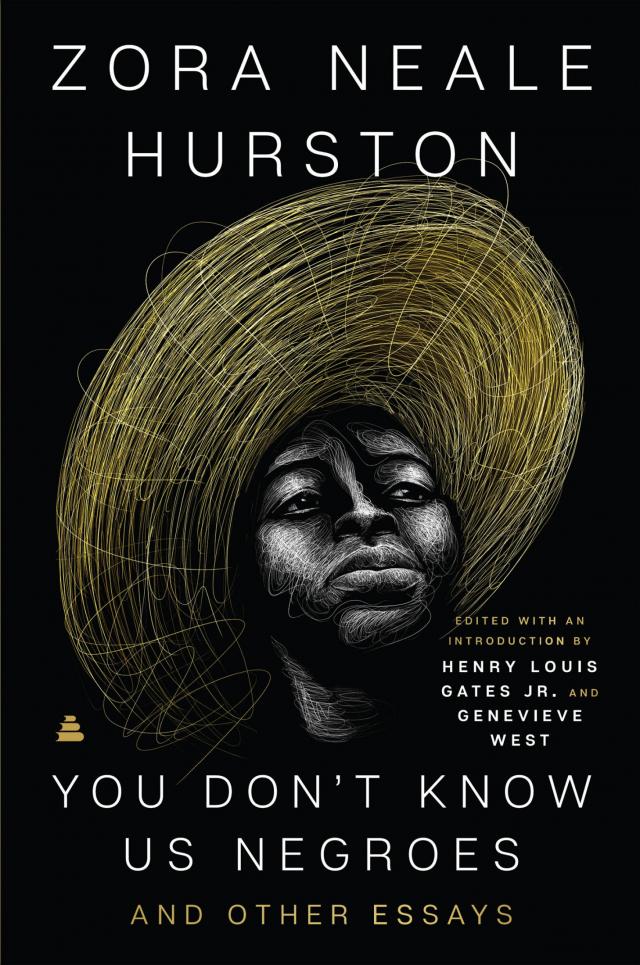
You Don't Know Us Negroes and Other Essays,
p.5


“You all are taking a mighty long time for dinner,” Massa said. “Get up from there and get on back to the field. I mean for you to finish chopping that cotton today if it takes all night long. I got something else, harder than that, for you to do tomorrow. Get a move on you!”
They heard what Massa said, and they felt bad right off. But John de Conquer took and told them, saying, “Don’t pay what he say no mind. You know where you got something finer than this plantation and anything it’s got on it, put away. Ain’t that funny? Us got all that, and he don’t know nothing at all about it. Don’t tell him nothing. Nobody don’t have to know where us gets our pleasure from. Come on. Pick up your hoes and let’s go.”
They all began to laugh and grabbed up their hoes and started out.
“Ain’t that funny?” Aunt Diskie laughed and hugged herself with secret laughter. “Us got all the advantage, and Old Massa think he got us tied!”
The crowd broke out singing as they went off to work. The day didn’t seem hot like it had before. Their gift song came back into their memories in pieces, and they sang about glittering new robes and harps, and the work flew.
IV
So after a while, freedom came. Therefore High John de Conquer has not walked the winds of America for seventy-five years now. His people had their freedom, their laugh and their song. They have traded it to the other Americans for things they could use like education and property, and acceptance. High John knew that that was the way it would be, so he could retire with his secret smile into the soil of the South and wait.
The thousands upon thousands of humble people who still believe in him, that is, in the power of love and laughter to win by their subtle power, do John reverence by getting the root of the plant in which he has taken up his secret dwelling and “dressing” it with perfume, and keeping it on their person, or in their houses in a secret place. It is there to help them overcome things they feel that they could not beat otherwise, and to bring them the laugh of the day. John will never forsake the weak and the helpless, nor fail to bring hope to the hopeless. That is what they believe, and so they do not worry. They go on and laugh and sing. Things are bound to come out right tomorrow. That is the secret of Negro song and laughter.
So the brother in black offers to these United States the source of courage that endures, and laughter. High John de Conquer. If the news from overseas reads bad, and the nation inside seems like it is stuck in the Tar Baby, listen hard, and you will hear John de Conquer treading on his singing-drum. You will know then, that no matter how bad things look now, it will be worse for those who seek to oppress us. Even if your hair comes yellow, and your eyes are blue, John de Conquer will be working for you just the same. From his secret place, he is working for all America now. We are all his kinfolks. Just be sure our cause is right, and then you can lean back and say, “John de Conquer would know what to do in a case like this, and then he would finish it off with a laugh.”
White America, take a laugh out of our black mouths, and win! We give you High John de Conquer.
The Last Slave Ship
At low tide the hull of the Clotilda can be seen a little even now, in the marsh of Bayou Corne in Alabama, where she was scuttled and sunk.1 She was the last ship to bring a cargo of “black ivory” to the United States—stealing into Mobile Bay on a sultry night in August, 1859, only two years before Abraham Lincoln was elected and only five years before Emancipation. The progeny of those last-minute slaves today still live in Alabama, mostly in the untidy clapboard village of Plateau, long also known as African Town.
They have shed their accent, and even the oldest among them, in an eagerness to be like other American Negroes, conceal differences and emphasize sameness. To strangers, especially, they will not let on that their memories of Africa are fresher than those of their neighbors. Yet the last survivor of the last boat-load of black men and women who had been set down stark naked on American soil—one who called himself Cudgo Lewis2 and whose tribal name was Kossula-O-Lo-Loo-Ay—did not die until 1935, at the age of ninety-five.3 I myself talked to him often about his early capture and the fateful voyage on the Clotilda.
Only one physical symbol distinguished Plateau from any other American Negro village. That was the eight gates around Cudgo Lewis’ half-acre plot—built in memory of the Takkoi home from which he had been torn as a youth of eighteen. Through those original eight gates had poured the King of Dahomey’s warriors more than seventy years before, to massacre most of Cudgo’s tribesmen and to start the remainder on their forced journey overseas.4 Before then, Cudgo—or Kossula-O-Lo-Loo-Ay—had known a happy life as a member of his peaceful Nigerian tribe.
The people of Takkoi formed an industrious, agricultural community. They had remained on good terms with their neighbors for many years before the King of Dahomey sent the first message which was to spell their eventual doom. That message demanded tribute in the form of fruits and vegetables to be delivered regularly to the King of Dahomey.
The King of Takkoi was a fearless man. He sent back word that he had no garden produce other than what was needed for his own household. The rest, he said, belonged to his people, and he had no right to rob them for the sake of feeding Dahomey. Kossula told me that the people of Takkoi were proud of their king’s courageous reply. The King of Dahomey was widely known as a powerful chieftain whose main occupation had long been the capture and sale of slaves to cross the water. He commanded huge legions who were equipped with guns and swords from Europe. He had ships, and his palaces were richly filled with foreign luxuries. His capitol at Abomey was protected by cannon.5
It would seem, from the records, that the King of Dahomey was a merciful and long-suffering man. He tried to overlook the fact that other tribes refused to send him farm products, or made malicious remarks about his person and his family. He would bear these iniquities until urged by his generals to avenge the insults heaped upon him. Then, and only then, would he order his armies to march upon the culprits and punish them for their evil deeds.
This he did with admirable thoroughness. All who offered resistance were instantly beheaded—along with those who were too old, too young or otherwise unfit for the slave markets of America. He made sure, in this way, that their no-good breed would no longer be able to insult or abuse a merciful and patient man like the King of Dahomey.
The king’s legions included not only every able-bodied man in Dahomey but also a large female army, known to the Occident as Amazons. By all accounts, these female warriors were strong, courageous and even more bloodthirsty than the men. Their generals held equal rank with the leaders of the male army. When the king sat under his state umbrella on important occasions, the male generals sat on his right and the Amazon leaders at his left.
To foster thoroughness in battle, the king paid an extra bonus for every head brought in by his soldiers. Travelers reported that the palace at Abomey was made of bleached skulls. The gateposts of the royal compound was a mass of skulls, and the drive leading to the palace was marked out by skulls stuck on posts. Apparently the nations and tribes of West Africa were much addicted to slander of the King of Dahomey, and to mulishness in the matter of farm produce.
II
When the King of Takkoi’s reply arrived, the Dahomey chieftain was naturally outraged. Such impudence, from so petty a kingdom, had to be punished—and the King of Dahomey waited only for the rainy season to end before dealing with this latest impertinence. But fate intervened. The King of Dahomey died.
All the other chiefs and kings sent flowery messages of condolence at news of his death. But the King of Takkoi did not believe in concealing the hatred that they all felt. He sent word that the death of the King of Dahomey was a good thing. Now, he said, the ocean was dried up, and one could see the bottom of the sea. This slur on the King of Dahomey’s source of income fell harshly upon the surviving son’s ears. As soon as the long period of mourning was over, he struck. It was the season for wars, anyway.
Kossula said that the blow fell just before dawn. A few people of Takkoi had already come out of doors and were on their way to the nearby fields. Suddenly there was a fiendish yelling, and then a horde of the dreaded Amazons burst through the main gate of the town. They rushed down the avenue, brandishing their broad, short blades, and seizing all who ran out to meet them. Some of the Amazons dashed into the houses and dragged out those who still remained inside. The heads of all who offered the slightest resistance fell at one stroke from the flashing blades.
Kossula said that he had just gotten up from bed when he heard the terrible cry of the Amazons. He rushed out and fled to one of the farthest gates. “I runnee to de gate, but it somebody there. I runnee to ’nodder one, but somebody there too. I runnee and I runnee, but somebody at every gate.
“One big woman, she grab hold of me and tie me. No, I can’t do nothing with her. She too strong. She tie me. I cry for my mamma and papa and my brothers and sisters, and try to see where they at. I no see ’em. I never see them no more. O Lor’! People dead everywhere with no head. Plenty like me tied. De King, he fight till they ketchee him and tie him too. They take him outside the big gate and there de King of Dahomey sit in a great big chair. He say ‘bring our king before him.’ Our king, he standee there and de King of Dahomey lookee at him and lookee. But our king, he no lookee scared. He standee there straight up.
“De King of Dahomey say: ‘I take you to Dahomey, so people can see what I do with the man who insult my father.’ But our king, he say: ‘I am king in Takkoi. What for I go to Dahomey? No, I no go to Dahomey.’
“Many soldiers of Dahomey stand aroundee there to watchee and do what the King of Dahomey say. He make a sign, and one soldier grabbee the right hand of our king. Another grabbee the left hand, and one she-soldier, she raisee her big knife and chop off our king head. One cut—and it off. They pickee up the head and give it to the King of Dahomey. He take it in a basket. They pick up his chair, and he go.”
The captives of war were bound, and a forked stick placed around their necks. In a long line, tied together, they began their march to Dahomey. Kossula said that Dahomey was three sleeps from Takkoi. During their march they were forced to behold the severed heads of their friends and relatives dangling by the waistbands of the Dahomans. By the second day, the heads began to give off an offensive odor. The Dahomans stopped and smoked the heads, holding them on long sticks over a smoldering fire.
Near sundown of that second day they passed near a Dahoman village at a bend in the road. They caught sight of a great number of fresh heads raised on poles above the huts. Some huts had many heads, as a sign of the inhabitant’s valor. Others had only one. Kossula remembers that they passed through the towns of Ekko, Bardrigay and Adache, and finally arrived at Whydah, only seaport of the Dahomey kingdom.
At Whydah, there was a big white house near the waterfront. Behind it were the barracouns, or stockades, which the King of Dahomey had built for holding supplies of “black ivory” until sold.6 Captured tribes were each held in a separate barracoun, to prevent fighting. “Do for do bring black man here from Guinea,” says the Jamaican proverb—which means that fighting among themselves caused black folks to be in slavery.
Kossula and his fellow Takkoi tribesmen were placed in one barracoun by themselves. For three weeks they waited here, as fate spun the threads of their future wanderings.
III
News of their round-up had already found its way across the oceans and into the consciousness of four men in Mobile, Alabama. The news came by way of a dispatch in the Mobile Register for November 9, 1858.7 A brief item described conditions on the West Coast of Africa and concluded with the information: “The King of Dahomey is driving a brisk trade in slaves at from fifty to sixty dollars apiece at Whydah. Immense numbers of Negroes are collected along the coast for export.”
The four men who read this news with particular attention were the Meaher brothers—Tom, Tim and Burns—and their business associate, Captain Bill Foster.8 They were not the kind of men to stand aloof when an exciting opportunity presented itself. The Meaher brothers had a lumber mill and shipyard three miles north of Mobile, at the mouth of the Chickasabogue (now known as Three Mile Creek). There they built fine, fast sailing vessels for blockade-running, river trade or any other filibustering expeditions that might arise. They had just completed the Clotilda for Captain Foster. She was very fast, handled beautifully, and merely awaited a proper occasion to show what she could do.
None of the four men was a Southerner. The Meaher brothers were originally from Maine, and Captain Foster had been born in Nova Scotia, of English parentage. There was a Federal law against importing additional slaves from Africa, but this was no more of an obstacle than prohibition laws in later years would be to a bootlegger. The danger might be great, but the profits were huge for men daring enough to run the blockade by both the British and American navies.
Captain Foster and the Meaher brothers were daring and able. They immediately fitted out the Clotilda, hired a crew of all Northern sailors and slipped out of Mobile harbor and headed straight for Whydah and the kingdom of Dahomey. Not many days later Foster was anchored safely in the Gulf of Guinea before Whydah. Dressed in his best, and bearing presents for the native rulers, he was met on shore by six robust black soldiers, who carried him in a hammock to the presence of one of the Dahoman princes.
The prince was tall and heavy, weighing around three hundred pounds. He was very hospitable to Foster, showing him the snake collections, Juju houses and other sacred objects of Whydah. His musicians played for Foster after dinner, and one drummer performed a solo upon a special drum which the prince called to the captain’s particular attention. The skin of the drum had once belonged to a trader who had made the mistake of trying to capture his own slaves instead of buying them from the prince. Foster agreed with the prince that the drum was worth listening to.9
After two or three days of ceremonial politeness, the prince was ready for business. He took Foster to the barracouns, where the captives were gathered in circles of ten men or ten women each. Foster picked out 130 of the best-looking ones and closed his deal. He was carried in a hammock back to the beach. His newly-acquired purchases, chained one behind the other, trudged after him and began piling into the boats that were to take them out to the Clotilda. As they stepped into the boats, the waiting Dahomans rushed out and snatched their garments off their backs. The captives cried out in shame and outrage, but the Dahomans shouted consolingly: “You will get clothes where you are going.” Men and women alike were left entirely nude.
One hundred and sixteen of his purchases had been brought aboard, when Captain Foster suddenly noticed that the harbor seemed to come alive with activity. He climbed the riggings and was startled to see that all the Dahomey ships were flying the black flag of piracy. The Dahomans were obviously preparing to bear down on the Clotilda, recapture the slaves and take Foster and his crew prisoners. The captain scrambled down hurriedly, gave orders to weigh anchor at once, and to abandon all the slaves not already on board. The Dahomey ships were almost upon her when the Clotilda got under way. But her fleetness, coupled with expert handling, soon left the pursuers behind.
IV
Captain Foster had a pleasant and lucky voyage home. He treated his captives kindly, although the food was scarce. He gave them water with vinegar in it, to ward off scurvy. On the thirteenth day at sea, they were taken on deck to stretch their limbs. The crew supported them and walked them about the decks until their cramped muscles were rested. “We lookee, and lookee!” said Kossula. “We see nothing but water. Whar we come (from) we not know. Whar we go, we no know neither. One day we see islands.” Except for one occasion a week later—when Foster had to elude a British man-of-war on the lookout for slavers—the captives were allowed to stay on deck as much as possible.
The Clotilda slipped in behind some islands in the Mississippi Sound, at the lower end of Mobile Bay, on a Thursday night in August 1859. The return trip from the Slave Coast had taken just seventy days. At Mobile the Meaher brothers were eagerly waiting for Foster.
Disposal of the cargo, naturally, had to be carried out with great secrecy and caution. The Clotilda was taken directly to Twelve Mile Island, a very lonely spot. There another ship waited to take on the cargo. Some say it was the June, belonging to the Meahers. Others insist it was the R. B. Taney, named for Chief Justice Taney of Dred Scott Decision fame.10 In the darkness, the captives were quickly and quietly transferred to the steamboat, taken up the Alabama River, and landed the following day at John Dabney’s plantation just below Mount Vernon.11
The Africans, newly clothed, were kept hidden at Dabney’s plantation for eleven days. Then they were put aboard the S. S. Commodore and carried to Burns Meaher’s plantation at the bend in the Alabama River where the Tombigbee joins it. Meaher sent word to various slave owners, and prospective buyers were led to the secret hideaway by the Negro, Dennison.12 Some of the captives were bought and carried to Selma, Alabama. The remaining sixty were divided between the Meahers and Captain Foster. Sixteen men and sixteen women went to Tim Meaher. Burns Meaher took five couples, and another five couples went to Foster. The remaining eight slaves were apportioned to Tim Meaher.13
Thus began five years of slavery in America for the 116 black people who had journeyed from the beach at Whydah, Dahomey. Kossula-O-Lo-Loo-Ay went to Captain Tim Meaher, and was immediately put to work. “We astonish to see de mule behind de plow to pull,” he said to me. His naked state upon arriving in America was still a matter of humiliation to Kossula. Apparently the American-born slaves thought that the new arrivals always went naked in Africa. Kossula’s feeling about this episode was so profound that tears came to his eyes and his voice broke when he told me of it, after more than seventy years.