Complete works of freder.., p.1067
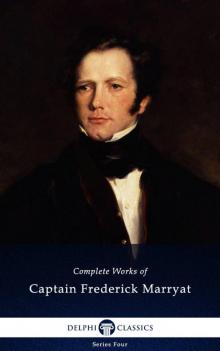
Complete Works of Frederick Marryat,
p.1067
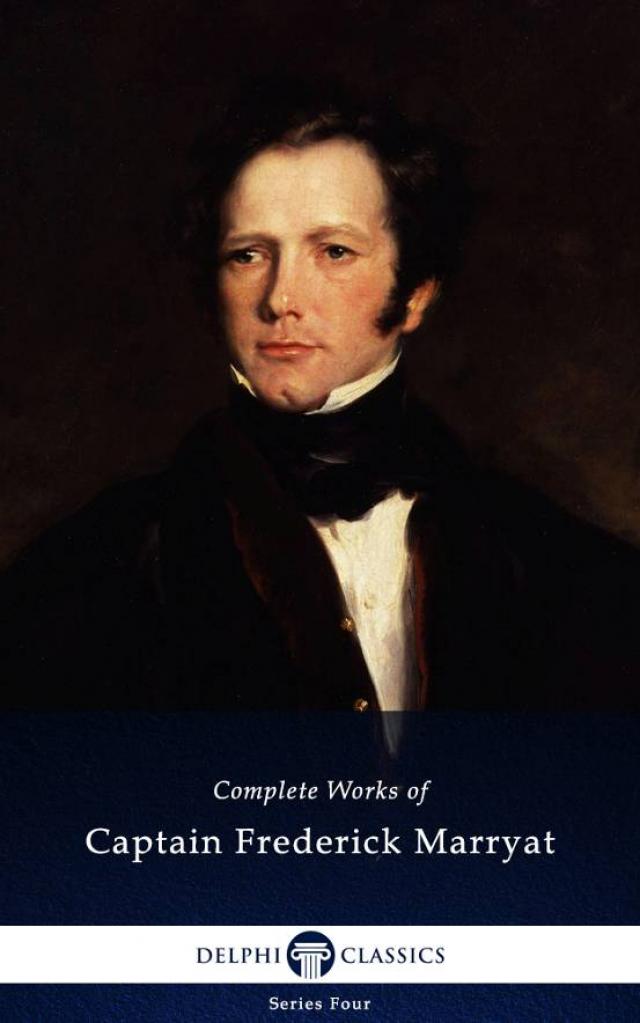


Captain Marryat (whom no one would have suspected to have been of Puritan descent) was the second son of the late Joseph Marryat, of Wimbledon House, Surrey, whose father, Thomas Marryat, M.D was the author of a work entitled, ‘ — Therapeutics, or the Art of Healing.’ Mr. Joseph Marryat was well known in the political world, being for many years member of Parliament for the boroughs of Horsham and Sandwich; he was also chairman for the committee of Lloyd’s, and colonial agent for the island of Grenada. In 1790 he married Charlotte Von Geyer, the third daughter of Frederic Von Geyer, a Hessian of good descent, who had settled at Boston. This last-named gentleman was distinguished as an American loyalist, who not only suffered severely from his attachment to the cause of Great Britain, during the struggle with her revolted colonies, but sustained large pecuniary losses from the shock which all landed properties underwent in the establishment of their independence. Whilst member for Sandwich, Mr. Marryat was the chief agent in passing a Bill for the abolition of slave-grown sugar, by which act he injured his own cause, being the owner of large property in the West Indies.
He was the author of several political pamphlets, much read at the time of their publication, and a very fair poet, though but few of his verses have appeared in print. So little did he care for worldly aggrandizement, that he refused the offer of a baronetcy from Spencer Perceval.
To show the high estimation in which he was held, the following lines, composed by Thomas Campbell, are inserted. They were written with a view to being placed upon his tombstone, but, as he was buried in the family vault at Wimbledon, were never used, and this is the first occasion on which they have appeared in print.
LINES FOR THE MONUMENT OF JOSEPH MARRYAT, ESQ.
“Marryat farewell! Thy outward traits express’d
A manliness of nature that combin’d
The thinking head and honourable breast.
In thee thy country lost a leading mind;
Yet they, who saw not private life draw forth
Thy heart’s affections, knew not half thy worth;
A worth that soothes ev’n friendship’s bitterest sigh
To lose thee — for thy virtues sprang from faith
And that high trust in Immortality,
Which Reason hinteth and Religion saith
Shall best enable man, when he has trod
Life’s path, to meet the mercy of his God.”
THOMAS CAMPBELL.
For some time previous to his death, Mr. Marryat resided at Wimbledon House; but it was in Westminster that, on the 10th of July 1792, his son Frederick was born to him.
He was one of fifteen sons and daughters, of whom ten attained maturity, and several have entered the lists of literature. As a family, they were vigorous both in mind and body and have evinced the possession of unusual talent; his eldest brother, Mr. Joseph Marryat, well-known as a collector of china, being the author of ‘Pottery and Porcelain;’ his youngest brother, Horace Marryat, of ‘One Year in Sweden,’ and ‘ Jutland and the Danish Isles his sister, Mrs. Bury Palliser, of ‘Nature and Art,’
‘ The History of Lace,’ and ‘ Historic Devices, Badges and War-cries;’ and his cousin, Sir Edward Belcher, of ‘ The Voyage of the Samarang;’
‘The Last of the Arctic Voyages,’ and a book on Surveying. Of the boyhood of Frederick Marryat there is little to relate, excepting that, like most children with strong passions and precocious minds, he was very troublesome. Learning with great facility, he forgot his tasks with equal readiness, and being of a genial temperament, he preferred play to lessons, and was constantly flogged for idleness and inattention. His master was heard, on more than one occasion, to declare that he and the late Charles Babbage (who was at the same school with him) could never come to any good, or be otherwise than dunces, seeing how little heed they paid to his instructions.
The anecdote which follows, was published in one of the newspaper obituaries of Mr. Babbage:
“One event of his boyhood deserves to be narrated, not merely as giving interesting evidence of the pertinacity with which Babbage adhered to a resolution he had once formed, but also as associating his name with that of a genial and deservedly popular writer — the late Captain Marryat. Babbage and a studious schoolfellow were in the habit of getting up in the morning at three o’clock, lighting a fire in the schoolroom, and studying surreptitiously until five or half-past five. Hearing of this, Frederick Marryat proposed to join them, but not so much from a desire to study as for the sake of doing what was forbidden. So, at least, Babbage interpreted the request, and he refused to let Marryat join them. One night, in trying to open the door of his bedroom, Babbage found that Marryat’s bed had been pulled up against it. He gently pushed it back, without waking the future captain, and pursued his way to the school-room. This happened on several successive nights; but at length Marryat improved the plan by fastening a string from his hand to the door lock. Babbage detected the trick, and untied the cord. A few nights later so stout a cord was used that he could only free the lock by cutting the string. Presently a chain took the place of the cord, and for one night Babbage was kept from his studies; for he was determined rather to stay away from the school-room than to waken Marryat. On the next night he had provided himself with a pair of stout pliers, with which he opened a link of the chain, and so effected his object. Each night he found a stouter chain; but he managed to remove the obstruction for several successive nights. At length a chain was made which he was unable to break. The next night, however, he relates, ‘I provided myself with a ball of packthread. As soon as I heard by his breathing that Marryat slept, I crept over to the door, drew one end of my ball of packthread through a link, and bringing it back with me to bed gave it a sudden jerk.’ Marryat jumped up, but, finding his chain all right, lay down again. As soon as he was asleep Babbage unmercifully woke him again. However, the end of the matter was that Marryat was allowed to prevail, when the consequences predicted by Babbage presently followed. Others joined them, play took the place of work, fireworks were let off, and of course the delinquents were discovered.”
As a child Marryat was very slightly built, so that his head appeared too large for the rest of his body. Whilst at a school at Ponder’s End, kept by a Mr. Freeman, that gentleman was surprised one day to detect him, with a book in his hand, in the “dignified but graceful” position of standing on his head (like Mrs. Vincent Crummies) which, from the circumstance alluded to, naturally (or unnaturally) formed his centre of gravity. But Mr. Freeman must have been still more surprised when, on asking his pupil why he chose so peculiar a mode in which to study his lesson, he received the answer: “Well! I’ve been trying for three hours to learn it on my feet, but I couldn’t, so I thought I would try whether it would be easier to learn it on my head.”
He ran away from school several times but was always recaptured and brought back again, until his final escapade, which took place when he was fourteen years of age. One of the excuses he gave for this behaviour, was characteristic of his independent disposition. His brother Joseph was but a twelvemonth older than himself, and, as he rapidly outgrew the skeleton suits then in vogue amongst the rising generation they were transferred to Frederick, which indignity appears to have rankled in his youthful mind. He ran away, so he averred, not from books and hard work, but from his brother’s cast-off garments.
Indeed, at this period of his life, he appears to have considered “running away” to be his mission, and most conscientiously endeavoured to fulfil his destiny by doing so whenever he could find an opportunity, and the place he ran to — the Eldorado of his imagination, was invariably the sea! On one occasion when his father, with much trouble, had pursued and caught him, he dispatched young Hopeful back to school in the carriage, but when it arrived at its destination the vehicle was found to be empty — Marryat having contrived to open the door and jump out, whilst it was in motion. He was subsequently discovered, sitting with much complacency at the theatre, in company with his younger brothers, whom he was treating with the money with which his parents had sent him back to school.
On leaving Ponder’s End, he studied with a tutor from whose care he ran away for the last time. Mr. Marryat again followed his son with a view to bringing him back, but, as he was then old enough to hold a commission and his desire to go to sea was too strong to be turned aside by any arguments, his father made the necessary arrangements for his entering the navy, and on the 23rd of September, 1806, he started on his first voyage on board H.M.S. Impérieuse, Captain Lord Cochrane, for the Mediterranean.
CHAPTER II.
Sails on board H.M.S. Impérieuse for the Mediterranean — She strikes upon a rock — Lord Cochrane takes Fort Roquette — Returns to Portsmouth to refit — Sails on foreign service — Captures a Genoese privateer — Engagement in the Bay of Arcasson — Sailors’ superstition relative to Sunday.
WHEN Marryat first went to sea, midshipmen were very differently treated to what they are at the present time. To use his own words, “there was no species of tyranny, injustice, and persecution, to which youngsters were not compelled to submit from those who were their superiors in bodily strength.” But, now that classes are organized on board ship and a general supervision kept over the pupils, many abuses then prevalent in the cockpit have gone out of fashion, in company with the cocked hat and shoe-strings. The proceedings of the Impérieuse after Marryat joined her can best be related by himself, in extracts from his unpublished papers and private log.
“The Impérieuse sailed; the Admiral of the port was one who would be obeyed, but would not listen always to reason or common sense. The signal for sailing was enforced by gun after gun; the anchor was hove up, and, with all her stores on deck, her guns not even mounted, in a state of confusion unparalleled from her being obliged to hoist in faster than it was possible she could stow away, she was driven out of harbour to encounter a heavy gale. A few hours more would have enabled her to proceed to sea with security, but they were denied; the consequences were appalling, they might have been fatal. In the general confusion, some iron too near the binnacles had attracted the needle of the compasses; the ship was steered out of her course. midnight, in a heavy gale at the close of the month of November, so dark that you could not distinguish any object, however close, the Impérieuse dashed upon the rocks between Ushant and the Main. The cry of terror which ran through the lower decks; the grating of the keel as she was forced in; the violence of the shocks which convulsed the frame of the vessel; the hurrying up of the ship’s company without their clothes; and then the enormous waves which again bore her up and carried her clean over the reef, will never be effaced from my memory.
“Our escape was miraculous: with the exception of her false keel having been torn off the ship had suffered little injury; but she had beat over a reef, and was riding by her anchors, surrounded by rocks, some of them as high out of water as her lower yards and close to her. How nearly were the lives of a fine ship’s company, and of Lord Cochrane and his officers, sacrificed in this instance to the despotism of an admiral who would be obeyed. The cruises of the Impérieuse were periods of continual excitement, from the hour in which she hove up her anchor till she dropped it again in port; the day that passed without a shot being fired in anger, was with us a blank day; the boats were hardly secured on the booms than they were cast loose and out again; the yard and stay tackles were for ever hoisting up and lowering down. The expedition with which parties were formed for service; the rapidity of the frigate’s movements, night and day; the hasty sleep, snatched at all hours; the waking up at the report of the guns, which seemed the only key-note to the hearts of those on board: the beautiful precision of our fire, obtained by constant practice; the coolness and courage of our captain, inoculating the whole of the ship’s company; the suddenness of our attacks, the gathering after the combat, the killed lamented, the wounded almost envied; the powder so burnt into our faces that years could not remove it; the proved character of every man and officer on board, the implicit trust and the adoration we felt for our commander; the ludicrous situations which would occur even in the extremest danger and create mirth when death was staring you in the face, the hair-breadth escapes, and the indifference to life shown by all — when memory sweeps along those years of excitement even now, my pulse beats more quickly with the reminiscence.” During the three years that Marryat served on board the Impérieuse he was witness to more than fifty engagements, in which he took as active and prominent a part as a lad of his age could be expected to do; and in the winter that followed his joining it, Lord Cochrane captured and destroyed three French national vessels and twelve merchant ships; he also demolished Fort Roquette, at the entrance of Arcasson, Marryat, speaking of this engagement, says:
“Preliminary to cutting out the vessels, it was necessary to storm and take possession of the fort, which the enemy, not dreaming that we would venture to attempt, had left weakly manned — a proportion of the men haying been sent to the beach to protect the vessels. Fort Roquette was not a mere battery, à fleur d’eau, but a regularly planned and laid out defence, protected on the land side as well as on the sea. It was, however, entered and carried with small loss; four thirty-six-pound long guns, two field pieces, and a thirteen-inch mortar, spiked; the platforms and carriages destroyed, magazines blown up, with a large quantity of military stores, and the fort left wholly in ruins. The whole of the convoy were then boarded and taken possession of; seven were destroyed, and the remainder brought out to the ship in the offing. For their conduct in this brilliant and well-conducted affair Lord Cochrane paid that honourable testimony to the services of Mapleton, Napier, and Houston Stewart which they so richly deserved.”
In Marryat’s private log, kept at this period, we find the following entries:
“1806. December 16th. Anchored off Isle Dieu, with a prize.
“December 19th. Engaged a battery, and took two prizes.
“ — 25th. Engaged a battery, and received a shot in the counter.
“.1807. January 2nd. Stove the cutter, and Henry Christian drowned.
“January 4th. Anchored, and stormed a battery.
“ — 6th. Took a galliot; blew up ditto.
“ — 8th. Trying to get a prize off that was ashore, lost five men.
“After a cruise of three months, during which nothing but the tempestuous weather prevented the Impérieuse from constantly attacking the enemy, Lord Cochrane’s private affairs demanded his presence in England and an acting captain was appointed to the ship. The consequence was that our guns were never cast loose, or our boats disturbed from the booms. This was a repose which was, however, rather trying to the officers and ship’s company, who had been accustomed to such an active life. But the Impérieuse returned home, and orders were sent down for her fitting-out for foreign service; and, to the delight of all, we found that the Mediterranean was to be our station and that Lord Cochrane was to resume the command.
“The Mediterranean was at that time the very focus of the war, and sanguine were the anticipations of the officers and men of what they would be able to accomplish in fine weather and smooth water, after having done so much on a stormy coast and during a winter’s cruise. Nor were those anticipations disappointed, as the annals of the country will testify. Our orders were, to touch at Gibraltar and Malta and then proceed to the admiral off Toulon; and it was during this passage that an unfortunate mistake took place, which was attended with a great waste of human life and that without indemnification.
“On Sunday, the 15th of November, 1807, the Impérieuse having then sailed from Malta about ten days, and, with light and baffling winds, coasted down the shores of Sicily, we observed a large polacre ship in-shore. When we first saw her the wind was very light, and soon afterwards it fell calm. The warlike appearance of the vessel was too suspicious to allow her to pass unnoticed: it was evident that she was an armed vessel, and built for fast sailing, and the general opinion was that it was a Genoese privateer. The boats were hoisted out, and, under the command of Napier and Fayrer, sent away to examine her. As soon as they were within half a mile, the ship hoisted English colours. The sight of those colours, of course, checked the attack; the boats pulled slowly up towards her, and, when within hail, demanded what she was, for, if an English vessel, she could have no objection to be boarded by the boats of an English frigate. Now, as it afterwards was proved, the ship was a Maltese privateer of great celebrity, commanded by the well-known Pasquil Giliano, who had been very successful in his cruises, and, if report spoke truly, for the best of reasons, as he paid very little respect to any colours; in fact, he was a well-known pirate, and, when he returned to Malta, his hold was full of goods taken out of vessels, which he had burnt that he might not weaken his crew by sending them away; and in an admiralty court so notoriously corrupt as that of Malta, inquiries Were easily hushed up. Although such was the fact, still, it had nothing to do with the present affair.
“When the boats pulled up astern the captain of the polacre answered that he was a Maltese privateer, but that he would not allow them to come on board; for, although Napier bad hailed him in English, and he could perceive the red jackets of the marines in the boats, Giliano had an idea, from the boats being fitted out with iron tholes and grummets, like the French, that they belonged to a ship of that nation. A short parley ensued, at the end of which the captain of the privateer pointed to his boarding nettings triced up, and told them that he was prepared, and if they attempted to board he should defend himself to the last. Napier replied that he must board, and Giliano leaped from the poop, telling him that he must take the consequences. The answer was a cheer, and a simultaneous dash of the boats to the vessel’s sides.