Complete works of freder.., p.391
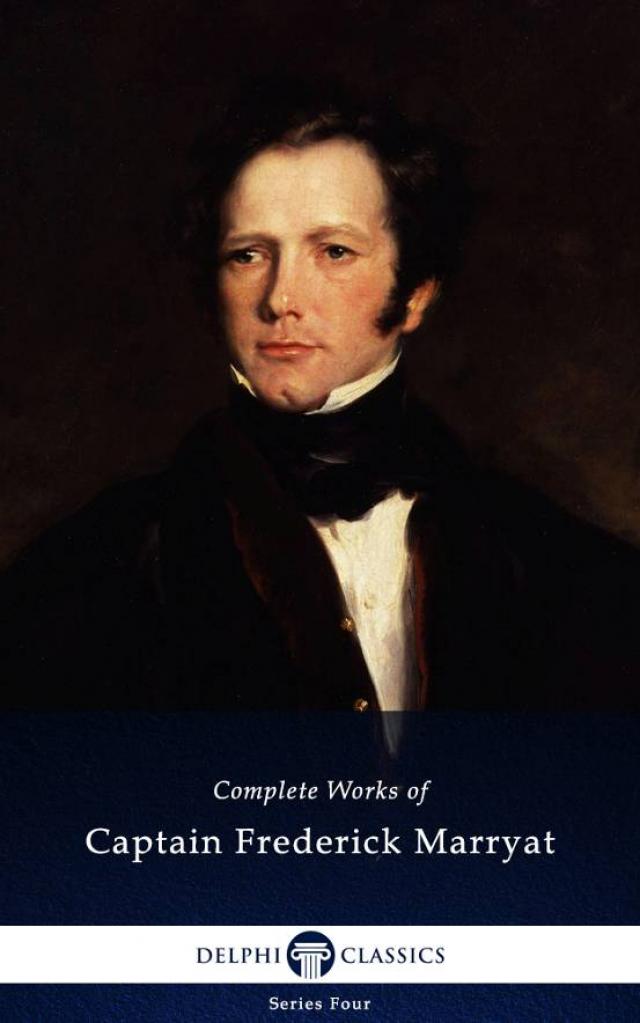
Complete Works of Frederick Marryat,
p.391


“You have lost much valuable time,” said he. “This impostor has now been domesticated some days with Sir Reginald. I think, with you, that he has no ulterior views upon the title and the estates. His object is present plunder, and the inducing your father, through the agency of that scoundrel London lawyer, to make him sign such documents that everything that can be willed away will be made over to him. We must, to-morrow, proceed in a body to the Hall, and take the villains by surprise. I will now return home and prepare some necessary documents. As this is a criminal matter, I will also take care to have the attendance of an upright and clear-seeing magistrate, who will proceed with us — not certainly later than ten o’clock to morrow.”
He then took his leave, with an air of much importance, and more alacrity than I could have expected from a man of his years.
When Pigtop and myself were left alone, neither the first nor the second nor’-wester of brandy-and-water could arouse him from his sullen mood. He told me frankly, and in his own sea-slang, that he could not disintegrate the idea of a lawyer from that of the devil, and that he was assured that neither I nor my cause would prosper if I permitted the interference of a land-shark. I was even obliged to assume a little the authority of a master, in order to subdue his murmurings: to convince his judgment I did not try — in which forbearance I displayed much wisdom. We each retired to our respective room, with less of cordiality than we had ever displayed since our unexpected reunion.
I had no sooner got to bed than I determined, by a violent effort, to sleep. I had always a ready soporific at hand. It was a repeating and re-repeating of a pious little ode by a late fashionable poet. It seldom failed to produce somnolency at about the twelfth or thirteenth repetition. I would recommend a similar prescription to the sleepless; and I can assure them that there is much verse lately printed, and by people who plume themselves no little upon it, that need not be gone over more than twice at furthest; excepting the person may have Saint Vitus dance, and then a third time may be necessary. I would specify some of these works, were it at all necessary; but the afflicted have only to ask, at random, for the last published volume of poems, or to take up an annual, either old or new, and they may be dosed without the perpetration of a pun.
Three times had I slept by the means of my ode, and three times had I awaked by some horrible dream, that fled my memory with my slumbers. I could draw no omen from it, for my mind could not bring it out sufficiently distinct to fix a single idea upon it. However, as I found my sleep so much more miserable than my watchfulness, I got up, and, putting on a portion of my clothes, began to promenade my room with a slow step and a very anxious mind.
I had made but few turns, when my door was abruptly thrust open, and Pigtop stalked in, fully dressed.
“I can’t sleep, Rattlin,” said he, “and tarnation glad am I to see that you can’t caulk either. A dutiful son you would be, to be snoozing here, and very likely, at this very moment, the rascal’s knife is hacking at your father’s weasand. It is not yet twelve o’clock; and I saw from my window, from whence I can see the Hall plainly, a strange dancing of light about the windows, and you may take an old sailor’s word that something uncommon’s in the wind. Let us go and reconnoitre.”
“With all my heart; any action is better than this wretched inactivity of suspense. I will complete my dress, and you, in the meantime, look to the pistols.”
We were soon ready, and sallied forth unperceived from the inn. We had no purpose, no ultimate views; yet both Pigtop and myself seemed fully to understand that we should be compelled into some desperate adventure. I was going armed, and by night, like an assassin, to seek the presence, or, at least, to watch over the safety of a father I had never seen, never loved, and never respected.
The space that separated the abode of my father from the inn was soon passed; and, a little after midnight, I stood within the gloomy and park-like enclosure that circumscribed the front of the large old mansion. The lodge was a ruin, the gates had long been thrown down, and we stumbled over some of their remnants, imbedded in the soil, and matted to it with long and tangled grass. I observed that there was a scaffolding over the front of the lodge; but whether it were for the purpose of repairing or taking down, I could not then discover.
As my companion and myself advanced to the front of the building, we also observed that, lofty as were its walls, it was scaffolded to the very attics, and some part of the roof of the right wing was already removed. Altogether, a more comfortless, a more dispiriting view could hardly have been presented; and its disconsolateness was much increased by the dim and fitful light that a young moon gave at intervals, upon gables, casements, and clumps of funereal yews.
“And this,” as we stood before the portals, said I to Pigtop, “is my inheritance — mine. Is it not a princely residence?”
“It looms like a county jail, that’s being turned into a private madhouse. If so be as how witches weren’t against the law of the land, this seems the very place for them. Do you believe in ghosts?”
“Verily, yes, and — no.”
“Because I think that I see the ghosts of a hearse and four horses among those tall trees at that corner.”
“Then, Pig, we must be on the alert — for I see it, too; but the vision has assumed the every-day deception of a post-chaise and four.”
“Jeer as you will, it is a hearse: somebody’s just losing the number of his mess. It will take away a corpse to-night, depend upon it. That a post-chaise! Pooh! I can see the black plumes waving upon the horses’ heads; and — hark at the low, deep moanings that seem to sweep by it — that is not at all natural — let us go back.”
“I was never more resolved to go forward. There is villainy hatching — completing. Wrap your cloak closely about your countenance; don’t mistake the wind for groans, nor the waving branches of cedar-trees for hearse-plumes, but follow me.”
“Who’s afraid?” said Pigtop.
His chattering teeth answered the question.
As I was prepared for everything, I was not surprised to find the principal door open, and the hall filled with iron-bound cases and several plate-chests. As we stepped into the midst of these, completely muffled in our cloaks, a fellow came and whispered to us, “Is all ready?”
“Hush!” said I.
“Oh, no fear — they are at prayers in Sir Reginald’s bedroom — he is going fast — he is restless — he cannot sleep.”
“Where are the servants?”
“Snoring in their nests.”
“And who is with Sir Reginald?”
“Nobody but the priest, and his son, Master Ralph — without the lawyer has gone up since; he saw all right about the chaise. But am I on the right lay?”
“Surely. Joshua Daunton and I—”
“Enough — you’re up to trap — so lend us a hand, and let us take the swag to the shay — though swag it ain’t, for it’s Josh’s by deed of law. Sir Reginald signs and seals to-night, as they say he can’t live over to-morrow.”
“No there is no occasion to stir yet. Which is the way to Sir Reginald’s room? I must speak one word to Joshua before we start. I know the countersign — it will bring him out to me in a moment. I would advise you, in the meantime, just to step to the chaise and see all right, and bring it up nearer the door quietly — mind, quietly, for these boxes are damned heavy.”
“You’re right there,” said the accomplice, and departed on his errand, after previously showing me the staircase that led to the apartment of my sick father.
When the rascal’s steps were no longer heard, “Now, Pigtop,” said I, “show your pluck, help me to lock and bar the hall-door — good — so one bloodhound is disposed of; he dare not make a noise, lest he should rouse the establishment. Now follow me — but, hark ye, no murder: the reptile’s life must be spared.”
Pigtop made no answer, but pointed to his scarred and disfigured lip, with a truly ferocious grin.
It is necessary for the fully understanding of the catastrophe that ensued, that I describe the site of the old building in which such startling events were passing. The front approach was level from the road; but on the back there was a precipitous, and rugged, and rocky descent, up to the very buttresses that supported the old walls — not, certainly, so great or so dangerous as to be called a precipice; for, on the extreme right wing of the rear of the house, it was no more than a gentle inclination of the soil, deepening rapidly towards the left, and there, directly under the extremity of that wing, assuming the appearance of a vast chasm, through the bottom of which a brawling stream chafed the pointed stones, on its way to the adjacent sea.
Sir Reginald’s sleeping-room was a large tapestried apartment on the first-floor, the windows of which occupied the extreme of the left wing of the house, and was directly over the deepest part of the chasm which I have described.
All this part of the mansion was scaffolded also; the ends of the poles having what appeared to be but a very precarious insertion on the projections of the rocks below. It had been the intention of Sir Reginald thoroughly to repair his mansion; but, falling sick, and in low spirits, he had ordered the preparations to be delayed. The scaffolding had been standing through the whole of the previous winter; and the poles, and more especially the ropes that bound them to the cross-piece, had already gone through several stages of decay.
Chapter Seventy.
Conclusion.
My associate and myself advanced stealthily and noiselessly up the staircase. We met no one. The profoundest security seemed to reign everywhere. Favoured by the dark shadows that hung around us, we advanced to the door that was nearly wide open, and we then had a full view of everything within. The picture was solemn. Seated in a very high-backed, elaborately-carved, and Gothic chair, supported on all sides by pillows, sat the attenuated figure of my father. I gazed upon him with an eager curiosity, mingled with awe. His countenance was long and ghastly — there was no beauty in it. Its principal expression was terror. It was evident that his days were numbered. I looked upon him intently. I challenged my heart for affection, and it made no answer.
Directly before my father was placed a table, covered with a rich and gold-embroidered cloth, bordered with heavy gold fringe, upon which stood four tall wax candles, surrounding a mimic altar surmounted by an ebony crucifix. His chaplain, dressed in Popish canonicals, was mumbling forth some form of prayer, and a splendidly-illuminated missal lay open before him. There was also on the table a small marble basin of water, and a curiously inlaid box filled with bones — relics, no doubt — imbued with the spirit of miracle-working. The priest was perhaps performing a private midnight mass.
The fitful attention that Sir Reginald gave to this office was painful to contemplate. His mind was evidently wandering, and he could bring himself to attend only at intervals. At another table, a little removed from the one I have described, sat the person of the London attorney; he had also two lights, and he was most busily employed in turning over and indexing various folios of parchment. But I have yet to describe the other figure — the, to me, loathsome person of my illegitimate half-brother. He was on his knees, mumbling forth the responses and joining in the prayers of the priest. He was paler and thinner than usual; he looked, however, perfectly gentlemanly, and was scrupulously well-dressed.
As yet, I had not heard the voice of Sir Reginald; his lips moved at some of the responses that the two made audibly, but sound there was none. At length, when there was a total cessation of the voices of the other, and a silence so great in that vast apartment that the rustling of the lawyer’s parchments was distinctly heard, even where I stood — even this hardened wretch seemed to feel the general awe of the moment, and ceased to disturb the tomb-like silence.
In the midst of this, the prematurely-old Sir Reginald suddenly lifted up his voice and exclaimed, loudly, in a tone of the most bitter anguish, “Lord Jesu, have mercy upon me!”
The vast and ancient room echoed dolorously with the heart-broken supplication. It was the first time that my father’s voice fell upon my ear: it was so plaintive, so imbued with wretchedness, that the feeling of resentment which, I take shame to myself, I had long suffered in my bosom, melted away at once, and a strange tenderness came over me. I could have flung myself upon his bosom, and wept. I felt that my mother’s wrongs had been avenged. Even as it was, with all the secrecy that I had then thought it my interest to preserve, I could not refrain, in a subdued, yet earnest tone, from responding to his broken ejaculation, from the very bottom of my heart, “Amen.”
A start of surprise and terror, as my hollow response reached the ears of all then and there assembled, followed my filial indiscretion. Each looked at the other with a glance that plainly asked, “Was the voice thine?” and each in reply shook his head.
“A miracle!” exclaimed the priest. “The sinner’s supplication has been heard. Let us pray.”
During this solemn scene, events of a very different description were taking place at the inn which we had just clandestinely left. Our exit had been noticed. The landlord was called up; he became seriously alarmed, the more especially when the direction that we had taken had been ascertained. He immediately concluded that we had gone to Rathelin Hall to commit a burglary, or perhaps a murder. He summoned to his aid the constables of the village; called up the magistrate, and the lawyer, Mr Seabright; and, with a whole posse of attendants, proceeded to the rescue. We will conduct them to the door that Pigtop and myself had secured when we barred out Daunton’s accomplice, and, there leaving them, return to the sick-chamber.
After the reverend gentleman had concluded his extempore prayer, but few of the sentences of which reached our place of concealment, Sir Reginald said, “My friends, the little business that we have to do to-night had better be done speedily. I feel unusually depressed. I hope that it is not the hand of death that is pressing so heavily upon me. I would live a little while longer — but the will of God, the Redeemer of our sins, be done! Bring the papers here — I will sign them. My friend Brown, and you, my poor and too long neglected Ralph (addressing Joshua), I trust to your integrity in all this matter; for not only am I averse to, but just now incapable of, business. But, my dear Ralph, before we do this irrevocable deed, kneel down and receive a repentant father’s blessing, and hear that father ask, with a contrite heart, pardon of his son and of his God.”
The parchments were brought and placed before the baronet by the assiduous lawyer, and the son — for son to Sir Reginald he really was — with looks of the most devout humility, and his eyes streaming with hypocritical tears, knelt reverently down at the feet of the trembling and disease-stricken parent. His feeble hands are outstretched over the inclined head of the impostor, his lips part — this — this — I cannot bear — so, before a single word falls from our common father, I rush forward, and, kneeling down beside my assassin-brother, exclaim, in all the agony of wretchedness and the spirit of a newly-born affection, “Bless me, even me also, O my father! — he has taken away my birthright, and, behold, he would take away my blessing also. Bless even me!”
“Ralph Rattlin, by all that’s damnable!” screamed forth the self-convicted impostor.
Thus, this apparently imprudent and rash step was productive to me of more service than could have been hoped from the deepest-laid plan. In a moment we were on our feet, and our hands on each other’s throats. This sudden act seemed miraculously to invigorate our father; he rose from his seat, and, standing to the full height of his tall and gaunt figure, placing his bony hand heavily on my shoulder, and looking me fixedly in the face, said, “If thou art Ralph Rathelin, who then is this?”
“The base-born of your paramour!” and with a sudden energy I hurled him from me; and he lay bruised and crouching beneath the large oriel window, at the extremity of the room.
“It was unseemly said, and cruelly done,” said the baronet, sorrowfully. “Oh, but now my sins are remembered upon me! I cast my sons loose upon the face of the earth, and, in my dying hour, they come and struggle together for their lives before my eyes! Verily am I punished; my crime is visited heavily upon me.”
The other parties in the room were little less affected with various emotions. The London attorney was making rapidly for the door, when he was met by the advancing Pigtop, who thrust him again into the apartment, and then boldly faced the priest — the latter still in his canonicals, the former dressed as a sectarian preacher.
Their antipathy was mutual and instantaneous. But, ere the really reverend gentleman could begin some pious objurgation at this apparent interference with his communicant, Pigtop indulged in one of the heaviest oaths that vulgarity and anger together ever concocted, and straightway went and seized the crouching Joshua, and lugged him before the agonised father, exclaiming, “Warrants out against him, Sir Reginald, for burglary, forgery, and assassination — he is my prisoner.”
The craven had not a word to say — his knees knocked together — he was a pitiable object of a terror-stricken wretch. Sir Reginald already began to look down upon him with contempt: and my heart bounded within me, when I already found him leaning parentally on my shoulder. “Speak, trembler! — is this person the veritable Ralph Rathelin?”
“Pity me, pardon me, and I will confess all.”
“Splits!” said the attorney, and vanished through the now unguarded door.
“Speak!”
“This gentleman is your lawful son — but I also—”
“No more — escape — there is gold — escape — hide yourself from the eye of man for ever!”
“No,” said Pigtop, giving him a remorseless shake. “Do you see this scar?”
“Let him go instantly, Pigtop! — obey me — I have promised his mother — it is sacred.”
“For my sake!” said Sir Reginald.
At this instant, the steward rushed in, partly dressed, crying out, “Sir Reginald, Sir Reginald, the constables and the magistrates have broken down the hall-door, and are now coming upstairs, to arrest the housebreakers — they have packed up all the plate, and it lies in the hall, ready to be carried off?”