Complete works of freder.., p.1072
Complete Works of Frederick Marryat,
p.1072
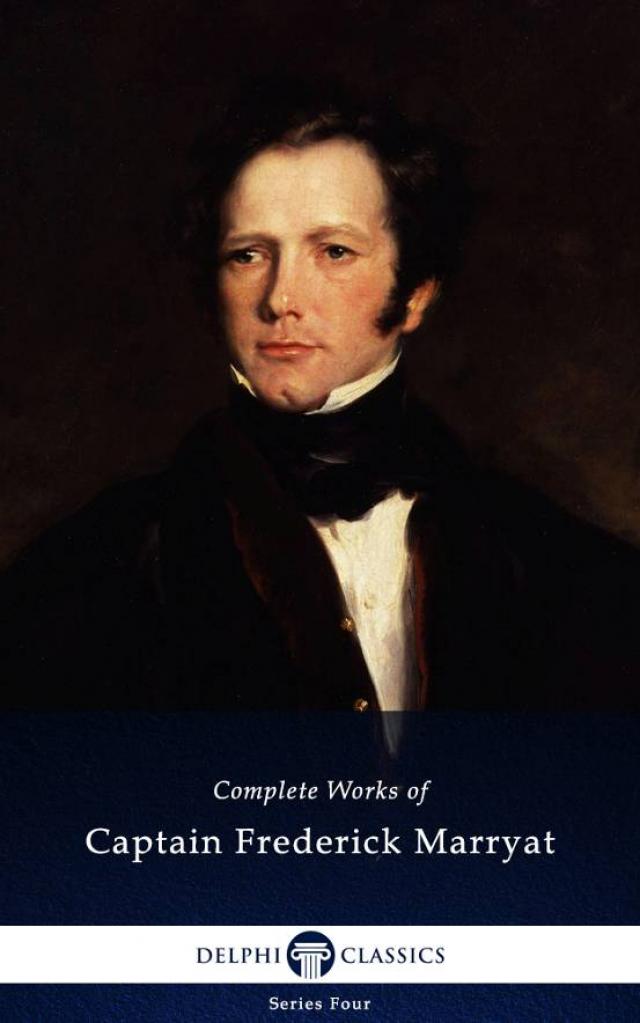


The enemy after this having become very troublesome by their predatory excursions, Sir A. Campbell determined to drive them not only from the stockades, but permanently to a greater distance, and in furtherance of this intention on the 2nd of September sent a detachment of infantry and artillery up the Dalla Creek for the purpose of shelling them from their position. In his despatch of the 4th of September he says: “Such was the excellent practice of the artillery and gunboats, under the immediate command of Captain Marryat, manned by the officers and crew of H.M.S. Lame and Honourable Company’s transport Moira, that the enemy were soon forced to abandon their defences with some considerable loss, and I am happy to say with only one man slightly wounded on our part. On gaining possession of the stockades, Captain Marryat and Major Evans pushed up the creek and succeeded in taking twenty-five boats and canoes from the enemy,” who, on seeing themselves closed with, jumped overboard and escaped into the jungle. “I cannot do adequate justice to the sense I entertain of the ability and readiness with which I find myself at all times supported by Captain Marryat and the officers and crew of the ship under his command.”
Captain Marryat appears never to have been at a loss for overcoming difficulties, whether they lay in the direction of crossing a river without a bridge, or making a scanty supply of water serve for the provision of a fleet. In this character he strongly reminds one of his own creation, Masterman Ready, who “always liked to make a beginning, were it ever so small,” and this proved, indeed, to be but the beginning to a long series of obstacles and circumstances of trial. Here is another account of the same expedition.
“The check sustained by the Burmese on the 1st had not altered their plans, and they continued gathering strength in front of the lines, and occasioning constant annoyance. It again, therefore, became necessary to repel them to a greater distance, and on the 8th a column about twelve hundred strong, under Brigadier-General Macbean, moved out to operate by land, whilst Brigadier-General Sir A. Campbell, with another division of eight hundred, proceeded by water. The boats, with the Lame and several of the company’s cruisers, advanced to a place where the Lyne River, or branch of the Irrawaddy, falls into the Rangoon branch, and at the point of their junction, termed Pagoda Point, they found the enemy strongly posted. The main entrenchment was constructed on the projecting tongue of land at the junction of the two rivers, whilst two other stockades, one on either bank of the Rangoon River, about eight hundred yards below the confluence, commanded the approach and afforded mutual support. Notwithstanding these formidable dispositions, the post was soon carried. A breach having been effected by the fire of the vessels, a gun brig and three cruisers, under the command of Captain Marryat, of the Royal Navy, the troops, consisting of the Madras Infantry, supported by part of H.M. 41st and the Madras European regiment, landed and stormed the first stockade; the second was carried by escalade, and the enemy abandoned the third.”
* * * * *
“The captured stockades now became a scene of continual warfare, and on the 4th of September the Lame found the floating remains of an English sailor whom the Burmese had tortured to death, and then sawed in half. In a letter addressed to Sir A. Campbell, and dated the 8th of September, Captain Marryat says: “In compliance with your request for a detail of the circumstances which occurred in the attack on the Dalla stockade, made by the Burmese on the morning of the 6th instant, I have the honour to inform you that at midnight of the 5th a straggling fire was heard in that direction, and shortly afterwards a rocket was thrown up — the signal previously arranged with the detachment in case of immediate assistance being required. With the advantage of a strong flood tide the boats of H.M.S. Lame proceeded rapidly to the scene of contention, where a heavy fire was exchanged. As our approach could not be perceived from the smoke, we cheered to announce that support was at hand, and had the satisfaction to hear it warmly returned, both by the detachment in the stockade and the crews of the gun-vessels.
“It appeared that the attack of the enemy had been simultaneous; the gun brigs lying in the creek having been assailed by a number of war boats, while the detachment on shore had been opposed to a force estimated at one thousand five hundred to two thousand men. Upon our arrival we found the enemy on shore had not retreated, but still kept up a galling fire. The war boats which had endeavoured to board the Kitty gun brig had been beat off by the exertions and gallantry of Mr. Crawfurd, commanding that vessel, and were apparently rallying at a short distance up the creek with a determination to renew the attack; hut on perceiving our boats advancing ahead of the gun-brigs, they made a precipitate retreat.
“Although from their superior speed there was little probability of success, chase was immediately given, and five of the war-boats which had been most severely handled, and could not keep up with the main body, were successively boarded and captured. Many others appeared to be only halfmanned, but we could not overtake them, and the pursuit was abandoned about four miles above the stockade. The spears remaining in the sides of the gun-brig, the ladders attached to her rigging, and the boarding netting cut through in many places, proved the severe conflict which had been sustained, and I trust you will be pleased to recommend the very meritorious conduct of Mr. Crawfurd to the consideration of the Right Honourable the Governor-General in Council. Great praise is due to Mr. J. King, of the Narcissa, and Mr.
Francis, of the Tiger, for the well-directed and destructive fire which they poured into the war-boats, and I trust, as an eyewitness, I may be allowed to express my admiration of the intrepid conduct of the officers commanding the detachment on shore. The loss of the enemy in this attack cannot be correctly ascertained, but from the number of dead in the boats captured, and the crippled state of many others, it cannot be estimated at less than two or three hundred men.
“I have the honour to enclose a return of our killed and wounded.
“And am, Sir, yours, &c.,
“F. MARRYAT, Captain.
CHAPTER VII.
Scurvy on board the Lame — Letter to Mr. Samuel Marryat — Expedition to Bassein — Exchanges into H.M.S. Tees — The baboon and the Newfoundland dog — Paid off at Chatham.
On the 13th of August Captain Marryat’s private log records the reception of the news of Commodore Grant’s death; and on the 15th of September the Lame, with almost the whole of her crew affected by scurvy, proceeded to Penang, previous to which change Captain Marryat had received the following letter from Sir A. Campbell:
“Head-quarters, Rangoon.
“September 10,1824.
“SIR,
“I have received with much regret your letter of this date, enclosing Mr. Churchill’s distressing report of the scurvy having broken out on H.M.S. Larne, and already made rapid progress among the ship’s company. Under these circumstances, I most fully coincide with you in opinion that no time should be lost in proceeding to Penang, where those comforts essentially necessary for the recovery of your crew are at present most conveniently to be had; assured as I am that the most urgent necessity alone induces you to suggest the removal of the ship under your command. I feel fully convinced that you will lose not a moment in returning to partake of the further and, I trust, more active operations of the approaching campaign.
“In Captain Ryves’ zeal and exertions with the force under his command I place the utmost reliance, and feel satisfied the shipping and harbour will be perfectly secure under his protection.
“In taking, I trust, a very short leave of yourself officers, and crew of the Lame, I shall not dwell, as I otherwise would, on the valuable and ready aid I have invariably received from you all, since the commencement of the present service, embracing duties of perhaps as severe and harassing a nature as ever were experienced by either sailors or soldiers, and under privations of the most trying nature.
“Any number of Malay sailors you may require are at your service.
“I have the honour to be, Sir,
“Your most obed’t, humble servant,
“A. CAMPBELL,
“Brigadier-General.
“Captain Marryat,
“H.M.S. Lame, Rangoon River.”
“We must here remark that the command held by Captain Marryat under such peculiar circumstances, from May 31st to September 11th, 1824, was so important, that had it been in the time of extended war it would in all probability have been delegated to a flag officer; that during a period so novel and trying to a young commander lie never once incurred censure, and that he did not give over the charge to Captain Ryves until the enemy had been so decidedly repulsed that Sir Archibald Campbell officially stated to him his conviction that the Sophia and Satellite were sufficient protection for the shipping.” Sickness continued on board the Lame, and before the return of Captain Marryat to active service at the end of the same year the deaths of five of the ship’s company are registered in the log.
Mr. Samuel Marryat, to whom the following letter was addressed from Penang, was his favourite brother, at that time studying for the bar:
“Pulo Penang, Sept 29, 1824.
“MY DEAR SAM,
“The Lame, with the remnants of a fine ship’s company, is at last removed from the scene of action, where, perhaps, in the course of five months they have undergone a severity of service almost unequalled. I should still have been there, but the men had been on salt provisions since February last, and the scurvy broke out and made such ravages that it was impossible to stay longer without sacrificing the remaining men. I gave up the command of the Sophie, and as I left the river the Arachne, Captain Chads, came in and took my place. I have left Rangoon now about fifteen days, being ten days on my passage. We have had much harder fighting lately, and the Company’s cruizers having been despatched against Migui and Pavoy, and the Sophie not having arrived from Calcutta, the Lame was by herself, and certainly kept up her character. I have gained credit in the business, as the despatches of the commander-in-chief fully prove. I have twice received the thanks of the General in public orders, and twice those of the Governor and Council at Calcutta, and we have since that done still more to be thanked for. But I do not think that I could have lasted much longer. I am not ill, but my head is so shattered with the fever which I have had, that it swims at the least exertion, and I am obliged to lay my pen down every four or five lines. I have also a touch of the liver. I do not know whether the Admiralty will publish my despatches, but being no favourite there, probably not; but I think, after having had the command of a fleet, armed and unarmed, of one hundred and, twenty sail; after having succeeded in everything, and with the small number of men allowed to a sloop of war, having done the duty of at least three or four frigates, that they must give me my promotion. This I am sure of, that any one in favour would be not only promoted, but made a C.B. The above I cannot expect, but I shall be content with the promotion.
“We are all in confusion here. The commodore is dead, poor fellow. He was very kind to me, and sent all the other vessels out of the way to give me the command of the expedition. Captain Coe, of the Tees, is the senior officer; he is daily expected at this port from New South Wales, and being a death vacancy, he has the right of promoting the officers. It is very doubtful who will get it. Mitchell, of the Slaney, is the senior; but I have hard service. It is, however, just as Captain Coe pleases — he may make anybody; I have a chance, but not one to build upon.
“I am very anxious to get to Point de Galle — Kate is there: I left her for six weeks, and have been away as many months — but cannot venture across the bay, with my weak ship’s company and ship in rags, in this next stormy month.
“When the Tees arrives I shall know what is to become of me. I know that the commander-in-chief has written very strongly to have me sent back in command there as soon as possible, but without I get the slip that cannot be, as the Arachne is my superior officer. If I do get my promotion by this vacancy, I shall certainly be sent there, and have a few more months’ work. It will, however, be better than the past, as we shall have fine weather and more assistance; at the same time, we shall have more hard fighting. * * *
“Your affectionate brother,
“F. MARRYAT.”
They never met again, for Samuel Marryat died before his brother returned to England; and in connection with this circumstance, and to prove the entire sympathy that existed between them, Captain Marryat used to relate how, when lying in his berth one night, and wide awake, Samuel entered his cabin, and walking up to his side, said, “Fred, I am come to tell you that I am dead.” So vivid was the impression made, that Captain Marryat leapt out of his berth, and finding that the figure had vanished, wrote down the hour and day of its appearance.
On reaching England after the war, the first letter put into his hand was to announce his brother’s death, which had taken place at the very time when he had fancied he was present with him.
The Lame returned to Rangoon on the 24th of December, 1824, whence she was despatched to Madras, Trincomalee, and Calcutta, with directions to Captain Marryat to take the Sophie sloop under his order, and to follow the instructions of the Governor-General of India as to the best means of employing the Lame and consort in a war against Ava.
By the 5th of February, 1825, they were back again in Burmah.
—”1825. February 5th. Boats attacked stockades.
“ — 8th. Discharged eighteen men invalided.
“February 10th. Fitting out and receiving troops for Bassein River.
“ — 19th. Sailed with the expedition against Bassein.
“ — 25th. Anchored; sent boats to reconnoitre Negrais stockades.
“ — 26th. Attacked stockades and took possession.
“ — 27th. Working up Bassein River.
“ — 28th.
“March 1st. On shore.
“ — 3 rd. Took possession of Bassein without opposition.
“ — 7th. Sent two row boats — Mr.
Hodder — with despatches to Rangoon.
“ — 9th. Expedition to Lamnia.
“ — 13th. Sent reinforcement to party at Lamnia.
“ — 14th. A second reinforcement.’
“ — 18th. Despatches from Captain Alexander.
“ — 22nd. Chief of Naputah sent in submission.
“February 24th, Expedition from Lamnia returned.”
On the 26th of March the Lame weighed anchor and dropped down to Naputah, and on the 27th, together with the Mercury, “took up such good positions as by a few rounds completely to drive the enemy from their works, and the troops immediately landed without opposition.” Upon proceeding to the next stockade, in the same order, “the effects of the guns from the Larne and Mercury were as decided as before, not any of the enemy waited the landing of the troops.” This quotation is from a dispatch of Major Sale’s, dated from Bassein, and the following extract from a newspaper of a later date:
“We understand that H. M. S. Lame left Bassein about the beginning of this month, to burn some stockades at Negrais, which was promptly and effectually accomplished. On the way down two enterprises were successfully attempted by Captain Marryat, which seem to us entitled to no ordinary commendation. In passing Naputah, he took fifty Burmese to assist him in destroying the above-mentioned stockades, the Chief of Naputah being friendly, and having accepted of our protection. In proceeding down the river, he learned from them that one hundred and fifty of the Naputah people were detained at Thingau — a town on the branch of the river leading to Irrawaddy — by a gold chatta chief, belonging to Bundoola, who had eight hundred men with him. The Lame being thirty short of her complement from sickness and men away on service, only forty sailors could be mustered. With these forty tars, two row boats, twelve Sepoys, and fifty Burmese, to whom swords only were entrusted, Captain Marryat boldly attacked the place, compelled them to give up the Naputah people, to lay down their arms, and he brought off prisoner the gold chatta chief.
“Two days before reaching Negrais, Captain Marryat, with his characteristic gallantry, attacked at night the force of another gold chatta chief, which he completely surprised. The Burmese, whom on the former service he had armed with swords only, were on this occasion entrusted with muskets, and behaved uncommonly well, following the chief of the enemy into the jungle, and bringing him in prisoner. The enemy submitted to the same terms which had been imposed on those vanquished at Thingau. Eight heavy iron guns were taken from them, besides jingals and muskets. Captain Marryat did not lose a man on either enterprise. These are the first occasions, we believe, when Burmese have been hostilely employed against Burmese, and it bodes well to the success of our ulterior operations, that the experiment has been attended with signal success. High credit is due to Captain Marryat and his small but intrepid band for achieving be much without any loss, and with means apparently so inadequate.” These extracts may appropriately be supplemented by Captain Marryat’s own account of the expedition against Bassein, taken from his ‘Diary on the Continent “It was not until many months after the war had been carried on that Sir Archibald Campbell found himself in a position to penetrate into the heart of the Burmah territory, and attempt the capital. He wanted almost everything, and, among the rest, reinforcements of men; for the rainy season had swept them off by thousands. At last, when determined to make the attempt, he did it with a most inadequate force; so small, that had the Burmese thought of even trenching up and barricading the roads at every half-mile, he must have been compelled, without firing a shot, to have retreated. Fortunately, he had an accession of men-of-war, and his river detachment was stronger than he could have hoped for.