Complete works of g k ch.., p.1137
Complete Works of G K Chesterton,
p.1137


Thus, among the juvenile verses I began to write about this time was one called “The Babe Unborn”, which imagined the uncreated creature crying out for existence and promising every virtue if he might only have the experience of life. Another conceived the scoffer as begging God to give him eyes and lips and a tongue that he might mock the giver of them; a more angry version of the same fancy. And I think it was about this time that I thought of the notion afterwards introduced into a tale called Manalive; of a benevolent being who went about with a pistol, which he would suddenly point at a pessimist, when that philosopher said that life was not worth living. This was not printed until long afterwards; but the verses were collected into a little volume; and my father was so imprudent as to help me to get them published under the title of The Wild Knight. And this is an important part of the story, in so far as any part of the story is important, because it did involve my introduction to literature and even to literary men.
My little volume of verse was reviewed with warm and almost overwhelming generosity by Mr. James Douglas, then almost entirely known as a leading literary critic. Impetuosity as well as generosity was always one of Mr. Douglas’s most attractive qualities. And he insisted, for some reason, on affirming positively that there was no such person as G. K. Chesterton; that the name was obviously a nom de plume; that the work was obviously not that of a novice but a successful writer; and finally that it could be none other than Mr. John Davidson. This naturally brought an indignant denial from Mr. John Davidson. That spirited poet very legitimately thanked the Lord that he had never written such nonsense; and I for one very heartily sympathised with him. Not very long afterwards, when Mr. John Lane had accepted the manuscript of The Napoleon of Notting Hill, I was lunching with that publisher and fell into a very pleasant conversation with a fair-haired young man on my left, a little older than myself. A more odd-looking man, a little like an elf, bald, black-haired and with a Mephistophelean tuft and monocle, joined in the conversation across the table; and we found that we agreed on a large number of literary subjects and formed, I think I may say, a lasting liking for each other. It was only afterwards that I discovered that the first man was Mr. James Douglas and the second man was Mr. John Davidson.
I am here advancing my story along the literary line, to a point which I have not yet reached on other lines that were rather political or social; but, for the sake of convenience, I may as well complete this part of my rather erratic development here. Perhaps the next most important accident that favoured me, and brought me into relation with the world of letters, was the fact that I wrote a long review on a book about Stevenson; perhaps the first of the rather stupid books written to belittle Stevenson. I defended Stevenson with so much vehemence, not to say violence, that I had the good fortune to attract the attention of very distinguished writers who, though themselves certainly neither violent nor vehement, were very specially Stevensonian. I received a charming letter, and later a great deal of hospitality and encouragement, from Sir Sidney Colvin; to whose house I often went, where I had the pleasure of meeting the lady who was afterwards Lady Colvin, and where I heard Stephen Phillips read aloud his play of “Ulysses”. Nobody could have been more magnanimous and considerate than Colvin always was to me; but I think we could never have been at one, as he was at one with Stevenson or even Stephen Phillips. For, except on the subject of Stevenson, we differed upon every subject in earth and heaven; he was both Imperialist in politics and Rationalist in religion; and with all his frigid refinement, he was whatever he was with an unquenchable pertinacity. He hated Radicals and Christian mystics and romantic sympathisers with small nationalities, and in fact everything that I had any tendency to be. But the same link of the love of Stevenson attached me a little later to another very eminent man of letters; Sir Edmund Gosse. In some way I always felt far more at home with Sir Edmund Gosse; because he despised all opinions and not merely my opinions. He had an extraordinary depth of geniality in his impartial cynicism. He had the art of snubbing without sneering. We always felt that he had not enjoyed snubbing but the snub itself, as a sort of art for art’s sake, a million miles from any personal malice. It was all the more artistic because of the courtly and silken manner that he commonly assumed. I was very fond of him; and it gives me great happiness to think that one of the last things he must have done was to write me a letter thanking me for another and much later vindication of Stevenson, in a book I wrote long afterwards, indeed only a few years ago. In this letter he said of Stevenson, with a very powerful simplicity coming from such a man, “I loved him; I love him still.” I have no right to use such strong terms in my case; but I feel something like that about Gosse.
About this time I discovered the secret of amiability in another person with a rather misleading reputation for acidity. Mr. Max Beerbohm asked me to lunch; and I have ever since known that he is himself the most subtle of his paradoxes. A man with his reputation might well find offence in the phrase amiability; I can only explain to so scholarly a wit that I put it in Latin or French because I dare not put it in English. Max played in the masquerade of his time, which he has described so brilliantly; and he dressed or overdressed the part. His name was supposed to be a synonym for Impudence; for the undergraduate who exhibited the cheek of a guttersnipe in the garb of a dandy. He was supposed to blow his own trumpet with every flourish of self-praise; countless stories were told about the brazen placidity of his egoism. How, when he had hardly written anything more than a few schoolboy essays, he bound them under the stately title of “The Works of Max Beerbohm.” How he projected a series of biographies called “Brothers of Great Men;” the first volume being “Herbert Beerbohm Tree.” And the first moment I heard his voice, or caught sight of the expression of his eyes, I knew that all this was the flat contrary of the truth. Max was and is a remarkably humble man, for a man of his gifts and his period. I have never known him, by a single phrase or intonation, claim to know more or judge better than he does; or indeed half so much or so well as he does. Most men spread themselves a little in conversation, and have their unreal victories and vanities; but he seems to me more moderate and realistic about himself than about anything else. He is more sceptical about everything than I am, by temper; but certainly he does not indulge in the base idolatry of believing in himself. On this point I wish I were so good a Christian as he. I hope, for the sake of his official or public personality, that he will manage to live down this last affront. But the people who could not see this fact, because an intelligent undergraduate enjoyed an intellectual rag, have something to learn about the possible combination of humility and humour.
Finally, a crown of what I can only call respectability came to me from the firm of Macmillan; in the form of a very flattering invitation to write the study of Browning for the English Men of Letters Series. It had just arrived when I was lunching with Max Beerbohm, and he said to me in a pensive way: “A man ought to write on Browning while he is young.” No man knows he is young while he is young. I did not know what Max meant at the time; but I see now that he was right; as he generally is. Anyhow, I need not say that I accepted the invitation to write a book on Browning. I will not say that I wrote a book on Browning; but I wrote a book on love, liberty, poetry, my own views on God and religion (highly undeveloped), and various theories of my own about optimism and pessimism and the hope of the world; a book in which the name of Browning was introduced from time to time, I might almost say with considerable art, or at any rate with some decent appearance of regularity. There were very few biographical facts in the book, and those were nearly all wrong. But there is something buried somewhere in the book; though I think it is rather my boyhood than Browning’s biography.
I have pursued this literary part of my own biography in advance of the rest. But long before this it was apparent that the centre of gravity in my existence had shifted from what we will (for the sake of courtesy) call Art to what we will (for the sake of courtesy) call Literature. The agent in this change of intention was, in the first instance, my friend Ernest Hodder Williams, afterwards the head of the well-known publishing firm. He was attending Latin and English lectures at University College while I was attending, or not attending, to the art instructions of the Slade School. I joined him in following the English course; and for this reason I am able to boast myself among the many pupils who are grateful to the extraordinarily lively and stimulating learning of Professor W.P. Ker. Most of the other students were studying for examinations; but I had not even that object in this objectless period of my life. The result was that I gained an entirely undeserved reputation for disinterested devotion to culture for its own sake; and I once had the honour of constituting the whole of Professor Ker’s audience. But he gave as thorough and thoughtful a lecture as I have ever heard given, in a slightly more colloquial style; asked me some questions about my reading; and, on my mentioning something from the poetry of Pope, said with great satisfaction, “Ah, I see you have been well brought up.” Pope had much less than justice from that generation of the admirers of Shelley and Swinburne. Hodder Williams and I often talked about literature, following on these literary lectures; and he conceived a fixed notion that I could write; a delusion which he retained to the day of his death. In consequence of this, and in connection with my art studies, he gave me some books on art to review for the Bookman, the famous organ of his firm and family. I need not say that having entirely failed to learn how to draw or paint, I tossed off easily enough some criticisms of the weaker points of Rubens or the misdirected talents of Tintoretto. I had discovered the easiest of all professions; which I have pursued ever since.
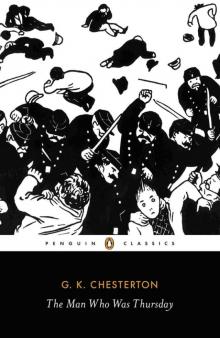
When I look back on these things, and indeed on my life generally, the thing that strikes me most is my extraordinary luck. I have already pleaded for the merits of the Moral Tale; but it is against all the proper principles that even any such measure of good fortune should have come to the Idle Apprentice. In the case of my association with Hodder Williams, it was against all reason that so unbusinesslike a person should have so businesslike a friend. In the case of the choice of a trade, it was outrageously unjust that a man should succeed in becoming a journalist merely by failing to become an artist. I say a trade and not a profession; for the only thing I can say for myself, in connection with both trades, is that I was never pompous about them. If I have had a profession, at least I have never been a professor. But in another sense there was about these first stages an element of luck, and even of accident. I mean that my mind remained very much abstracted and almost stunned; and these opportunities were merely things that happened to me, almost like calamities. To say that I was not ambitious makes it sound far too like a virtue, when it really was a not very disgraceful defect; it was that curious blindness of youth which we can observe in others and yet never explain in ourselves. But, above all, I mention it here also because it was connected with the continuity of that unresolved riddle of the mind, which I mentioned at the beginning of this chapter. The essential reason was that my eyes were turned inwards rather than outwards; giving my moral personality, I should imagine, a very unattractive squint. I was still oppressed with the metaphysical nightmare of negations about mind and matter, with the morbid imagery of evil, with the burden of my own mysterious brain and body; but by this time I was in revolt against them; and trying to construct a healthier conception of cosmic life, even if it were one that should err on the side of health. I even called myself an optimist, because I was so horribly near to being a pessimist. It is the only excuse I can offer. All this part of the process was afterwards thrown up in the very formless form of a piece of fiction called The Man Who Was Thursday. The title attracted some attention at the time; and there were many journalistic jokes about it. Some, referring to my supposed festive views, affected to mistake it for “The Man Who Was Thirsty.” Others naturally supposed that Man Thursday was the black brother of Man Friday. Others again, with more penetration, treated it as a mere title out of topsy-turveydom; as if it had been “The Woman Who Was Half-past Eight,” or “The Cow Who Was Tomorrow Evening.” But what interests me about it was this; that hardly anybody who looked at the title ever seems to have looked at the sub-title; which was “A Nightmare,” and the answer to a good many critical questions.
I pause upon the point here, because it is of some importance to the understanding of that time. I have often been asked what I mean by the monstrous pantomime ogre who was called Sunday in that story; and some have suggested, and in one sense not untruly, that he was meant for a blasphemous version of the Creator. But the point is that the whole story is a nightmare of things, not as they are, but as they seemed to the young half-pessimist of the ‘90s; and the ogre who appears brutal but is also cryptically benevolent is not so much God, in the sense of religion or irreligion, but rather Nature as it appears to the pantheist, whose pantheism is struggling out of pessimism. So far as the story had any sense in it, it was meant to begin with the picture of the world at its worst and to work towards the suggestion that the picture was not so black as it was already painted. I explained that the whole thing was thrown out in the nihilism of the ‘90s in the dedicatory lines which I wrote to my friend Bentley, who had been through the same period and problems; asking rhetorically: “Who shall understand but you?” In reply to which a book-reviewer very sensibly remarked that if nobody understood the book except Mr. Bentley, it seemed unreasonable to ask other people to read it.
But I speak of it here because, though it came at the beginning of the story, it was destined to take on another meaning before the end of it. Without that distant sequel, the memory may appear as meaningless as the book; but for the moment I can only leave on record here the two facts to which I managed somehow and in some sense to testify. First, I was trying vaguely to found a new optimism, not on the maximum but the minimum of good. I did not so much mind the pessimist who complained that there was so little good. But I was furious, even to slaying, with the pessimist who asked what was the good of good. And second, even in the earliest days and even for the worst reasons, I already knew too much to pretend to get rid of evil. I introduced at the end one figure who really does, with a full understanding, deny and defy the good. Long afterwards Father Ronald Knox told me, in his whimsical manner, that he was sure that the rest of the book would be used to prove that I was a Pantheist and a Pagan, and that the Higher Critics of the future would easily show that the episode of the Accuser was an interpolation by priests.
This was not the case; in fact it was quite the other way. At this time I should have been quite as annoyed as anybody else for miles round, if I had found a priest interfering with my affairs or interpolating things in my manuscript. I put that statement into that story, testifying to the extreme evil (which is merely the unpardonable sin of not wishing to be pardoned), not because I had learned it from any of the million priests whom I had never met, but because I had learned it from myself. I was already quite certain that I could if I chose cut myself off from the whole life of the universe. My wife, when asked who converted her to Catholicism, always answers, “the devil”.
But all that was so long afterwards, that it has no relation to the groping and guesswork philosophy of the story in question. I would much rather quote a tribute from a totally different type of man, who was nevertheless one of the very few men who, for some reason or other, have ever made head or tail of this unfortunate romance of my youth. He was a distinguished psychoanalyst, of the most modern and scientific sort. He was not a priest; far from it; we might say, like the Frenchman asked if he had lunched on the boat, “au contraire”. He did not believe in the Devil; God forbid, if there was any God to forbid. But he was a very keen and eager student of his own subject; and he made my hair stand on end by saying that he had found my very juvenile story useful as a corrective among his morbid patients; especially the process by which each of the diabolical anarchs turns out to be a good citizen in disguise. “I know a number of men who nearly went mad,” he said quite gravely, “but were saved because they had really understood The Man Who Was Thursday.” He must have been rather generously exaggerative; he may have been mad himself, of course; but then so was I. But I confess it flatters me to think that, in this my period of lunacy, I may have been a little useful to other lunatics.