Collected cards the almo.., p.150
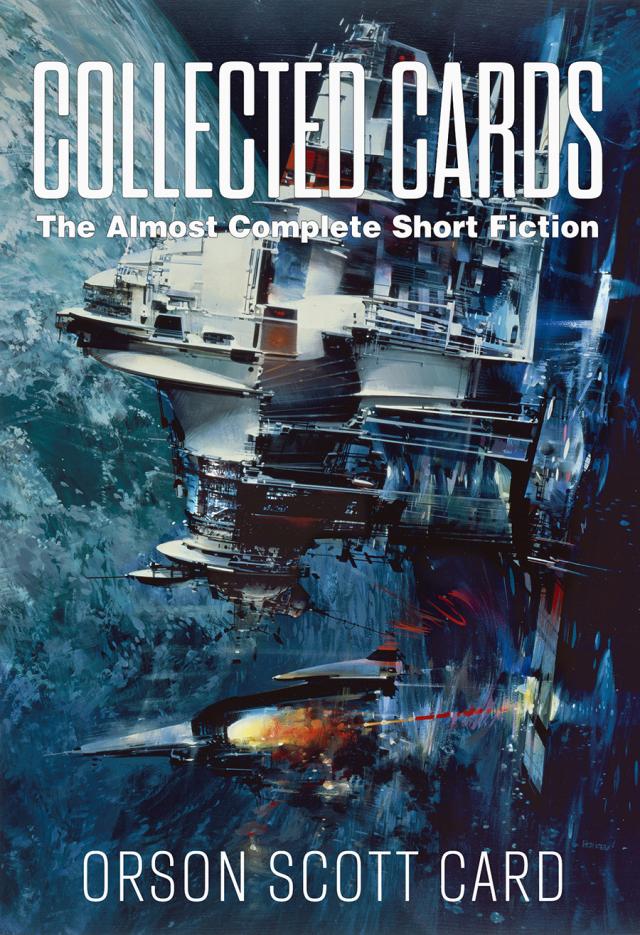
Collected Cards: The Almost Complete Short Fiction,
p.150


That’s how Hooch kept himself entertained, sitting in that lock-up room for two long days and nights.
Then they hauled him out and brought him into court—unshaven, dirty, his hair wild and his clothes all wrinkled up. General Harrison was the judge, the jury was all in uniform, and the defense attorney was—Andrew Jackson! It was plain Governor Bill was trying to make Hooch get mad and start in ranting, but Hooch wasn’t born yesterday. He knew that whatever Harrison had in mind, it wouldn’t do no good to yell about it. Just sit tight and put up with it.
It took only a few minutes.
Hooch listened with a straight face as a young lieutenant testified that all Hooch’s whisky had been sold to the sutler at exactly the price it sold for last time. According to the legal papers, Hooch didn’t make a penny more from having kept them waiting four months between shipments. Well, thought Hooch, that’s fair enough, Harrison’s letting me know how he wants things run. So he didn’t say a word. Harrison looked as merry as you please, behind his magisterial solemnity. Enjoy yourself, thought Hooch. You can’t make me mad.
But he could, after all. They took 220 dollars right off the top and handed it over to Andrew Jackson right there in court. Counted out eleven gold twenty-dollar coins. That caused Hooch physical pain, to see that fiery metal dropping into Jackson’s hands. He couldn’t keep his silence then. But he did manage to keep his voice low and mild-sounding. “It don’t seem regular to me,” he said, “to have the plaintiff acting as defense attorney.”
“Oh, he’s not your defense attorney on the debt charges,” said His Honor Judge Harrison. “He’s just your defense attorney on the likker charges.” Then Harrison grinned and gaveled that matter closed.
The likker business didn’t take much longer. Jackson carefully presented all the same invoices and receipts to prove that every keg of whisky was sold to the sutler of Carthage Fort, and not a speck of it to any Reds. “Though I will say,” said Jackson, “that the amount of whisky represented by these receipts seems like enough for three years for an army ten times this size.”
“We’ve got a bunch of hard-drinking soldiers,” said Judge Harrison. “And I reckon that likker won’t last six months. But not a drop to the Reds, Mr. Jackson, you may be sure!”
Then he dismissed all charges against Hooch Palmer, alias Ulysses Brock. “But let this be a lesson to you, Mr. Palmer,” said Harrison in his best judicial voice. “Justice on the frontier is swift and sure. See to it you pay your debts. And avoid even the appearance of evil.”
“Sure enough,” said Hooch cheerfully. Harrison had rolled him over good, but everything had worked out fine. Oh, the 220 dollars bothered him, and so did the two days in jail, but Harrison didn’t mean for Hooch to suffer much. Because what Jackson didn’t know, and no one else saw fit to mention, was that Hooch Palmer happened to have the contract as sutler for the U.S. Army in Wobbish Territory. All those documents that proved he hadn’t sold the likker to the Reds really showed that he sold the likker to himself—and at a profit, too. Now Jackson would head on home and Hooch would settle down in the sutler’s store, selling likker to the Reds at extortionate prices, splitting the profits with Governor Bill and watching the Reds die like flies. Harrison had played his little joke on Hooch, right enough, but he’d played an even bigger one on old Hickory.
Hooch made sure to be at the wharf when they ferried Jackson back across the Hio. Jackson had brought along two big old mountain boys with rifles, no less. Hooch took note that one of them looked to be half Red himself, probably a Cherriky half-breed—there was lots of that kind of thing in Appalachee, white men actually marrying squaws like as if they was real women. And both those rifles had “Eli Whitney” stamped on the barrel, which meant they was made in the state of Irrakwa, where this Whitney fellow set up shop making guns so fast he made the price drop; and the story was that all his workmen was women, Irrakwa squaws, if you can believe it. Jackson could talk all he wanted about pushing the Reds west of the Mizzipy, but it was already too late. Ben Franklin did it, by letting the Irrakwa have their own state up north, and Tom Jefferson made it worse by letting the Cherriky be full voting citizens in Appalachee when they fought their revolution against the King. Treat them Reds like citizens and they start to figure they got the same rights as a white man. There was no way to have an orderly society if that sort of thing caught on. Why, next thing you know them Blacks’d start trying to get out of being slaves, and first thing you know you’d sit down at the bar in a saloon and you’d look to your left and there’d be a Red, and you’d look to your right and there’d be a Black, and that was just plain against nature.
There went Jackson, thinking he was going to save the white man from the Red, when he was traveling with a half-breed and toting Red-made rifles. Worst of all, Jackson had eleven gold coins in his saddle pouch, coins that properly belonged to Hooch Palmer. It made Hooch so mad he couldn’t think straight.
So Hooch hotted up that saddle pouch, right where the metal pin held it onto the saddle. He could feel it from here, the leather charring, turning ash-black and stiff around that pin. Pretty soon, as the horse walked along, that bag would drop right off. But since they was likely to notice it, Hooch figured he wouldn’t stop with the pouch. He hotted up a whole lot of other places on that saddle, and on the other men’s saddles, too. When they reached the other shore they mounted up and rode off, but Hooch knew they’d be riding bareback before they got back to Nashville. He most sincerely hoped that Jackson’s saddle would break in such a way and at such a time that old Hickory would land on his butt or maybe even break his arm. Just thinking about the prospect made Hooch pretty cheerful. Every now and then it was kind of fun to be a spark. Take some pompous holy-faced lawyer down a peg.
Truth is, an honest man like Andrew Jackson just wasn’t no match for a couple of scoundrels like Bill Harrison and Hooch Palmer. It was just a crying shame that the army didn’t give no medals to soldiers who likkered their enemies to death instead of shooting them. Cause if they did, Harrison and Palmer would both be heroes, Hooch knew that for sure.
As it was, Hooch reckoned Harrison would find a way to make himself a hero out of all this anyway, while Hooch would end up with nothing but money. Well, that’s how it goes, thought Hooch. Some people get the fame, and some people get the money. But I don’t mind, as long as I’m not one of the people who end up with nothing at all. I sure never want to be one of them. And if I am, they’re sure going to be sorry.
While Hooch was watching Jackson cross the river, Ta-Kumsaw watched the White whisky trader and knew what he was doing. So did most other Reds who cared to watch—those that were sober, anyway. White men did a lot of things that Red men didn’t understand, but when they fiddled with things like fire, water, earth, and air, well, they couldn’t hide it from a Red man.
Ta-Kumsaw didn’t exactly see the burning of the saddle leather on Jackson’s horse, or even feel the heat of it. Instead it was like a stirring, a tiny whirlwind, a little suction drawing his attention out to the water. A disturbance in the peacefulness of the land. Some Reds couldn’t feel it as keenly as Ta-Kumsaw could, and others—not many—could sense it far more powerfully. Ta-Kumsaw’s little brother, Lolla-Wossiky, had been one of those with a keen sense of those whirlpools, those eddies in the stream. Ta-Kumsaw remembered their father speaking of it, how Lolla-Wossiky would someday be a shaman, and Ta-Kumsaw would be a war-leader. That was before Lying-Mouth Harrison shot Pucky-Shinwa right before Lolla-Wossiky’s eyes.
Ta-Kumsaw remembered that day. He had been off hunting, half a day’s walk to the north, but he felt it as if the gun had been fired right behind him. When a White man laid a hex or a curse or cast a doodlebug, it felt to Ta-Kumsaw like an itch under his skin, but when a White man killed, it was like a knife stabbing. He was with his brother Methowa-Tasky, and he called to him. “Did you feel it?” Methowa-Tasky’s eyes went wide. He had not. But even then, even at that age—not yet thirteen—Ta-Kumsaw had no doubt of himself. He had felt it; it was true; a murder had been done, and he must go to the dying man.
He led the way, running through the forest. As always with a Red man, his harmony with the woodland was complete. He did not have to think about where he placed his feet; he knew that the twigs under his feet would soften and bend, the leaves would moisten and not rustle, the branches he brushed aside would quickly go back to their proper place and leave no sign of his passing. Some White men prided themselves that they could move as quiet as a Red, and in truth some of them could—but they did it by moving slowly, carefully, watching the ground, stepping around bushes. They never realized how little thought a Red man took for making no sound, for leaving no trace.
What Ta-Kumsaw thought of was not his steps, not himself at all. It was the whirlpool sucking him downward, ever more powerfully, toward the place where the peace was torn open like a wound to let a murder through. By the time they got there, even Methowa-Tasky could feel it. There on the ground lay their father, a bullet through his face. And standing by him, silent and unseeing, was Lolla-Wossiky, ten years old.
Ta-Kumsaw carried his father’s body home across his shoulders, like a deer. Methowa-Tasky led Lolla-Wossiky by the hand, for otherwise the boy would not move. Mother greeted them with great wails of grief, for she had also felt the death, but did not know it was her own husband until her sons brought him back. Mother tied her husband’s corpse to Ta-Kumsaw’s back; then Ta-Kumsaw climbed the tallest tree, and bound his father’s corpse to the highest branch he could reach. It would have been very bad if he had climbed beyond his strength, and his father’s body had fallen from his grasp. But Ta-Kumsaw did not climb beyond his strength. And so he bound his father to a branch that was in constant sunlight. The birds and insects would eat of him; the sun and air would dry him; the rain would wash him downward to the earth. This was how Ta-Kumsaw gave his father back to the land.
But what could they do with Lolla-Wossiky? He said nothing, he wouldn’t eat unless someone fed him, and if you didn’t take his hand and lead him, he would stay in one place forever. Mother was frightened at what had happened to her son. Mother loved Ta-Kumsaw very much, more than any other mother in the tribe loved any other son; but even so, she loved Lolla-Wossiky more. How often had she told them how Lolla-Wossiky always cried the first time the air grew bitter cold each winter, and how she could never get him to stop, no matter how she covered him with bear skins and buffalo robes. Not until he was old enough to talk did he explain why he cried. “All the bees are dying,” he said. That was Lolla-Wossiky, the only Shaw-Nee boy who ever felt the death of bees.
That was the boy who had stood beside his father when Colonel Bill Harrison shot him dead. If Ta-Kumsaw felt that murder like a knife wound, half a day’s journey away, what did Lolla-Wossiky feel, standing so close, and already so sensitive? If he cried for the death of bees in winter, what did he feel when a White man murdered his father before his eyes?
After a few years, Lolla-Wossiky finally began to speak again, but the fire was gone from his eyes, and he was careless. He put his own eye out, by accident, because he tripped and fell on the short jagged stump of a broken bush. Tripped and fell! What Red man ever did that? It was as if Lolla-Wossiky had lost all feeling for the land, as if from being the most sensitive, he had become as dull as a White man.
Or maybe, Ta-Kumsaw thought, maybe the sound of that ancient gunshot is still ringing in his head so loud that he can’t feel the tickling of the world around him. Not until he first tasted whisky had Lolla-Wossiky been able to take the sharpness off that pain.
That was why Ta-Kumsaw never beat Lolla-Wossiky for likkering, though he would beat any other Shaw-Nee, even his brother, even an old man, if he found him with the White man’s poison in his hand.
But the White man never guessed at what the Red man saw and heard and felt. The White man brought death and emptiness to this place. The White man cut down wise old trees with much to tell; young saplings with many lifetimes of life ahead; and the White man never asked, Will you be glad to make a lodgehouse for me and my tribe? Hack and cut and chop and bum, that was the White man’s way. Take from the forest, take from the land, take from the river, but put nothing back. The White man killed animals he didn’t need, animals that did him no harm; yet if a bear woke hungry in the winter and took so much as a single young pig, the White man hunted him down and killed him in revenge. He never felt the balance of the land at all.
No wonder the land hated the White man! No wonder all the natural things of the land rebelled against his every step, crackling underfoot, bending the wrong way, shouting out to the Red man, Here was where the enemy stood! Here came the intruder, through these bushes, up this hill! The White man joked that some Reds seemed like they could even track a man on water, then laughed as if it weren’t true. But it was true, for when a White man passed along a river or a lake, it bubbled and foamed and rippled loudly for hours after he had passed.
Now Hooch Palmer, who carried poison with him wherever he went, now he stood making his silly little fires on another White man’s saddles, and he thought that no one knew. These White men with their pathetic little knacks. These White men with their hexes and their wardings. They didn’t realize that their hexes only worked to fend off unnatural things. If a thief came, knowing he was doing wrong, then a good strong fending hex would make his fear grow within him until he cried out and ran off. But the Red man was never a thief. The Red man always belonged wherever he was in this land. The hex was just a cold place, a stirring in the air, and nothing more.
Ta-Kumsaw watched Hooch turn away, return to the fort. Soon he would start selling his poison in earnest, and most of the Reds gathered around here would be drunk. Ta-Kumsaw would remain here, keeping watch. He did not have to speak to anyone. They only had to see him, and those with any courage left would turn away without likkering. He was a constant reproach to them.
He walked to the place where Hooch had stood, and let his calm replace the agitation that Hooch had left there. Soon the buzzing, furious insects became quieter; the smell of the likkery man settled; the water again lapped the shore with its random musical rhythm.
How easily the land was healed after the White man passed. If all the white men left today, by tomorrow the land would be at rest, and in a year it would not show any sign that the White man had ever been there. Even the ruins of the White man’s buildings would be part of the land again, making homes for small animals and crumbling in the grip of the hungering vines. White man’s metal would be rust; White man’s stone work would be low hills and small caves; White man’s murders would be wistful, beautiful notes in the song of the redbird—for the redbird remembered everything, turning it into goodness when it could.
All day Ta-Kumsaw stood outside the fort, watching Reds go in to buy their poison. Men and women from every tribe—Wee-aw and Kicky-Poo, Potty-Wottamee and Chippy-Wa, Winny-Baygo and Pee-Orawa—they went in carrying pelts or baskets and came out with no more than cups or jugs of likker, and sometimes with nothing, but he could feel how the Reds who drank this poison became unconnected to the land. They were not a disturbance the way the White man was; rather it was as if they had ceased to exist. The Red man who drank whisky was already dead, as far as the land knew. I stand here to watch the corpses walking their slow path to the grave, thought Ta-Kumsaw. He said this only inside his head, but the land felt his grief, and the breeze answered him by weeping through the leaves.
As dusk fell, a redbird came and walked on the dirt in front of Ta-Kumsaw.
Tell me a story, said the redbird in its silent way, its eyes cocked upward at the silent Red man.
You know my story before I tell it, said Ta-Kumsaw silently. You feel my tears before I shed them. You taste my blood before it is spilled.
Why do you grieve for Red men who are not of the Shaw-Nee?
Before the White man came, said Ta-Kumsaw silently, we did not see that all Red men were alike, brothers of the land, because we thought all creatures were this way; so we quarreled with other Red men the way the bear quarrels with the cougar, the way the muskrat scolds the beaver. Then the White man came, and I saw that all Red men are like twins compared to the White man.
What is the White man? What does he do?
The White man is like a human being, but he crushes all other living things under his feet.
Then why, O Ta-Kumsaw, when I look into your heart, why is it that you do not wish to hurt the White man, that you do not wish to kill the White man?
The White man doesn’t know the evil that he does. The White man doesn’t feel the peace of the land, so how can he tell that he’s wrecking it? I can’t blame the White man. But I can’t let him stay. So when I make him leave this land, I’ll do it without malice. I’ll cause him no more pain than it takes to make him go away.
The redbird nodded once, twice, three times, four. Then it fluttered to a branch above Ta-Kumsaw’s head and sang a short song. In those notes Ta-Kumsaw could not understand any words; but he could hear his own story being told. From now on, the song of every redbird in the land would include his story, for what one redbird knew, all of them remembered.
If anyone had been watching Ta-Kumsaw, they would have had no idea of what was going on. His face held no more expression than it had all day. He stood where he had been standing; a redbird landed near him, stayed awhile, sang, and went away.
Yet it was the turning point of Ta-Kumsaw’s life; he recognized it at once. Until this moment he had been a young man, a child. He had spoken as any Shaw-Nee could speak, but having spoken, he then kept still and let others decide. Now he would decide for himself, like a true chief, like a war chief. Not a chief of the Shaw-Nee, or even a chief of the Reds of this north country, but rather the chief of all Reds in the war against the White man. It was what he knew must happen, had known for many years; but until this moment he had thought that it would be another man, a chief like Cornstalk, Blackfish, or even a Cree-Ek or Chok-Taw from the south. But the redbird had come to him, Ta-Kumsaw, and put him in the song. Now wherever Ta-Kumsaw went through the land that knew the redbird song, his name would already be familiar to the wisest Red men. He was the chief of all tribes; the land had chosen him. As he stood there near the bank of the Hio, he felt like he was the face of the land; he felt like the fire of the sun, the breath of the air, the strength of the earth, the speed of the water all reached into him and looked out on the world through his eyes. I am the land; I am the hands and feet and mouth and voice of the land as it struggles to rid itself of the White man.