Collected cards the almo.., p.82
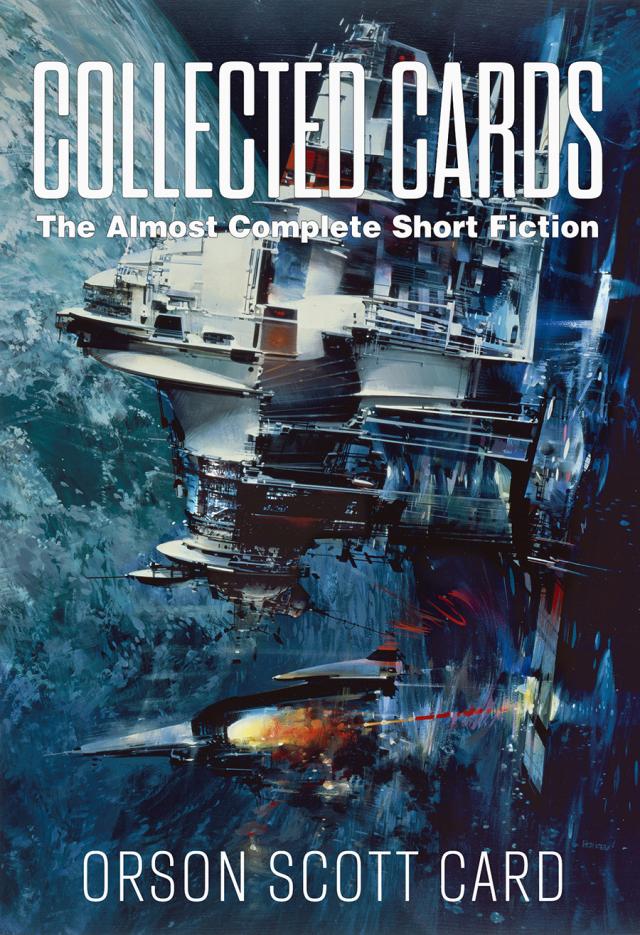
Collected Cards: The Almost Complete Short Fiction,
p.82


And for the first time in all his life, Orion realized that he had reason to be afraid.
“But that’s a capital offense,” he said lamely.
“I only wish it included torture,” Officer Manwool said heatedly, “the kind of torture you put that poor truck driver through!”
And then she started to pull Orion out of the room.
Rod Bingley lifted his eyes from the steering wheel and stared uncomprehendingly at the road ahead. The truck’s light illuminated the road clearly for many meters. And for five seconds or thirty minutes or some other length of time that was both brief and infinite he did not understand what it meant.
He got out of the cab and walked to the edge of the ravine, looking down. For a few minutes he felt relieved.
Then he walked back to the truck and counted the wounds in the cab. The dents on the grill and the smooth metal. Three cracks in the windshield.
He walked back to where the man had been urinating. Sure enough, though there was no urine, there was an indentation in the ground where the hot liquid had struck, speckles in the dirt where it had splashed.
And in the fresh asphalt, laid, surely, that morning (but then why no warning signs on the bridge? Perhaps the wind tonight blew them over), his tire tracks showed clearly. Except for a manwidth stretch where the left rear tires had left no print at all.
And Rodney remembered the dead, smashed faces, especially the bright and livid eyes among the blood and broken bone. They all looked like Rachel to him. Rachel who had wanted him to—to what? Couldn’t even remember the dreams anymore?
He got back into the cab and gripped the steering wheel. His head spun and ached, but he felt himself on the verge of a marvelous conclusion, a simple answer to all of this. There was evidence, yes, even though the bodies were gone, there was evidence that he had hit those people. He had not imagined it.
They must, then, be (he stumbled over the word, even in his mind, laughed at himself as he concluded:) angels. Jesus sent them, he knew it, as his mother had taught him, destroying angels teaching him the death that he had brought to his wife while daring, himself, to walk away scatheless.
It was time to even up the debt.
He started the engine and drove, slowly, deliberately toward the end of the road. And as the front tires bumped off and a sickening moment passed when he feared that the truck would be too heavy for the driving wheels to push along the ground, he clasped his hands in front of his face and prayed, aloud: “Forward!”
And then the truck slid forward, tipped downward, hung in the air, and fell. His body pressed into the back of the truck. His clasped hands struck his face. He meant to say, “Into thy hands I commend my spirit,” but instead he screamed, “No no no no no,” in an infinite negation of death that, after all, didn’t do a bit of good once he was committed into the gentle, unyielding hands of the ravine. They clasped and enfolded him, pressed him tightly, closed his eyes and pillowed his head between the gas tank and the granite.
“Wait,” Gemini said.
“Why the hell should we?” Officer Manwool said, stopping at the door with Orion following docilely on the end of the lovecord. Orion, too, stopped, and looked at the policeman with the adoring expression all lovecord captives wore.
“Give the man a break,” Gemini said.
“He doesn’t deserve one,” she said. “And neither do you.”
“I say give the man a break. At least wait for the proof.”
She snorted. “What more proof does he need, Gemini? A signed statement from Rodney Bingley that Orion Overweed is a bloody hitler?”
Gemini smiled and spread his hands. “We didn’t actually see what Rodney did next, did we? Maybe he was struck by lightning two hours later, before he saw anybody—I mean, you’re required to show that damage did happen. And I don’t feel any change to the present—”
“You know that changes aren’t felt. They aren’t even known, since we wouldn’t remember anything other than how things actually happened!”
“At least,” Gemini said, “watch what happens and see whom Rodney tells.”
So she led Orion back to the controls, and at her instructions Orion lovingly started the holo moving again.
And they all watched as Rodney Bingley walked to the edge of the ravine, then walked back to the truck, drove it to the edge and over into the chasm, and died on the rocks.
As it happened, Hector hooted in joy. “He died after all! Orion didn’t change a damned thing, not one damned thing!”
Manwool turned on him in disgust. “You make me sick,” she said.
“The man’s dead,” Hector said in glee. “So get that stupid string off Orion or I’ll sue for a writ of—”
“Go pucker in a corner,” she said, and several of the women pretended to be shocked. Manwool loosened the lovecord and slid it off Orion’s wrist. Immediately he turned on her, snarling. “Get out of here! Get out! Get out!”
He followed her to the door of the crambox. Gemini was not the only one who wondered if he would hit her. But Orion kept his control, and she left unharmed.
Orion stumbled back from the crambox rubbing his arms as if with soap, as if trying to scrape them clean from contact with the lovecord. “That thing ought to be outlawed. I actually loved her. I actually loved that stinking, bloody, son-of-a-bitching cop!” And he shuddered so violently that several of the guests laughed and the spell was broken.
Orion managed a smile and the guests went back to amusing themselves. With the sensitivity that even the insensitive and jaded sometimes exhibit, they left him alone with Gemini at the controls of the timelid.
Gemini reached out and brushed a strand of hair out of Orion’s eyes. “Get a comb someday,” he said. Orion smiled and gently stroked Gemini’s hand. Gemini slowly removed his hand from Orion’s reach. “Sorry, Orry,” Gemini said, “but not anymore.”
Orion pretended to shrug. “I know,” he said. “Not even for old times’ sake.” He laughed softly. “That stupid string made me love her. They shouldn’t even do that to criminals.”
He played with the controls of the holo, which was still on. The image zoomed in; the cab of the truck grew larger and larger. The chronons were too scattered and the image began to blur and fade. Orion stopped it.
By ducking slightly and looking through a window into the cab, Orion and Gemini could see the exact place where the outcropping of rock crushed Rod Bingley’s head against the gas tank. Details, of course, were indecipherable.
“I wonder,” Orion finally said, “if it’s any different.”
“What’s any different?” Gemini asked.
“Death. If it’s any different when you don’t wake up right afterward.”
A silence.
Then the sound of Gemini’s soft laughter.
“What’s funny?” Orion asked.
“You,” the younger man answered. “Only one thing left that you haven’t tried, isn’t there?”
“How could I do it?” Orion asked, half-seriously (only half?). “They’d only clone me back.”
“Simple enough,” Gemini said. “All you need is a friend who’s willing to turn off the machine while you’re on the far end. Nothing is left. And you can take care of the actual suicide yourself.”
“Suicide,” Orion said with a smile. “Trust you to use the policeman’s term.”
And that night, as the other guests slept off the alcohol in beds or other convenient places, Orion lay on the chair and pulled the box over his head. And with Gemini’s last kiss on his cheek and Gemini’s left hand on the controls, Orion said, “All right. Pull me over.”
After a few minutes Gemini was alone in the room. He did not even pause to reflect before he went to the breaker box and shut off all the power for a critical few seconds. Then he returned, sat alone in the room with the disconnected machine and the empty chair. The crambox soon buzzed with the police override, and Mercy Manwool stepped out. She went straight to Gemini, embraced him. He kissed her, hard.
“Done?” she asked.
He nodded.
“The bastard didn’t deserve to live,” she said.
Gemini shook his head. “You didn’t get your justice, my dear Mercy.”
“Isn’t he dead?”
“Oh yes, that. Well, it’s what he wanted, you know. I told him what I planned. And he asked me to do it.”
She looked at him angrily. “You would. And then tell me about it, so I wouldn’t get any joy out of this at all.” Gemini only shrugged.
Manwool turned away from him, walked to the timelid. She ran her fingers along the box. Then she detached her laser from her belt and slowly melted the timelid until it was a mass of hot plastic on a metal stand. The few metal components had even melted a little, bending to be just a little out of shape.
“Screw the past anyway,” she said. “Why can’t it stay where it belongs?”
Sandmagic
The great domes of the city of Gyree dazzled blue and red when the sun shone through a break in the clouds, and for a moment Cer Cemreet thought he saw some of the glory the uncles talked about in the late night tales of the old days of Greet. But the capital did not look dazzling up close, Cer remembered bitterly. Now dogs ran in the streets and rats lived in the wreckage of the palace, and the King of Greet lived in New Gyree in the hills far to the north, where the armies of the enemy could not go. Yet.
The sun went back behind a cloud and the city looked dark again. A Nefyr patrol was riding briskly on the Hetterwee Road far to the north. Cer turned his gaze to the lush grass on the hill where he sat. The clouds meant rain, but probably not here, he thought. He always thought of something else when he saw a Nefyr patrol. Yes, it was too early in Hrickan for rains to fall here. This rain would fall in the north, perhaps in the land of the King of the High Mountains, or on the vast plain of Westwold where they said horses ran free but were tame for any man to ride at need. But no rain would fall in Greet until Doonse, three weeks from now. By then the wheat would all be stored and the hay would be piled in vast ricks as tall as the hill Cer sat on.
In the old days, they said, all during Doonse the great wagons from Westwold would come and carry off the hay to last them through the snow season. But not now, Cer remembered. This year and last year and the year before the wagons had come from the south and east, two-wheeled wagons with drivers who spoke, not High Westil, but the barbarian Fyrd language. Fyrd or firt, thought Cer, and laughed, for firt was a word he could not say in front of his parents. They spoke firt.
Cer looked out over the plain again. The Nefyr patrol had turned from the highway and were on the road to the hills.
The road to the hills. Cer leaped to his feet and raced down the track leading home. A patrol heading for the hills could only mean trouble.
He stopped to rest only once, when the pain in his side was too bad to bear. But the patrol had horses, and he arrived home only to see the horses of the Nefyrre gathered at his father’s gate.
Where are the uncles? Cer thought. The uncles must come.
But the uncles were not there, and Cer heard a terrible scream from inside the garden walls. He had never heard his mother scream before, but somehow he knew it was his mother, and he ran to the gate. A Nefyr soldier seized him and called out, “Here’s the boy!” in a thick accent of High Westil, so that Cer’s parents could understand. Cer’s mother screamed again, and now Cer saw why.
His father had been stripped naked, his arms and legs held by two tall Nefyrre. The Nefyr captain held his viciously curved short-sword, point up, pressing against Cer’s father’s hard-muscled stomach. As Cer and his mother watched, the sword drew blood, and the captain pushed it in to the hilt, then pulled it up to the ribs. Blood gushed. The captain had been careful not to touch the heart, and now they thrust a spear into the huge wound, and lifted it high, Cer’s father dangling from the end. They lashed the spear to the gatepost, and the blood and bowels stained the gates and the walls.
For five minutes more Cer’s father lived, his chest heaving in the agony of breath. He may have died of pain, but Cer did not think so, for his father was not the kind to give in to pain. He may have died of suffocation, for one lung was gone and every breath was excruciating, but Cer did not think so, for his father kept breathing to the end. It was loss of blood, Cer decided, weeks later. It was when his body was dry, when the veins collapsed, that Cer’s father died.
He never uttered a sound. Cer’s father would never let the Nefyrre hear him so much as sigh in pain.
Cer’s mother screamed and screamed until blood came from her mouth and she fainted.
Cer stood in silence until his father died. Then when the captain, a smirk on his face, walked near Cer and looked in his face, Cer kicked him in the groin.
They cut off Cer’s great toes, but like his father, Cer made no sound.
Then the Nefyrre left and the uncles came.
Uncle Forwin vomited. Uncle Erwin wept. Uncle Crune put his arm around Cer’s shoulder as the servants bound his maimed feet and said, “Your father was a great, a brave man. He killed many Nefyrre, and burned many wagons. But the Nefyrre are strong.”
Uncle Crune squeezed Cer’s shoulder. “Your father was stronger. But he was one, and they were many.”
Cer looked away.
“Will you not look at your uncle?” Uncle Crune asked.
“My father,” Cer said, “did not think that he was alone.”
Uncle Crune got up and walked away. Cer never saw the uncles again.
He and his mother had to leave the house and the fields, for a Nefyr farmer had been given the land to farm for the King of Nefyryd. With no money, they had to move south, across the River Greebeck into the drylands near the desert, where no rivers flowed and so only the hardiest plants lived. They lived the winter on the charity of the desperately poor. In the summer, when the heat came, so did the Poor Plague which swept the drylands. The cure was fresh fruits, but fresh fruits came from Yffyrd and Suffyrd and only the rich could buy them, and the poor died by the thousands. Cer’s mother was one of them.
They took her out on the sand to burn her body and free her spirit. As they painted her with tar (tar, at least, cost nothing, if a man had a bucket), five horsemen came to the brow of a dune to watch. At first Cer thought they were Nefyrre, but no. The poor people looked up and saluted the strangers, which Greetmen never do the enemy. These, then, were desert men, the Abadapnur nomads, who raided the rich farms of Greet during dry years, but who never harmed the poor.
We hated them, Cer thought, when we were rich. But now we are poor, and they are our friends.
His mother burned as the sun set.
Cer watched until the flames went out. The moon was high for the second time that night. Cer said a prayer to the moonlady over his mother’s bones and ashes and then he turned and left.
He stopped at their hut and gathered the little food they had, and put on his father’s tin ring, which the Nefyrre had thought was valueless, but which Cer knew was the sign of the Cemreet family’s authority since forever ago.
Then Cer walked north.
He lived by killing rats in barns and cooking them. He lived by begging at poor farmer’s doors, for the rich farmers had servants to turn away beggars. That, at least, Cer remembered, his father had never done. Beggars always had a meal at his father’s house.
Cer also lived by stealing when he could hunt or beg no food. He stole handfuls of raw wheat. He stole carrots from gardens. He stole water from wells, for which he could have lost his life in this rainless season. He stole, one time, a fruit from a rich man’s food wagon.
It burned his mouth, it was so cold and the acid so strong. It dribbled down his chin. As a poor man and a thief, Cer thought, I now eat a thing so dear that even my father, who was called wealthy, could never buy it.
And at last he saw the mountains in the north. He walked on, and in a week the mountains were great cliffs and steep slopes of shale. The Mitherkame, where the king of the High Mountains reigned, and Cer began to climb.
He climbed all one day and slept in a cleft of a rock. He moved slowly, for climbing in sandals was clumsy, and without his great toes Cer could not climb barefoot. The next morning he climbed more. Though he nearly fell one time when falling would have meant crashing a mile down onto the distant plain, at last he reached the knifelike top of the Mitherkame, and heaven.
For of a sudden the stone gave way to soil. Not the pale sandy soil of the drylands, nor the red soil of Greet, but the dark black soil of the old songs from the north, the soil that could not be left alone for a day or it would sprout plants that in a week would be a forest.
And there was a forest, and the ground was thick with grass. Cer had seen only a few trees in his life, and they had been olive trees, short and gnarled, and fig sycamores, that were three times the height of a man. These were twenty times the height of a man and ten steps around, and the young trees shot up straight and tall so that not a sapling was as small as Cer, who for twelve years old was not considered small.
To Cer, who had known only wheat and hay and olive orchards, the forest was more magnificent than the mountain or the city or the river or the moon.
He slept under a huge tree. He was very cold that night. And in the morning he realized that in a forest he would find no farms, and where there were no farms there was no food for him. He got up and walked deeper into the forest. There were people in the High Mountains, else there would be no king, and Cer would find them. If he didn’t, he would die. But at least he would not die in the realms of the Nefyrre.
He passed many bushes with edible berries, but he did not know they could be eaten so he did not eat. He passed many streams with slow stupid fish that he could have caught, but in Greet fish was never eaten, because it always carried disease, and so Cer caught no fish.
And on the third day, when he began to feel so weak from hunger that he could walk no longer, he met the treemage.
He met him because it was the coldest night yet, and at last Cer tore branches from a tree to make a fire. But the wood did not light, and when Cer looked up he saw that the trees had moved. They were coming closer, surrounding him tightly. He watched them, and they did not move as he watched, but when he turned around the ones he had not been watching were closer yet. He tried to run, but the low branches made a tight fence he could not get through. He couldn’t climb, either, because the branches all stabbed downward. Bleeding from the twigs he had scraped, Cer went back to his camping place and watched as the trees at last made a solid wall around him.