Collected cards the almo.., p.278
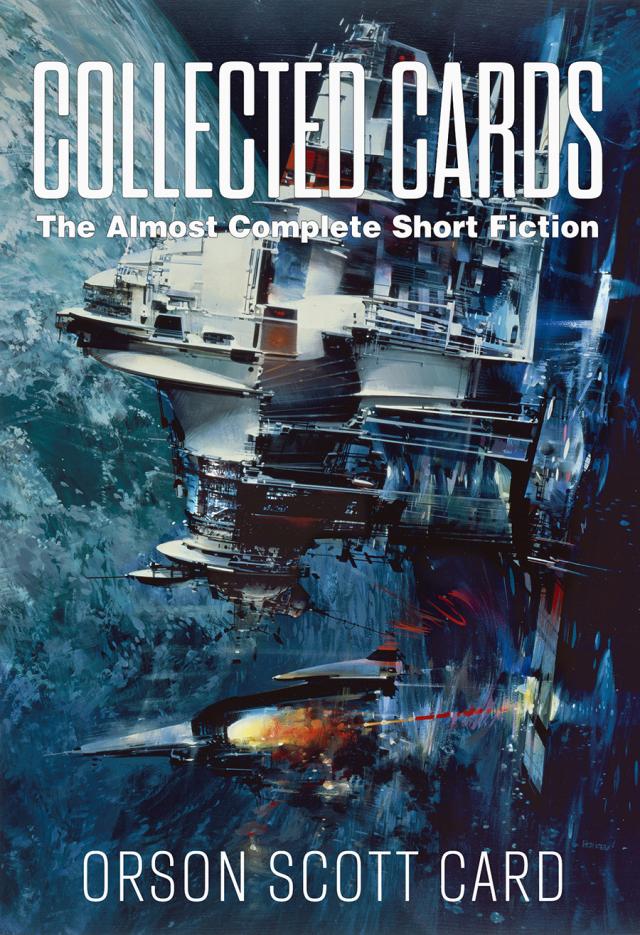
Collected Cards: The Almost Complete Short Fiction,
p.278


“But you saw what I did, didn’t you? I made it soft without getting it hot.”
“You done good, Arthur Stuart. There’s no denying it. You’re a maker now.”
“Not much of one.”
“Whenever you got two makers, one’s going to be more of a maker than the other. But lessen that one starts gettin’ uppity, it’s good to remember that there’s always a third one who’s better than both of them.”
“Who’s better than you?” asked Arthur Stuart.
“You,” said Alvin. “Because I’ll take an ounce of compassion over a pound of tricks any day. Now go to sleep.”
Only then did Arthur let himself feel how very, very tired he was. Whatever had kept him awake before, it was gone now. He barely made it to his cot before he fell asleep.
Oh, there was a hullabaloo in the morning. Suspicions flew every which way. Some folks thought it was the boys from the raft, because why else would the slaves have left their cargo behind? Until somebody pointed out that with the cargo still on the raft, there wouldn’t have been room for all the runaways.
Then suspicion fell on the guard who had slept, but most folks knew that was wrong, because if he had done it then why didn’t he run off, instead of lying there asleep on the deck till a crewman noticed the slaves was gone and raised the alarm?
Only now, when they were gone, did the ownership of the slaves become clear. Alvin had figured Mr. Travis to have a hand in it, but the man most livid at their loss was Captain Howard hisself. That was a surprise. But it explained why the men bound for Mexico had chosen this boat to make their journey downriver.
To Alvin’s surprise, though, Travis and Howard both kept glancing at him and young Arthur Stuart as if they suspected the truth. Well, he shouldn’t have been surprised, he realized. If Bowie told them what had happened to his knife out on the water, they’d naturally wonder if a man with such power over iron might have been the one to slip the hinge pins out of all the fetters.
Slowly the crowd dispersed. But not Captain Howard, not Travis. And when Alvin and Arthur made as if to go, Howard headed straight for them. “I want to talk to you,” he said, and he didn’t sound friendly.
“What about?” said Alvin.
“That boy of yours,” said Howard. “I saw how he was doing their slops on the morning watch. I saw him talking to them. That made me suspicious, all right, since not one of them spoke English.”
“Pero todos hablaban español,” said Arthur Stuart.
Travis apparently understood him, and looked chagrined. “They all of them spoke Spanish? Lying skunks.”
Oh, right, as if slaves owed you some kind of honesty.
“That’s as good as a confession,” said Captain Howard. “He just admitted he speaks their language and learned things from them that even their master didn’t know.”
Arthur was going to protest, but Alvin put a hand on his shoulder. He did not, however, stop his mouth. “My boy here,” said Alvin, “only just learned to speak Spanish, so naturally he seized on an opportunity to practice. Unless you got some evidence that those fetters was opened by use of a slop bucket, then I think you can safely leave this boy out of it.”
“No, I expect he wasn’t the one who popped them hinge pins,” said Captain Howard. “I expect he was somebody’s spy to tell them blacks about the plan.”
“I didn’t tell nobody no plan,” said Arthur Stuart hotly.
Alvin clamped his grip tighter. No slave would talk to a white man like that, least of all a boat captain.
Then from behind Travis and Howard came another voice. “It’s all right, boy,” said Bowie. “You can tell them. No need to keep it secret any more.”
And with a sinking feeling, Alvin wondered what kind of pyrotechnics he’d have to go through to distract everybody long enough for him and Arthur Stuart to get away.
But Bowie didn’t say at all what Alvin expected. “I got the boy to tell me what he learned from them. They were cooking up some evil Mexica ritual. Something about tearing out somebody’s heart one night when they were pretending to be our guides. A treacherous bunch, and so I decided we’d be better off without them.”
“You decided!” Captain Howard growled. “What right did you have to decide?”
“Safety,” said Bowie. “You put me in charge of the scouts, and that’s what these were supposed to be. But it was a blame fool idea from the start. Why do you think them Mexica left those boys alive instead of taking their beating hearts out of their chests? It was a trap. All along, it was a trap. Well, we didn’t fall into it.”
“Do you know how much they cost?” demanded Captain Howard.
“They didn’t cost you anything,” said Travis.
That reminder took a bit of the dudgeon out of Captain Howard. “It’s the principle of the thing. Just setting them free.”
“But I didn’t,” said Bowie. “I sent them across the river. What do you think will happen to them there—if they make it through the fog?”
There was a bit more grumbling, but some laughter, too, and the matter was closed.
Back in his room, Alvin waited for Bowie to return.
“Why?” he demanded.
“I told you I could keep a secret,” said Bowie. “I watched you and the boy do it, and I have to say, it was worth it to see how you broke their irons without ever laying a hand on them. To think I’d ever see a knack like that. Oh, you’re a maker all right.”
“Then come with me,” said Alvin. “Leave these men behind. Don’t you know the doom that lies over their heads? The Mexica aren’t fools. These are dead men you’re traveling with.”
“Might be so,” said Bowie, “but they need what I can do, and you don’t.”
“I do so,” said Alvin. “Because I don’t know many men in this world can hide their heartfire from me. It’s your knack, isn’t it? To disappear from all men’s sight, when you want to. Because I never saw you watching us.”
“And yet I woke you up just reaching for your poke the other night,” said Bowie with a grin.
“Reaching for it?” said Alvin. “Or putting it back?”
Bowie shrugged.
“I thank you for protecting us and taking the blame on yourself.”
Bowie chuckled. “Not much blame there. Truth is, Travis was getting sick of all the trouble of taking care of them blacks. It was only Howard who was so dead set on having them, and he ain’t even going with us, once he drops us off on the Mexica coast.”
“I could teach you. The way Arthur Stuart’s been learning.”
“I don’t think so,” said Bowie. “It’s like you said. We’re different kind of men.”
“Not so different but what you can’t change iffen you’ve a mind to.”
Bowie only shook his head.
“Well, then, I’ll thank you the only way that’s useful to you,” said Alvin.
Bowie waited. “Well?”
“I just did it,” said Alvin. “I just put it back.”
Bowie reached down to the sheath at his waist. It wasn’t empty. He drew out the knife. There was the blade, plain as day, not a whit changed.
You’d’ve thought Bowie was handling his long-lost baby.
“How’d you get the blade back on it?” he asked. “You never touched it.”
“It was there all along,” said Alvin. “I just kind of spread it out a little.”
“So I couldn’t see it?”
“And so it wouldn’t cut nothing.”
“But now it will?”
“I think you’re bound to die, when you take on them Mexica, Mr. Bowie. But I want you to take some human sacrificers with you on the way.”
“I’ll do that,” said Bowie. “Except for the part about me dying.”
“I hope I’m wrong and you’re right, Mr. Bowie,” said Alvin.
“And I hope you live forever, Alvin Maker,” said the knife-wielding killer.
That morning Alvin and Arthur Stuart left the boat, as did Abe Lincoln and Cuz, and they made their journey down to Nueva Barcelona together, all four of them, swapping impossible stories all the way. But that’s another tale, not this one.
2004
Keeper of Lost Dreams
Orson Scott Card has earned kudos and awards up the wazoo. What may sometimes get lost in all the hoopla surrounding his bestselling novels (Ender’s Game and its sequels, and so forth) is what a fine short-story writer he is.
Witness the following, about one of life’s rejects born with no real dreams of his own but blessed with a very special talent.
Mack Street was not born. He was, in the words of the immortal bard, “from the womb untimely ripped.”
Unfortunately, there was no evil Macbeth that needed slaying by someone who was not “of woman born.” Still, Mack Street always knew that his life had a purpose—perhaps a great one, perhaps a small one, but a purpose all the same. How else could he explain the fact that he was alive at all?
He did not know why his mother decided to abort him, or why she waited so long. Was the abortion a spiteful vengeance when his father left her only a few months before their baby’s due date? Was she merely indecisive, and it took her seven months to make up her mind to get rid of the kid?
And why, when she realized the appalling fact that he was breathing, perhaps even crying those weak mews of a premature baby, did she take him all the way to Baldwin Park, far from the nearest path, and cover him with leaves so that it would take a miracle for someone to find him and keep him alive?
Still, he was found, by a couple of boys in search of a safe place to smoke their first joints. Just before they would have discovered that they had been cheated, and the “weed” was, in fact, merely a weed, a common and slightly nauseating one at that, the smaller boy saw the pile of leaves move, and he pulled them away to reveal a naked baby that looked too small to be real.
The bigger boy insisted that it wasn’t real, or at least wasn’t human. “Everybody knows that baby coyotes look human,” he said.
“You telling me this one gone grow up to be a niggah coyote?” said the smaller boy.
“Come on,” said the bigger boy. “Do the smoke first, then we tell somebody about the baby.”
“If it do us like it do my big brother, we ain’t gone tell nobody nothing for about half a day. This a tiny baby, he gonna die.”
“Little dick like that, he ain’t no niggah,” said the bigger boy, but already he was putting the supposed weed back in the Ziploc bag. “You want to take him somewhere, you do it without old Raymo, I don’t want nobody asking me questions when I got a bag of weed on me.”
“Bag of weed your mama’s black ass,” said the smaller boy. “I bet they rolled up broccoli or something anyway, they ain’t gone give us nothing.”
“Don’t you go talking about my mama’s ass, Ceese.”
Which might have led to an argument, seeing how they were both on edge and a little pissed off at each other, but Ceese picked up the baby and it wiggled and mewed and he thought, Just like a baby kitten, and then he remembered how Raymo once took a baby kitten and stepped on its head just to see it squish. Ceese decided not to stick around, even though the thing with the kitten was a couple of years ago and Raymo had puked his guts out and threw the brain-covered shoe away and got a licking for “losing” it. You just never knew what Raymo was going to do. As his mama often told him at the top of her voice, he wasn’t the kind of guy who ever seemed to “learn his lesson.”
So Ceese took off with the aborted baby and ran all the way home and when he showed it to his mama she screamed and ran next door and woke up Miz Smitcher, who was a night shift nurse, and Miz Smitcher called the emergency room to alert them, and then put Ceese, still holding the baby, in the back seat of her Civic, belted him in, and drove like a crazy woman all the way to the hospital, cussing the whole time about how people ought to have a license to own a uterus.
“People so crazy they won’t let them buy a gun can go right out and make a baby without asking anybody’s permission, and when they get a baby they just throw it away.”
Then Miz Smitcher had a sudden ugly thought and leaned over the seat to glare at Ceese. “That ain’t your baby, is it, boy?”
“Watch the road, dammit!” yelled Ceese, seeing how the big truck in front of them had come to a stop and Miz Smitcher hadn’t.
Miz Smitcher slammed on the brake so fast that Ceese got flung forward till his chin smacked against the seat, and of course the baby had already flown out of his hands, bounced off the back of the front seat, and dropped like a rock onto the floor.
“It’s dead!” screamed Ceese.
“Pick it up, you coprocephalic!” shouted Miz Smitcher.
Ceese leaned over and picked up the baby.
“Is it all right?” said Miz Smitcher.
“Ain’t you gone ask if I’m all right?” demanded Ceese.
“I know you all right, cause you giving me sass and acting stupid! Now what about that baby!”
“He’s breathing,” said Ceese. “You got so many McDonald’s wrappers on the floor, I guess he didn’t hit all that hard.”
“That baby plain determined not to die,” said Miz Smitcher. She flipped off the people behind her, who were honking their brains out. Then she turned on her blinkers like she thought that would make her car an ambulance, caught up with the truck, whipped around it, and kept on going at top speed till she lurched to a stop in the turnaround at the emergency entrance.
Which is how Mack Street happened not to die under a pile of leaves in Baldwin Park, and instead got fostered out to Ceese’s neighborhood.
Well, technically, he was fostered to Miz Smitcher, who took to calling him her little miracle, though more likely she felt guilty about jamming the brakes and throwing him onto the floor and she wanted to make sure if there was some brain damage or something, she’d be able to make it up to him.
But Miz Smitcher worked nights and slept days, and baby Mack slept nights and yelled his lungs out while she was trying to sleep, so it turned out he was sort of fostered to whatever mother was home and willing to take him. Not a one of them took him to heart the way Miz Smitcher did, so mostly he just lay around until somebody remembered to feed him or wipe his butt, except when somebody’s kid decided he’d be a great baby doll or a cool squirmy football and incorporated him into a game.
Some folks said that that was why Miz Smitcher gave him the last name Street—because he was raised by most every family on the block. Wasn’t a soul asked, and so not a soul was told, that Street was Miz Smitcher’s last name before she got married and divorced, and Mack was the nickname of her favorite uncle. Mack didn’t find it out till after she died and he went through her things. She just wasn’t much of a talker or a self-explainer. If she loved you, you’d have to guess it from her cooking and buying clothes for you, cause you’d never know it from a word or a touch.
Still, despite the lack of affection in Mack’s life, he certainly didn’t lack for stimulation. Being fed mud pies or flying through the air as a forward pass is bound to keep a baby somewhat alert. By the time he started school he was pretty much fearless. He’d take any dare, seeing as how there was nothing he could be asked to eat or do that he hadn’t already eaten or done worse. “There’s an angel watching over that boy,” said Miz Smitcher, when somebody told her of another of the crazy things Mack did.
Dare-taking was what he did to win a place, however strange it was, among the kids at school. It wasn’t where he lived.
For Mack, the real excitement in his life came in dreams. It wasn’t till he was seven years old that he first found out that other people only dreamed when they were asleep. For Mack, dreams had a way of popping up day or night. It was the reason the other kids sometimes saw him slow down in the middle of a game and go sort of slack-jawed, staring off into space. When that happened, kids would just say, “Mack’s gone,” and go off and continue their game without him.
Most dreams he could shrug off and pay no heed to—they weren’t worth missing out on recess time or getting barked at by grumpy teachers in school, the kind who actually expected their lessons to be listened to.
But some dreams captivated him, even though he didn’t understand them.
There was one in particular, it started when Mack was ten. He was in a vehicle—he wasn’t sure it was a car, because a car shouldn’t be able to drive on roads like this. It started out on a dirt road, with ragged-looked trees around, kind of a dry California kind of woods. The road began to sink down while the ground stayed level on both sides, till they were dirt walls or steep hills, and sometimes buttes. And the road began to get rocky, only the rocks were all the size of cobblestones, rounded like river rocks, and they hurtled along—Mack and whoever else was in the vehicle—as if the rocks were pavement.
The rocks glistened black in the sunlight, like they’d been wet recently. The cobbly road started to go up again, steeper and steeper, and then it narrowed suddenly and they were almost jammed in between high cliffs with a thin trickly waterfall coming from the crease where the cliffs joined together.
So they backed out—and here was where Mack knew it wasn’t him driving, because he didn’t know how to back a car. If it was a car.
Backed out and headed down until the canyon was wide enough that they could turn around, and then they rushed along until they found the place where they had gone wrong. When the road reached the lowest point, there was a narrow passage off to the left leading farther down, and now Mack realized that this wasn’t no road, this was a river that just happened to be dry. And the second he thought of that, he heard distant thunder and he knew it was raining up in the high hills and that little trickle of a waterfall was about to become a torrent, and there’d be water coming down the other branch of the river, too, and here they were trapped in this narrow canyon barely wide enough for their vehicle, it was going to fill up with water and throw them down the canyon, bashing against the cliffs, rounding them off just like one of the river rocks.