Collected cards the almo.., p.291
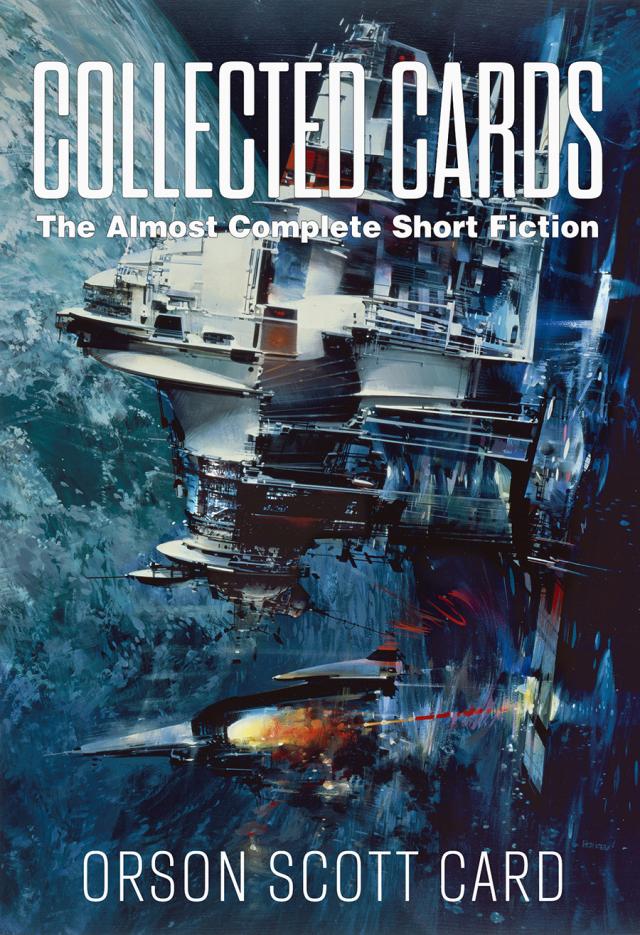
Collected Cards: The Almost Complete Short Fiction,
p.291


“I figured you’d have some blame fool plan like that,” said Alvin.
“And I thought you was going to let them go on as slaves like you didn’t care, but I should’ve knowed better,” said Arthur Stuart.
“I thought so, too,” said Alvin. “But I don’t know if it was having Jim Bowie guess too much, or him trying to kill me with that knife—and no, Arthur Stuart, he did not stop in time, if there’d been a blade in that knife it would have cut right through my throat. Could have been the fear of death made me think that I didn’t want to face God knowing I could have freed twenty-five men, but chose to leave them slaves. Then again, it might have been Mr. Clay’s sermon tonight. Converted me as neat as you please.”
“Converted Mr. Lincoln,” said Arthur Stuart.
“Might be,” said Alvin. “Though he doesn’t look like the sort who ever sought to own another man.”
“I know why you had to do it,” said Arthur Stuart.
“Why is that?”
“Because you knew that if you didn’t, I would.”
Alvin shrugged. “Well, I knew you’d made up your mind to try.”
“I could have done it.”
“Very slowly.”
“It was working, once I realized I only had to go after the hinge.”
“I reckon so,” said Alvin. “But the real reason I chose tonight was that the raft was here. A gift to us, don’t you think? Would have been a shame not to use it.”
“So what happens when they get to the Red man’s shore?”
“Tenskwa Tawa will see to them. I gave them a token to show to the first Red they meet. When they see it, they’ll get escorted straight to the Prophet, wherever he might be. And when he sees it, he’ll give them safe passage. Or maybe let them dwell there.”
“Or maybe he’ll need them, to help him fight the Mexica. If they’re moving north.”
“Maybe.”
“What was the token?” asked Arthur Stuart.
“A couple of these,” said Alvin. He held up a tiny shimmering cube that looked like the clearest ice that had ever been, or maybe glass, but no glass had ever shimmered.
Arthur Stuart took it in his hand and realized what it was. “This is water. A box of water.”
“More like a block of water. I decided to make it today out on the river, when I came so close to having my blood spill into the water. That’s partly how they’re made. A bit of my own self has to go into the water to make it strong as steel. You know the law. ‘The maker is the one . . .’ ”
“The maker is the one who is part of what he makes,” said Arthur Stuart.
“Get to sleep,” said Alvin. “We can’t let nobody know we was up tonight. I can’t keep them all asleep forever.”
“Can I keep this?” said Arthur Stuart. “I think I see something in it.”
“You can see everything in it, if you look long enough,” said Alvin. “But no, you can’t keep it. If you think what I got in my poke is valuable, think what folks would do to have a solid block of water that showed them true visions of things far and near, past and present.”
Arthur reached out and offered the cube to Alvin.
But instead of taking it, Alvin only smiled, and the cube went liquid all at once and dribbled through Arthur Stuart’s fingers. Arthur looked at the puddle on the table, feeling as forlorn as he ever had.
“It’s just water,” said Alvin.
“And a little bit of blood.”
“Naw,” said Alvin. “I took that back.”
“Good night,” said Arthur Stuart. “And . . . thank you for setting them free.”
“Once you set your heart on it, Arthur, what else could I do? I looked at them and thought, somebody loved them once as much as your mama loved you. She died to set you free. I didn’t have to do that. Just inconvenience myself a little. Put myself at risk, but not by much.”
“But you saw what I did, didn’t you? I made it soft without getting it hot.”
“You done good, Arthur Stuart. There’s no denying it. You’re a maker now.”
“Not much of one.”
“Whenever you got two makers, one’s going to be more of a maker than the other. But lessen that one starts gettin’ uppity, it’s good to remember that there’s always a third one who’s better than both of them.”
“Who’s better than you?” asked Arthur Stuart.
“You,” said Alvin. “Because I’ll take an ounce of compassion over a pound of tricks any day. Now go to sleep.”
Only then did Arthur let himself feel how very, very tired he was. Whatever had kept him awake before, it was gone now. He barely made it to his cot before he fell asleep.
Oh, there was a hullabaloo in the morning. Suspicions flew every which way. Some folks thought it was the boys from the raft, because why else would the slaves have left their cargo behind? Until somebody pointed out that with the cargo still on the raft, there wouldn’t have been room for all the runaways.
Then suspicion fell on the guard who had slept, but most folks knew that was wrong, because if he had done it then why didn’t he run off, instead of lying there asleep on the deck till a crewman noticed the slaves was gone and raised the alarm.
Only now, when they were gone, did the ownership of the slaves become clear. Alvin had figured Mr. Austin to have a hand in it, but the man most livid at their loss was Captain Howard hisself. That was a surprise. But it explained why the men bound for Mexico had chosen this boat to make their journey downriver.
To Alvin’s surprise, though, Austin and Howard both kept glancing at him and young Arthur Stuart as if they suspected the truth. Well, he shouldn’t have been surprised, he realized. If Bowie told them what had happened to his knife out on the water, they’d naturally wonder if a man with such power over iron might have been the one to slip the hinge pins out of all the fetters.
Slowly the crowd dispersed. But not Captain Howard, not Austin. And when Alvin and Arthur made as if to go, Howard headed straight for them. “I want to talk to you,” he said, and he didn’t sound friendly.
“What about?” said Alvin.
“That boy of yours,” said Howard. “I saw how he was doing their slops on the morning watch. I saw him talking to them. That made me suspicious, all right, since not one of them spoke English.”
“Pero todos hablaban espanol,” said Arthur Stuart.
Austin apparently understood him, and looked chagrined. “They all of them spoke Spanish? Lying skunks.”
Oh, right, as if slaves owed you some kind of honesty.
“That’s as good as a confession,” said Captain Howard. “He just admitted he speaks their language and learned things from them that even their master didn’t know.”
Arthur was going to protest, but Alvin put a hand on his shoulder. He did not, however, stop his mouth. “My boy here,” said Alvin, “only just learned to speak Spanish, so naturally he seized on an opportunity to practice. Unless you got some evidence that those fetters was opened by use of a slop bucket, then I think you can safely leave this boy out of it.”
“No, I expect he wasn’t the one who popped them hingepins,” said Captain Howard. “I expect he was somebody’s spy to tell them Blacks about the plan.”
“I didn’t tell nobody no plan,” said Arthur Stuart hotly.
Alvin clamped his grip tighter. No slave would talk to a white man like that, least of all a boat captain.
Then from behind Austin and Howard came another voice. “It’s all right, boy,” said Bowie. “You can tell them. No need to keep it secret any more.”
And with a sinking feeling, Alvin wondered what kind of pyrotechnics he’d have to go through to distract everybody long enough for him and Arthur Stuart to get away.
But Bowie didn’t say at all what Alvin expected. “I got the boy to tell me what he learned from them. They were cooking up some evil Mexica ritual. Something about tearing out somebody’s heart one night when they were pretending to be our guides. A treacherous bunch, and so I decided we’d be better of without them.”
“You decided!” Captain Howard growled. “What right did you have to decide.”
“Safety,” said Bowie. “You put me in charge of the scouts, and that’s what these were supposed to be. But it was a blame fool idea from the start. Why do you think them Mexica left those boys alive instead of taking their beating heart out of their chests? It was a trap. All along, it was a trap. Well, we didn’t fall into it.”
“Do you know how much they cost?” demanded Captain Howard.
“They didn’t cost you anything,” said Austin.
That reminder took a bit of the dudgeon out of Captain Howard. “It’s the principle of the thing. Just setting them free.”
“But I didn’t,” said Bowie. “I sent them across river. What do you think will happen to them there—if they make it through the fog?”
There was a bit more grumbling, but some laughter, too, and the matter was closed.
Back in his room, Alvin waited for Bowie to return.
“Why?” he demanded.
“I told you I could keep a secret,” said Bowie. “I watched you and the boy do it, and I have to say, it was worth it to see how you broke their irons without ever laying a hand on them. To think I’d ever see a knack like that. Oh, you’re a maker all right.”
“Then come with me,” said Alvin. “Leave these men behind. Don’t you know the doom that lies over their heads? The Mexica aren’t fools. These are dead men you’re traveling with.”
“Might be so,” said Bowie, “but they need what I can do, and you don’t.”
“I do so,” said Alvin. “Because I don’t know many men in this world can hide their heartfire from me. It’s your knack, isn’t it? To disappear from all men’s sight, when you want to. Because I never saw you watching us.”
“And yet I woke you up just reaching for your poke the other night,” said Bowie with a grin.
“Reaching for it?” said Alvin. “Or putting it back?”
Bowie shrugged.
“I thank you for protecting us and taking the blame on yourself.”
Bowie chuckled. “Not much blame there. Truth is, Austin was getting sick of all the trouble of taking care of them Blacks. It was only Howard who was so dead set on having them, and he ain’t even going with us, once he drops us off on the Mexica coast.”
“I could teach you. The way Arthur Stuart’s been learning.”
“I don’t think so,” said Bowie. “It’s like you said. We’re different kind of men.”
“Not so different but what you can’t change iffen you’ve a mind to.”
Bowie only shook his head.
“Well, then, I’ll thank you the only way that’s useful to you,” said Alvin.
Bowie waited. “Well?”
“I just did it,” said Alvin. “I just put it back.”
Bowie reached down to the sheath at his waist. It wasn’t empty. He drew out the knife. There was the blade, plain as day, not a whit changed.
You’d’ve thought Bowie was handling his long-lost baby.
“How’d you get the blade back on it?” he asked. “You never touched it.”
“It was there all along,” said Alvin. “I just kind of spread it out a little.”
“So I couldn’t see it?”
“And so it wouldn’t cut nothing.”
“But now it will?”
“I think you’re bound to die, when you take on them Mexica, Mr. Bowie. But I want you to take some human sacrificers with you on the way.”
“I’ll do that,” said Bowie. “Except for the part about me dying.”
“I hope I’m wrong and you’re right, Mr. Bowie,” said Alvin.
“And I hope you live forever, Alvin Maker,” said the knife-wielding killer.
That morning Alvin and Arthur Stuart left the boat, as did Abe Lincoln and Cuz, and they made their journey down to Nueva Barcelona together, all four of them, swapping impossible stories all the way. But that’s another tale, not this one.
Pretty Boy: The Story of Bonzo Madrid
How do you systematically destroy a child with love? It’s not something that any parent aspires to do, yet a surprising number come perilously close to achieving it. Many a child escapes destruction only through his own disbelief in his parents’ worship. If I am a god, these children say, then there are no gods, or such gods as there be are weak and feeble things.
In short, it is their own depressive personalities that save them. They are self-atheists.
You know you have begun badly when you parents name you Bonito—“Pretty Boy.”
Well, perhaps they named you after a species of tuna. But when you are pampered and coddled and adored, you soon become quite sure that the tuna was named after you, and not the other way around.
In the cathedral in Toledo, he was baptized with the name Tomas Benedito Bonito de Madrid y Valencia.
“An alliance between two cities!” his father proclaimed, though everyone knew that to have two cities in your name was a sign of low, not high, pedigree. Only if his ancestors had been lords of those cities would the names have meant anything except that somebody’s ancestors were a butcher from Madrid and an orange picker from Valencia who moved somewhere else and came to be known by their city of origin.
But in truth Bonito’s father, Amaro, did not care for his ancestry, or at least not his specific ancestry. It was enough for him to claim Spain as his family.
“We are a people who were once conquered by Islam, and yet we would not stay conquered,” he would say—often. “Look at other lands that were once more civilized than we. Egypt! Asia Minor! Syria! Phoenicia! The Arabs came with their big black rock god that they pretended was not idolatry, and what happened? The Egyptians became so Muslim that they called themselves Arab and forgot their own language. So did the Syrians! So did the Lebanese! So did ancient Carthage and Lydia and Phrygia, Pontus and Macedonia! They gave up. They converted.” He always said that word as if it were a mouthful of mud.
“But Spain—we retreated up into the Pyrenees. Navarre, Aragon, Leon, Galicia. They could not get us out of the hills. And slowly, year by year, city by city, village by village, orchard by orchard, we won it back. 1492. We drove the last of the Moors out of Spain, we purified the Spanish civilization, and then we went out and conquered a world!”
To goad him, friends would remind him that Columbus was Italian. “Yes, but he had to come to Spain before he accomplished a damn thing! It was Spanish money and Spanish bottoms that floated him west, and we all know it was really Spanish sailors who did the navigation and discovered the new world. It was Spaniards who in their dozens conquered armies that numbered in the millions!”
“So,” the daring ones would say, “so what happened? Why did Spain topple from its place?”
“Spain never toppled. Spain had the tragic misfortune to get captured by foreign kings. A pawn of the miserable Hapsburgs. Austrians! Germans. They spent the blood and treasure of Spain on what? Dynastic wars! Squabbles in the Netherlands. What a waste! We should have been conquering China. China would have been better off speaking Spanish like Peru and Mexico. They’d have an alphabet! They’d eat with forks! They’d pray to the god on the cross!”
“But you don’t pray to the god on the cross.”
“Si, pero yo lo respecto! Yo lo adoro! Es muerto, pero es verdaderamente mi redentor ainda lo mismo!” I respect him, I worship him. He’s dead, but he’s truly my redeemer all the same.
Don’t ever get Amaro de Madrid started on religion. “The people must have their god, or they’ll make gods of whatever you give them. Look at the environmentalists, serving the god Gaia, sacrificing the prosperity of the world on her altar of compost! Cristo is a good god, he makes people peaceful with each other but fierce with their enemies.”
No point in arguing when Amaro had a case to make. For he was a lawyer. No, he was a poet who was licensed and paid as a lawyer. His perorations in court were legendary. People would come to boring court actions, just to hear him—not a lot of people, but most of them other lawyers or idealistic citizens or women held spellbound by his fire and the flood of words that sounded like wisdom and sometimes were. Enough that he was something of a celebrity in Toledo. Enough that his house was always full of people wanting to engage him in conversation.
This was the father at whose knee the pampered Bonito would sit, listening wide-eyed as pilgrims came to this living shrine to the lost religion of Spanish patriotism. Only gradually did Bonito come to realize that his father was not just its prophet, but its sole communicant as well.
Except, of course, Bonito. He was a remarkably bright child, verbal before he was a year old, and Amaro swore that his son understood every word he said before he was eighteen months old.
Not every word, but close enough. Word spread, as it always did, about this infant who listened to his brilliant father and was not merely dazzled, but seemed to understand.
So before Bonito was two years old, they came from the International Fleet to begin their tests. “You would steal my son from me? More importantly, you would steal him from Spain?”
The young officer patiently explained to him that Spain was, in fact, part of the human race, and the whole human race was searching among its children to find the most brilliant military minds to lead the struggle for survival against the formics, that hideous race that had come two generations before and scoured humans out of the way like mildew until great heroes destroyed them. “It was a near thing,” said the officer. “What if your son is the next Mazer Rackham, only you withhold him. Do you think the formics will stop at the border of Spain?”
“We will do as we did before,” said Amaro. “We will hide in our mountain fortresses and then come back to reclaim Earth, city by city, village by village, until—”
But this young officer had studied history and only smiled. “The Moors captured the villages of Spain and ruled over them. The formics would obliterate them; what then will you recapture? Christians remained in Spain for your ancestors to liberate. Will you convert formics to rebel against their hive queen and join your struggle? You might as well try to persuade a man’s hands to rebel against his brain.”