Collected cards the almo.., p.227
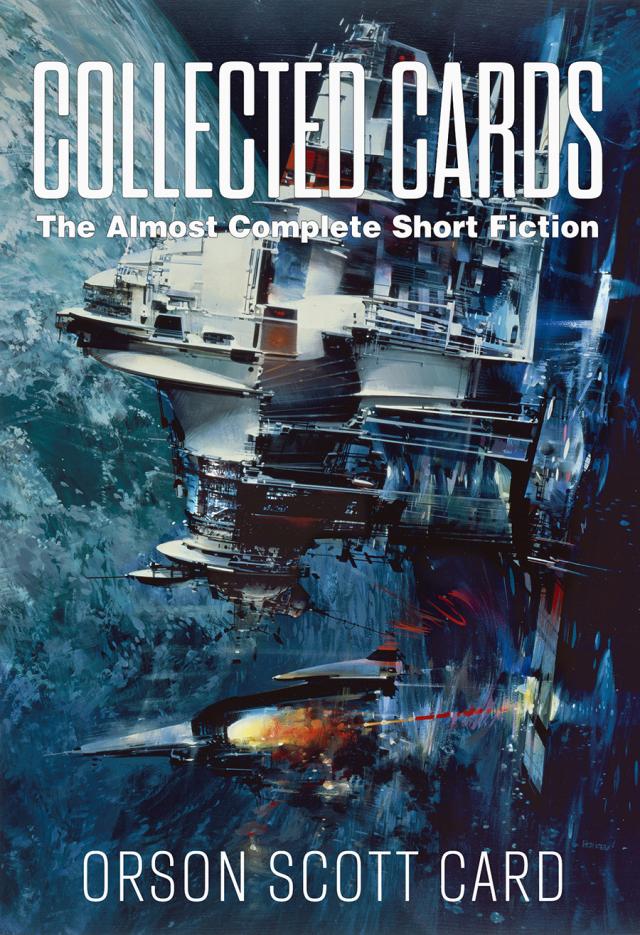
Collected Cards: The Almost Complete Short Fiction,
p.227


On the day that Kemal became sure that his Noah had actually changed the world, he was satisfied. He said little and wrote nothing about his conclusion. This surprised even him, for in all the months and years that he had searched hungrily for Atlantis, and then for Noah, and then for the meaning of Noah’s saga, Kemal had assumed that, like Schliemann, he would publish everything, he would tell the world the great truth that he had found. But to his surprise he discovered that he must not have searched so far for the sake of science, or for fame, or for any other motive than simply to know, for himself, that one person’s life amounted to something. Naog changed the world, but then so did Zawada, and so did Kormo, and so did the servant who skinned his elbows running down the hill, and so did Naog’s father and mother, and . . . and in the end, so did they all. The great forces of history were real, after a fashion. But when you examined them closely, those great forces always came down to the dreams and hungers and judgments of individuals. The choices they made were real. They mattered.
Apparently that was all that Kemal had needed to know. The next day he could think of no reason to go to work. He resigned from his position at the head of the Atlantis project. Let others do the detail work. Kemal was well over thirty now, and he had found the answer to his great question, and it was time to get down to the business of living.
1995
Investment Counselor
THE ENDER SERIES
Ender’s Game (1985)
Speaker for the Dead (1986)
Xenocide (1991)
Children of the Mind (1996)
When I first started writing science fiction, I conceived a series of stories about a family with heritable mental powers, and the first stories I wrote had a rural setting. I got nice rejection letters but no sales. It was Ben Bova at Analog who explained why: They felt like fantasy! This baffled me at first—weren’t Zenna Henderson’s stories of “The People” considered science fiction? Then I realized that the true commercial distinction between science fiction and fantasy is: Fantasy has trees, science fiction has rivets! If I was going to sell to the s-f magazines, I had to write stories with rivets in them!
Back when I was sixteen and had just read Asimov’s Foundation trilogy, I decided I wanted to write an s-f story, too. At the time (1967) the Vietnam War was raging, and my older brother had just finished boot camp, so military things were on my mind. I put a science-fiction spin on the problem of training troops: how would you train soldiers to fight in three-dimensional space? I remembered Nordhoff and Hall’s novel about World War I flying aces and the problem of training pilots to stop looking for enemy aircraft only in the horizontal plane, and realized the problem in null gravity would be greatly compounded by the lack of a clear up and down. Old habits of gravity-based life would have to be trained out of the soldiers. The result of my thought experiment was the battle room, a hundred-meter cube of null-gravity space in which various obstacles could be set up, and in which teams of trainees would do mock battle in space suits that showed where and how badly a soldier had been hit by “enemy” fire.
And that was it. A good idea, I thought, but I had no notion at the time of how to turn it into a story. Who was the hero? Where did I go from there?
Years later, when I determined to write a riveted—and, I hoped, riveting—science-fiction story, I remembered the battleroom concept, and, on the lawn outside the Salt Palace in Salt Lake City, while I waited for a friend who was taking her boss’s children to the circus, I opened my notebook and wrote the first sentence of a story I called “Ender’s Game”: “Remember, the enemy’s gate is down.”
What made the story writable for me was the decision that the trainees in the battle room would be children, in a future world where military aptitude could be discovered at a very early age, and children were taken from their parents to give them training in tactics and strategy while they were still young enough for their minds to be malleable. The story that resulted was my first science-fiction sale, bought by Ben Bova, and it appeared in the August 1977 issue of Analog (the same month that my first non-s-f story, “Gert Fram,” appeared in the Ensign magazine of the LDS Church).
Years later, working on a project called Speaker for the Dead, I found that the story didn’t come alive until I realized that the hero of the story should be Ender Wiggin. In order to set up the novel Speaker, I had to rewrite the original story as a novel; thus the novel Ender’s Game came into existence only so I could write the novel Speaker for the Dead. I never planned a series, and unlike most series the second novel was a completely different kind of science fiction from the first. Instead of a military novel, it was anthropological; and Ender was now an adult with a complicated hidden past.
Then a third project, long on the shelf, came to life when I realized that it would make a good sequel to Speaker—but this time the book would be yet a third kind of science fiction, the novel of metaphysical speculation. Eventually divided into two books, this work became Xenocide and Children of the Mind. I daresay there has been no series of novels starring the same character whose volumes have been more disparate in theme, story, and genre. And yet through all four volumes the character of Ender Wiggin struggled to resolve personal and moral dilemmas that carried over from book to book.
Those dilemmas were resolved at the end of the fourth book. I plan to write more novels in the same universe (one about Ender’s brother, Peter, and another about Bean, a young companion of Ender in the first novel), but the story of Ender himself is finished—except for one small gap.
During the three thousand years between Ender’s Game and Speaker for the Dead, during which Ender journeyed from planet to planet, using lightspeed time dilation to skim through time without living in any decade very long, he somehow acquired a computer-based companion named Jane, who is second only to Ender in importance in the last three books of the series. The story now before you is an account of how they met.
—Orson Scott Card
Andrew Wiggin turned twenty the day he reached the planet Sorelledolce. Or rather, after complicated calculations of how many seconds he had been in flight, and at what percentage of lightspeed, and therefore what amount of subjective time had elapsed for him, he reached the conclusion that he had passed his twentieth birthday just before the end of the voyage.
This was much more relevant to him than the other pertinent fact—that four hundred and some-odd years had passed since the day he was born, back on Earth, back when the human race had not spread beyond the solar system of its birth.
When Valentine emerged from the debarkation chamber—alphabetically she was always after him—Andrew greeted her with the news. “I just figured it out,” he said. “I’m twenty.”
“Good,” she said. “Now you can start paying taxes like the rest of us.”
Ever since the end of the war of Xenocide, Andrew had lived on a trust fund set up by a grateful world to reward the commander of the fleets that saved humanity. Well, strictly speaking, that action was taken at the end of the Third Bugger War, when people still thought of the Buggers as monsters and the children who commanded the fleet as heroes. By the time the name was changed to the War of Xenocide, humanity was no longer grateful, and the last thing any government would have dared to do was authorize a pension trust fund for Ender Wiggin, the perpetrator of the most awful crime in human history.
In fact, if it had become known that such a fund existed, it would have become a public scandal. But the interstellar fleet was slow to convert to the idea that destroying the Buggers had been a bad idea. And so they carefully shielded the trust fund from public view, dispersing it among many mutual funds and as stock in many different companies, with no single authority controlling any significant portion of the money. Effectively, they had made the money disappear, and only Andrew himself and his sister Valentine knew where the money was, or how much of it there was.
One thing, though, was certain: By law, when Andrew reached the subjective age of twenty, the tax-exempt status of his holdings would be revoked. The income would start being reported to the appropriate authorities. Andrew would have to file a tax report either every year or every time he concluded an interstellar voyage of greater than one year in objective time, the taxes to be annualized and interest on the unpaid portion duly handed over.
Andrew was not looking forward to it.
“How does it work with your book royalties?” he asked Valentine.
“The same as anyone,” she answered, “except that not many copies sell, so there isn’t much in the way of taxes to pay.”
Only a few minutes later she had to eat her words, for when they sat down at the rental computers in the starport of Sorelledolce, Valentine discovered that her most recent book, a history of the failed Jung Calvin colonies on the planet Helvetica, had achieved something of a cult status.
“I think I’m rich,” she murmured to Andrew.
“I have no idea whether I’m rich or not,” said Andrew.
“I can’t get the computer to stop listing my holdings.”
The names of companies kept scrolling up and back, the list going on and on.
“I thought they’d just give you a check for whatever was in the bank when you turned twenty,” said Valentine.
“I should be so lucky,” said Andrew. “I can’t sit here and wait for this.”
“You have to,” said Valentine. “You can’t get through customs without proving that you’ve paid your taxes and that you have enough left over to support yourself without becoming a drain on public resources.”
“What if I didn’t have enough money? They send me back?”
“No, they assign you to a work crew and compel you to earn your way free at an extremely unfair rate of pay.”
“How do you know that?”
“I don’t. I’ve just read a lot of history and I know how governments work. If it isn’t that, it’ll be the equivalent. Or they’ll send you back.”
“I can’t be the only person who ever landed and discovered that it would take him a week to find out what his financial situation was,” said Andrew. “I’m going to find somebody.”
“I’ll be here, paying my taxes like a grown-up,” said Valentine. “Like an honest woman.”
“You make me ashamed of myself,” called Andrew blithely as he strode away.
Benedetto took one look at the cocky young man who sat down across the desk from him and sighed. He knew at once that this one would be trouble. A young man of privilege, arriving at a new planet, thinking he could get special favors for himself from the tax man. “What can I do for you?” asked Benedetto—in Italian, even though he was fluent in Starcommon and the law said that all travelers had to be addressed in that language unless another was mutually agreed upon.
Unfazed by the Italian, the young man produced his identification.
“Andrew Wiggin?” asked Benedetto, incredulous.
“Is there a problem?”
“Do you expect me to believe that this identification is real?” He was speaking Starcommon now; the point had been made.
“Shouldn’t I?”
“Andrew Wiggin? Do you think this is such a backwater that we are not educated enough to recognize the name of Ender the Xenocide?”
“Is having the same name a criminal offense?” asked Andrew.
“Having false identification is.”
“If I were using false identification, would it be smart or stupid to use a name like Andrew Wiggin?” he asked.
“Stupid,” Benedetto grudgingly admitted.
“So let’s start from the assumption that I’m smart, but also tormented by having grown up with the name of Ender the Xenocide. Are you going to find me psychologically unfit because of the imbalance these traumas caused me?”
“I’m not customs,” said Benedetto. “I’m taxes.”
“I know. But you seemed preternaturally absorbed with the question of identity, so I thought you were either a spy from customs or a philosopher, and who am I to deny the curiosity of either?”
Benedetto hated the smart-mouthed ones. “What do you want?”
“I find my tax situation is complicated. This is the first time I’ve had to pay taxes—I just came into a trust fund—and I don’t even know what my holdings are. I’d like to have a delay in paying my taxes until I can sort it all out.”
“Denied,” said Benedetto.
“Just like that?”
“Just like that,” said Benedetto.
Andrew sat there for a moment.
“Can I help you with something else?” asked Benedetto.
“Is there any appeal?”
“Yes,” said Benedetto. “But you have to pay your taxes before you can appeal.”
“I intend to pay my taxes,” said Andrew. “It’s just going to take me time to do it, and I thought I’d do a better job of it on my own computer in my own apartment rather than on the public computers here in the starport.”
“Afraid someone will look over your shoulder?” asked Benedetto. “See how much of an allowance Grandmother left you?”
“It would be nice to have more privacy, yes,” said Andrew.
“Permission to leave without payment is denied.”
“All right, then, release my liquid funds to me so I can pay to stay here and work on my taxes.”
“You had your whole flight to do that.”
“My money had always been in a trust fund. I never knew how complicated the holdings were.”
“You realize, of course, that if you keep telling me these things you’ll break my heart and I’ll run from the room crying,” said Benedetto calmly.
The young man sighed. “I’m not sure what you want me to do.”
“Pay your taxes like every other citizen.”
“I have no way to get to my money until I pay my taxes,” said Andrew. “And I have no way to support myself while I figure out my taxes unless you release some funds to me.”
“Makes you wish you had thought of this earlier, doesn’t it?” said Benedetto.
Andrew looked around the office. “It says on that sign that you’ll help me fill out my tax form.”
“Yes.”
“Help.”
“Show me the form.”
Andrew looked at him oddly. “How can I show it to you?”
“Bring it up on the computer here.” Benedetto turned his computer around on his desk, offering the keyboard side of it to Andrew.
Andrew looked at the blanks in the form displayed above the computer, and typed in his name and his tax I.D. number, then his private I.D. code. Benedetto pointedly looked away while he typed in the code, even though his software was recording each keystroke the young man entered. Once he was gone, Benedetto would have full access to all his records and all his funds. The better to assist him with his taxes, of course.
The display began scrolling.
“What did you do?” asked Benedetto. The words appeared at the bottom of the display, as the top of the page slid back and out of the way, rolling into an ever-tighter scroll. Because it wasn’t paging, Benedetto knew that this long list of information was appearing as it was being called up by a single question on the form. He turned the computer around to where he could see it. The list consisted of the names and exchange codes of corporations and mutual funds, along with numbers of shares.
“You see my problem,” said the young man.
The list went on and on. Benedetto reached down and pressed a few keys in combination. The list stopped. “You have,” he said softly, “a large number of holdings.”
“But I didn’t know it,” said Andrew. “I mean, I knew that the trustees had diversified me some time ago, but I had no idea the extent. I just drew an allowance whenever I was on planet, and because it was a tax-free government pension I never had to think any more about it.”
So maybe the kid’s wide-eyed innocence wasn’t an act. Benedetto disliked him a little less. In fact, Benedetto felt the first stirrings of true friendship. This lad was going to make Benedetto a rich man without even knowing it. Benedetto might even retire from the tax service. Just his stock in the last company on the interrupted list, Enzichel Vinicenze, conglomerate with extensive holdings on Sorelledolce, was worth enough for Benedetto to buy a country estate and keep servants for the rest of his life. And the list was only up to the Es.
“Interesting,” said Benedetto.
“How about this?” said the young man. “I only turned twenty in the last year of my voyage. Up to then, my earnings were still tax-exempt and I’m entitled to them without paying taxes. Free up that much of my funds, and then give me a few weeks to get some expert to help me analyze the rest of this and I’ll submit my tax forms then.”
“Excellent idea,” said Benedetto. “Where are those liquid earnings held?”
“Catalonian Exchange Bank,” said Andrew.
“Account number?”
“All you need is to free up any funds held in my name,” said Andrew. “You don’t need the account number.”
Benedetto didn’t press the point. He wouldn’t need to dip into the boy’s petty cash. Not with the mother lode waiting for him to pillage at will before he ever got into a tax attorney’s office. He typed in the necessary information and published the form. He also gave Andrew Wiggin a thirty-day pass, allowing him the freedom of Sorelledolce as long as he logged in daily with the tax service and turned in a full tax form and paid the estimated tax within that thirty-day period, and promised not to leave the planet until his tax form had been evaluated and confirmed.
Standard operating procedure. The young man thanked him—that’s the part Benedetto always liked, when these rich idiots thanked him for lying to them and skimming invisible bribes from their accounts—and then left the office.
As soon as he was gone, Benedetto cleared the display and called up his snitch program to report the young man’s I.D. code. He waited. The snitch program did not come up. He brought up his log of running programs, checked the hidden log, and found that the snitch program wasn’t on the list. Absurd. It was always running. Only now it wasn’t. And in fact it had disappeared from memory.