The complete novels of v.., p.290
The Complete Novels of Victor Hugo,
p.290


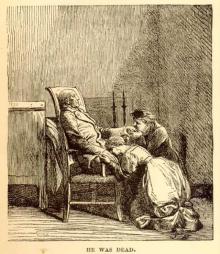
The night was starless and extremely dark. No doubt, in the gloom, some immense angel stood erect with wings outspread, awaiting that soul.
CHAPTER VI—THE GRASS COVERS AND THE RAIN EFFACES
In the cemetery of Pere-Lachaise, in the vicinity of the common grave, far from the elegant quarter of that city of sepulchres, far from all the tombs of fancy which display in the presence of eternity all the hideous fashions of death, in a deserted corner, beside an old wall, beneath a great yew tree over which climbs the wild convolvulus, amid dandelions and mosses, there lies a stone. That stone is no more exempt than others from the leprosy of time, of dampness, of the lichens and from the defilement of the birds. The water turns it green, the air blackens it. It is not near any path, and people are not fond of walking in that direction, because the grass is high and their feet are immediately wet. When there is a little sunshine, the lizards come thither. All around there is a quivering of weeds. In the spring, linnets warble in the trees.
This stone is perfectly plain. In cutting it the only thought was the requirements of the tomb, and no other care was taken than to make the stone long enough and narrow enough to cover a man.
No name is to be read there.
Only, many years ago, a hand wrote upon it in pencil these four lines, which have become gradually illegible beneath the rain and the dust, and which are, to-day, probably effaced:
Il dort. Quoique le sort fut pour lui bien étrange,
Il vivait. Il mourut quand il n'eut plus son ange.
La chose simplement d'elle-même arriva,
Comme la nuit se fait lorsque le jour s'en va.
LETTER TO M. DAELLI
Publisher of the Italian translation of Les Misérables in Milan.
HAUTEVILLE-HOUSE, October 18, 1862.
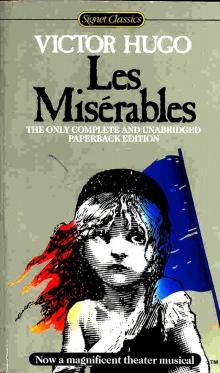
You are right, sir, when you tell me that Les Misérables is written for all nations. I do not know whether it will be read by all, but I wrote it for all. It is addressed to England as well as to Spain, to Italy as well as to France, to Germany as well as to Ireland, to Republics which have slaves as well as to Empires which have serfs. Social problems overstep frontiers. The sores of the human race, those great sores which cover the globe, do not halt at the red or blue lines traced upon the map. In every place where man is ignorant and despairing, in every place where woman is sold for bread, wherever the child suffers for lack of the book which should instruct him and of the hearth which should warm him, the book of Les Misérables knocks at the door and says: "Open to me, I come for you."
At the hour of civilization through which we are now passing, and which is still so sombre, the miserable's name is Man; he is agonizing in all climes, and he is groaning in all languages.
Your Italy is no more exempt from the evil than is our France. Your admirable Italy has all miseries on the face of it. Does not banditism, that raging form of pauperism, inhabit your mountains? Few nations are more deeply eaten by that ulcer of convents which I have endeavored to fathom. In spite of your possessing Rome, Milan, Naples, Palermo, Turin, Florence, Sienna, Pisa, Mantua, Bologna, Ferrara, Genoa, Venice, a heroic history, sublime ruins, magnificent ruins, and superb cities, you are, like ourselves, poor. You are covered with marvels and vermin. Assuredly, the sun of Italy is splendid, but, alas, azure in the sky does not prevent rags on man.
Like us, you have prejudices, superstitions, tyrannies, fanaticisms, blind laws lending assistance to ignorant customs. You taste nothing of the present nor of the future without a flavor of the past being mingled with it. You have a barbarian, the monk, and a savage, the lazzarone. The social question is the same for you as for us. There are a few less deaths from hunger with you, and a few more from fever; your social hygiene is not much better than ours; shadows, which are Protestant in England, are Catholic in Italy; but, under different names, the vescovo is identical with the bishop, and it always means night, and of pretty nearly the same quality. To explain the Bible badly amounts to the same thing as to understand the Gospel badly.
Is it necessary to emphasize this? Must this melancholy parallelism be yet more completely verified? Have you not indigent persons? Glance below. Have you not parasites? Glance up. Does not that hideous balance, whose two scales, pauperism and parasitism, so mournfully preserve their mutual equilibrium, oscillate before you as it does before us? Where is your army of schoolmasters, the only army which civilization acknowledges?
Where are your free and compulsory schools? Does every one know how to read in the land of Dante and of Michael Angelo? Have you made public schools of your barracks? Have you not, like ourselves, an opulent war-budget and a paltry budget of education? Have not you also that passive obedience which is so easily converted into soldierly obedience? military establishment which pushes the regulations to the extreme of firing upon Garibaldi; that is to say, upon the living honor of Italy? Let us subject your social order to examination, let us take it where it stands and as it stands, let us view its flagrant offences, show me the woman and the child. It is by the amount of protection with which these two feeble creatures are surrounded that the degree of civilization is to be measured. Is prostitution less heartrending in Naples than in Paris? What is the amount of truth that springs from your laws, and what amount of justice springs from your tribunals? Do you chance to be so fortunate as to be ignorant of the meaning of those gloomy words: public prosecution, legal infamy, prison, the scaffold, the executioner, the death penalty? Italians, with you as with us, Beccaria is dead and Farinace is alive. And then, let us scrutinize your state reasons. Have you a government which comprehends the identity of morality and politics? You have reached the point where you grant amnesty to heroes! Something very similar has been done in France. Stay, let us pass miseries in review, let each one contribute his pile, you are as rich as we. Have you not, like ourselves, two condemnations, religious condemnation pronounced by the priest, and social condemnation decreed by the judge? Oh, great nation of Italy, thou resemblest the great nation of France! Alas! our brothers, you are, like ourselves, Misérables.
From the depths of the gloom wherein you dwell, you do not see much more distinctly than we the radiant and distant portals of Eden. Only, the priests are mistaken. These holy portals are before and not behind us.
I resume. This book, Les Misérables, is no less your mirror than ours. Certain men, certain castes, rise in revolt against this book,—I understand that. Mirrors, those revealers of the truth, are hated; that does not prevent them from being of use.
As for myself, I have written for all, with a profound love for my own country, but without being engrossed by France more than by any other nation. In proportion as I advance in life, I grow more simple, and I become more and more patriotic for humanity.
This is, moreover, the tendency of our age, and the law of radiance of the French Revolution; books must cease to be exclusively French, Italian, German, Spanish, or English, and become European, I say more, human, if they are to correspond to the enlargement of civilization.
Hence a new logic of art, and of certain requirements of composition which modify everything, even the conditions, formerly narrow, of taste and language, which must grow broader like all the rest.
In France, certain critics have reproached me, to my great delight, with having transgressed the bounds of what they call "French taste"; I should be glad if this eulogium were merited.
In short, I am doing what I can, I suffer with the same universal suffering, and I try to assuage it, I possess only the puny forces of a man, and I cry to all: "Help me!"
This, sir, is what your letter prompts me to say; I say it for you and for your country. If I have insisted so strongly, it is because of one phrase in your letter. You write:—
"There are Italians, and they are numerous, who say: 'This book, Les Misérables, is a French book. It does not concern us. Let the French read it as a history, we read it as a romance.'"—Alas! I repeat, whether we be Italians or Frenchmen, misery concerns us all. Ever since history has been written, ever since philosophy has meditated, misery has been the garment of the human race; the moment has at length arrived for tearing off that rag, and for replacing, upon the naked limbs of the Man-People, the sinister fragment of the past with the grand purple robe of the dawn.
If this letter seems to you of service in enlightening some minds and in dissipating some prejudices, you are at liberty to publish it, sir. Accept, I pray you, a renewed assurance of my very distinguished sentiments.
VICTOR HUGO.
TOILERS OF THE SEA
CONTENTS
INTRODUCTION
PREFACE
PART I.—SIEUR CLUBIN
BOOK I
THE HISTORY OF A BAD REPUTATION
I
A WORD WRITTEN ON A WHITE PAGE
II
THE BÛ DE LA RUE
III
FOR YOUR WIFE: WHEN YOU MARRY
IV
AN UNPOPULAR MAN
V
MORE SUSPICIOUS FACTS ABOUT GILLIATT
VI
THE DUTCH SLOOP
VII
A FIT TENANT FOR A HAUNTED HOUSE
VIII
THE GILD-HOLM-'UR SEAT
BOOK II
MESS LETHIERRY
I
A TROUBLED LIFE, BUT A QUIET CONSCIENCE
II
A CERTAIN PREDILECTION
III
THE OLD SEA LANGUAGE
IV
ONE IS VULNERABLE WHERE ONE LOVES
BOOK III
DURANDE AND DÉRUCHETTE
I
PRATTLE AND SMOKE
II
THE OLD STORY OF UTOPIA
III
RANTAINE
IV
CONTINUATION OF THE STORY OF UTOPIA
V
THE DEVIL BOAT
VI
LETHIERRY'S EXALTATION
VII
THE SAME GODFATHER AND THE SAME PATRON SAINT
VIII
"BONNIE DUNDEE"
IX
THE MAN WHO DISCOVERED RANTAINE'S CHARACTER
X
LONG YARNS
XI
MATRIMONIAL PROSPECTS
XII
AN ANOMALY IN THE CHARACTER OF LETHIERRY
XIII
THOUGHTLESSNESS ADDS A GRACE TO BEAUTY
BOOK IV
THE BAGPIPE
I
STREAKS OF FIRE ON THE HORIZON
II
THE UNKNOWN UNFOLDS ITSELF BY DEGREES
III
THE AIR "BONNIE DUNDEE" FINDS AN ECHO ON THE HILL
IV
V
A DESERVED SUCCESS HAS ALWAYS ITS DETRACTORS
VI
THE SLOOP "CASHMERE" SAVES A SHIPWRECKED CREW
VII
HOW AN IDLER HAD THE GOOD FORTUNE TO BE SEEN BY A FISHERMAN
BOOK V
THE REVOLVER
I
CONVERSATIONS AT THE JEAN AUBERGE
II
CLUBIN OBSERVES SOMEONE
III
CLUBIN CARRIES AWAY SOMETHING AND BRINGS BACK NOTHING
IV
PLEINMONT
V
THE BIRDS'-NESTERS
VI
THE JACRESSADE
VII
NOCTURNAL BUYERS AND MYSTERIOUS SELLERS
VIII
A "CANNON" OFF THE RED BALL AND THE BLACK
IX
USEFUL INFORMATION FOR PERSONS WHO EXPECT OR FEAR THE ARRIVAL OF LETTERS FROM BEYOND SEA
BOOK VI
THE DRUNKEN STEERSMAN AND THE SOBER CAPTAIN
I
THE DOUVRES
II
AN UNEXPECTED FLASK OF BRANDY
III
CONVERSATIONS INTERRUPTED
IV
CAPTAIN CLUBIN DISPLAYS ALL HIS GREAT QUALITIES
V
CLUBIN REACHES THE CROWNING-POINT OF GLORY
VI
THE INTERIOR OF AN ABYSS SUDDENLY REVEALED
VII
AN UNEXPECTED DENOUEMENT
BOOK VII
THE DANGER OF OPENING A BOOK AT RANDOM
I
THE PEARL AT THE FOOT OF THE PRECIPICE
II
MUCH ASTONISHMENT ON THE WESTERN COAST
III
A QUOTATION FROM THE BIBLE
PART II.—MALICIOUS GILLIATT
BOOK I
THE ROCK
I
THE PLACE WHICH IS DIFFICULT TO REACH, AND DIFFICULT TO LEAVE
II
A CATALOGUE OF DISASTERS
III
SOUND; BUT NOT SAFE
IV
A PRELIMINARY SURVEY
V
A WORD UPON THE SECRET CO-OPERATIONS OF THE ELEMENTS
VI
A STABLE FOR THE HORSE
VII
A CHAMBER FOR THE VOYAGER
VIII
IMPORTUNÆQUE VOLUCRES
IX
THE ROCK, AND HOW GILLIATT USED IT
X
THE FORGE
XI
DISCOVERY
XII
THE INTERIOR OF AN EDIFICE UNDER THE SEA
XIII
WHAT WAS SEEN THERE; AND WHAT PERCEIVED DIMLY
BOOK II
THE LABOUR
I
THE RESOURCES OF ONE WHO HAS NOTHING
II
WHEREIN SHAKESPEARE AND ÆSCHYLUS MEET
III
GILLIATT'S MASTERPIECE COMES TO THE RESCUE OF THAT OF LETHIERRY
IV
SUB RE
V
SUB UMBRA
VI
GILLIATT PLACES THE SLOOP IN READINESS
VII
SUDDEN DANGER
VIII
MOVEMENT RATHER THAN PROGRESS
IX
A SLIP BETWEEN CUP AND LIP
X
SEA-WARNINGS
XI
A WORD TO THE WISE IS ENOUGH
BOOK III
THE STRUGGLE
I
EXTREMES MEET
II
THE OCEAN WINDS
III
THE NOISES EXPLAINED
IV
TURBA TURMA
V
GILLIATT'S ALTERNATIVES
VI
THE COMBAT
BOOK IV
PITFALLS IN THE WAY
I
HE WHO IS HUNGRY IS NOT ALONE
II
THE MONSTER
III
ANOTHER KIND OF SEA-COMBAT
IV
NOTHING IS HIDDEN, NOTHING LOST
V
THE FATAL DIFFERENCE BETWEEN SIX INCHES AND TWO FEET
VI
DE PROFUNDIS AD ALTUM
VII
THE APPEAL IS HEARD
PART III.—DÉRUCHETTE
BOOK I
NIGHT AND THE MOON
I
THE HARBOUR BELL
II
THE HARBOUR BELL AGAIN
BOOK II
GRATITUDE AND DESPOTISM
I
JOY SURROUNDED BY TORTURES
II
THE LEATHERN TRUNK
BOOK III
THE DEPARTURE OF THE CASHMERE
I
THE HAVELET NEAR THE CHURCH
II
DESPAIR CONFRONTS DESPAIR
III
THE FORETHOUGHT OF SELF-SACRIFICE
IV
FOR YOUR WIFE: WHEN YOU MARRY
V
THE GREAT TOMB
INTRODUCTION
Victor Hugo was thinking much of Æschylus and his Prometheus at the time he conceived the figure of Gilliatt, heroic warrer with the elements. But it is to a creature of the Gothic mind like Byron's Manfred, and not to any earlier, or classic, type of the eternal rebellion against fate or time or circumstance, that Hugo's readers will be tempted to turn for the fellow to his Guernsey hero:
"My joy was in the wilderness—to breathe
The difficult air of the iced mountain's top,
Where the birds dare not build—nor insects wing
Flit o'er the herbless granite; or to plunge
Into the torrent, and to roll along
On the swift whirl of the new-breaking wave
Of river-stream, or ocean, in their flow."
The island of Guernsey was Gilliatt's Alp and sea-solitude, where he, too, had his avalanches waiting to fall "like foam from the round ocean of old Hell." And as Byron figured his own revolt against the bonds in Manfred, so Hugo, being in exile, put himself with lyrical and rhetorical impetuosity into the island marcou and child of destiny that he concocted with "a little sand and a little blood and a deal of fantasy" in the years 1864 and 1865. There is a familiar glimpse of the Hugo household to be had in the first winter of its transference to the Channel Islands, years before Les Travailleurs was written, which betrays the mood from which finally sprang this concrete fable of the man-at-odds. It was the end of November 1852, and a father and his younger son sat in a room of a house of Marine Terrace, Jersey—a plain, unpicturesque house; square, hard in outline, and newly whitewashed,—Methodism, said Hugo, in stones and mortar. Outside its windows the rain fell and the wind blew: the house was like a thing benumbed by the angry noise. The two inmates sat plunged in thought, possibly thinking of the sad significance of these beginnings of winter and of exile which had arrived together. At length the son (François Hugo) asked the father what he meant to do during their exile, which he had already predicted would be long? The father said, "I shall look at the sea." Then came a silence, broken by a question as to what the son would do? To which he replied that he would translate Shakespeare.
Victor Hugo's own study or eulogy of Shakespeare was written as a preamble to his son's translation of the plays. It is not too much to connect the new and ample creative work that followed, including his great novel of Revolution, Les Misérables, and his poems in La Légende des Siècles (first series) with the double artistic stimulus gained from this conditioned solitude and his closer acquaintance with the dramatic mind of that "giant of the great art of the ages," as he termed our English poet in the book already quoted from.
The Shakespeare book is dated from Hauteville House, 1864. Les Travailleurs from the same quarters, March 1866. The Hugos had perforce suddenly left Jersey for Guernsey in 1855, owing to the gibes and flouts of an unlucky revolutionary Jersey journal, L'Homme, at the two governments: Victor Hugo being already a marked man for his pains. The Guernsey house he inhabited for so many years had a spacious study in its upper story, with a large window, free to the sun and to the sea. Here he wrote, tirelessly, tremendously, as his custom was: beginning betimes in the early morning, and writing on till the time for his déjeuner : standing at a tall desk to write in his sea-tower. You must turn to certain of his poems and to the pages of Les Misérables and Les Travailleurs for the mental colours and phantasmagoria of those days and years.