Complete works of robert.., p.229
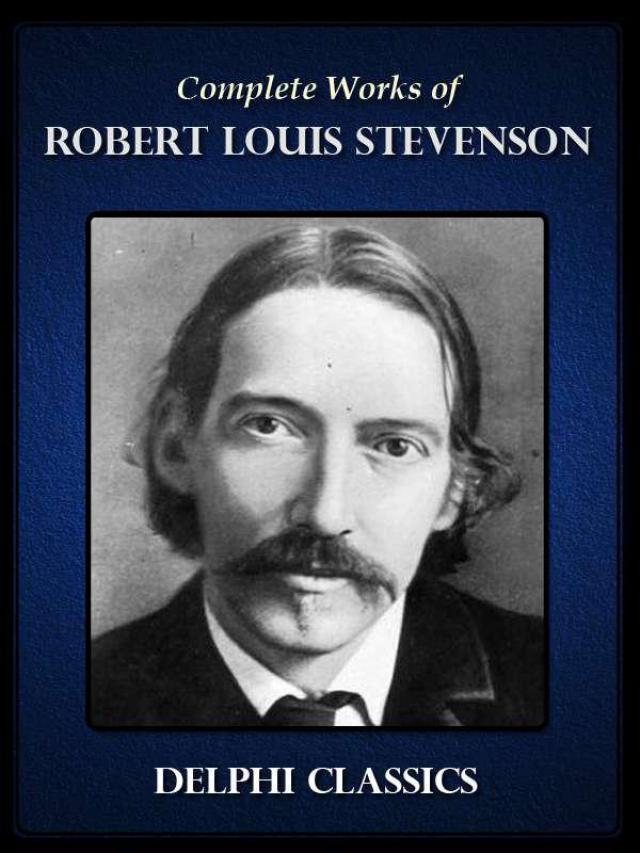
Complete Works of Robert Louis Stevenson (Illustrated),
p.229


Auld, auld Elliotts, clay-cauld Elliotts, dour, bauld Elliotte of auld!”
All the time she sang she looked steadfastly before her, her knees straight, her hands upon her knee, her head cast back and up. The expression was admirable throughout, for had she not learned it from the lips and under the criticism of the author? When it was done, she turned upon Archie a face softly bright, and eyes gently suffused and shining in the twilight, and his heart rose and went out to her with boundless pity and sympathy. His question was answered. She was a human being tuned to a sense of the tragedy of life; there were pathos and music and a great heart in the girl.
He arose instinctively, she also; for she saw she had gained a point, and scored the impression deeper, and she had wit enough left to flee upon a victory. They were but commonplaces that remained to be exchanged, but the low, moved voices in which they passed made them sacred in the memory. In the falling greyness of the evening he watched her figure winding through the morass, saw it turn a last time and wave a hand, and then pass through the Slap; and it seemed to him as if something went along with her out of the deepest of his heart. And something surely had come, and come to dwell there. He had retained from childhood a picture, now half obliterated by the passage of time and the multitude of fresh impressions, of his mother telling him, with the fluttered earnestness of her voice, and often with dropping tears, the tale of the “Praying Weaver,” on the very scene of his brief tragedy and long repose. And now there was a companion piece; and he beheld, and he should behold for ever, Christina perched on the same tomb, in the grey colours of the evening, gracious, dainty, perfect as a flower, and she also singing —
“Of old, unhappy far off things,
And battles long ago,”
of their common ancestors now dead, of their rude wars composed, their weapons buried with them, and of these strange changelings, their descendants, who lingered a little in their places, and would soon be gone also, and perhaps sung of by others at the gloaming hour. By one of the unconscious arts of tenderness the two women were enshrined together in his memory. Tears, in that hour of sensibility, came into his eyes indifferently at the thought of either; and the girl, from being something merely bright and shapely, was caught up into the zone of things serious as life and death and his dead mother. So that in all ways and on either side, Fate played his game artfully with this poor pair of children. The generations were prepared, the pangs were made ready, before the curtain rose on the dark drama.
In the same moment of time that she disappeared from Archie, there opened before Kirstie’s eyes the cup-like hollow in which the farm lay. She saw, some five hundred feet below her, the house making itself bright with candles, and this was a broad hint to her to hurry. For they were only kindled on a Sabbath night with a view to that family worship which rounded in the incomparable tedium of the day and brought on the relaxation of supper. Already she knew that Robert must be within-sides at the head of the table, “waling the portions”; for it was Robert in his quality of family priest and judge, not the gifted Gilbert, who officiated. She made good time accordingly down the steep ascent, and came up to the door panting as the three younger brothers, all roused at last from slumber, stood together in the cool and the dark of the evening with a fry of nephews and nieces about them, chatting and awaiting the expected signal. She stood back; she had no mind to direct attention to her late arrival or to her labouring breath.
“Kirstie, ye have shaved it this time, my lass?” said Clem. “Whaur were ye?”
“O, just taking a dander by mysel’,” said Kirstie.
And the talk continued on the subject of the American War, without further reference to the truant who stood by them in the covert of the dusk, thrilling with happiness and the sense of guilt.
The signal was given, and the brothers began to go in one after another, amid the jostle and throng of Hob’s children.
Only Dandie, waiting till the last, caught Kirstie by the arm. “When did ye begin to dander in pink hosen, Mistress Elliott?” he whispered slyly.
She looked down; she was one blush. “I maun have forgotten to change them,” said she; and went into prayers in her turn with a troubled mind, between anxiety as to whether Dand should have observed her yellow stockings at church, and should thus detect her in a palpable falsehood, and shame that she had already made good his prophecy. She remembered the words of it, how it was to be when she had gotten a jo, and that that would be for good and evil. “Will I have gotten my jo now?” she thought with a secret rapture.
And all through prayers, where it was her principal business to conceal the pink stockings from the eyes of the indifferent Mrs. Hob — and all through supper, as she made a feint of eating and sat at the table radiant and constrained — and again when she had left them and come into her chamber, and was alone with her sleeping niece, and could at last lay aside the armour of society — the same words sounded within her, the same profound note of happiness, of a world all changed and renewed, of a day that had been passed in Paradise, and of a night that was to be heaven opened. All night she seemed to be conveyed smoothly upon a shallow stream of sleep and waking, and through the bowers of Beulah; all night she cherished to her heart that exquisite hope; and if, towards morning, she forgot it a while in a more profound unconsciousness, it was to catch again the rainbow thought with her first moment of awaking.
CHAPTER VII — ENTER MEPHISTOPHELES
Two days later a gig from Crossmichael deposited Frank Innes at the doors of Hermiston. Once in a way, during the past winter, Archie, in some acute phase of boredom, had written him a letter. It had contained something in the nature of an invitation or a reference to an invitation — precisely what, neither of them now remembered. When Innes had received it, there had been nothing further from his mind than to bury himself in the moors with Archie; but not even the most acute political heads are guided through the steps of life with unerring directness. That would require a gift of prophecy which has been denied to man. For instance, who could have imagined that, not a month after he had received the letter, and turned it into mockery, and put off answering it, and in the end lost it, misfortunes of a gloomy cast should begin to thicken over Frank’s career? His case may be briefly stated. His father, a small Morayshire laird with a large family, became recalcitrant and cut off the supplies; he had fitted himself out with the beginnings of quite a good law library, which, upon some sudden losses on the turf, he had been obliged to sell before they were paid for; and his bookseller, hearing some rumour of the event, took out a warrant for his arrest. Innes had early word of it, and was able to take precautions. In this immediate welter of his affairs, with an unpleasant charge hanging over him, he had judged it the part of prudence to be off instantly, had written a fervid letter to his father at Inverauld, and put himself in the coach for Crossmichael. Any port in a storm! He was manfully turning his back on the Parliament House and its gay babble, on porter and oysters, the race-course and the ring; and manfully prepared, until these clouds should have blown by, to share a living grave with Archie Weir at Hermiston.
To do him justice, he was no less surprised to be going than Archie was to see him come; and he carried off his wonder with an infinitely better grace.
“Well, here I am!” said he, as he alighted. “Pylades has come to Orestes at last. By the way, did you get my answer? No? How very provoking! Well, here I am to answer for myself, and that’s better still.”
“I am very glad to see you, of course,” said Archie. “I make you heartily welcome, of course. But you surely have not come to stay, with the Courts still sitting; is that not most unwise?”
“Damn the Courts!” says Frank. “What are the Courts to friendship and a little fishing?”
And so it was agreed that he was to stay, with no term to the visit but the term which he had privily set to it himself — the day, namely, when his father should have come down with the dust, and he should be able to pacify the bookseller. On such vague conditions there began for these two young men (who were not even friends) a life of great familiarity and, as the days drew on, less and less intimacy. They were together at meal times, together o’ nights when the hour had come for whisky-toddy; but it might have been noticed (had there been any one to pay heed) that they were rarely so much together by day. Archie had Hermiston to attend to, multifarious activities in the hills, in which he did not require, and had even refused, Frank’s escort. He would be off sometimes in the morning and leave only a note on the breakfast table to announce the fact; and sometimes, with no notice at all, he would not return for dinner until the hour was long past. Innes groaned under these desertions; it required all his philosophy to sit down to a solitary breakfast with composure, and all his unaffected good-nature to be able to greet Archie with friendliness on the more rare occasions when he came home late for dinner.
“I wonder what on earth he finds to do, Mrs. Elliott?” said he one morning, after he had just read the hasty billet and sat down to table.
“I suppose it will be business, sir,” replied the housekeeper drily, measuring his distance off to him by an indicated curtsy.
“But I can’t imagine what business!” he reiterated.
“I suppose it will be his business,” retorted the austere Kirstie.
He turned to her with that happy brightness that made the charm of his disposition, and broke into a peal of healthy and natural laughter.
“Well played, Mrs. Elliott!” he cried; and the housekeeper’s face relaxed into the shadow of an iron smile. “Well played indeed!” said he. “But you must not be making a stranger of me like that. Why, Archie and I were at the High School together, and we’ve been to college together, and we were going to the Bar together, when — you know! Dear, dear me! what a pity that was! A life spoiled, a fine young fellow as good as buried here in the wilderness with rustics; and all for what? A frolic, silly, if you like, but no more. God, how good your scones are, Mrs. Elliott!”
“They’re no mines, it was the lassie made them,” said Kirstie; “and, saving your presence, there’s little sense in taking the Lord’s name in vain about idle vivers that you fill your kyte wi’.”
“I daresay you’re perfectly right, ma’am,” quoth the imperturbable Frank. “But as I was saying, this is a pitiable business, this about poor Archie; and you and I might do worse than put our heads together, like a couple of sensible people, and bring it to an end. Let me tell you, ma’am, that Archie is really quite a promising young man, and in my opinion he would do well at the Bar. As for his father, no one can deny his ability, and I don’t fancy any one would care to deny that he has the deil’s own temper — ”
“If you’ll excuse me, Mr. Innes, I think the lass is crying on me,” said Kirstie, and flounced from the room.
“The damned, cross-grained, old broomstick!” ejaculated Innes.
In the meantime, Kirstie had escaped into the kitchen, and before her vassal gave vent to her feelings.
“Here, ettercap! Ye’ll have to wait on yon Innes! I canna haud myself in. ‘Puir Erchie!’ I’d ‘puir Erchie’ him, if I had my way! And Hermiston with the deil’s ain temper! God, let him take Hermiston’s scones out of his mouth first. There’s no a hair on ayther o’ the Weirs that hasna mair spunk and dirdum to it than what he has in his hale dwaibly body! Settin’ up his snash to me! Let him gang to the black toon where he’s mebbe wantit — birling in a curricle — wi’ pimatum on his heid — making a mess o’ himsel’ wi’ nesty hizzies — a fair disgrace!” It was impossible to hear without admiration Kirstie’s graduated disgust, as she brought forth, one after another, these somewhat baseless charges. Then she remembered her immediate purpose, and turned again on her fascinated auditor. “Do ye no hear me, tawpie? Do ye no hear what I’m tellin’ ye? Will I have to shoo ye in to him? If I come to attend to ye, mistress!” And the maid fled the kitchen, which had become practically dangerous, to attend on Innes’ wants in the front parlour.
Tantaene irae? Has the reader perceived the reason? Since Frank’s coming there were no more hours of gossip over the supper tray! All his blandishments were in vain; he had started handicapped on the race for Mrs. Elliott’s favour.
But it was a strange thing how misfortune dogged him in his efforts to be genial. I must guard the reader against accepting Kirstie’s epithets as evidence; she was more concerned for their vigour than for their accuracy. Dwaibly, for instance; nothing could be more calumnious. Frank was the very picture of good looks, good humour, and manly youth. He had bright eyes with a sparkle and a dance to them, curly hair, a charming smile, brilliant teeth, an admirable carriage of the head, the look of a gentleman, the address of one accustomed to please at first sight and to improve the impression. And with all these advantages, he failed with every one about Hermiston; with the silent shepherd, with the obsequious grieve, with the groom who was also the ploughman, with the gardener and the gardener’s sister — a pious, down-hearted woman with a shawl over her ears — he failed equally and flatly. They did not like him, and they showed it. The little maid, indeed, was an exception; she admired him devoutly, probably dreamed of him in her private hours; but she was accustomed to play the part of silent auditor to Kirstie’s tirades and silent recipient of Kirstie’s buffets, and she had learned not only to be a very capable girl of her years, but a very secret and prudent one besides. Frank was thus conscious that he had one ally and sympathiser in the midst of that general union of disfavour that surrounded, watched, and waited on him in the house of Hermiston; but he had little comfort or society from that alliance, and the demure little maid (twelve on her last birthday) preserved her own counsel, and tripped on his service, brisk, dumbly responsive, but inexorably unconversational. For the others, they were beyond hope and beyond endurance. Never had a young Apollo been cast among such rustic barbarians. But perhaps the cause of his ill-success lay in one trait which was habitual and unconscious with him, yet diagnostic of the man. It was his practice to approach any one person at the expense of some one else. He offered you an alliance against the some one else; he flattered you by slighting him; you were drawn into a small intrigue against him before you knew how. Wonderful are the virtues of this process generally; but Frank’s mistake was in the choice of the some one else. He was not politic in that; he listened to the voice of irritation. Archie had offended him at first by what he had felt to be rather a dry reception, had offended him since by his frequent absences. He was besides the one figure continually present in Frank’s eye; and it was to his immediate dependants that Frank could offer the snare of his sympathy. Now the truth is that the Weirs, father and son, were surrounded by a posse of strenuous loyalists. Of my lord they were vastly proud. It was a distinction in itself to be one of the vassals of the “Hanging Judge,” and his gross, formidable joviality was far from unpopular in the neighbourhood of his home. For Archie they had, one and all, a sensitive affection and respect which recoiled from a word of belittlement.
Nor was Frank more successful when he went farther afield. To the Four Black Brothers, for instance, he was antipathetic in the highest degree. Hob thought him too light, Gib too profane. Clem, who saw him but for a day or two before he went to Glasgow, wanted to know what the fule’s business was, and whether he meant to stay here all session time! “Yon’s a drone,” he pronounced. As for Dand, it will be enough to describe their first meeting, when Frank had been whipping a river and the rustic celebrity chanced to come along the path.
“I’m told you’re quite a poet,” Frank had said.
“Wha tell’t ye that, mannie?” had been the unconciliating answer.
“O, everybody!” says Frank.
“God! Here’s fame!” said the sardonic poet, and he had passed on his way.
Come to think of it, we have here perhaps a truer explanation of Frank’s failures. Had he met Mr. Sheriff Scott he could have turned a neater compliment, because Mr. Scott would have been a friend worth making. Dand, on the other hand, he did not value sixpence, and he showed it even while he tried to flatter. Condescension is an excellent thing, but it is strange how one-sided the pleasure of it is! He who goes fishing among the Scots peasantry with condescension for a bait will have an empty basket by evening.
In proof of this theory Frank made a great success of it at the Crossmichael Club, to which Archie took him immediately on his arrival; his own last appearance on that scene of gaiety. Frank was made welcome there at once, continued to go regularly, and had attended a meeting (as the members ever after loved to tell) on the evening before his death. Young Hay and young Pringle appeared again. There was another supper at Windiclaws, another dinner at Driffel; and it resulted in Frank being taken to the bosom of the county people as unreservedly as he had been repudiated by the country folk. He occupied Hermiston after the manner of an invader in a conquered capital. He was perpetually issuing from it, as from a base, to toddy parties, fishing parties, and dinner parties, to which Archie was not invited, or to which Archie would not go. It was now that the name of The Recluse became general for the young man. Some say that Innes invented it; Innes, at least, spread it abroad.
“How’s all with your Recluse to-day?” people would ask.
“O, reclusing away!” Innes would declare, with his bright air of saying something witty; and immediately interrupt the general laughter which he had provoked much more by his air than his words, “Mind you, it’s all very well laughing, but I’m not very well pleased. Poor Archie is a good fellow, an excellent fellow, a fellow I always liked. I think it small of him to take his little disgrace so hard, and shut himself up. ‘Grant that it is a ridiculous story, painfully ridiculous,’ I keep telling him. ‘Be a man! Live it down, man!’ But not he. Of course, it’s just solitude, and shame, and all that. But I confess I’m beginning to fear the result. It would be all the pities in the world if a really promising fellow like Weir was to end ill. I’m seriously tempted to write to Lord Hermiston, and put it plainly to him.”