Complete works of robert.., p.800
Complete Works of Robert Louis Stevenson (Illustrated),
p.800
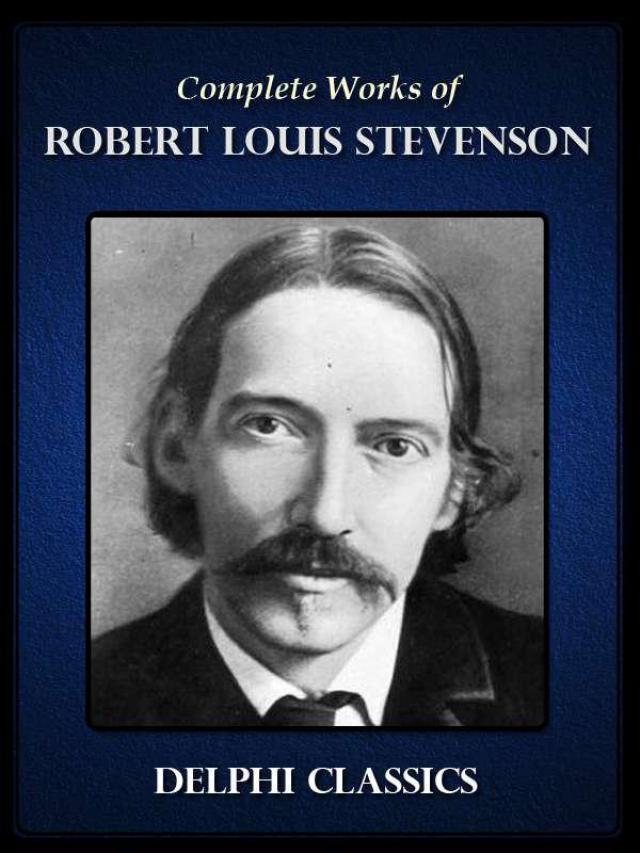


Robert Louis Stevenson.
To Mrs. A. Baker
The next is in answer to a request for permission to print some of the writings of R. L. S. in Braille type for the use of the blind.
December 1893.
DEAR MADAM, — There is no trouble, and I wish I could help instead. As it is, I fear I am only going to put you to trouble and vexation. This Braille writing is a kind of consecration, and I would like if I could to have your copy perfect. The two volumes are to be published as Vols. I. and II. of The Adventures of David Balfour. 1st, Kidnapped; 2nd, Catriona. I am just sending home a corrected Kidnapped for this purpose to Messrs. Cassell, and in order that I may if possible be in time, I send it to you first of all. Please, as soon as you have noted the changes, forward the same to Cassell and Co., La Belle Sauvage Yard, Ludgate Hill.
I am writing to them by this mail to send you Catriona.
You say, dear madam, you are good enough to say, it is “a keen pleasure” to you to bring my book within the reach of the blind.
Conceive then what it is to me! and believe me, sincerely yours,
Robert Louis Stevenson.
I was a barren tree before,
I blew a quenchèd coal,
I could not, on their midnight shore,
The lonely blind console.
A moment, lend your hand, I bring
My sheaf for you to bind,
And you can teach my words to sing
In the darkness of the blind.
R .L. S.
To Henry James
Apia, December, 1893.
MY DEAR HENRY JAMES, — The mail has come upon me like an armed man three days earlier than was expected; and the Lord help me! It is impossible I should answer anybody the way they should be. Your jubilation over Catriona did me good, and still more the subtlety and truth of your remark on the starving of the visual sense in that book. ‘Tis true, and unless I make the greater effort — and am, as a step to that, convinced of its necessity — it will be more true I fear in the future. I hear people talking, and I feel them acting, and that seems to me to be fiction. My two aims may be described as —
1st. War to the adjective.
2nd. Death to the optic nerve.
Admitted we live in an age of the optic nerve in literature. For how many centuries did literature get along without a sign of it? However, I’ll consider your letter.
How exquisite is your character of the critic in Essays in London! I doubt if you have done any single thing so satisfying as a piece of style and of insight — Yours ever,
R. L. S.
To Sidney Colvin
Recounting a scene of gratitude for bounty shown by him to the prisoners in Apia gaol.
[Vailima, December 1893.]
MY DEAR COLVIN, — One page out of my picture book I must give you. Fine burning day; ½ past two P.M. We four begin to rouse up from reparatory slumbers, yawn, and groan, get a cup of tea, and miserably dress: we have had a party the day before, X’mas Day, with all 368 the boys absent but one, and latterly two; we had cooked all day long, a cold dinner, and lo! at two our guests began to arrive, though dinner was not till six; they were sixteen, and fifteen slept the night and breakfasted. Conceive, then, how unwillingly we climb on our horses and start off in the hottest part of the afternoon to ride 4½ miles, attend a native feast in the gaol, and ride four and a half miles back. But there is no help for it. I am a sort of father of the political prisoners, and have charge d’âmes in that riotously absurd establishment, Apia Gaol. The twenty-three (I think it is) chiefs act as under gaolers. The other day they told the Captain of an attempt to escape. One of the lesser political prisoners the other day effected a swift capture, while the Captain was trailing about with the warrant; the man came to see what was wanted; came, too, flanked by the former gaoler; my prisoner offers to show him the dark cell, shoves him in, and locks the door. “Why do you do that?” cries the former gaoler. “A warrant,” says he. Finally, the chiefs actually feed the soldiery who watch them!
The gaol is a wretched little building, containing a little room, and three cells, on each side of a central passage; it is surrounded by a fence of corrugated iron, and shows, over the top of that, only a gable end with the inscription O le Fale Puipui. It is on the edge of the mangrove swamp, and is reached by a sort of causeway of turf. When we drew near, we saw the gates standing open and a prodigious crowd outside — I mean prodigious for Apia, perhaps a hundred and fifty people. The two sentries at the gate stood to arms passively, and there seemed to be a continuous circulation inside and out. The captain came to meet us; our boy, who had been sent ahead was there to take the horses; and we passed inside the court which was full of food, and rang continuously to the voice of the caller of gifts; I had to blush a little later when my own present came, and I heard my one pig and eight miserable pine-apples being 369 counted out like guineas. In the four corners of the yard and along one wall, there are make-shift, dwarfish, Samoan houses or huts, which have been run up since Captain Wurmbrand came to accommodate the chiefs. Before that they were all crammed into the six cells, and locked in for the night, some of them with dysentery. They are wretched constructions enough, but sanctified by the presence of chiefs. We heard a man corrected loudly to-day for saying “Fale” of one of them; “Maota,” roared the highest chief present — ”palace.” About eighteen chiefs, gorgeously arrayed, stood up to greet us, and led us into one of these maotas, where you may be sure we had to crouch, almost to kneel, to enter, and where a row of pretty girls occupied one side to make the ava (kava). The highest chief present was a magnificent man, as high chiefs usually are; I find I cannot describe him; his face is full of shrewdness and authority; his figure like Ajax; his name Auilua. He took the head of the building and put Belle on his right hand. Fanny was called first for the ava (kava). Our names were called in English style, the high-chief wife of Mr. St — (an unpronounceable something); Mrs. Straw, and the like. And when we went into the other house to eat, we found we were seated alternately with chiefs about the — table, I was about to say, but rather floor. Everything was to be done European style with a vengeance! We were the only whites present, except Wurmbrand, and still I had no suspicion of the truth. They began to take off their ulas (necklaces of scarlet seeds) and hang them about our necks; we politely resisted, and were told that the king (who had stopped off their siva) had sent down to the prison a message to the effect that he was to give a dinner to-morrow, and wished their second-hand ulas for it. Some of them were content; others not. There was a ring of anger in the boy’s voice, as he told us we were to wear them past the king’s house. Dinner over, I must say they are moderate eaters at a feast, we returned to the ava house; and then 370 the curtain drew suddenly up upon the set scene. We took our seats, and Auilua began to give me a present, recapitulating each article as he gave it out, with some appropriate comment. He called me several times “their only friend,” said they were all in slavery, had no money, and these things were all made by the hands of their families — nothing bought; he had one phrase, in which I heard his voice rise up to a note of triumph: “This is a present from the poor prisoners to the rich man.” Thirteen pieces of tapa, some of them surprisingly fine, one I think unique; thirty fans of every shape and colour; a kava cup, etc., etc. At first Auilua conducted the business with weighty gravity; but before the end of the thirty fans, his comments began to be humorous. When it came to a little basket, he said: “Here was a little basket for Tusitala to put sixpence in, when he could get hold of one” — with a delicious grimace. I answered as best as I was able through a miserable interpreter; and all the while, as I went on, I heard the crier outside in the court calling my gift of food, which I perceived was to be Gargantuan. I had brought but three boys with me. It was plain that they were wholly overpowered. We proposed to send for our gifts on the morrow; but no, said the interpreter, that would never do; they must go away to-day, Mulinuu must see my porters taking away the gifts, — ”make ‘em jella,” quoth the interpreter. And I began to see the reason of this really splendid gift; one half, gratitude to me — one half, a wipe at the king.
And now, to introduce darker colours, you must know this visit of mine to the gaol was just a little bit risky; we had several causes for anxiety; it might have been put up, to connect with a Tamasese rising. Tusitala and his family would be good hostages. On the other hand, there were the Mulinuu people all about. We could see the anxiety of Captain Wurmbrand, no less anxious to have us go, than he had been to see us come; he was deadly white and plainly had a bad headache, in the noisy scene. 371 Presently, the noise grew uproarious; there was a rush at the gate — a rush in, not a rush out — where the two sentries still stood passive; Auilua leaped from his place (it was then that I got the name of Ajax for him) and the next moment we heard his voice roaring and saw his mighty figure swaying to and fro in the hurly-burly. As the deuce would have it, we could not understand a word of what was going on. It might be nothing more than the ordinary “grab racket” with which a feast commonly concludes; it might be something worse. We made what arrangements we could for my tapa, fans, etc., as well as for my five pigs, my masses of fish, taro, etc., and with great dignity, and ourselves laden with ulas and other decorations, passed between the sentries among the howling mob to our horses. All’s well that ends well. Owing to Fanny and Belle, we had to walk; and, as Lloyd said, “he had at last ridden in a circus.” The whole length of Apia we paced our triumphal progress, past the king’s palace, past the German firm at Sogi — you can follow it on the map — amidst admiring exclamations of “Mawaia” — beautiful — it may be rendered “O my! ain’t they dandy” — until we turned up at last into our road as the dusk deepened into night. It was really exciting. And there is one thing sure: no such feast was ever made for a single family, and no such present ever given to a single white man. It is something to have been the hero of it. And whatever other ingredients there were, undoubtedly gratitude was present. As money value I have actually gained on the transaction!
Your note arrived; little profit, I must say. Scott has already put his nose in, in St. Ives, sir; but his appearance is not yet complete; nothing is in that romance, except the story. I have to announce that I am off work, probably for six months. I must own that I have overworked bitterly — overworked — there, that’s legible. My hand is a thing that was, and in the meanwhile so are my brains. And here, in the very midst, comes a plausible scheme 372 to make Vailima pay, which will perhaps let me into considerable expense just when I don’t want it. You know the vast cynicism of my view of affairs, and how readily and (as some people say) with how much gusto I take the darker view?
Why do you not send me Jerome K. Jerome’s paper, and let me see The Ebb Tide as a serial? It is always very important to see a thing in different presentments. I want every number. Politically we begin the new year with every expectation of a bust in 2 or 3 days, a bust which may spell destruction to Samoa. I have written to Baxter about his proposal.
* * *
The correspondent whose letter I had sent on was a high official at the Foreign Office: the subject, Stevenson and Samoa.
Hemorrhage from the lungs.
Vitrolle’s Mémoires and the “1814” and “1815” of M. Henri Houssaye were sent accordingly.
Ultimately The Ebb Tide.
For a volume of selected Essays, containing the pick of Virginibus Puerisque, Memories and Portraits, and Across the Plains.
The Owl was to be a Breton story of the Revolution; Death in the Pot, a tale of the Sta. Lucia mountains in California; the scene of The Go-Between was laid in the Pacific Islands; of The Sleeper Awakened I know nothing.
Of Island Nights’ Entertainments.
John Addington Symonds.
Across the Plains.
Volume of sonnets by José Maria de Hérédia.
Dr. Fairfax Ross, a distinguished physician of Sydney, and friend of the Stevenson family, who during a visit to England this summer had conveyed to me no very reassuring impression as to the healthfulness of the island life and climate.
W. Hole, R.S.A.: essential for the projected illustrations to Kidnapped and Catriona.
Mr. S. R. Crockett. The words quoted from this gentleman’s dedication were worked by Stevenson into a very moving and metrically original set of verses, addressed to him in acknowledgment (Songs of Travel, xlii.).
Simon Fraser, the Master of Lovat, in Catriona: the spelling of his name.
The bust was exhibited in the New Gallery Summer Exhibition, 1895.
Island Nights’ Entertainments.
The Window in Thrums, with illustrations by W. Hole, R.S.A. Hodder and Stoughton. 1892.
The scheme of the Edinburgh Edition.
XIV
LIFE IN SAMOA — Concluded
FOURTH YEAR AT VAILIMA — THE END
January-December 1894
This new year began for Stevenson with an illness which seemed to leave none of the usual lowering consequences, and for Samoa with fresh rumours of war, which were not realised until the autumn, and then — at least in the shape of serious hostilities — in the district of Atua only and not in his own. On the whole Stevenson’s bodily health and vigour kept at a higher level than during the previous year. But for serious imaginative writing he found himself still unfit, and the sense that his old facility had for the time being failed him caused him much inward misgiving. In his correspondence the misgiving mood was allowed to appear pretty freely; but in personal intercourse his high spirits seemed to his family and visitors as unfailing as ever. Several things happened during the year to give him peculiar pleasure: first, at the beginning of the year, the news of Mr. Baxter’s carefully prepared scheme of the Edinburgh Edition, and of its acceptance by the publishers concerned. On this subject much correspondence naturally passed between him and Mr. Baxter and myself, over and above that which is here published; and finally he resolved to leave all the details of the execution to us. By the early autumn the financial success of the scheme 374 was fully assured and made known to him by cable; but he did not seem altogether to realise the full measure of relief from money anxieties which the assurance was meant to convey to him. Other pleasurable circumstances were the return of Mr. Graham Balfour after a prolonged absence; the visit of a spirited and accomplished young English man of business and of letters, Mr. Sidney Lysaght (see below, p, 388, etc.); and the frequent society of the officers of H.M.S. Curaçoa, with whom he was on terms of particular regard and cordiality. Lastly, he was very deeply touched and gratified by the action of the native political prisoners, towards whom he had shown much thoughtful kindness during their months of detention, in volunteering as a testimony of gratitude after their release to re-make with their own hands the branch road leading to his house: “the Road of Loving Hearts,” as it came to be christened. Soon afterwards, the anniversaries of his own birthday and of the American Thanks-giving feast brought evidences hardly less welcome, after so much contention and annoyance as the island affairs and politics had involved him in, of the honour and affection in which he was held by all that was best in the white community. By each succeeding mail came stronger proofs from home of the manner in which men of letters of the younger generation had come to regard him as a master, an example, and a friend.
But in spite of all these causes of pleasure, his letters showed that his old invincible spirit of inward cheerfulness was beginning not infrequently to give way to moods of depression and overstrained feeling. The importunity of these moods was no doubt due to some physical premonition that his vital powers, so frail from the cradle and always with so cheerful a courage overtaxed, were near exhaustion. 375 During the first months of the year he attempted little writing; in the late spring and early summer his work was chiefly on the annals of his family and on the tale St. Ives. The latter he found uphill work: after the first ten or twelve chapters, which are in his happiest vein, the narrative, as he himself was painfully aware, began to flag. Towards the end of October he gave it up for the time being and turned to a more arduous task, the tragic Weir of Hermiston. On this theme he felt his inspiration return, and during the month of November and the first days of December wrought once more at the full pitch of his powers and in the conscious delight of their exercise. On the third of December, after a morning of happy work and pleasant correspondence, he was seen gazing long and wistfully toward the forest-clad mountain, on a ledge of which he had desired that he should be buried. In the afternoon he brought his morning’s work to his wife, the most exacting of his critics; asked her whether it was not well done; and in her glow of admiring assent found his confirmation and his reward. Nevertheless she could not throw off an oppressive sense of coming calamity. He was reassuring her with gay and laughing talk when the sudden rupture of a blood-vessel in the brain laid him almost in a moment unconscious at her feet; and before two hours were over he had passed away. All the world knows how his body was carried by the loving hands of his native servants to the burial-place of his choice, and rests there with the words of his own requiem engraved on his tomb — the words which we have seen him putting on paper when he was at grips with death fifteen years before in California —
“Home is the sailor, home from sea,
And the hunter home from the hill.”
To Charles Baxter
Mr. Baxter, after much preliminary consideration and inquiry, had matured and submitted to Stevenson the scheme of the Edinburgh edition, to which this letter is his reply. The paper on Treasure Island appeared in the Idler for August 1889, and was afterwards reprinted in the miscellany My First Book (Chatto and Windus, 1894). See Edinburgh edition, Miscellanies, vol. iv. .