Complete works of robert.., p.741
Complete Works of Robert Louis Stevenson (Illustrated),
p.741
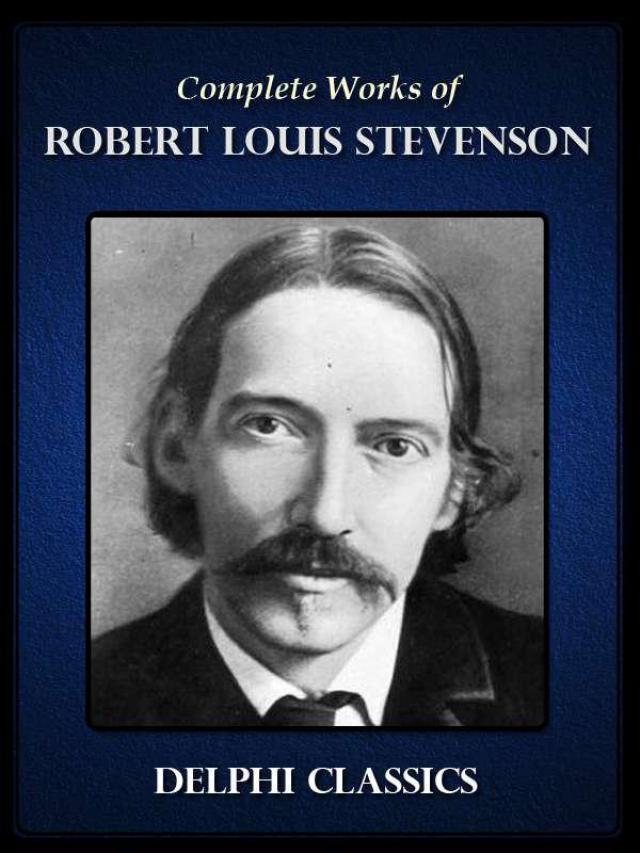


Robert Louis Stevenson.
We expect you, remember that.
To William Archer
Skerryvore, Bournemouth, November 1, 1885.
DEAR MR. ARCHER, — You will see that I had already had a sight of your article and what were my thoughts.
One thing in your letter puzzles me. Are you, too, not in the witness-box? And if you are, why take a wilfully false hypothesis? If you knew I was a chronic invalid, why say that my philosophy was unsuitable to such a case? My call for facts is not so general as yours, but an essential fact should not be put the other way about.
The fact is, consciously or not, you doubt my honesty; you think I am making faces, and at heart disbelieve my utterances. And this I am disposed to think must spring from your not having had enough of pain, sorrow, and trouble in your existence. It is easy to have too much; easy also or possible to have too little; enough is required that a man may appreciate what elements of consolation and joy there are in everything but absolutely overpowering physical pain or disgrace, and how in almost all circumstances the human soul can play a fair part. You fear life, I fancy, on the principle of the hand of little employment. But perhaps my hypothesis is as unlike the truth as the one you chose. Well, if it be so, if you have had trials, sickness, the approach of death, the alienation of friends, poverty at the heels, and have 164 not felt your soul turn round upon these things and spurn them under — you must be very differently made from me, and I earnestly believe from the majority of men. But at least you are in the right to wonder and complain.
To “say all”? Stay here. All at once? That would require a word from the pen of Gargantua. We say each particular thing as it comes up, and “with that sort of emphasis that for the time there seems to be no other.” Words will not otherwise serve us; no, nor even Shakespeare, who could not have put As You Like It and Timon into one without ruinous loss both of emphasis and substance. Is it quite fair then to keep your face so steadily On my most light-hearted works, and then say I recognise no evil? Yet in the paper on Burns, for instance, I show myself alive to some sorts of evil. But then, perhaps, they are not your sorts.
And again: “to say all”? All: yes. Everything: no. The task were endless, the effect nil. But my all, in such a vast field as this of life, is what interests me, what stands out, what takes on itself a presence for my imagination or makes a figure in that little tricky abbreviation which is the best that my reason can conceive. That I must treat, or I shall be fooling with my readers. That, and not the all of some one else.
And here we come to the division: not only do I believe that literature should give joy, but I see a universe, I suppose, eternally different from yours; a solemn, a terrible, but a very joyous and noble universe, where suffering is not at least wantonly inflicted, though it falls with dispassionate partiality, but where it may be and generally is nobly borne; where, above all (this I believe; probably you don’t: I think he may, with cancer), any brave man may make out a life which shall be happy for himself, and, by so being, beneficent to those about him. And if he fails, why should I hear him weeping? I mean if I fail, why should I weep? Why should you hear me? 165 Then to me morals, the conscience, the affections, and the passions are, I will own frankly and sweepingly, so infinitely more important than the other parts of life, that I conceive men rather triflers who become immersed in the latter; and I will always think the man who keeps his lip stiff, and makes “a happy fireside clime,” and carries a pleasant face about to friends and neighbours, infinitely greater (in the abstract) than an atrabilious Shakespeare or a backbiting Kant or Darwin. No offence to any of these gentlemen, two of whom probably (one for certain) came up to my standard.
And now enough said; it were hard if a poor man could not criticise another without having so much ink shed against him. But I shall still regret you should have written on an hypothesis you knew to be untenable, and that you should thus have made your paper, for those who do not know me, essentially unfair. The rich, fox-hunting squire speaks with one voice; the sick man of letters with another. — Yours very truly,
Robert Louis Stevenson
(Prometheus-Heine in minimis).
P.S. — Here I go again. To me, the medicine bottles on my chimney and the blood on my handkerchief are accidents; they do not colour my view of life, as you would know, I think, if you had experience of sickness; they do not exist in my prospect; I would as soon drag them under the eyes of my readers as I would mention a pimple I might chance to have (saving your presence) on my posteriors. What does it prove? what does it change? it has not hurt, it has not changed me in any essential part; and I should think myself a trifler and in bad taste if I introduced the world to these unimportant privacies.
But, again, there is this mountain-range between us — that you do not believe me. It is not flattering, but the fault is probably in my literary art.
To W. H. Low
The “other thing coming out” mentioned below in the last paragraph but one was The Strange Case of Dr. Jekyll and Mr. Hyde.
Skerryvore, Bournemouth, December 26, 1885.
MY DEAR LOW, — Lamia has not yet turned up, but your letter came to me this evening with a scent of the Boulevard Montparnasse that was irresistible. The sand of Lavenue’s crumbled under my heel; and the bouquet of the old Fleury came back to me, and I remembered the day when I found a twenty franc piece under my fetish. Have you that fetish still? and has it brought you luck? I remembered, too, my first sight of you in a frock-coat and a smoking-cap, when we passed the evening at the Café de Medicis; and my last when we sat and talked in the Parc Monceau; and all these things made me feel a little young again, which, to one who has been mostly in bed for a month, was a vivifying change.
Yes, you are lucky to have a bag that holds you comfortably. Mine is a strange contrivance; I don’t die, damme, and I can’t get along on both feet to save my soul; I am a chronic sickist; and my work cripples along between bed and the parlour, between the medicine bottle and the cupping glass. Well, I like my life all the same; and should like it none the worse if I could have another talk with you, though even my talks now are measured out to me by the minute hand like poisons in a minim glass.
A photograph will be taken of my ugly mug and sent to you for ulterior purposes: I have another thing coming out, which I did not put in the way of the Scribners, I can scarce tell how; but I was sick and penniless and rather back on the world, and mismanaged it. I trust they will forgive me.
I am sorry to hear of Mrs. Low’s illness, and glad to hear of her recovery. I will announce the coming Lamia to Bob: he steams away at literature like smoke. I have 167 a beautiful Bob on my walls, and a good Sargent, and a delightful Lemon; and your etching now hangs framed in the dining-room. So the arts surround me. — Yours,
R. L. S.
To Mrs. de Mattos
With this cousin the writer had always been on terms of close affection, and he now dedicated to her The Strange Case of Dr. Jekyll and Mr. Hyde. In the dedication as published only the second verse stands.
[Skerryvore, Bournemouth] January 1st, 1886.
DEAREST KATHARINE, — Here, on a very little book and accompanied with lame verses, I have put your name. Our kindness is now getting well on in years; it must be nearly of age; and it gets more valuable to me with every time I see you. It is not possible to express any sentiment, and it is not necessary to try, at least between us. You know very well that I love you dearly, and that I always will. I only wish the verses were better, but at least you like the story; and it is sent to you by the one that loves you — Jekyll, and not Hyde.
R. L. S.
Ave!
Bells upon the city are ringing in the night;
High above the gardens are the houses full of light;
On the heathy Pentlands is the curlew flying free;
And the broom is blowing bonnie in the north countrie.
We cannae break the bonds that God decreed to bind,
Still we’ll be the children of the heather and the wind;
Far away from home, O, it’s still for you and me
That the broom is blowing bonnie in the north countrie.
R. L. S.
To Alison Cunningham
[Skerryvore, Bournemouth] Jan. 1st, 1886.
MY DEAR KINNICUM, — I am a very bad dog, but not for the first time. Your book, which is very interesting, 168 came duly; and I immediately got a very bad cold indeed, and have been fit for nothing whatever. I am a bit better now, and aye on the mend; so I write to tell you, I thought of you on New Year’s Day; though, I own, it would have been more decent if I had thought in time for you to get my letter then. Well, what can’t be cured must be endured, Mr. Lawrie; and you must be content with what I give. If I wrote all the letters I ought to write, and at the proper time, I should be very good and very happy; but I doubt if I should do anything else.
I suppose you will be in town for the New Year; and I hope your health is pretty good. What you want is diet; but it is as much use to tell you that as it is to tell my father. And I quite admit a diet is a beastly thing. I doubt, however, if it be as bad as not being allowed to speak, which I have tried fully, and do not like. When, at the same time, I was not allowed to read, it passed a joke. But these are troubles of the past, and on this day, at least, it is proper to suppose they won’t return. But we are not put here to enjoy ourselves: it was not God’s purpose; and I am prepared to argue, it is not our sincere wish. As for our deserts, the less said of them the better, for somebody might hear, and nobody cares to be laughed at. A good man is a very noble thing to see, but not to himself; what he seems to God is, fortunately, not our business; that is the domain of faith; and whether on the first of January or the thirty-first of December, faith is a good word to end on.
My dear Cummy, many happy returns to you and my best love. — The worst correspondent in the world,
Robert Louis Stevenson.
To Mr. and Mrs. Thomas Stevenson
[Skerryvore, Bournemouth] January 1st, 1886.
MY DEAR PEOPLE, — Many happy returns of the day to you all; I am fairly well and in good spirits; and much 169 and hopefully occupied with dear Jenkin’s life. The inquiry in every detail, every letter that I read, makes me think of him more nobly. I cannot imagine how I got his friendship; I did not deserve it. I believe the notice will be interesting and useful.
My father’s last letter, owing to the use of a quill pen and the neglect of blotting-paper, was hopelessly illegible. Every one tried, and every one failed to decipher an important word on which the interest of one whole clause (and the letter consisted of two) depended.
I find I can make little more of this; but I’ll spare the blots. — Dear people, ever your loving son,
R. L. S.
I will try again, being a giant refreshed by the house being empty. The presence of people is the great obstacle to letter-writing. I deny that letters should contain news (I mean mine; those of other people should). But mine should contain appropriate sentiments and humorous nonsense, or nonsense without the humour. When the house is empty, the mind is seized with a desire — no, that is too strong — a willingness to pour forth unmitigated rot, which constitutes (in me) the true spirit of correspondence. When I have no remarks to offer (and nobody to offer them to), my pen flies, and you see the remarkable consequence of a page literally covered with words and genuinely devoid of sense. I can always do that, if quite alone, and I like doing it; but I have yet to learn that it is beloved by correspondents. The deuce of it is, that there is no end possible but the end of the paper; and as there is very little left of that — if I cannot stop writing — suppose you give up reading. It would all come to the same thing; and I think we should all be happier....
To W. H. Low
In the following letter R. L. S. accepts the dedication of Mr. Low’s illustrated edition of Keats’s Lamia, and sends him in return 170 the newly published Jekyll and Hyde, and a set of verses afterwards printed in the Century Magazine and Underwoods, and inscribed by Mr. St. Gaudens on his medallion portrait of the author. The terms of the Lamia dedication are as follows: “In testimony of loyal friendship and of a common faith in doubtful tales from Faery-Land, I dedicate to Robert Louis Stevenson my work in this book.” The Latin legend inscribed above the design runs: “Neque est ullum certius amicitiae vinculum quam consensus et societas consiliorum et voluntatum.”
[Skerryvore, Bournemouth] Jan. 2nd, 1886.
MY DEAR LOW, — Lamia has come, and I do not know how to thank you, not only for the beautiful art of the designs, but for the handsome and apt words of the dedication. My favourite is “Bathes unseen,” which is a masterpiece; and the next, “Into the green recessed woods,” is perhaps more remarkable, though it does not take my fancy so imperiously. The night scene at Corinth pleases me also. The second part offers fewer opportunities. I own I should like to see both Isabella and the Eve thus illustrated; and then there’s Hyperion — O, yes, and Endymion! I should like to see the lot: beautiful pictures dance before me by hundreds: I believe Endymion would suit you best. It also is in faery-land; and I see a hundred opportunities, cloudy and flowery glories, things as delicate as the cobweb in the bush; actions, not in themselves of any mighty purport, but made for the pencil: the feast of Pan, Peona’s isle, the “slabbed margin of a well,” the chase of the butterfly, the nymph, Glaucus, Cybele, Sleep on his couch, a farrago of unconnected beauties. But I divagate; and all this sits in the bosom of the publisher.
What is more important, I accept the terms of the dedication with a frank heart, and the terms of your Latin legend fairly. The sight of your pictures has once more awakened me to my right mind; something may come of it; yet one more bold push to get free of this prison-yard of the abominably ugly, where I take my daily exercise with my contemporaries. I do not know, I have a feeling in my bones, a sentiment which may take on the 171 forms of imagination, or may not. If it does, I shall owe it to you; and the thing will thus descend from Keats even if on the wrong side of the blanket. If it can be done in prose — that is the puzzle — I divagate again. Thank you again: you can draw and yet you do not love the ugly: what are you doing in this age? Flee, while it is yet time; they will have your four limbs pinned upon a stable door to scare witches. The ugly, my unhappy friend, is de rigueur: it is the only wear! What a chance you threw away with the serpent! Why had Apollonius no pimples? Heavens, my dear Low, you do not know your business....
I send you herewith a Gothic gnome for your Greek nymph; but the gnome is interesting, I think, and he came out of a deep mine, where he guards the fountain of tears. It is not always the time to rejoice. — Yours ever,
R. L. S.
The gnome’s name is Jekyll & Hyde; I believe you will find he is likewise quite willing to answer to the name of Low or Stevenson.
Same day. — I have copied out on the other sheet some bad verses, which somehow your picture suggested; as a kind of image of things that I pursue and cannot reach, and that you seem — no, not to have reached — but to have come a thought nearer to than I. This is the life we have chosen: well, the choice was mad, but I should make it again.
What occurs to me is this: perhaps they might be printed in (say) the Century for the sake of my name; and if that were possible, they might advertise your book. It might be headed as sent in acknowledgment of your Lamia. Or perhaps it might be introduced by the phrases I have marked above. I dare say they would stick it in: I want no payment, being well paid by Lamia. If they are not, keep them to yourself.
to will h. low
Damned bad lines in return for a beautiful book
Youth now flees on feathered foot.
Faint and fainter sounds the flute;
Rarer songs of Gods.
And still,
Somewhere on the sunny hill,
Or along the winding stream.
Through the willows, flits a dream;
Flits, but shows a smiling face,
Flees, but with so quaint a grace,
None can choose to stay at home,
All must follow — all must roam.
This is unborn beauty: she
Now in air floats high and free,
Takes the sun, and breaks the blue; —
Late, with stooping pinion flew
Raking hedgerow trees, and wet
Her wing in silver streams, and set
Shining foot on temple roof.
Now again she flies aloof,
Coasting mountain clouds, and kissed
By the evening’s amethyst.
In wet wood and miry lane
Still we pound and pant in vain;
Still with earthy foot we chase
Waning pinion, fainting face;
Still, with grey hair, we stumble on
Till — behold! — the vision gone!
Where has fleeting beauty led?
To the doorway of the dead!
[Life is gone, but life was gay:
We have come the primrose way!]
R. L. S.
To Edmund Gosse
Skerryvore, Bournemouth, Jan. 2nd, 1886.
MY DEAR GOSSE, — Thank you for your letter, so interesting to my vanity. There is a review in the St. James’s, which, as it seems to hold somewhat of your opinions, and is besides written with a pen and not a poker, we think may possibly be yours. The Prince has done fairly well in spite of the reviews, which have been bad: he was, as you doubtless saw, well slated in the Saturday; one paper received it as a child’s story; another (picture my agony) described it as a “Gilbert comedy.” It was amusing to see the race between me and Justin M’Carthy: the Milesian has won by a length.
That is the hard part of literature. You aim high, and you take longer over your work, and it will not be so successful as if you had aimed low and rushed it. What the public likes is work (of any kind) a little loosely executed; so long as it is a little wordy, a little slack, a little dim and knotless, the dear public likes it; it should (if possible) be a little dull into the bargain. I know that good work sometimes hits; but, with my hand on my heart, I think it is by an accident. And I know also that good work must succeed at last; but that is not the doing of the public; they are only shamed into silence or affectation. I do not write for the public; I do write for money, a 174 nobler deity; and most of all for myself, not perhaps any more noble, but both more intelligent and nearer home.