Complete works of robert.., p.845
Complete Works of Robert Louis Stevenson (Illustrated),
p.845


It would give a false impression, however, if I neglected to mention the excitement of politics, which in Europe is denied to all but the few diplomatists behind the scenes. In Apia every one knew the chief persons involved, both white and Samoan, and knew all, and much more than all, that was passing between them. As a young Irishman quoted by Stevenson said: “ I never saw so good a place as this Apia; you can be in a new conspiracy every day.” And to Stevenson himself at first the interest was absorbing: “ You don’t know what news is, nor what politics, nor what the life of man, till you see it on so small a scale and with your liberty on the board for stake.”1 But so futile and so harassing were these concerns, that before long he was glad to leave them on one side as far as he could, and devote himself once more to literature. He soon found politics “the dirtiest, the most foolish, and the most random of human employments”: 2 and for the diplomatists — ” You know what a French post-office or railway official is? That is the diplomatic card to the life. Dickens is not in it; caricature fails.” 3
Of the exact amount of influence that Stevenson possessed with the natives, it is hard to speak with any certainty. From what I have said of his stationary life it will be evident that there were many Samoans who had no opportunity of coming into contact with him at all; but in spite of this drawback his prestige and authority were gradually spreading, and his kindness and fidelity in misfortune produced a real effect upon the native mind. His influence was probably as great as that of any white resident in the islands, with the possible exception of two or three who had married native wives. But this, after all, did not amount to very 1 Letters, ii. 276. 2 Ibid., 295. 3 Ibid., 334. much; the Sainoans, in common with other native races who have not been too well treated by the whites, have learned to protect themselves by an armour of reserve and diplomacy, and they seldom accepted any foreigner’s advice unless it recommended to them the course which they were already disposed to follow. As Mr. Whitmee, who knew the islands well, said: “There have been paragraphs in British papers representing Mr. Stevenson as being something like a king in Samoa. 1 believe I have seen it stated that he might have been king of the islands had he wished. That was simple nonsense.” (And, I may add, nonsense which irritated Stevenson more than almost any other idle rumour.) “But he was respected by the natives as a whole, and by many he was beloved.”
His work was given at first entirely to the “letters” which were constructed out of the notes and journals of his voyages, and were themselves in turn the rough material of which he intended to compose his great book on the South Seas. ‘‘ To get this stuff jointed and moving “ was his first aim, but never did he labour to so little purpose. Some seventy “letters” in all were written, and his contract with Messrs. M’Clure was fulfilled; but the strain of production was excessive, and the result satisfied neither the author nor the public. The “bargain was quite unsuitable to his methods,” for one thing;1 for another, the material was unlimited and his knowledge was always increasing. Instead of the entertaining book of travels, full of personal interest and excitement, and abounding in picturesque descrip-
1 Vailima Letters, p. 55. tions of the scenery and manners of the South Seas, for which his readers so eagerly looked, they found a series of disconnected chapters on native beliefs with all or nearly all the sense of adventure left out, and but scanty information as to the details of travel upon which the public so dearly loves to be informed. That the Voyage in the Sunbeam should be a popular work and Stevenson’s South Sea letters a failure is one of the tragedies of literature, but if any one will compare the letters from the Paumotus with the letter to R. A. M. Stevenson,1 he will see that it was due to Stevenson’s deliberate judgment, which in this instance for once was entirely mistaken. The experience he enjoyed most — the visit to Tahiti — remained unwritten; the part which the public awaited perhaps with most interest — the visit to Molokai — was not seriously attempted; and by the time the best letters were reached, those in which he describes his unique experiences in Apemama, his readers had lost heart; and indeed I believe the Tembinok’ chapters never appeared in England at all. Thus he was well advised when in June, 1891, he abandoned the task, and cast ab.out for some fresh work to take in hand.
First, for the sake of change, he began the history of his family, which he had contemplated for some time as the frame in which to include the long-projected memorial of his father. The greater part of his grandfather’s life was ultimately finished, and now forms the Family of Engineers. He did not even begin the account of his uncle Alan, the builder of Skerryvore lighthouse, a man of extraordinary ability, who retired 1 Letters, ii. 135. from practice at an early age; and his father’s life, except for the sketch of his boyhood already quoted, was likewise untouched. For the present little more than Chapter I. was written, and the book was taken up from time to time only as a relaxation from creative work.
The Wrecker, which had been left half finished since a month after his arrival in Samoa, was now taken in hand again on the return of his collaborator, and carried to a conclusion. It was written on the same plan as before, the first drafts of the San Francisco parts being written by Mr. Osbourne, who had no hand at all in the Paris days, or the scene at Barbizon.1 The book perhaps appealed to too many interests to receive its due from any one class of readers. The following letter from the late Lord Pembroke is a testimonial to its accuracy, coming from one of the authors of South Sea Bubbles, who have done more almost than any one to make the Pacific familiar ground to the English reader: —
“I am afraid only a small minority in England can be really capable of appreciating The Wrecker. The majority don’t know enough of the real big World to know how true it is, and they will infinitely prefer that most delightful story, Treasure Island. Perhaps it is a better story than The Wrecker, but to me there is the difference that Treasure Island might have been written by a man who had no knowledge of such matters but what he had got from books and a powerful imagination, while The Wrecker has the indefinite smack of reality, of real knowledge of what men and ships do in 1 Letters, ii. 356. that wild and beautiful world beyond the American continent.”
In the meantime Stevenson’s expeditions into the solitudes of the forest above his home led not only to the set of verses called The Woodman, written, as he says most of his verses were,1 “at the autumnal equinox,” but also to the beginning of the story which at first, as The High Woods of Ulufanua, turned on a supernatural element, and then came down to earth in its final form as The Beach of Falesd. To the style of this admirable story justice has been done by Professor Raleigh,2 doubtless to the entire bewilderment of those people who could see nothing in it but a farrago of slang; but the astonishing merits of the tale and its setting can hardly be appreciated by any but those who have lived in “The Islands.” Stevenson himself is as usual his own best critic, and though he gives it high praise, he says not a word too much: “It is the first realistic South Sea story; I mean with real South Sea character and details of life. Everybody else who has tried, that I have seen, got carried away by the romance, and ended in a kind, of sugar-candy sham epic, and the whole effect was lost — there was no etching, no human grip, consequently no conviction. Now I have got the smell and look of the thing a good deal. You will know more about the South Seas after you have read my little tale than if you had read a library.”3 It is not a picture of any one island, though most of it would 1 Vailima Letters, p. 245.
2 Robert Louis Stevenson, by Walter Raleigh, p. 37. Edward Arnold, 1896.
3 Vailima Letters, p. 88.
have been applicable at the time to any place in Samoa, if Apia had not existed. The darker features of the story, however, as I have said, were taken chiefly from some of the people then living in the Gilberts.
The Shovels of Newton French was the next long work which he planned, a chronicle of seven generations of a family, in which two other stories were to be embodied. In much the same way the chief story intended for a South Sea volume became absorbed in Sophia Scarlet,1 and neither of the projects was ever realised.
The state of affairs in Samoa was becoming serious. As early as August of 1891 Stevenson had written to Mr. Baxter, “We sit and pipe upon a volcano, which is being stoked by bland, incompetent amateurs “; and he now determined that if the constitution should again go into the melting-pot, at least those who recast it should not be obliged to do their work in ignorance of the past. The material he had collected for his “letters” and the subsequent unwritten book was lying ready to hand with the first few chapters even drafted, and he began the Foot-note to History, worked at it under pressure, and had it finished in the following May.
The evidence he brought forward has never been met, the conclusion reached — that the Berlin Treaty was wholly unworkable — has long been recognised by everybody concerned; but for the time the only result achieved was that the edition of the Foot-note to History which Baron Tauchnitz prepared to issue for the Continent of Europe was burned by order of the German Government, and the publishers only escaped from further penalties by payment of a large sum to a charity 117th May, 1892, Vailima Letters, p. 161. selected by the authorities. But in 1893 Chief-justice Cedercrantz and President von Pilsach were superseded, and the Germans, from being the bitter enemies of Stevenson’s friend Mataafa, had by 1899 become his champions and the chief supporters of his claim.
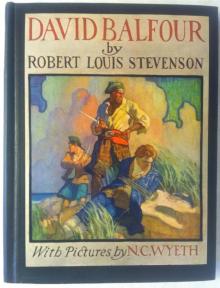
Stevenson now turned again to Scotland for subjects, for the first time since he had finished The Master, and his power of reproducing the Scottish life and atmosphere among alien scenes and under widely different influences was shown once more in a no less remarkable degree. The Foot-note was but partly engaging his attention in January, 1892, when he received fresh material from Mr. Andrew Lang for a story dealing with the private adventures of the Young Chevalier. Its introduction was written in May, but in the meantime Stevenson took up the story of David Balfour at the point where he had left it six years before, and he now carried it on concurrently with the Foot-note, so that in spite of endless interruptions it was actually finished by the end of September. It was the first of his works that was completed while I was at Vailima, and 1 well remember the agitation and stress with which it was brought to a close.. It lends no support to the theory that the continuation of a story is doomed to fail. If Catriona lacks unity of plot and that splendid swiftness of action which marked the best part of Kidnapped, it contains the story of Tod Lapraik, and in none of Stevenson’s books save the last is there such wealth of character. We have David Balfour himself, strengthened and matured; Lord Prestongrange; Stewart the writer and his colleagues; Mrs. Allardyce; Barbara Grant, that most bewildering and charming of women, who rendered even her creator disloyal to Catriona; and the two best Highlandmen in fiction, the incomparable Alan Breck again, and his foil, James Mohr. Of the original of the latter Mr. Andrew Lang says: “ From first to last, James was a valiant, plausible, conscienceless, heartless liar, with a keen feeling for the point of honour, and a truly Celtic passion of affection for his native land. . . . Though unacquainted with the documents that we shall cite, Mr. Stevenson divined James Mohr with the assured certainty of genius.” 1
Catriona is perhaps the best example of the rule to which it was apparently an exception, that all its author’s more considerable stories were done at two breaks. “I have to leave off,” he wrote to Mr. lies in 1887, “and forget a tale for a little; then I can return upon it fresh and with interest revived.” During the composition of Catriona there was no long pause, but it had been “simmering” since 1886, and surely we may see no more than the two volumes of one book in the completed Adventures of David Balfour.
Again there was the question of what should be taken next. It so happened one afternoon at Vailima that I was the only person available, and Louis carried me off to debate the claims of two stories which he then unfolded — Sophia Scarlet, and what afterwards became Weir of Hermiston. Either on that day or about that time I remember very distinctly his saying to me: “There are, so far as I know, three ways, and three ways only, of writing a story. You may take a plot and fit characters to it, or you may take a character and 1 Pickle, the Spy, by Andrew Lang, p. 231, 2nd edition 1897. There is much about James Mohr in the introduction to Rob Roy. choose incidents and situations to develop it, or lastly — you must bear with me while I try to make this clear”
— (here he made a gesture with his hand as if he were trying to shape something and give it outline and form)
— “you may take a certain atmosphere and get action and persons to express and realise it. I ‘11 give you an example — The Merry Men. There I began with the feeling of one of those islands on the west coast of Scotland, and 1 gradually developed the story to express the sentiment with which that coast affected me.”
It was on this last scheme that Sophia Scarlet had been conceived, the atmosphere being that of a large plantation in Tahiti, such as Mr. Stewart’s had been at Atimono twenty years before.1 It may be that the method did not lend itself readily to an effective sketch of the plot; the draft of the beginning of the story seems to me better than I thought the outline at the time. But in any case there could be no hesitation in the choice. Weir of Hermiston was begun, and for three or four days Stevenson was in such a seventh heaven as he has described:2 he worked all day and all evening, writing or talking, debating points, devising characters and incidents, ablaze with enthusiasm, and abounding with energy. No finished story was, or ever will be, so good as Weir of Hermiston shone to us in those days by the light of its author’s first ardour of creation.
Then he settled down, and a few days later read aloud to the family, as was his custom, the first draft of the opening chapters. After that but little progress was made, and in January, 1893, St. Ives was begun as a short story, the visit of the ladies to the prisoners in 1 South Sea Bubbles, 24th August, 1870. 2 See vol. ii. p. 38. Edinburgh being introduced at first as a mere episode without result. Stevenson was then attacked by hemorrhage: silence was imposed, and for several days he continued his work only by dictating to his stepdaughter on his fingers in the deaf-and-dumb alphabet. In this fashion he achieved from five to seven pages of manuscript a day. Before long, however, he left home with his wife and Mrs. Strong upon his last visit to Sydney, all work was stopped, and on his return in six weeks’ time he began a short story for the Illustrated London News. He had lately been reading again Barbey d’Aure- villy, and his mind had turned to Brittany. The new tale dealt with the Chouans in 1793, and was to be called The Owl. But it did not prosper; the writer was not well, and he was anxious about his wife’s health, and when one chapter had been written, he gave up the attempt and took up a half-finished piece of work, which afterward became The Ebb Tide.
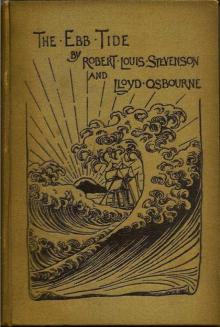
This was a story begun with Mr. Osbourne in Honolulu just after their return from Tahiti, and known at that time as The Pearl Fisher and later as The Schooner Farallone. Mr. Osbourne had drafted the opening chapters, and no work of his had ever earned more praise from his stepfather. But at that moment an area of several acres behind the house was being cleared of forest and planted with pineapples for exportation — a scheme which it was hoped would make the plantation pay, and for the time being this engaged all Mr. Osbourne’s energies. Stevenson, talking to me one day, produced the unfinished draft of the story, which at this time included only the first ten or eleven chapters, and debated what course he should pursue. The fragment was originally intended as a prologue; Attwater was to be blinded with vitriol and then return to England. The remainder of the action of the book was to take place in England, and chiefly in Blooms- bury, where the Herricks lived. Stevenson now reconsidered the whole question, accepted a shorter ending, and grew more and more interested in the character of Attwater, as he worked it out. It is perhaps worth remarking that the picture of the arrival of the schooner at the new island gives better than anything else some of the charm of such cruises as those which delighted its author, who found no experience more exhilarating than “when you sight an island and drop anchor in a new world.”1
The fables begun before he had left England and promised to Messrs. Longmans, he attacked again, and from time to time added to their number. The reference to Odin perhaps is due to his reading of the Sagas, which led him to attempt a tale in the same style, called “The Waif Woman.” But I find no clue to any fresh study of Celtic legends that could have suggested the last and most beautiful fable of all, called “The Song of the Morrow,” which dealt with the king’s daughter of Duntrine, who “had no care for the morrow and no power upon the hour,” and is like nothing else Stevenson ever wrote.
Besides all these and the letters to the Times, as well as his private correspondence, there were endless other schemes, for the most part projected and perhaps not even begun, never certainly brought near to completion. He wrote to Mr. Charles Baxter: “My schemes 1 Letters, ii. 120. are all in the air, and vanish and reappear again like shapes in the clouds.” So likewise to Miss Boodle: “ I have a projected, entirely planned love-story — everybody will think it dreadfully improper, I ‘m afraid — called Cannonmills. And I ‘ve a vague, rosy haze before me — a love-story too, but not improper — called The Rising Sun. It ‘s the name of the wayside inn where the story, or much of the story, runs; but it’s a kind of a pun: it means the stirring up of a boy by falling in love, and how he rises in the estimation of a girl who despised him, though she liked him and had befriended him. I really scarce see beyond their childhood yet, but I want to go beyond, and make each out-top the other by successions: it should be pretty and true if I could do it.”
Neither of these was ever written. There was also a play for home representation, showing the adventures of an English tourist in Samoa; and I can remember two more serious schemes which were likewise without result. In the August before he died, he drew up with Mr. Osbourne the outline of a history, or of a series of the most striking episodes, of the Indian Mutiny, to be written for boys, and sent home for the books necessary for its execution. Another day he sketched the plan of an English grammar, to be illustrated by examples from the English classics. These are but a few, the many are unremembered; but all alike belong, not to the fleet of masterpieces unlaunched, but the larger and more inglorious squadron whose keels were never even laid down.