Complete works of robert.., p.711
Complete Works of Robert Louis Stevenson (Illustrated),
p.711
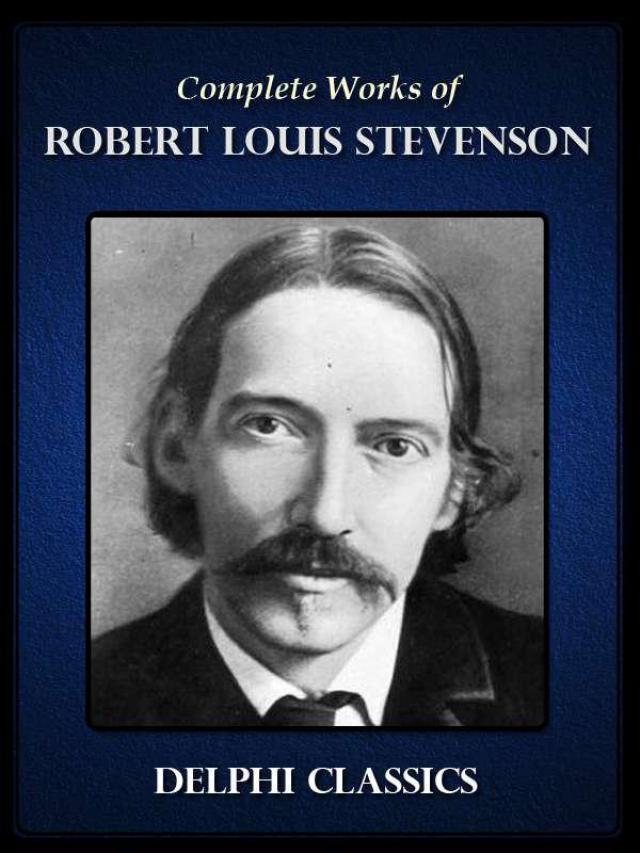


R. L. S.
To Mrs. Sitwell
Part of The Hair Trunk still exists in MS. It contains some tolerable fooling, but is chiefly interesting from the fact that the seat of the proposed Bohemian colony from Cambridge is to be in the Navigator Islands; showing the direction which had been given to Stevenson’s thoughts by the conversation of the New Zealand official, Mr. Seed, two years before.
17 Heriot Row, Edinburgh, May 1877.
... A perfect chorus of repudiation is sounding in my ears; and although you say nothing, I know you must be repudiating me, all the same. Write I cannot — there’s no good mincing matters, a letter frightens me worse than the devil; and I am just as unfit for correspondence as if I had never learned the three R.’s.
Let me give my news quickly before I relapse into my usual idleness. I have a terror lest I should relapse before I get this finished. Courage, R. L. S.! On Leslie Stephen’s advice, I gave up the idea of a book of essays. He said he didn’t imagine I was rich enough for such an amusement; and moreover, whatever was worth publication was worth republication. So the best of those I had already, An Apology for Idlers, is in proof for the Cornhill. I have Villon to do for the same magazine, but God knows when I’ll get it done, for drums, trumpets — I’m engaged upon — trumpets, drums — a novel! “The Hair Trunk; or, the Ideal Commonwealth.” It is a most absurd story of a lot of young Cambridge fellows who are going to found a new society, with no ideas on the subject, and nothing but Bohemian tastes in the place of ideas; and 206 who are — well, I can’t explain about the trunk — it would take too long — but the trunk is the fun of it — everybody steals it; burglary, marine fight, life on desert island on west coast of Scotland, sloops, etc. The first scene where they make their grand schemes and get drunk is supposed to be very funny, by Henley. I really saw him laugh over it until he cried.
Please write to me, although I deserve it so little, and show a Christian spirit. — Ever your faithful friend,
Robert Louis Stevenson.
To Sidney Colvin
[Edinburgh, August 1877.]
MY DEAR COLVIN, — I’m to be whipped away to-morrow to Penzance, where at the post-office a letter will find me glad and grateful. I am well, but somewhat tired out with overwork. I have only been home a fortnight this morning, and I have already written to the tune of forty-five Cornhill pages and upwards. The most of it was only very laborious re-casting and re-modelling, it is true; but it took it out of me famously, all the same.
Temple Bar appears to like my Villon, so I may count on another market there in the future, I hope. At least, I am going to put it to the proof at once, and send another story, The Sire de Malétroit’s Mousetrap: a true novel, in the old sense; all unities preserved moreover, if that’s anything, and I believe with some little merits; not so clever perhaps as the last, but sounder and more natural.
My Villon is out this month; I should so much like to know what you think of it. Stephen has written to me à propos of Idlers, that something more in that vein would be agreeable to his views. From Stephen I count that a devil of a lot.
I am honestly so tired this morning that I hope you will take this for what it’s worth and give me an answer in peace. — Ever yours,
Louis Stevenson.
To Mrs. Sitwell
Neither The Stepfather’s Story nor the St. Michael’s Mounts essay here mentioned ever, to my knowledge, came into being.
[Penzance, August 1877.]
... You will do well to stick to your burn, that is a delightful life you sketch, and a very fountain of health. I wish I could live like that, but, alas! it is just as well I got my “Idlers” written and done with, for I have quite lost all power of resting. I have a goad in my flesh continually, pushing me to work, work, work. I have an essay pretty well through for Stephen; a story, The Sire de Malétroit’s Mousetrap, with which I shall try Temple Bar; another story, in the clouds, The Stepfather’s Story, most pathetic work of a high morality or immorality, according to point of view; and lastly, also in the clouds, or perhaps a little farther away, an essay on The Two St. Michael’s Mounts, historical and picturesque; perhaps if it didn’t come too long, I might throw in the Bass Rock, and call it Three Sea Fortalices, or something of that kind. You see how work keeps bubbling in my mind. Then I shall do another fifteenth century paper this autumn — La Sale and Petit Jehan de Saintré, which is a kind of fifteenth century Sandford and Merton, ending in horrid immoral cynicism, as if the author had got tired of being didactic, and just had a good wallow in the mire to wind up with and indemnify himself for so much restraint.
Cornwall is not much to my taste, being as bleak as the bleakest parts of Scotland, and nothing like so pointed and characteristic. It has a flavour of its own, though, which I may try and catch, if I find the space, in the proposed article. Will o’ the Mill I sent, red hot, to Stephen in a fit of haste, and have not yet had an answer. I am quite prepared for a refusal. But I begin to have more hope in the story line, and that should improve my 208 income anyway. I am glad you liked Villon; some of it was not as good as it ought to be, but on the whole it seems pretty vivid, and the features strongly marked. Vividness and not style is now my line; style is all very well, but vividness is the real line of country; if a thing is meant to be read, it seems just as well to try and make it readable. I am such a dull person now, I cannot keep off my own immortal works. Indeed, they are scarcely ever out of my head. And yet I value them less and less every day. But occupation is the great thing; so that a man should have his life in his own pocket, and never be thrown out of work by anything. I am glad to hear you are better. I must stop — going to Land’s End. — Always your faithful friend,
Robert Louis Stevenson.
To A. Patchett Martin
This correspondent, living at the time in Australia, was, I believe, the first to write and seek Stevenson’s acquaintance from admiration of his work, meaning especially the Cornhill essays of the Virginibus Puerisque series so far as they had yet appeared. The “present” herein referred to is Mr. Martin’s volume called A Sweet Girl Graduate and other Poems (Melbourne, 1876).
DEAR SIR, — It would not be very easy for me to give you any idea of the pleasure I found in your present. People who write for the magazines (probably from a guilty conscience) are apt to suppose their works practically unpublished. It seems unlikely that any one would take the trouble to read a little paper buried among so many others; and reading it, read it with any attention or pleasure. And so, I can assure you, your little book, coming from so far, gave me all the pleasure and encouragement in the world.
I suppose you know and remember Charles Lamb’s essay on distant correspondents? Well, I was somewhat of his way of thinking about my mild productions. I did 209 not indeed imagine they were read, and (I suppose I may say) enjoyed right round upon the other side of the big Football we have the honour to inhabit. And as your present was the first sign to the contrary, I feel I have been very ungrateful in not writing earlier to acknowledge the receipt. I dare say, however, you hate writing letters as much as I can do myself (for if you like my article, I may presume other points of sympathy between us); and on this hypothesis you will be ready to forgive me the delay.
I may mention with regard to the piece of verses called Such is Life that I am not the only one on this side of the Football aforesaid to think it a good and bright piece of work, and recognised a link of sympathy with the poets who “play in hostelries at euchre.” — Believe me, dear sir, yours truly,
R. L. S.
To A. Patchett Martin
17 Heriot Row, Edinburgh [December 1877].
MY DEAR SIR, — I am afraid you must already have condemned me for a very idle fellow truly. Here it is more than two months since I received your letter; I had no fewer than three journals to acknowledge; and never a sign upon my part. If you have seen a Cornhill paper of mine upon idling, you will be inclined to set it all down to that. But you will not be doing me justice. Indeed, I have had a summer so troubled that I have had little leisure and still less inclination to write letters. I was keeping the devil at bay with all my disposable activities; and more than once I thought he had me by the throat. The odd conditions of our acquaintance enable me to say more to you than I would to a person who lived at my elbow. And besides, I am too much pleased and flattered at our correspondence not to go as far as I can to set myself right in your eyes.
In this damnable confusion (I beg pardon) I have lost 210 all my possessions, or near about, and quite lost all my wits. I wish I could lay my hands on the numbers of the Review, for I know I wished to say something on that head more particularly than I can from memory; but where they have escaped to, only time or chance can show. However, I can tell you so far, that I was very much pleased with the article on Bret Harte; it seemed to me just, clear, and to the point. I agreed pretty well with all you said about George Eliot: a high, but, may we not add? — a rather dry lady. Did you — I forget — did you have a kick at the stern works of that melancholy puppy and humbug Daniel Deronda himself? — the Prince of Prigs; the literary abomination of desolation in the way of manhood; a type which is enough to make a man forswear the love of women, if that is how it must be gained.... Hats off all the same, you understand: a woman of genius.
Of your poems I have myself a kindness for Noll and Nell, although I don’t think you have made it as good as you ought: verse five is surely not quite melodious. I confess I like the Sonnet in the last number of the Review — the Sonnet to England.
Please, if you have not, and I don’t suppose you have, already read it, institute a search in all Melbourne for one of the rarest and certainly one of the best of books — Clarissa Harlowe. For any man who takes an interest in the problems of the two sexes, that book is a perfect mine of documents. And it is written, sir, with the pen of an angel. Miss Howe and Lovelace, words cannot tell how good they are! And the scene where Clarissa beards her family, with her fan going all the while; and some of the quarrel scenes between her and Lovelace; and the scene where Colonel Marden goes to Mr. Hall, with Lord M. trying to compose matters, and the Colonel with his eternal “finest woman in the world,” and the inimitable affirmation of Mobray — nothing, nothing could be better! You will bless me when you read it for this recommendation; 211 but, indeed, I can do nothing but recommend Clarissa. I am like that Frenchman of the eighteenth century who discovered Habakkuk, and would give no one peace about that respectable Hebrew. For my part, I never was able to get over his eminently respectable name; Isaiah is the boy, if you must have a prophet, no less. About Clarissa, I meditate a choice work: A Dialogue on Man, Woman, and “Clarissa Harlowe.” It is to be so clever that no array of terms can give you any idea; and very likely that particular array in which I shall finally embody it, less than any other.
Do you know, my dear sir, what I like best in your letter? The egotism for which you thought necessary to apologise. I am a rogue at egotism myself; and to be plain, I have rarely or never liked any man who was not. The first step to discovering the beauties of God’s universe is usually a (perhaps partial) apprehension of such of them as adorn our own characters. When I see a man who does not think pretty well of himself, I always suspect him of being in the right. And besides, if he does not like himself, whom he has seen, how is he ever to like one whom he never can see but in dim and artificial presentments?
I cordially reciprocate your offer of a welcome; it shall be at least a warm one. Are you not my first, my only, admirer — a dear tie? Besides, you are a man of sense, and you treat me as one by writing to me as you do, and that gives me pleasure also. Please continue to let me see your work. I have one or two things coming out in the Cornhill: a story called The Sire de Malétroit’s Door in Temple Bar; and a series of articles on Edinburgh in the Portfolio; but I don’t know if these last fly all the way to Melbourne. — Yours very truly,
Robert Louis Stevenson.
To Sidney Colvin
The Inland Voyage, it must be remembered, at this time just put into the publisher’s hands, was the author’s first book. The “Crane 212 sketch” mentioned in the second of the following notes to me was the well-known frontispiece to that book on which Mr. Walter Crane was then at work. The essay Pan’s Pipes, reprinted in Virginibus Puerisque, was written about this time.
Hôtel des Étrangers, Dieppe, January 1, 1878.
MY DEAR COLVIN, — I am at the Inland Voyage again: have finished another section, and have only two more to execute. But one at least of these will be very long — the longest in the book — being a great digression on French artistic tramps. I only hope Paul may take the thing; I want coin so badly, and besides it would be something done — something put outside of me and off my conscience; and I should not feel such a muff as I do, if once I saw the thing in boards with a ticket on its back. I think I shall frequent circulating libraries a good deal. The Preface shall stand over, as you suggest, until the last, and then, sir, we shall see. This to be read with a big voice.
This is New Year’s Day: let me, my dear Colvin, wish you a very good year, free of all misunderstanding and bereavement, and full of good weather and good work. You know best what you have done for me, and so you will know best how heartily I mean this. — Ever yours,
Robert Louis Stevenson.
To Sidney Colvin
I had had business in Edinburgh, and had stayed with Stevenson’s parents in his absence.
[Paris, January or February 1878.]
MY DEAR COLVIN, — Many thanks for your letter. I was much interested by all the Edinburgh gossip. Most likely I shall arrive in London next week. I think you know all about the Crane sketch; but it should be a river, not a canal, you know, and the look should be “cruel, lewd, and kindly,” all at once. There is more sense in that Greek myth of Pan than in any other that I recollect except the luminous Hebrew one of the Fall: one of the 213 biggest things done. If people would remember that all religions are no more than representations of life, they would find them, as they are, the best representations, licking Shakespeare.
What an inconceivable cheese is Alfred de Musset! His comedies are, to my view, the best work of France this century: a large order. Did you ever read them? They are real, clear, living work. — Ever yours,
R. L. S.
To Thomas Stevenson
Café de la Source, Bd. St. Michel, Paris, 15th Feb. 1878.
MY DEAR FATHER, — A thought has come into my head which I think would interest you. Christianity is among other things, a very wise, noble, and strange doctrine of life. Nothing is so difficult to specify as the position it occupies with regard to asceticism. It is not ascetic. Christ was of all doctors (if you will let me use the word) one of the least ascetic. And yet there is a theory of living in the Gospels which is curiously indefinable, and leans towards asceticism on one side, although it leans away from it on the other. In fact, asceticism is used therein as a means, not as an end. The wisdom of this world consists in making oneself very little in order to avoid many knocks; in preferring others, in order that, even when we lose, we shall find some pleasure in the event; in putting our desires outside of ourselves, in another ship, so to speak, so that, when the worst happens, there will be something left. You see, I speak of it as a doctrine of life, and as a wisdom for this world. People must be themselves, I suppose. I feel every day as if religion had a greater interest for me; but that interest is still centred on the little rough-and-tumble world in which our fortunes are cast for the moment. I cannot transfer my interests, not even my religious interest, to any different sphere.... I have had some sharp lessons 214 and some very acute sufferings in these last seven-and-twenty years — more even than you would guess. I begin to grow an old man; a little sharp, I fear, and a little close and unfriendly; but still I have a good heart, and believe in myself and my fellow-men and the God who made us all.... There are not many sadder people in this world, perhaps, than I. I have my eye on a sickbed; I have written letters to-day that it hurt me to write, and I fear it will hurt others to receive; I am lonely and sick and out of heart. Well, I still hope; I still believe; I still see the good in the inch, and cling to it. It is not much, perhaps, but it is always something.
I find I have wandered a thousand miles from what I meant. It was this: of all passages bearing on Christianity in that form of a worldly wisdom, the most Christian, and so to speak, the key of the whole position, is the Christian doctrine of revenge. And it appears that this came into the world through Paul! There is a fact for you. It was to speak of this that I began this letter; but I have got into deep seas and must go on.
There is a fine text in the Bible, I don’t know where, to the effect that all things work together for good to those who love the Lord. Strange as it may seem to you, everything has been, in one way or the other, bringing me a little nearer to what I think you would like me to be. ‘Tis a strange world, indeed, but there is a manifest God for those who care to look for him.
This is a very solemn letter for my surroundings in this busy café; but I had it on my heart to write it; and, indeed, I was out of the humour for anything lighter. — Ever your affectionate son,
Robert Louis Stevenson.
P.S. — While I am writing gravely, let me say one word more. I have taken a step towards more intimate relations with you. But don’t expect too much of me. Try to take me as I am. This is a rare moment, and I 215 have profited by it; but take it as a rare moment. Usually I hate to speak of what I really feel, to that extent that when I find myself cornered, I have a tendency to say the reverse.
R. L. S.
To Mr. and Mrs. Thomas Stevenson