Complete works of robert.., p.510
Complete Works of Robert Louis Stevenson (Illustrated),
p.510


1
IV
HENRY DAVID THOREAU: HIS CHARACTER AND OPINIONS
I
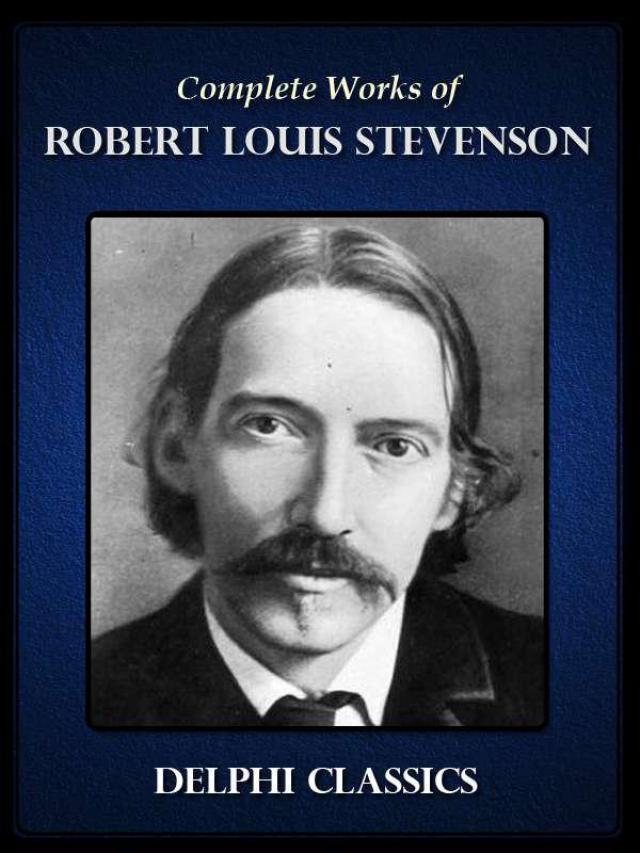
Thoreau’s thin, penetrating, big-nosed face, even in a bad woodcut, conveys some hint of the limitations of his mind and character. With his almost acid sharpness of insight, with his almost animal dexterity in act, there went none of that large, unconscious geniality of the world’s heroes. He was not easy, not ample, not urbane, not even kind; his enjoyment was hardly smiling, or the smile was not broad enough to be convincing; he had no waste lands nor kitchen-midden in his nature, but was all improved and sharpened to a point. “He was bred to no profession,” says Emerson; “he never married; he lived alone; he never went to church; he never voted; he refused to pay a tax to the State; he ate no flesh, he drank no wine, he never knew the use of tobacco; and, though a naturalist, he used neither trap nor gun. When asked at dinner what dish he preferred, he answered, ‘the nearest.’” So many negative superiorities begin to smack a little of the prig. From his later works he was in the habit of cutting out the humorous passages, under the impression that they were beneath the dignity of his moral muse; and there we see the prig stand public and confessed. It was “much easier,” says Emerson acutely, much easier for Thoreau to say no than yes; and that is a characteristic which depicts the man. It is a useful accomplishment to be able to say no, but surely it is the essence of amiability 2 to prefer to say yes where it is possible. There is something wanting in the man who does not hate himself whenever he is constrained to say no. And there was a great deal wanting in this born dissenter. He was almost shockingly devoid of weaknesses; he had not enough of them to be truly polar with humanity; whether you call him demi-god or demi-man, he was at least not altogether one of us, for he was not touched with a feeling of our infirmities. The world’s heroes have room for all positive qualities, even those which are disreputable, in the capacious theatre of their dispositions. Such can live many lives; while a Thoreau can live but one, and that only with perpetual foresight.
He was no ascetic, rather an Epicurean of the nobler sort; and he had this one great merit, that he succeeded so far as to be happy. “I love my fate to the core and rind,” he wrote once; and even while he lay dying, here is what he dictated (for it seems he was already too feeble to control the pen): “You ask particularly after my health. I suppose that I have not many months to live, but of course know nothing about it. I may say that I am enjoying existence as much as ever, and regret nothing.” It is not given to all to bear so clear a testimony to the sweetness of their fate, nor to any without courage and wisdom; for this world in itself is but a painful and uneasy place of residence, and lasting happiness, at least to the self-conscious, comes only from within. Now Thoreau’s content and ecstasy in living was, we may say, like a plant that he had watered and tended with womanish solicitude; for there is apt to be something unmanly, something almost dastardly, in a life that does not move with dash and freedom, and that fears the bracing contact of the world. In one word, Thoreau was a skulker. He did not wish virtue to go out of him among his fellow-men, but slunk into a corner to hoard it for himself. He left all for the sake of certain virtuous self-indulgences. It is true that his tastes were noble; that his ruling passion was to keep himself 3 unspotted from the world; and that his luxuries were all of the same healthy order as cold tubs and early rising. But a man may be both coldly cruel in the pursuit of goodness, and morbid even in the pursuit of health. I cannot lay my hands on the passage in which he explains his abstinence from tea and coffee, but I am sure I have the meaning correctly. It is this: He thought it bad economy and worthy of no true virtuoso to spoil the natural rapture of the morning with such muddy stimulants; let him but see the sun rise, and he was already sufficiently inspirited for the labours of the day. That may be reason good enough to abstain from tea; but when we go on to find the same man, on the same or similar grounds, abstain from nearly everything that his neighbours innocently and pleasurably use, and from the rubs and trials of human society itself into the bargain, we recognise that valetudinarian healthfulness which is more delicate than sickness itself. We need have no respect for a state of artificial training. True health is to be able to do without it. Shakespeare, we can imagine, might begin the day upon a quart of ale, and yet enjoy the sunrise to the full as much as Thoreau, and commemorate his enjoyment in vastly better verses. A man who must separate himself from his neighbours’ habits in order to be happy, is in much the same case with one who requires to take opium for the same purpose. What we want to see is one who can breast into the world, do a man’s work, and still preserve his first and pure enjoyment of existence.
Thoreau’s faculties were of a piece with his moral shyness; for they were all delicacies. He could guide himself about the woods on the darkest night by the touch of his feet. He could pick up at once an exact dozen of pencils by the feeling, pace distances with accuracy, and gauge cubic contents by the eye. His smell was so dainty that he could perceive the fœtor of dwelling-houses as he passed them by at night; his palate so unsophisticated that, like a child, he disliked the taste of wine — or perhaps, living in 4 America, had never tasted any that was good; and his knowledge of nature was so complete and curious that he could have told the time of year, within a day or so, by the aspect of the plants. In his dealings with animals he was the original of Hawthorne’s Donatello. He pulled the woodchuck out of its hole by the tail; the hunted fox came to him for protection; wild squirrels have been seen to nestle in his waistcoat; he would thrust his arm into a pool and bring forth a bright, panting fish, lying undismayed in the palm of his hand. There were few things that he could not do. He could make a house, a boat, a pencil, or a book. He was a surveyor, a scholar, a natural historian. He could run, walk, climb, skate, swim, and manage a boat. The smallest occasion served to display his physical accomplishment; and a manufacturer, from merely observing his dexterity with the window of a railway carriage, offered him a situation on the spot. “The only fruit of much living,” he observes, “is the ability to do some slight thing better.” But such was the exactitude of his senses, so alive was he in every fibre, that it seems as if the maxim should be changed in his case, for he could do most things with unusual perfection. And perhaps he had an approving eye to himself when he wrote: “Though the youth at last grows indifferent, the laws of the universe are not indifferent, but are for ever on the side of the most sensitive.”
II
Thoreau had decided, it would seem, from the very first to lead a life of self-improvement: the needle did not tremble as with richer natures, but pointed steadily north; and as he saw duty and inclination in one, he turned all his strength in that direction. He was met upon the threshold by a common difficulty. In this world, in spite of its many agreeable features, even the most sensitive must undergo some drudgery to live. It is not possible 5 to devote your time to study and meditation without what are quaintly but happily denominated private means; these absent, a man must contrive to earn his bread by some service to the public such as the public cares to pay him for; or, as Thoreau loved to put it, Apollo must serve Admetus. This was to Thoreau even a sourer necessity than it is to most; there was a love of freedom, a strain of the wild man, in his nature, that rebelled with violence against the yoke of custom; and he was so eager to cultivate himself and to be happy in his own society, that he could consent with difficulty even to the interruptions of friendship. “Such are my engagements to myself that I dare not promise,” he once wrote in answer to an invitation; and the italics are his own. Marcus Aurelius found time to study virtue, and between whiles to conduct the imperial affairs of Rome; but Thoreau is so busy improving himself that he must think twice about a morning call. And now imagine him condemned for eight hours a day to some uncongenial and unmeaning business! He shrank from the very look of the mechanical in life; all should, if possible, be sweetly spontaneous and swimmingly progressive. Thus he learned to make lead-pencils, and, when he had gained the best certificate, and his friends began to congratulate him on his establishment in life, calmly announced that he should never make another. “Why should I?” said he; “I would not do again what I have done once.” For when a thing has once been done as well as it wants to be, it is of no further interest to the self-improver. Yet in after years, and when it became needful to support his family, he returned patiently to this mechanical art — a step more than worthy of himself.
The pencils seem to have been Apollo’s first experiment in the service of Admetus; but others followed. “I have thoroughly tried school-keeping,” he writes, “and found that my expenses were in proportion, or rather out of proportion, to my income; for I was obliged to dress and train, not to say, think and believe, accordingly, and 6 I lost my time into the bargain. As I did not teach for the benefit of my fellow-men, but simply for a livelihood, this was a failure. I have tried trade, but I found that it would take ten years to get under way in that, and that then I should probably be on my way to the devil.” Nothing, indeed, can surpass his scorn for all so-called business. Upon that subject gall squirts from him at a touch. “The whole enterprise of this nation is not illustrated by a thought,” he writes; “it is not warmed by a sentiment; there is nothing in it for which a man should lay down his life, nor even his gloves.” And again: “If our merchants did not most of them fail, and the banks too, my faith in the old laws of this world would be staggered. The statement that ninety-six in a hundred doing such business surely break down is perhaps the sweetest fact that statistics have revealed.” The wish was probably father to the figures; but there is something enlivening in a hatred of so genuine a brand, hot as Corsican revenge, and sneering like Voltaire.
Pencils, school-keeping, and trade being thus discarded one after another, Thoreau, with a stroke of strategy, turned the position. He saw his way to get his board and lodging for practically nothing; and Admetus never got less work out of any servant since the world began. It was his ambition to be an Oriental philosopher; but he was always a very Yankee sort of Oriental. Even in the peculiar attitude in which he stood to money, his system of personal economics, as we may call it, he displayed a vast amount of truly down-East calculation, and he adopted poverty like a piece of business. Yet his system is based on one or two ideas which, I believe, come naturally to all thoughtful youths, and are only pounded out of them by city uncles. Indeed, something essentially youthful distinguishes all Thoreau’s knock-down blows at current opinion. Like the posers of a child, they leave the orthodox in a kind of speechless agony. These know the thing is nonsense. They are sure there must be an answer, yet 7 somehow cannot find it. So it is with his system of economy. He cuts through the subject on so new a plane that the accepted arguments apply no longer; he attacks it in a new dialect where there are no catch-words ready made for the defender; after you have been boxing for years on a polite, gladiatorial convention, here is an assailant who does not scruple to hit below the belt.
“The cost of a thing,” says he, “is the amount of what I will call life which is required to be exchanged for it, immediately or in the long run.” I have been accustomed to put it to myself, perhaps more clearly, that the price we have to pay for money is paid in liberty. Between these two ways of it, at least, the reader will probably not fail to find a third definition of his own; and it follows, on one or other, that a man may pay too dearly for his livelihood, by giving, in Thoreau’s terms, his whole life for it, or, in mine, bartering for it the whole of his available liberty, and becoming a slave till death. There are two questions to be considered — the quality of what we buy, and the price we have to pay for it. Do you want a thousand a year, a two thousand a year, or a ten thousand a year livelihood? and can you afford the one you want? It is a matter of taste; it is not in the least degree a question of duty, though commonly supposed so. But there is no authority for that view anywhere. It is nowhere in the Bible. It is true that we might do a vast amount of good if we were wealthy, but it is also highly improbable; not many do; and the art of growing rich is not only quite distinct from that of doing good, but the practice of the one does not at all train a man for practising the other. “Money might be of great service to me,” writes Thoreau; “but the difficulty now is that I do not improve my opportunities, and therefore I am not prepared to have my opportunities increased.” It is a mere illusion that, above a certain income, the personal desires will be satisfied and leave a wider margin for the generous impulse. It is as difficult to be generous, or anything else except perhaps a member 8 of Parliament, on thirty thousand as on two hundred a year.
Now Thoreau’s tastes were well defined. He loved to be free, to be master of his times and seasons, to indulge the mind rather than the body; he preferred long rambles to rich dinners, his own reflections to the consideration of society, and an easy, calm, unfettered, active life among green trees to dull toiling at the counter of a bank. And such being his inclination he determined to gratify it. A poor man must save off something; he determined to save off his livelihood. “When a man has attained those things which are necessary to life,” he writes, “there is another alternative than to obtain the superfluities; he may adventure on life now, his vacation from humbler toil having commenced.” Thoreau would get shelter, some kind of covering for his body, and necessary daily bread; even these he should get as cheaply as possible; and then, his vacation from humbler toil having commenced, devote himself to Oriental philosophers, the study of nature, and the work of self-improvement.
Prudence, which bids us all go to the ant for wisdom and hoard against the day of sickness, was not a favourite with Thoreau. He preferred that other, whose name is so much misappropriated: Faith. When he had secured the necessaries of the moment, he would not reckon up possible accidents or torment himself with trouble for the future. He had no toleration for the man “who ventures to live only by the aid of the mutual insurance company, which has promised to bury him decently.” He would trust himself a little to the world. “We may safely trust a good deal more than we do,” says he. “How much is not done by us! or what if we had been taken sick?” And then, with a stab of satire, he describes contemporary mankind in a phrase: “All the day long on the alert, at night we unwillingly say our prayers and commit ourselves to uncertainties.” It is not likely that the public will be much affected by Thoreau, when they blink the direct injunctions 9 of the religion they profess; and yet, whether we will or no, we make the same hazardous ventures; we back our own health and the honesty of our neighbours for all that we are worth; and it is chilling to think how many must lose their wager.
In , twenty-eight years old, an age by which the liveliest have usually declined into some conformity with the world, Thoreau, with a capital of something less than five pounds and a borrowed axe, walked forth into the woods by Walden Pond, and began his new experiment in life. He built himself a dwelling, and returned the axe, he says with characteristic and workmanlike pride, sharper than when he borrowed it; he reclaimed a patch, where he cultivated beans, peas, potatoes, and sweet corn; he had his bread to bake, his farm to dig, and for the matter of six weeks in the summer he worked at surveying, carpentry, or some other of his numerous dexterities, for hire. For more than five years this was all that he required to do for his support, and he had the winter and most of the summer at his entire disposal. For six weeks of occupation, a little cooking and a little gentle hygienic gardening, the man, you may say, had as good as stolen his livelihood. Or we must rather allow that he had done far better; for the thief himself is continually and busily occupied; and even one born to inherit a million will have more calls upon his time than Thoreau. Well might he say, “What old people tell you you cannot do, you try and find you can.” And how surprising is his conclusion: “I am convinced that to maintain oneself on this earth is not a hardship, but a pastime, if we will live simply and wisely; as the pursuits of simpler nations are still the sports of the more artificial.”
When he had enough of that kind of life, he showed the same simplicity in giving it up as in beginning it. There are some who could have done the one, but, vanity forbidding, not the other; and that is perhaps the story of the hermits; but Thoreau made no fetich of his own example, and did what he wanted squarely. And five years is long 0 enough for an experiment, and to prove the success of transcendental Yankeeism. It is not his frugality which is worthy of note; for, to begin with, that was inborn, and therefore inimitable by others who are differently constituted; and again, it was no new thing, but has often been equalled by poor Scotch students at the universities. The point is the sanity of his view of life, and the insight with which he recognised the position of money, and thought out for himself the problem of riches and a livelihood. Apart from his eccentricities, he had perceived, and was acting on, a truth of universal application. For money enters in two different characters into the scheme of life. A certain amount, varying with the number and empire of our desires, is a true necessary to each one of us in the present order of society; but beyond that amount, money is a commodity to be bought or not to be bought, a luxury in which we may either indulge or stint ourselves, like any other. And there are many luxuries that we may legitimately prefer to it, such as a grateful conscience, a country life, or the woman of our inclination. Trite, flat, and obvious as this conclusion may appear, we have only to look round us in society to see how scantily it has been recognised; and perhaps even ourselves, after a little reflection, may decide to spend a trifle less for money, and indulge ourselves a trifle more in the article of freedom.