Complete works of robert.., p.801
Complete Works of Robert Louis Stevenson (Illustrated),
p.801


1st January ‘94.
MY DEAR CHARLES, — I am delighted with your idea, and first, I will here give an amended plan and afterwards give you a note of some of the difficulties.
[Plan of the Edinburgh edition — 14 vols.]
... It may be a question whether my Times letters might not be appended to the Footnote with a note of the dates of discharge of Cedercrantz and Pilsach.
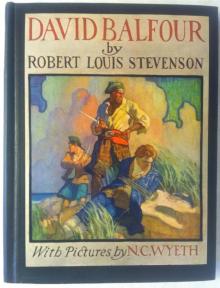
I am particularly pleased with this idea of yours, because I am come to a dead stop. I never can remember how bad I have been before, but at any rate I am bad enough just now, I mean as to literature; in health I am well and strong. I take it I shall be six months before I’m heard of again, and this time I could put in to some advantage in revising the text and (if it were thought desirable) writing prefaces. I do not know how many of them might be thought desirable. I have written a paper on Treasure Island, which is to appear shortly. Master of Ballantrae — I have one drafted. The Wrecker is quite sufficiently done already with the last chapter, but I suppose an historic introduction to David Balfour is quite unavoidable. Prince Otto I don’t think I could say anything about, and Black Arrow don’t want to. But it is probable I could say something to the volume of Travels. In the verse business I can do just what I like better than anything else, and extend Underwoods with a lot of unpublished stuff. À propos, if I were to get printed off a very few poems which are somewhat too intimate for the 377 public, could you get them run up in some luxuous manner, so that fools might be induced to buy them in just a sufficient quantity to pay expenses and the thing remain still in a manner private? We could supply photographs of the illustrations — and the poems are of Vailima and the family — I should much like to get this done as a surprise for Fanny.
R. L. S.
To H. B. Baildon
Vailima, January 15th, 1894.
MY DEAR BAILDON, — Last mail brought your book and its Dedication. “Frederick Street and the gardens, and the short-lived Jack o’ Lantern,” are again with me — and the note of the east wind, and Froebel’s voice, and the smell of soup in Thomson’s stair. Truly, you had no need to put yourself under the protection of any other saint, were that saint our Tamate himself! Yourself were enough, and yourself coming with so rich a sheaf.
For what is this that you say about the Muses? They have certainly never better inspired you than in “Jael and Sisera,” and “Herodias and John the Baptist,” good stout poems, fiery and sound. “‘Tis but a mask and behind it chuckles the God of the Garden,” I shall never forget. By the by, an error of the press, page 49, line 4, “No infant’s lesson are the ways of God.” The is dropped.
And this reminds me you have a bad habit which is to be comminated in my theory of letters. Same page, two lines lower: “But the vulture’s track” is surely as fine to the ear as “But vulture’s track,” and this latter version has a dreadful baldness. The reader goes on with a sense of impoverishment, of unnecessary sacrifice; he has been robbed by footpads, and goes scouting for his lost article! Again, in the second Epode, these fine verses would surely sound much finer if they began, “As a hardy climber who has set his heart,” than with the jejune “As hardy climber.” 378 I do not know why you permit yourself this licence with grammar; you show, in so many pages, that you are superior to the paltry sense of rhythm which usually dictates it — as though some poetaster had been suffered to correct the poet’s text. By the way, I confess to a heartfelt weakness for Auriculas. — Believe me the very grateful and characteristic pick-thank, but still sincere and affectionate,
Robert Louis Stevenson.
To W. H. Low
Vailima, January 15th, 1894.
MY DEAR LOW, — ... Pray you, stoop your proud head, and sell yourself to some Jew magazine, and make the visit out. I assure you, this is the spot for a sculptor or painter. This, and no other — I don’t say to stay there, but to come once and get the living colour into them. I am used to it; I do not notice it; rather prefer my grey, freezing recollections of Scotland; but there it is, and every morning is a thing to give thanks for, and every night another — bar when it rains, of course.
About The Wrecker — rather late days, and I still suspect I had somehow offended you; however, all’s well that ends well, and I am glad I am forgiven — did you not fail to appreciate the attitude of Dodd? He was a fizzle and a stick, he knew it, he knew nothing else, and there is an undercurrent of bitterness in him. And then the problem that Pinkerton laid down: why the artist can do nothing else? is one that continually exercises myself. He cannot: granted. But Scott could. And Montaigne. And Julius Caesar. And many more. And why can’t R. L. S.? Does it not amaze you? It does me. I think of the Renaissance fellows, and their all-round human sufficiency, and compare it with the ineffable smallness of the field in which we labour and in which we do so little. I think David Balfour a nice little book, 379 and very artistic, and just the thing to occupy the leisure of a busy man; but for the top flower of a man’s life it seems to me inadequate. Small is the word; it is a small age, and I am of it. I could have wished to be otherwise busy in this world. I ought to have been able to build lighthouses and write David Balfours too. Hinc illae lacrymae. I take my own case as most handy, but it is as illustrative of my quarrel with the age. We take all these pains, and we don’t do as well as Michael Angelo or Leonardo, or even Fielding, who was an active magistrate, or Richardson, who was a busy bookseller. J’ai honte pour nous; my ears burn.
I am amazed at the effect which this Chicago exhibition has produced upon you and others. It set Mrs. Fairchild literally mad — to judge by her letters. And I wish I had seen anything so influential. I suppose there was an aura, a halo, some sort of effulgency about the place; for here I find you louder than the rest. Well, it may be there is a time coming; and I wonder, when it comes, whether it will be a time of little, exclusive, one-eyed rascals like you and me, or parties of the old stamp who can paint and fight, and write and keep books of double entry, and sculp, and scalp. It might be. You have a lot of stuff in the kettle, and a great deal of it Celtic. I have changed my mind progressively about England: practically the whole of Scotland is Celtic, and the western half of England, and all Ireland, and the Celtic blood makes a rare blend for art. If it is stiffened up with Latin blood, you get the French. We were less lucky: we had only Scandinavians, themselves decidedly artistic, and the Low-German lot. However, that is a good starting-point, and with all the other elements in your crucible, it may come to something great very easily. I wish you would hurry up and let me see it. Here is a long while I have been waiting for something good in art; and what have I seen? Zola’s Débâcle and a few of Kipling’s tales. Are you a reader of Barbey d’Aurévilly? He is a never-failing 380 source of pleasure to me, for my sins, I suppose. What a work is the Rideau Cramoisi! and L’Ensorcelée! and Le Chevalier Des Touches!
This is degenerating into mere twaddle. So please remember us all most kindly to Mrs. Low, and believe me ever yours,
Robert Louis Stevenson.
P.S. — Were all your privateers voiceless in the war of 1812? Did no one of them write memoirs? I shall have to do my privateer from chic, if you can’t help me. My application to Scribner has been quite in vain. See if you can get hold of some historic sharp in the club, and tap him; they must some of them have written memoirs or notes of some sort; perhaps still unprinted; if that be so, get them copied for me.
R. L. S.
To Sidney Colvin
Vailima, Jan. 29th, 1894.
MY DEAR COLVIN, — I had fully intended for your education and moral health to fob you off with the meanest possible letter this month, and unfortunately I find I will have to treat you to a good long account of matters here. I believe I have told you before about Tui-ma-le-alii-fano and my taking him down to introduce him to the Chief Justice. Well, Tui came back to Vailima one day in the blackest sort of spirits, saying the war was decided, that he also must join in the fight, and that there was no hope whatever of success. He must fight as a point of honour for his family and country; and in his case, even if he escaped on the field of battle, deportation was the least to be looked for. He said he had a letter of complaint from the Great Council of A’ana which he wished to lay 381 before the Chief Justice; and he asked me to accompany him as if I were his nurse. We went down about dinner time; and by the way received from a lurking native the famous letter in an official blue envelope gummed up to the edges. It proved to be a declaration of war, quite formal, but with some variations that really made you bounce. White residents were directly threatened, bidden to have nothing to do with the King’s party, not to receive their goods in their houses, etc., under pain of an accident. However, the Chief Justice took it very wisely and mildly, and between us, he and I and Tui made up a plan which has proved successful — so far. The war is over — fifteen chiefs are this morning undergoing a curious double process of law, comparable to a court martial; in which their complaints are to be considered, and if possible righted, while their conduct is to be criticised, perhaps punished. Up to now, therefore, it has been a most successful policy; but the danger is before us. My own feeling would decidedly be that all would be spoiled by a single execution. The great hope after all lies in the knotless, rather flaccid character of the people. These are no Maoris. All the powers that Cedercrantz let go by disuse the new C. J. is stealthily and boldly taking back again; perhaps some others also. He has shamed the chiefs in Mulinuu into a law against taking heads, with a punishment of six years’ imprisonment and, for a chief, degradation. To him has been left the sole conduct of this anxious and decisive inquiry. If the natives stand it, why, well! But I am nervous.
To H. B. Baildon
Vailima, January 30th, 1894.
MY DEAR BAILDON, — ”Call not blessed.” — Yes, if I could die just now, or say in half a year, I should have had a splendid time of it on the whole. But it gets a little stale, and my work will begin to senesce; and 382 parties to shy bricks at me; and now it begins to look as if I should survive to see myself impotent and forgotten. It’s a pity suicide is not thought the ticket in the best circles.
But your letter goes on to congratulate me on having done the one thing I am a little sorry for; a little — not much — for my father himself lived to think that I had been wiser than he. But the cream of the jest is that I have lived to change my mind; and think that he was wiser than I. Had I been an engineer, and literature my amusement, it would have been better perhaps. I pulled it off, of course, I won the wager, and it is pleasant while it lasts; but how long will it last? I don’t know, say the Bells of Old Bow.
All of which goes to show that nobody is quite sane in judging himself. Truly, had I given way and gone in for engineering, I should be dead by now. Well, the gods know best.
... I hope you got my letter about the Rescue. — Adieu.
R. L. S.
True for you about the benefit: except by kisses, jests, song, et hoc genus omne, man cannot convey benefit to another. The universal benefactor has been there before him.
To Sidney Colvin
Feb. 1894.
DEAR COLVIN, — By a reaction, when your letter is a little decent, mine is to be naked and unashamed. We have been much exercised. No one can prophesy here, of course, and the balance still hangs trembling, but I think it will go for peace.
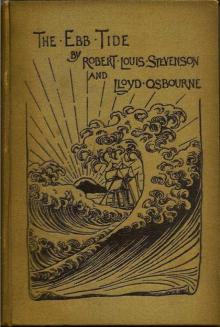
The mail was very late this time: hence the paltriness of this note. When it came and I had read it, I retired with The Ebb Tide and read it all before I slept. 383 I did not dream it was near as good; I am afraid I think it excellent. A little indecision about Attwater, not much. It gives me great hope, as I see I can work in that constipated, mosaic manner, which is what I have to do just now with Weir of Hermiston.
We have given a ball; I send you a paper describing the event. We have two guests in the house, Captain-Count Wurmbrand and Monsieur Albert de Lautreppe. Lautreppe is awfully nice — a quiet, gentlemanly fellow, gonflé de rêves, as he describes himself — once a sculptor in the atelier of Henry Crosse, he knows something of art, and is really a resource to me.
Letter from Meredith very kind. Have you seen no more of Graham?
What about my Grandfather? The family history will grow to be quite a chapter.
I suppose I am growing sensitive; perhaps, by living among barbarians, I expect more civility. Look at this from the author of a very interesting and laudatory critique. He gives quite a false description of something of mine, and talks about my “insolence.” Frankly, I supposed “insolence” to be a tapu word. I do not use it to a gentleman, I would not write it of a gentleman: I may be wrong, but I believe we did not write it of a gentleman in old days, and in my view he (clever fellow as he is) wants to be kicked for applying it to me. By writing a novel — even a bad one — I do not make myself a criminal for anybody to insult. This may amuse you. But either there is a change in journalism, too gradual for you to remark it on the spot, or there is a change in me. I cannot bear these phrases; I long to resent them. My forbears, the tenant farmers of the Mures, would not have suffered such expressions unless it had been from Cauldwell, or Rowallan, or maybe Auchendrane. My Family Pride bristles. I am like the negro, “I just heard last night” who my great, great, great, great grandfather was. — Ever yours,
R. L. S.
To J. H. Bates
The next is to a correspondent in Cincinnati, who had been the founder of an R. L. S. Society in that city, “originally,” he writes me, under date April 7, 1895, “the outcome of a boyish fancy, but it has now grown into something more substantial.”
Vailima, Samoa, March 25th, 1894.
MY DEAR MR. JOE H. BATES, — I shall have the greatest pleasure in acceding to your complimentary request. I shall think it an honour to be associated with your chapter, and I need not remind you (for you have said it yourself) how much depends upon your own exertions whether to make it to me a real honour or only a derision. This is to let you know that I accept the position that you have seriously offered to me in a quite serious spirit. I need scarce tell you that I shall always be pleased to receive reports of your proceedings; and if I do not always acknowledge them, you are to remember that I am a man very much occupied otherwise, and not at all to suppose that I have lost interest in my chapter.
In this world, which (as you justly say) is so full of sorrow and suffering, it will always please me to remember that my name is connected with some efforts after alleviation, nor less so with purposes of innocent recreation which, after all, are the only certain means at our disposal for bettering human life.
With kind regards, to yourself, to Mr. L. C. Congdon, to E. M. G. Bates, and to Mr. Edward Hugh Higlee Bates, and the heartiest wishes for the future success of the chapter, believe me, yours cordially.
Robert Louis Stevenson.
To William Archer
Vailima, Samoa, March 27th, 1894.
MY DEAR ARCHER, — Many thanks for your Theatrical World. Do you know, it strikes me as being really very 385 good? I have not yet read much of it, but so far as I have looked, there is not a dull and not an empty page in it. Hazlitt, whom you must often have thought of, would have been pleased. Come to think of it, I shall put this book upon the Hazlitt shelf. You have acquired a manner that I can only call august; otherwise, I should have to call it such amazing impudence. The Bauble Shop and Becket are examples of what I mean. But it “sets you weel.”
Marjorie Fleming I have known, as you surmise, for long. She was possibly — no, I take back possibly — she was one of the greatest works of God. Your note about the resemblance of her verses to mine gave me great joy, though it only proved me a plagiarist. By the by, was it not over The Child’s Garden of Verses that we first scraped acquaintance? I am sorry indeed to hear that my esteemed correspondent Tomarcher has such poor taste in literature. I fear he cannot have inherited this trait from his dear papa. Indeed, I may say I know it, for I remember the energy of papa’s disapproval when the work passed through his hands on its way to a second birth, which none regrets more than myself. It is an odd fact, or perhaps a very natural one; I find few greater pleasures than reading my own works, but I never, O I never read The Black Arrow. In that country Tomarcher reigns supreme. Well, and after all, if Tomarcher likes it, it has not been written in vain.
We have just now a curious breath from Europe. A young fellow just beginning letters, and no fool, turned up here with a letter of introduction in the well-known blue ink and decorative hieroglyphs of George Meredith. His name may be known to you. It is Sidney Lysaght. He is staying with us but a day or two, and it is strange to me and not unpleasant to hear all the names, old and new, come up again. But oddly the new are so much more in number. If I revisited the glimpses of the moon 386 on your side of the ocean, I should know comparatively few of them.
My amanuensis deserts me — I should have said you, for yours is the loss, my script having lost all bond with humanity. One touch of nature makes the whole world kin: that nobody can read my hand. It is a humiliating circumstance that thus evens us with printers!
You must sometimes think it strange — or perhaps it is only I that should so think it — to be following the old round, in the gas lamps and the crowded theatres, when I am away here in the tropical forest and the vast silences!
My dear Archer, my wife joins me in the best wishes to yourself and Mrs. Archer, not forgetting Tom; and I am yours very cordially,
Robert Louis Stevenson.
To Sidney Colvin
Partly concerning a fresh rising, this time of the partisans of Tamasese from the district of Atua, which had occurred and was after some time suppressed; partly in reference to the visit of Mr. Sidney Lysaght; partly in reply to a petition that his letters might be less entirely taken up with native affairs, of relatively little meaning to his correspondent.